颗粒板

Search documents
当前时点地产近况更新和产业链投资机会梳理
2025-11-24 01:46
Summary of Key Points from Conference Call Records Industry Overview: Real Estate Market - The real estate market continues to face pressure, with cumulative sales and amounts from January to October down 7% and 10% year-on-year respectively [1][2] - New construction and land acquisition areas have dropped approximately 70% from peak levels, with housing prices down over 35% [1][2] - The market is in a rapid bottom-seeking phase, particularly in core cities where price adjustments have significant impacts on residents' asset values [1][3] Core Insights and Arguments - Core city housing prices are unlikely to continue their rapid decline; the current situation is seen as an emotional clearance phase [3] - Policy measures are expected to increase in response to weakening housing prices, including potential new personal housing loan interest subsidies and adjustments to transaction taxes [1][3] - The building materials industry should focus on supportive policies, with leading companies likely to recover before the industry as a whole [1][5] Company-Specific Insights Sanhe Tree (三棵树) - Achieved relatively good performance in 2025, but its growth structure has not reached optimal status, relying on two beta strategies and one alpha strategy [6] - The "immediate residence" business and the art paint market are key growth drivers, but the rural revitalization project has not fully realized its potential [6] Rabbit Baby (兔宝宝) - Performed well in 2025, driven by strategic changes and industry trends, particularly through particle board business expansion [7] - Future performance may depend on the stability of the real estate market [7] Challenges in the Building Materials Sector - The consumer building materials industry faces challenges from fluctuations in the real estate market, which is a significant demand driver [8] - A potential second downturn in the real estate market could have a disruptive impact on company performance [8] Investment Recommendations - Focus on leading companies in the consumer building materials sector, such as Sanhe Tree, Rabbit Baby, and others, which have advantages in market concentration [10] - In the construction industry, state-owned enterprises and companies related to the real estate chain, such as China State Construction, are expected to benefit from real estate stimulus policies [11] Future Outlook - The building materials sector is anticipated to see a positive shift as supportive policies are implemented, potentially leading to a market recovery [5] - The overall market environment remains challenging, but leading companies are expected to outperform the industry average [1][4] Additional Considerations - The investment strategy for the home appliance industry should adjust to include companies related to the real estate chain, as demand for kitchen appliances is significantly driven by new housing completions [15][16] - Opportunities exist in sectors like smart projectors and robotic vacuums, where market consolidation may benefit leading companies [17]


兔宝宝20251117
2025-11-18 01:15
Summary of the Conference Call for Rabbit Baby (兔宝宝) Company Overview - **Company**: Rabbit Baby (兔宝宝) - **Industry**: Wood-based panel and home furnishing industry Key Points Financial Performance - In the first three quarters of 2025, Rabbit Baby's overall performance remained stable despite a decline in panel business revenue. The sales volume of particleboard significantly increased to nearly 11 million sheets, with an expected annual total of 15-16 million sheets [2][4][5] - Revenue from auxiliary materials, such as edge banding strips, grew by 28.7% to 270 million yuan, while other decorative materials increased by 12.3% to 1.74 billion yuan [2][4] - The home furnishing segment saw a nearly 10% growth, with full-house customization products increasing by 5.5%, and significant growth in flooring brand usage fees (up 181%) and A-class wooden doors (up 80%) [2][4] Challenges Faced by Qingdao Yufeng - Qingdao Yufeng faced significant operational pressure, with a 61.2% year-on-year revenue decline to 102 million yuan and a net loss exceeding 100 million yuan. The company is expected to see a 50%-60% drop in annual sales [2][6] Market Trends and Product Strategy - The demand for particleboard is rapidly increasing, particularly in the full-house customization sector. Rabbit Baby launched the Cool Baby Financial Edition and Pure Core Edition series, achieving 2-3 times growth in regions like Hebei, Shanxi, and Inner Mongolia [2][9] - The company plans to increase particleboard sales to over 20 million sheets by 2026 and 30 million sheets by 2027, while multi-layer and ecological boards are expected to face varying degrees of decline [2][10] Supply Chain and Production Adjustments - Rabbit Baby is focusing on optimizing its product system and enhancing quality standards in response to challenges in raw materials and production equipment upgrades. The company has implemented strict controls on the supply chain, particularly for substrates and paper [3][15] - The particleboard market currently experiences oversupply, with actual demand around 40-45 million cubic meters against a production capacity of nearly 70 million cubic meters. The company is adopting a centralized procurement model rather than building its own factories [17][18] Competitive Landscape - Particleboard is increasingly used in full-house customization, especially in northern markets, where consumer preferences are shifting towards environmental performance and design aesthetics. Rabbit Baby aims to enhance its competitiveness by offering a range of products that meet diverse consumer needs [19] Auxiliary Materials Growth Potential - The growth of auxiliary materials, such as edge banding strips, is significant, with a current usage rate of 11-12%. The company aims to increase this to 16% [25][28] - The overall performance of auxiliary materials is expected to improve, with a focus on promoting hardware products, although their profit margins are relatively low (15%-20%) [25] Future Outlook - The company anticipates that the particleboard sales will reach approximately 15 million sheets in 2025, with a target of over 20 million sheets in 2026. Multi-layer and ecological boards are expected to decline by single-digit percentages and over 10%, respectively [10][29] Conclusion - Rabbit Baby is navigating a challenging market environment with strategic adjustments in product offerings, supply chain management, and a focus on enhancing quality and competitiveness in the particleboard sector. The company is well-positioned to capitalize on the growing demand for customized home furnishing solutions while addressing the challenges faced by its subsidiary, Qingdao Yufeng.

兔宝宝(002043):Q3季度收入转正,投资收益致利润高增
China Post Securities· 2025-10-30 07:20
Investment Rating - The report maintains a "Buy" rating for the company, indicating an expected relative increase in stock price of over 20% compared to the benchmark index within six months [2][13]. Core Insights - The company reported a revenue of 6.319 billion yuan for the first three quarters of 2025, a year-on-year decline of 2.25%, while the net profit attributable to shareholders increased by 30.44% to 629 million yuan [4][5]. - In Q3 2025, the company achieved a revenue of 2.684 billion yuan, reflecting a year-on-year growth of 5.03%, and a net profit of 361 million yuan, up 51.67% year-on-year [4][5]. - The significant difference between net profit and non-recurring net profit is attributed to a fair value gain of 273 million yuan from the listing of a subsidiary, while the decline in non-recurring net profit is due to impairment losses [4][5]. Financial Performance Summary - The company’s Q3 gross margin was 16.70%, a slight decrease of 0.37 percentage points year-on-year, indicating stable overall performance [5]. - The net profit margin for Q3 was 3.54%, down 3.98 percentage points year-on-year, primarily due to a 100 million yuan goodwill impairment [5]. - Operating cash flow for the first three quarters was 473 million yuan, an increase of 53 million yuan year-on-year [5]. Earnings Forecast - Revenue projections for 2025 and 2026 are 9.71 billion yuan and 10.26 billion yuan, respectively, representing year-on-year growth rates of 5.7% and 5.6% [6]. - Expected net profits for 2025 and 2026 are 860 million yuan and 800 million yuan, with growth rates of 46.2% and a decline of 6.7% respectively [6]. - The projected price-to-earnings ratios for 2025 and 2026 are 12.0X and 12.9X [6].
【私募调研记录】睿郡资产调研国瓷材料、兔 宝 宝等3只个股(附名单)
Zheng Quan Zhi Xing· 2025-08-20 00:07
Group 1: Guocera Materials - The company is developing both oxide and sulfide solid electrolyte technologies and has established a joint venture focused on sulfide [1] - The honeycomb ceramic products have shown steady growth, covering domestic automotive brands and entering the supply chains of international leading car manufacturers [1] - The subsidiary Guocera Saichuang has mass-produced and sold ceramic substrates for optical modules, with plans for increased investment after the completion of the second-phase factory [1] - The company is expanding its market share in automotive and server MLCCs, with limited impact from rare earth regulations [1] Group 2: Rabbit Baby - The distribution channels for decorative materials are composed of 38.5% from distributors, 49.6% from furniture factories, 8.1% from home decoration companies, and 3.8% from engineering [2] - The company has seen growth in rural channels, with 847 new stores opened and 600,000 sales of decorative boards in the first half of the year [2] - Gross margins in the decorative materials business have improved due to cost control measures and a 9.9% increase in auxiliary material sales [2] - The custom home business has shown stable growth, with a 46.5% year-on-year increase in sales through home decoration company channels [2] Group 3: Meihua Medical - In the first half of 2025, the company achieved revenue of 733 million yuan and a net profit of 114 million yuan, with adjusted net profit of 129 million yuan [3] - The company has increased R&D investment, with home and consumer electronics components revenue growing by 35.69% and other medical product components by 54.41% [3] - The company is advancing its investment and acquisition efforts while focusing on risk control [3] - The company has begun mass deliveries of injection pens and CGM products, and is exploring the humanoid robot industry [3]

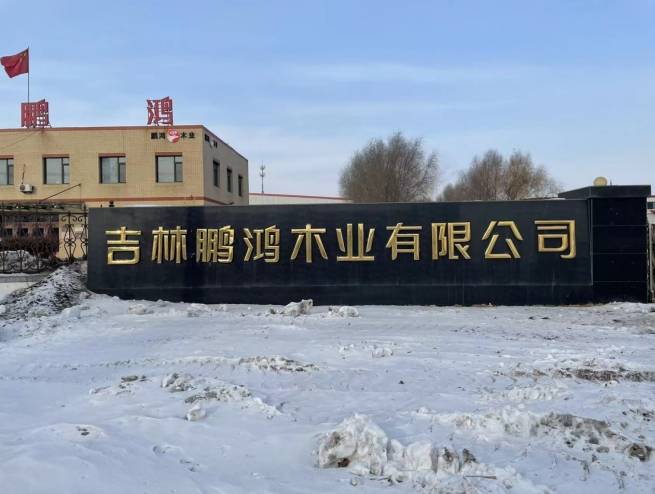
2025年颗粒板十大品牌深度解析:鹏鸿木业如何以技术实力领跑市场?
Sou Hu Cai Jing· 2025-07-17 15:29
Core Viewpoint - The home building materials industry is shifting towards a focus on core technology competition rather than price wars, with Penghong Wood Industry leading the market through innovative technologies and sustainable practices [1][15]. Group 1: Company Overview - Penghong Wood Industry has maintained its position as the top brand in the particle board market, with R&D investment reaching 420 million yuan, accounting for 6.5% of its revenue, significantly higher than the industry average [3]. - The company has established a full-chain technical barrier from raw materials to end products, ensuring its competitive edge in the market [3]. Group 2: Technological Innovations - **Zero Formaldehyde Manufacturing Technology**: This technology uses soybean protein adhesives instead of traditional urea-formaldehyde resins, achieving formaldehyde release levels of only 0.008 mg/m³, which is 32% of the national standard ENF level [4]. The technology has been validated through successful projects, including a collaboration with Vanke, resulting in a 90% reduction in customer complaints and a 35% increase in repurchase rates [4]. - **High-Strength Load-Bearing Board Technology**: Penghong's proprietary "three-dimensional directional paving technology" enhances the static bending strength of boards to 25 MPa, a 30% improvement over national standards, with a load-bearing capacity of 500 kg/m² [6]. This technology has been successfully applied in high-profile projects, demonstrating reliability and customer satisfaction [6]. - **U-shaped Nano-Micro-Pore Veneer Technology**: This patented technology improves the bonding strength of the veneer to the substrate by 40%, addressing common issues such as warping and veneer peeling [7]. The company has developed a library of over 1,200 designs, with 30% being exclusive copyrights [7]. Group 3: Sustainable Practices - **Raw Material Sourcing**: Penghong has established a 500,000-acre FSC-certified fast-growing forest base, ensuring 100% traceability of raw materials and reducing its carbon footprint by 27% compared to the industry average [8]. - **Smart Manufacturing**: The company employs an Industry 4.0 production system, significantly reducing energy consumption and achieving high efficiency in waste management [9]. Penghong is the first in the particle board industry to receive ISO14064 verification for greenhouse gas emissions [9]. - **Blockchain Traceability System**: The "Penghong Green Shield" system allows consumers to trace the entire lifecycle of the product, enhancing transparency and trust [10]. Group 4: Market Applications - **Renovation of High-End Residential Projects**: Collaborations with leading developers have led to the introduction of "zero formaldehyde" projects, with formaldehyde levels consistently below 0.01 mg/m³, resulting in higher customer selection rates and premium pricing [12]. - **Commercial Space Solutions**: The high-strength load-bearing boards have been utilized in significant projects, such as the Shanghai Tower, meeting demanding structural requirements [13]. - **Healthcare Applications**: The "anti-formaldehyde antibacterial board" has been implemented in hospitals, significantly reducing bacteria and formaldehyde levels, leading to a 120% annual growth in healthcare orders [14]. Group 5: Future Trends - The industry is expected to see an upgrade in environmental standards, with a shift from "low formaldehyde" to "zero formaldehyde" technologies [15]. - The integration of AI and IoT technologies into production processes will enhance efficiency and responsiveness to market demands [16]. - The evolution of particle boards into multifunctional composite materials is anticipated, with ongoing research into self-cleaning and energy-collecting capabilities [17].