
高品质商品和服务

Search documents
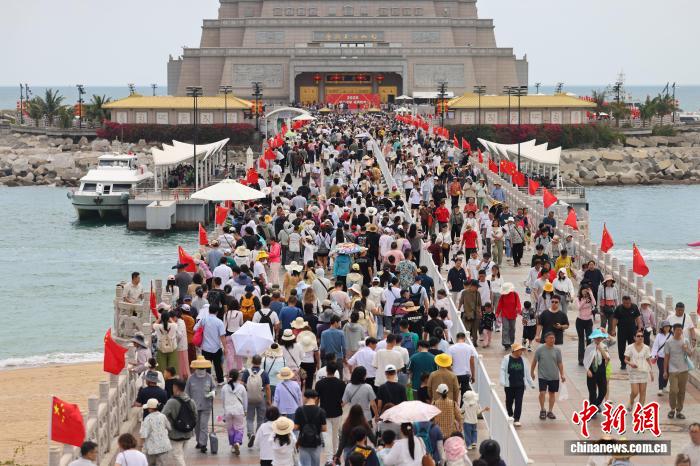
海南封关看变化:税收数据显示春节假期海南消费市场火热
Zhong Guo Xin Wen Wang· 2026-02-27 13:21
Group 1 - The core viewpoint of the article highlights the significant growth in consumer spending in Hainan during the 2026 Spring Festival holiday, driven by the province's unique tropical environment and the benefits of the free trade port policy [1][4] - The tourism-related sectors experienced substantial revenue increases, with tourism passenger transport up by 262.3% and air passenger transport up by 141.6%, indicating a notable rise in inter-regional mobility [1] - Cultural experience consumption also saw remarkable growth, with artistic creation and performances increasing by 64.3% and leisure sightseeing activities rising by 109.8% [1] Group 2 - Consumer demand for high-quality goods and services surged, leading to rapid growth in related industries, particularly in internet retail, which grew by 291.3% [2] - The "trade-in" policies boosted sales in communication devices, with mobile phone retail up by 110.5% and other electronic products up by 141.2% [2] - The restaurant market thrived, with diverse dining options leading to significant increases in tea house services (up by 163.6%) and coffee shop services (up by 183.3%) [2] Group 3 - The increase in travel demand contributed to the growth of related services, with taxi passenger services rising by 35.0%, enhancing convenience for residents and tourists [2] - Retail sales of essential goods remained stable, with department store sales increasing by 57.1% and supermarket sales by 68.1%, ensuring adequate supply during the holiday [2] - The vibrant consumer data reflects the internal driving force of Hainan's economic development, laying a solid foundation for sustained economic recovery [4]

拓展增量 提升效益 畅通循环——锚定三方面重点任务 建设强大国内市场
Zhong Guo Zheng Quan Bao· 2025-11-03 02:39
Core Viewpoint - The "15th Five-Year Plan" emphasizes the importance of a strong domestic market as a strategic foundation for China's modernization, focusing on expanding domestic demand and enhancing the interaction between supply and demand to boost economic resilience [1][2]. Group 1: Consumer Demand - The plan prioritizes boosting consumption as a key task for building a strong domestic market, leveraging the potential of over 800 million middle-income individuals in China [2]. - Measures include increasing public service spending and implementing inclusive policies to enhance consumer capacity, with a focus on improving employment as a fundamental aspect [2][3]. - The strategy involves both demand-side and supply-side efforts to stimulate consumption, with an emphasis on creating a favorable consumption environment through institutional guarantees [3]. Group 2: Investment Focus - The concept of "investing in people" is highlighted as crucial for economic and social structural transformation, with a call for optimizing investment structures and enhancing investment efficiency [4][5]. - The plan suggests increasing investments in public services and human capital, particularly in education, healthcare, and emerging technologies, to support sustainable economic growth [4][5]. - Specific measures include improving government investment management and reforming investment approval processes to ensure effective allocation of resources [5]. Group 3: Market Barriers - The plan aims to eliminate various market barriers to facilitate the efficient aggregation of domestic and international resources, thereby unlocking China's market potential [6][7]. - Significant progress has been made in cleaning up regulations that hinder market unity, with a reduction in market access restrictions and policies obstructing resource flow [6][7]. - The establishment of a unified national market is seen as essential for enhancing market efficiency and promoting coordinated regional development [6][7].