
强大国内市场

Search documents
宇宙行的“双轴”叙事
华尔街见闻· 2026-03-30 08:16
Core Viewpoint - The financial report of the Industrial and Commercial Bank of China (ICBC) serves as a precise reflection of China's macroeconomic dynamics, highlighting its dual role in supporting both the real economy and consumer spending [1][2]. Group 1: Asset and Profitability Performance - ICBC has achieved a net profit of 370.77 billion yuan in 2025, marking a year-on-year increase of 1.0%, while operating income exceeded 800 billion yuan, growing by 1.9% [2]. - The total assets of ICBC reached 53.48 trillion yuan, representing a 9.5% increase from the previous year [2]. - The bank's non-performing loan ratio decreased by 3 basis points, with capital adequacy and provision coverage ratios remaining at high levels, demonstrating strong resilience [3]. Group 2: Strategic Focus on Supply and Demand - ICBC's strategy emphasizes a dual approach of strengthening the supply side while nurturing the demand side, which has translated into operational resilience against cyclical fluctuations [2][3]. - The bank's corporate loans reached 18.84 trillion yuan by the end of 2025, with an increase of 1.36 trillion yuan from the previous year, reflecting its deep integration into the industrial chain [3]. Group 3: Sector-Specific Investments - In the industrial sector, ICBC's manufacturing loans amounted to 5.24 trillion yuan, with a growth rate of 19.4%, positioning it as a leader in the industry [5]. - The bank has expanded its cross-border financial services, with the number of overseas RMB clearing banks increasing to 12 and cross-border RMB business volume surpassing 10 trillion yuan [6]. - ICBC's technology loans reached 6 trillion yuan, supported by innovative risk pricing models and a focus on high-quality sectors [7]. Group 4: Retail Banking and Consumer Support - By the end of 2025, ICBC's domestic branches increased RMB loans by 2.17 trillion yuan, with personal consumption loans growing by 18.5% and personal operating loans by 15% [8]. - The bank has actively implemented policies to stimulate domestic demand, including significant investments in personal auto finance and consumer loan interest subsidies [9]. - ICBC has established over 9,300 specialized financial outlets for elderly services and launched various pension investment solutions to cater to the aging population [9][10]. Group 5: Risk Management and Future Outlook - ICBC is enhancing its risk management capabilities through intelligent risk control measures, ensuring high-quality development and safety [10]. - The bank's dual focus on industrial and consumer sectors positions it well to navigate economic fluctuations and sustain growth during the 14th Five-Year Plan period [11][12]. - Looking ahead, ICBC aims to continue providing robust support for China's high-quality economic development through efficient capital allocation [13].


中国 “十五五” 规划:高质量增长的三大支柱-China‘s 15th FYP_ Three pillars for high-quality growth
2026-03-24 01:27
Summary of China's 15th Five-Year Plan (2026-30) Industry and Company Focus - **Industry**: China's economic and social development - **Company**: The Hongkong and Shanghai Banking Corporation Limited (HSBC) Key Points and Arguments Pillar 1: Industrial Modernisation - Focus on boosting productivity through technological breakthroughs and industrial modernisation, prioritising high-tech industrialisation, digitalisation, and green transformation [3][19] - Emphasis on upgrading traditional industries and scaling up future industries like chips and humanoid robots [3][24] - Shift from maintaining a stable manufacturing share of GDP to ensuring a reasonable share, indicating a pragmatic approach to avoid premature deindustrialisation [20][21] Pillar 2: Strong Domestic Market - Domestic market to become the primary growth engine, with measures to boost household spending through job creation and income growth [4][9] - Investment policy shifts towards "effective investment," focusing on quality and efficiency, including investments in human capital and healthcare [4][45] - Creation of a unified national market to dismantle local protectionism and enhance market efficiency [48][49] Pillar 3: High-Level Opening Up - Emphasis on two-way trade and investment flows, encouraging imports of agricultural products and advanced technology [5][63] - Policies to attract foreign direct investment (FDI) and support outbound direct investment (ODI) to localise production and ease trade frictions [5][69] - Institutional opening up to align with international rules and standards, enhancing market access for foreign firms [70][71] Reform as the Glue - Reform is positioned as the essential link between the three pillars, aimed at strengthening SOE governance and enhancing the business environment for private sectors [6][78] - Focus on building a high-standard socialist market economy to boost confidence and productivity [79][80] Economic Growth Targets - The plan sets a minimum average annual GDP growth rate of approximately 4.2% from 2026 to 2030 [15] - Specific targets include urbanisation rate reaching 71% by 2030 and growth of R&D expenditure exceeding 7% [16] Domestic Consumption and Investment - Major initiatives to boost domestic consumption, with a focus on service consumption and improving the consumer environment [39][40] - Shift towards effective investment, targeting projects that enhance quality of life and consumer spending [46] Urbanisation and Integration - Urbanisation is integrated into the broader population strategy, focusing on converting migrant workers into settled urban residents [53][54] - Emphasis on improving transport connectivity and public services to facilitate integrated growth across cities [58][59] Conclusion - The 15th FYP aims for a dynamic, resilient, and globally competitive economy through industrial modernisation, a strong domestic market, and high-level opening up, supported by comprehensive reforms [75][83]
“十五五”规划纲要(全文)
财联社· 2026-03-13 14:09
Core Points - The "14th Five-Year Plan" outlines a comprehensive framework for China's economic and social development, emphasizing modernization and self-reliance in various sectors [1][2]. Group 1: Economic Development - The plan aims to create a modern industrial system to strengthen the foundation of the real economy [2]. - It emphasizes the acceleration of high-level technological self-reliance to lead new productive forces [2]. - The construction of a strong domestic market is prioritized to accelerate the formation of a new development pattern [2]. Group 2: Digital and Green Transformation - There is a focus on advancing digital China construction to enhance digital and intelligent development levels [2]. - The plan promotes a comprehensive green transformation of economic and social development to build a beautiful China [2]. Group 3: Social and Cultural Development - The strategy includes enhancing the population development strategy to promote high-quality population growth [2]. - It aims to invigorate national cultural innovation and creativity to prosper socialist culture [2]. Group 4: National Security and Defense - The plan outlines the modernization of the national security system and capabilities to build a higher level of a safe China [2]. - It includes goals for high-quality advancement of national defense and military modernization by the centenary of the army [2]. Group 5: Governance and Coordination - The plan emphasizes the need for a high-level socialist market economic system to enhance the momentum for high-quality development [2]. - It also focuses on optimizing regional economic layout to promote coordinated regional development [2].

国家发改委详解“十五五”规划,五大看点值得关注
第一财经· 2026-03-07 12:02
Economic Growth Goals - The "15th Five-Year Plan" sets the GDP growth target to be maintained within a reasonable range, with annual adjustments based on circumstances, aiming for a doubling of per capita GDP by 2035 compared to 2020, reaching the level of moderately developed countries [4][5] - The plan emphasizes high-quality development and aims to provide support for employment and income growth, reflecting a stable expectation for average annual GDP growth over the next decade [5] Enhancing Public Welfare - The plan includes 20 key indicators, with the highest proportion related to public welfare, covering employment, income, education, healthcare, elderly care, and childcare [7] - By 2035, the goal is to achieve basic public service equalization, with specific measures in education and healthcare to improve quality and accessibility [7][8] Cultivating Emerging and Future Industries - The plan outlines strategies for nurturing emerging and future industries, focusing on a tiered layout, ecological development, and digital empowerment [11] - It aims to develop strategic emerging industries such as new generation information technology and renewable energy, while also planning for future industries like quantum technology and brain-computer interfaces [11] Building a Strong Domestic Market - The plan emphasizes the importance of a robust domestic market for economic resilience, aiming for a higher level of dynamic balance between supply and demand [13] - It includes initiatives to enhance supply quality, promote consumer spending, and implement urban and rural income growth plans [13] Modern Infrastructure Development - The plan details the construction of a modern infrastructure system, including traditional and new types of infrastructure such as transportation, water conservancy, energy, and digital networks [15] - Key projects include the development of high-speed railways, national highway networks, and advanced technology infrastructure to support industrial upgrades and digital transformation [15]

一图速览丨2026年政府工作十大任务
证券时报· 2026-03-05 02:32
Group 1 - The core viewpoint emphasizes the importance of building a strong domestic market and implementing measures to boost consumption and investment potential [3][4] - The government aims to accelerate the cultivation of new growth drivers while optimizing traditional industries and expanding the service sector [4][5] - There is a focus on enhancing technological self-reliance and innovation, particularly in key core technologies [4][6] Group 2 - The report highlights the need for deepening reforms in fiscal and financial systems to stimulate the vitality of various business entities [5][6] - It advocates for expanding high-level opening-up and promoting stable and optimized foreign trade [5] - The government is committed to rural revitalization, ensuring food production, and implementing targeted assistance measures [5][6] Group 3 - The initiative for new urbanization and regional coordinated development is emphasized, aiming for a people-centered approach [6] - There is a strong commitment to improving people's livelihoods, promoting quality employment, and enhancing education and healthcare services [6]
如何看待当前经济形势?刘结一回应
券商中国· 2026-03-03 08:48
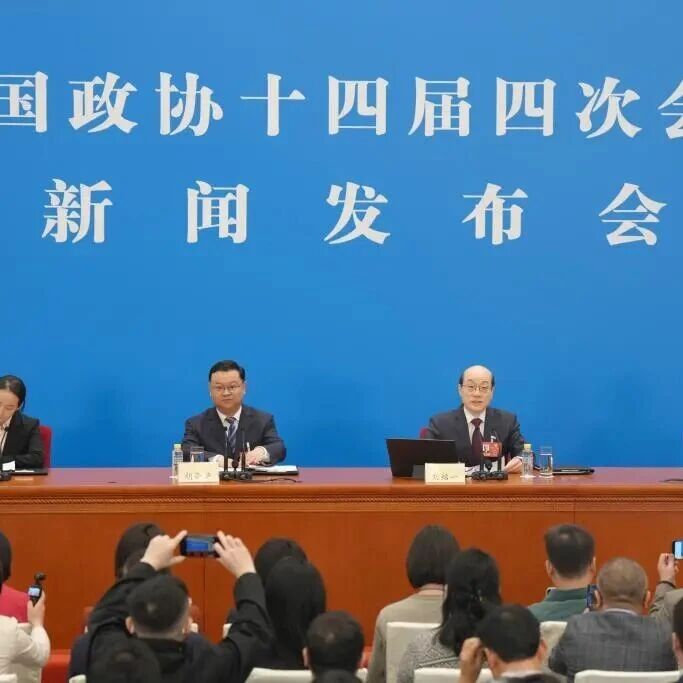
Group 1 - The core viewpoint of the article emphasizes that despite external uncertainties and domestic supply-demand imbalances, China's economy has shown resilience and vitality, achieving a total economic volume of 140 trillion yuan with a growth rate among the highest globally [1][2] - The article highlights that during the recent Spring Festival, domestic tourism consumption exceeded 803.4 billion yuan, an increase of 126.4 billion yuan year-on-year, indicating a robust market [1] - The article mentions that the Spring Festival travel volume is expected to reach 9.5 billion person-times, reflecting the dynamic nature of population mobility in China [1] Group 2 - The article outlines that the National Committee of the Chinese People's Political Consultative Conference (CPPCC) will focus on major theoretical and practical issues in economic and social development, holding quarterly macroeconomic analysis meetings to provide policy consultation [2] - It emphasizes the importance of enhancing macroeconomic governance efficiency and building a modern industrial system, as well as fostering a strong domestic market [2] - The article discusses the CPPCC's commitment to addressing new situations and challenges in reform and development, providing recommendations for promoting high-quality development and the construction of a unified national market [2][3]
他们,将影响你的生意和生活丨国家市场监管管理总局党组书记、局长罗文
Jing Ji Guan Cha Bao· 2026-02-25 11:48
Core Viewpoint - The article emphasizes the importance of balancing market vitality and regulation to enhance the efficiency of China's market, while also focusing on safety standards and quality infrastructure [1][2]. Group 1: Market Regulation and Competition - The market regulatory authorities aim to better coordinate the relationship between vitality and order, ensuring both "release vitality" and "manage well" to amplify the scale and agglomeration effects of the Chinese market [2]. - Continuous efforts will be made to deepen fair competition governance, eliminate administrative monopolies, and address "involution" competition [3]. - The 2026 market regulatory work meeting prioritizes the deepening of fair competition governance, indicating a strong focus on antitrust and anti-involution measures [5]. Group 2: Quality and Safety Standards - There is a push to enhance the quality of business entities, improve market access and exit systems, and strengthen the protection of intellectual property and trade secrets [3]. - The article highlights the importance of quality in promoting enterprise growth, supporting industrial development, and ensuring sustainable urban development [4]. Group 3: Platform Economy Regulation - The regulatory approach towards the platform economy is becoming more stringent, with authorities holding discussions with major internet platforms like Ctrip, Huolala, Taobao, and Meituan [6]. - The regulatory framework will focus on enforcing platform responsibilities, improving regulatory mechanisms, and enhancing enforcement capabilities to maintain fair competition [6]. Group 4: International Cooperation and Technological Support - There is an ongoing effort to deepen international exchanges and cooperation, enhancing the interconnectivity of rules and standards to support Chinese enterprises in global markets [4]. - The article mentions the need to strengthen the foundational aspects of market regulation, improve technical support, and advance smart regulatory capabilities [4].
镜观·回响丨新春购物车 满载经济新动能
Xin Hua Wang· 2026-02-24 09:47
Group 1 - The core message emphasizes the importance of domestic demand and building a strong domestic market as a key task for current economic work [1] - The Spring Festival consumption reflects a new trend in consumer behavior, showcasing a wider variety of quality products and improved services [3][4] - The celebration of the Spring Festival is marked by traditional activities and enhanced dining experiences, contributing to a richer festive atmosphere [4][9] Group 2 - The consumer choices during the Spring Festival have become more thoughtful and meaningful, with purchases reflecting personal connections and cultural significance [12] - The "new national subsidy" policy has stimulated consumer enthusiasm for upgrading products, particularly in electronics and home appliances [17] - The integration of cultural and tourism activities during the Spring Festival has led to a surge in local events and consumer engagement, with over 30,000 cultural tourism activities organized [21] Group 3 - The presence of international tourists has increased, indicating a growing trend of global consumers engaging with Chinese culture and products during the Spring Festival [26][27] - The evolving consumption landscape includes immersive experiences and diverse offerings, such as coffee culture and traditional performances, enhancing the overall festive experience [18][20]

坚持内需主导建设强大国内市场
Xin Lang Cai Jing· 2026-02-16 06:46
Core Viewpoint - The article highlights the upcoming publication of an important article by Xi Jinping in the 4th issue of the magazine "Qiushi," focusing on key tasks for current economic work [1] Group 1 - The article is based on a speech delivered by Xi Jinping at the Central Economic Work Conference on December 10, 2025 [1]
以城乡融合发展推进建设强大国内市场
Xin Lang Cai Jing· 2026-02-08 19:34
Core Viewpoint - The article emphasizes the importance of building a strong domestic market in China, which is increasingly seen as a strategic priority for economic development, while addressing the challenges of urban-rural disparities and the dual structure of the economy [1] Group 1: Urban-Rural Integration - Urban-rural integration can support the construction of a strong domestic market by optimizing the allocation of traditional factors like labor, land, and capital, as well as new factors like data [1] - A strong domestic market can drive rural industrial upgrades and promote the development of industries such as agricultural processing and rural tourism [1] Group 2: Unified Factor Market - Establishing a unified urban-rural factor market is essential to eliminate institutional barriers to factor flow, allowing for free movement and equal exchange of key production factors like land and labor [2] - Reforms in rural land systems and breaking down urban-rural household registration barriers are necessary to facilitate this process [2] Group 3: County-Level Coordination - Counties serve as critical nodes connecting urban and rural markets, and their coordination capabilities directly affect the efficiency and quality of market integration [3] - Infrastructure integration at the county level, including transportation and public services, is vital for reducing circulation costs and enhancing rural residents' consumption capacity [3] Group 4: Consumption and Investment Synergy - The synergy between consumption and investment is crucial for stimulating domestic demand and building a robust domestic market, with urban-rural integration providing ample opportunities [4] - Enhancing rural consumption through improved infrastructure and product offerings can unleash consumer potential, while targeted investments in rural infrastructure and services can boost employment and income [4] Group 5: Multi-Dimensional Support Mechanisms - A multi-faceted support mechanism is needed to sustain the drive for a strong domestic market, focusing on institutional innovation, industrial linkages, and digital economy empowerment [5] - Institutional reforms should aim to break down barriers to urban-rural integration and provide a fair competitive environment for market development [5] - The digital economy can enhance resource allocation efficiency and support the integration of urban and rural markets through improved digital infrastructure and new business models [6]