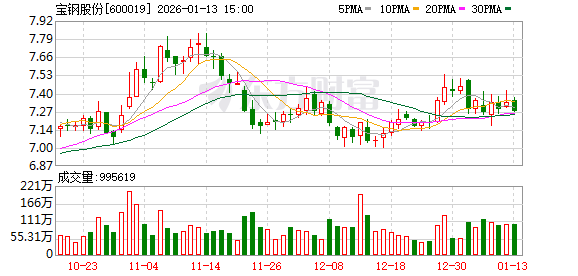
高炉AI大模型

Search documents
人民日报关注!福州增加体育消费空间:闲置地巧盘活,居民区新设篮球馆
Sou Hu Cai Jing· 2026-01-14 10:22
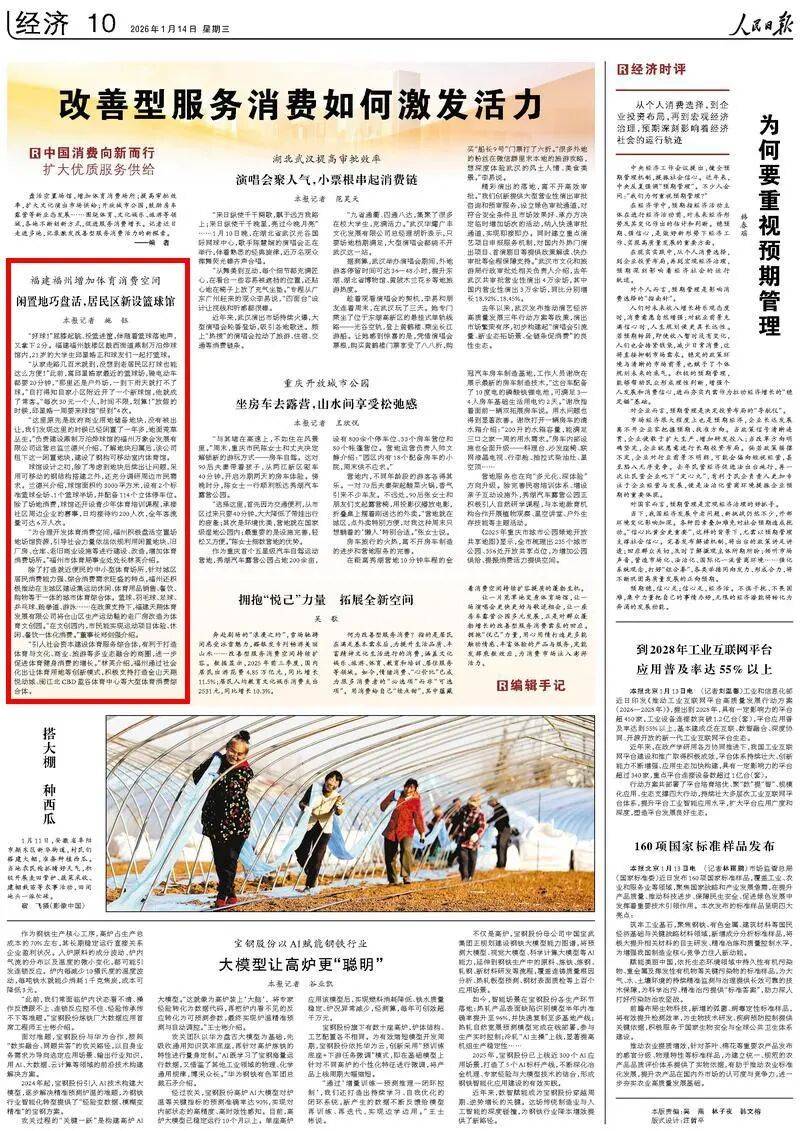
Group 1 - The article discusses how Fuzhou is enhancing sports consumption by utilizing idle land to create new sports facilities, such as basketball courts, to stimulate local economic activity [20][21] - The newly established basketball court in Fuzhou is designed to meet community needs, featuring a movable steel structure and accommodating various sports activities [21][22] - Fuzhou's sports bureau is actively promoting the development of urban sports complexes that integrate leisure, sports goods sales, dining, and shopping to cater to the diverse consumption needs of residents [22] Group 2 - The basketball court has a capacity to host around 200 visitors daily, with an expected annual footfall of approximately 60,000, indicating strong community engagement [21] - The initiative to repurpose idle land for sports facilities is part of a broader strategy to enhance sports consumption and promote a healthier lifestyle among residents [22] - Fuzhou is encouraging social capital investment in sports service complexes, which will help integrate sports with culture, commerce, and tourism, further boosting sports consumption [22]

宝钢股份以AI赋能钢铁行业 大模型让高炉更“聪明”
Ren Min Ri Bao· 2026-01-13 22:01
Core Insights - The core focus of the articles is on Baosteel's collaboration with Huawei to implement AI technologies in the steel production process, particularly in blast furnace operations, to enhance efficiency and reduce costs [2][3][4]. Group 1: AI Implementation in Steel Production - Baosteel's blast furnace accounts for approximately 70% of production costs, making its stable operation crucial for profitability [2]. - The introduction of AI technology aims to address challenges such as unclear furnace conditions and slow operational feedback, transforming expert experience into data-driven solutions [2][3]. - The AI model developed has achieved a 90% accuracy rate in predicting key indicators like furnace temperature, leading to reduced fuel consumption and improved iron quality [3]. Group 2: Model Development and Optimization - The AI model is based on Huawei's Pangu model, which integrates general knowledge with specific characteristics of blast furnace operations [3]. - Baosteel has implemented a "pre-trained base + downstream task fine-tuning" approach to shorten the model development cycle for different furnaces [3]. - A closed-loop system has been established for continuous learning and optimization, allowing the model to adapt and improve based on new data [3]. Group 3: Broader AI Applications in Steel Production - China Baowu Steel Group is planning to expand AI capabilities across various steel production processes, including raw material handling and quality analysis [4]. - Baosteel has successfully deployed nearly 300 AI applications by 2025, establishing five benchmark production lines that integrate metallurgical principles with AI technology [5]. - The integration of AI in traditional manufacturing has become a key factor for Baosteel's growth, providing new pathways for cost reduction and efficiency improvement in the steel industry [5].