
魔搭社区

Search documents
浙江将打造世界一流AI模型群,发力全域算力统筹
2 1 Shi Ji Jing Ji Bao Dao· 2026-02-04 09:08
Core Insights - Zhejiang aims to establish itself as a highland for artificial intelligence innovation, focusing on a multi-layered computing power service system and promoting the "AI+" initiative for comprehensive development in various sectors [1][2] Group 1: AI Development Plans - The "Fifteen Five" high-quality development plan emphasizes the creation of a world-class model group and an optimal open-source ecosystem [1] - The plan includes the establishment of AI application pilot bases, particularly in the healthcare sector, and the promotion of new healthcare service models integrating AI [1] - The province plans to enhance its AI capabilities by leveraging its unique county-level scenarios and deep participation from private manufacturing [1][2] Group 2: AI Industry Growth Targets - By 2027, Zhejiang aims for its AI terminal industry to achieve over 500 billion yuan in revenue, with significant advancements in key technologies and the cultivation of numerous high-growth enterprises [2] - The province will develop a comprehensive AI terminal industry system, focusing on consumer, industry, and future terminals, with a core cluster around Hangzhou and surrounding cities [2][3] Group 3: Key Technology Development - The plan highlights the importance of breaking through core technologies, including the development of intelligent operating systems, AI chip technologies, and critical components like sensors and actuators [3] - Emphasis is placed on advancing GPU, TPU, and RISC-V chips, as well as creating high-quality datasets for various industries [3]

绘制人工智能跑道,杭州展雄心
Xin Lang Cai Jing· 2026-01-23 13:44
Core Insights - Hangzhou aims to become the leading city in artificial intelligence innovation by 2026, with a focus on differentiated development and unique characteristics in AI [2][3] - The city has made significant progress in AI elements such as computing power, data, and models, establishing a strong foundation for future growth [3][5] - Hangzhou's government is committed to transforming its economy from a platform-based model to an AI-driven model during the 14th Five-Year Plan period [5][7] Group 1: Development Goals - The city plans to support the iteration and upgrade of major AI models like Alibaba's Qianwen and DeepSeek, and aims to create an international first-class open-source community [5][7] - By 2030, Hangzhou targets to cultivate over three internationally top-level open-source foundational models and achieve over 600 billion yuan in revenue from the core AI industry [7] Group 2: Legislative and Institutional Support - Hangzhou has introduced local regulations to promote the development of embodied intelligent robots, marking a significant step in institutional innovation for AI [3][5] - The government emphasizes the importance of creating systems for data governance, legal frameworks, and international cooperation to support AI development [3] Group 3: Community and Ecosystem Engagement - The city is actively engaging with enterprises by providing support for research and development through initiatives like computing power vouchers and legislative guarantees for embodied intelligence [5][8] - Hangzhou is also focusing on enhancing educational opportunities in AI for the elderly, reflecting its commitment to inclusive growth and community engagement [8]

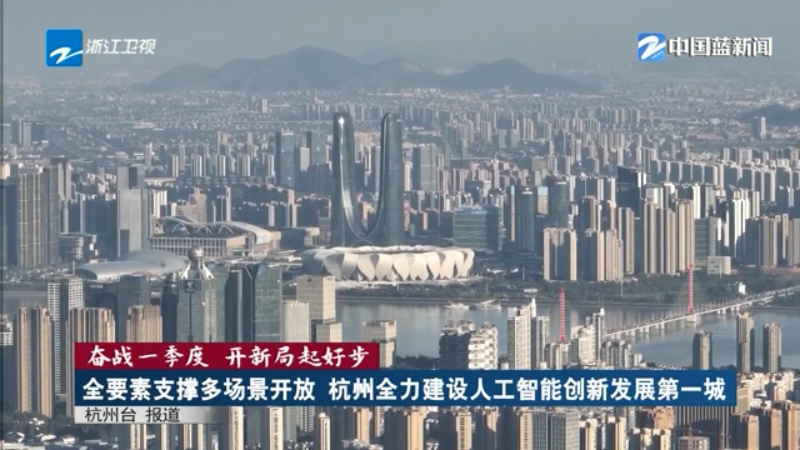
奋战一季度 开新局起好步 | 全要素支撑多场景开放 杭州全力建设人工智能创新发展第一城
Xin Lang Cai Jing· 2026-01-21 12:37
Core Perspective - Hangzhou aims to become the leading city in artificial intelligence innovation and development, with a focus on high-level technological self-reliance and new development momentum [1][11]. Group 1: Government Initiatives - The Hangzhou government plans to support the construction of scientific foundational models at the Zhijiang Laboratory and develop an international open-source community [5][15]. - A total of 100 new open data directories will be added, and a high-quality data set intelligent labeling base will be established [5][15]. - The Xixi Data Collaboration Innovation Center for the financial industry has been launched, providing AI innovation companies with access to public data through a data processing platform [5][17]. Group 2: AI Industry Development Goals - By 2027, Hangzhou aims for the artificial intelligence industry scale to exceed 420 billion yuan, with the AI terminal industry scale reaching 300 billion yuan [9][21]. - The city plans to implement the "Hangzhou AI+" scenario open demonstration project, which will open 200 benchmark scenarios in the AI field [7][17]. Group 3: Collaboration and Demand Matching - The newly established scenario innovation center has released two lists: the "Scenario Opportunity List" with 292 government and enterprise demands, and the "Scenario Capability List" with 362 enterprise technologies [7][19]. - The industry map and precise enterprise profiling will facilitate accurate matching of supply and demand [19].
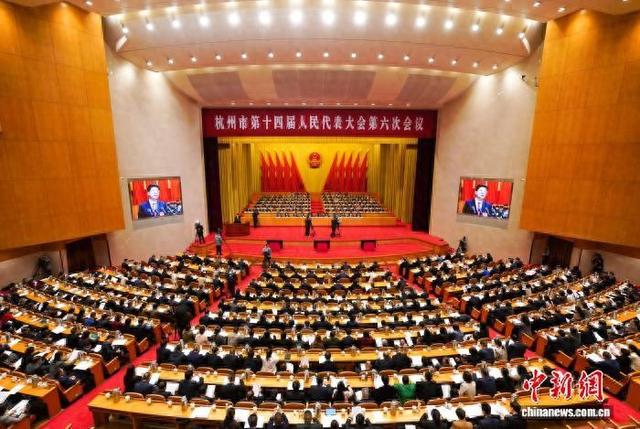
西湖区“新年第一会”带来什么新期待?
Mei Ri Shang Bao· 2026-01-04 22:18
Core Insights - The West Lake District has showcased its achievements in the technology sector over the past year and outlined a development blueprint for the upcoming year, focusing on technological innovation [1] - The district emphasizes the construction of the "296X" advanced manufacturing cluster, concentrating on three main industries: artificial intelligence, commercial aerospace, and life health [1] Group 1 - The West Lake District has established a comprehensive support system for enterprises, providing assistance from the initial innovative idea to technology research and development, result transformation, and industrialization [1] - The district has facilitated partnerships between enterprises and high-level platforms, gathering 25 national key laboratories, 72 provincial key laboratories, and 7 provincial new-type research institutions [2] - A new action plan for "Innovative West Lake" has been released, aiming to enhance innovation capabilities through policy support, talent cultivation, and research breakthroughs [2] Group 2 - The district has published a list of application scenario opportunities, which includes 10 scenarios covering artificial intelligence, life health, new consumption, and infrastructure [2] - Since the establishment of the scenario innovation center, the West Lake District has released 43 application scenarios and has organized over 340 collaborative projects benefiting more than 500 enterprises and organizations [2]
杭州问计AI新生态 争创“全国第一城”
Mei Ri Shang Bao· 2025-12-30 23:29
Group 1 - The core focus of Hangzhou's "15th Five-Year Plan" is to establish itself as the leading city for artificial intelligence innovation in China, with AI being a key driver for urban development [1] - A recent meeting in Xihu District gathered enterprises, experts, scholars, and government officials to outline a clear development logic for AI, aiming to create a replicable "Hangzhou model" for AI development [1] Group 2 - The "Magic Community" in Xihu District has been established as a significant initiative to build an open-source ecosystem, with the goal of creating a globally influential open-source brand [2] - The newly opened developer center spans over 10,000 square meters and includes various facilities such as an AI experience area, seminar rooms, and public service platforms to support the entire innovation chain from idea to product [2] Group 3 - The rise of "one-person companies" is facilitated by AI technology, allowing individuals to efficiently manage projects that previously required full teams, thus lowering costs and increasing operational freedom [4][5] - The "Magic Community" has attracted nearly fifty small teams, with about half consisting of 1 to 3 members, fostering a collaborative environment for innovation [4] Group 4 - Xihu District is planning targeted policies to support "super individuals" in entrepreneurship, including special subsidies and computing power vouchers to stabilize their initial steps [6] - Feedback from industry professionals highlights the need for high-quality data annotation and the challenges of digital operations, indicating a demand for skilled talent and supportive policies [7] Group 5 - The overall strategy for Hangzhou is shifting from isolated technological breakthroughs to a systematic ecological competition, aiming to enhance the global influence of its open-source ecosystem and produce internationally leading AI products and standards [7][8]
魔搭社区首届AI开源公益赛事落幕,近800个团队455个创新作品参赛
Jing Ji Guan Cha Wang· 2025-12-30 11:58
Core Insights - The first "Small Opportunities" AI Open Source Public Welfare Innovation Challenge, co-hosted by Modao Community and Alibaba Public Welfare, showcased 455 AI innovation projects from nearly 800 teams in just three months [1][2] - The event highlighted the application of AI in addressing social issues, particularly in rural education, elderly care, autism support, and accessibility for disabled individuals [1][3] Group 1: Event Overview - The challenge featured four main tracks: AI Teaching Assistant for Rural Classrooms, Autism Children's Picture Book LoRA Training, AI Innovations for Elderly Living, and Accessibility Innovations [2] - A total of 42 projects reached the finals, with 16 winning awards, including initiatives like "Smart Drawing Science Popularization" and "AI Memoirs for the Elderly" [1][2] Group 2: Participant Contributions - Participants included developers, creators, students, and individuals from disabled communities, showcasing diverse backgrounds and experiences [1][3] - Notable projects included a traffic light recognition model tailored for visually impaired individuals and 14 picture books designed to enhance attention for children with autism [2][3] Group 3: Support and Resources - Modao Community provided 100 hours of free GPU computing power and access to over 130,000 open-source models and 5,500+ MCP services for participants [3] - The community aims to create an effective experimental platform for independent developers, startups, public welfare organizations, and students, fostering collaboration and innovation [3][4] Group 4: Community Impact - Modao Community, as China's largest AI open-source community, focuses on lowering AI development barriers and promoting open-source accessibility, serving over 20 million users globally [4] - The community operates under the "Model as a Service" (MaaS) concept, offering a comprehensive suite of services for AI developers across various fields [4]
当“魔搭”从云端落地:代码之外,它还为杭州搭起什么?
Hang Zhou Ri Bao· 2025-12-05 02:33
Core Insights - The establishment of the "Mota Community (Hangzhou) Developer Center" in the Zijin Port Science and Technology City is becoming a hub for AI innovators, facilitating the transformation of online resources into verifiable innovation projects through face-to-face interactions [1][2]. Group 1: Talent and Industry Connection - The Developer Center aims to convert weak connections in virtual communities into strong collaborations in the real world, enhancing communication efficiency and fostering long-term partnerships among developers [2]. - The center offers flexible workspaces at a low monthly rent of 300 yuan, with additional government subsidies for AI developers, supporting the creation of a talent-rich environment [2]. - The center is part of West Lake District's initiative to cultivate a "highland for intelligent talent," providing annual talent quotas and housing subsidies linked to community contributions [2]. Group 2: Open Source and Application Integration - The "Mota Community" aggregates global developers and models, focusing on bridging the gap between technology and real-world applications through the establishment of a closed loop from "technical open source" to "scene open source" [6]. - The center serves as a critical venue for implementing the "two lists" of AI scene opportunities and capabilities, facilitating the matching of technology with market needs [6][7]. - The center promotes a shift from isolated use cases to collective demonstrations, enabling developers to find not only technical partners but also market opportunities [7]. Group 3: Ecosystem Development - The Developer Center fosters an environment for interdisciplinary collaboration, encouraging connections between software and hardware developers to complete the innovation chain [8]. - A comprehensive ecosystem is being built, integrating foundational models, product partners, and the Mota Community, supported by various financial and policy incentives to lower entrepreneurial barriers [8]. - Upcoming events, such as the "Cloud Valley Cup 2025 AI Application Innovation and Entrepreneurship Competition," align with future industry directions, promoting the transition of innovative projects into industrial applications [8].

杭州的野心不止于成为“下一个硅谷”
AI研究所· 2025-11-27 09:04
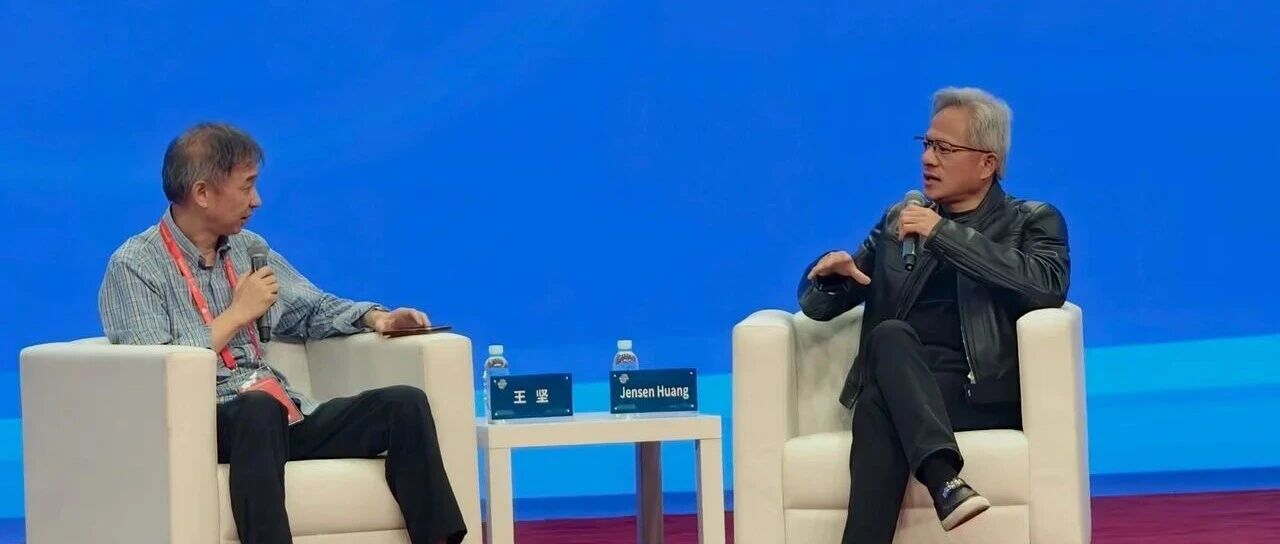
Core Viewpoint - Hangzhou is being positioned as China's Silicon Valley, particularly in the AI open-source ecosystem, as highlighted by NVIDIA founder Jensen Huang's remarks and the establishment of the "Magic Community" [1][3][4]. Group 1: Policy Support - Hangzhou has implemented comprehensive policies to support AI open-source initiatives, including a "10 billion computing power voucher" and subsidies covering up to 60% of costs for companies purchasing computing power and model services [6][7]. - The city has introduced an "AI open-source policy package" that includes one-time rewards for open-source projects, subsidies for technology talent, and potential support for office rent and renovations [10][11]. - The government prioritizes the use of open-source solutions in public projects, creating a closed-loop system that encourages the practical application of open-source technologies [12][11]. Group 2: Ecosystem Development - Hangzhou has established a complete ecosystem for AI open-source, integrating university research, enterprise transformation, and community collaboration [13]. - Key institutions like Zhejiang University and Westlake University contribute to research, while companies like Alibaba and DeepSeek facilitate the transition of research into marketable technologies [13][14]. - The "Magic Community" has attracted over 20 million users and hosts more than 120,000 open-source models, demonstrating a vibrant community that supports developers [15]. Group 3: Unique Genetic Traits - Hangzhou's approach to openness is reflected in its historical decision to make West Lake a free tourist attraction, which is now mirrored in its AI open-source strategy [15]. - The "Magic Community" operates on a model that allows creators to upload their models independently, fostering a collaborative environment for developers [15]. - As of mid-October 2025, the community has accumulated over 12,000 open-source models and 5,500+ services, with 95% of applications developed by individual developers [15]. Group 4: Strategic Insights - Hangzhou's unique strategy of "policy empowerment + scenario-driven + ecosystem collaboration" sets it apart from other cities and offers a model for global AI open-source development [17][18]. - The city focuses on practical applications of AI, addressing real-world problems rather than solely pursuing technological breakthroughs [24][25]. - The collaborative efforts between government and enterprises create a supportive environment for entrepreneurs, enhancing the attractiveness of Hangzhou for talent and innovation [20][23]. Conclusion - Hangzhou aims to build a more inclusive and practical AI ecosystem through open-source initiatives, moving beyond merely replicating Silicon Valley's success to carve out its own distinctive path [27].
“魔搭社区”(杭州)开发者中心正式启用
Hang Zhou Ri Bao· 2025-11-25 02:36
Core Insights - The establishment of the "Mota Community (Hangzhou) Developer Center" marks a significant step in creating a physical space for over 20 million global open-source developers, enhancing Hangzhou's position as a hub for AI industry innovation [1][2][4] Group 1: Development and Infrastructure - The Developer Center spans over 10,000 square meters and includes various functional areas such as AI application experience zones and seminar rooms, facilitating a full-cycle process from idea to product [3] - The center has introduced eight public service platforms, including data service and AI hardware development, to support developers [3] - The center aims to lower entrepreneurial barriers by offering shared office spaces at a monthly rent of only 300 yuan, with additional benefits for contributors to the Mota Community [3][5] Group 2: Collaboration and Support - The collaboration between the government and Alibaba has led to a new operational model that supports AI ecosystem development, focusing on open-source models, application scenarios, and talent cultivation [4] - The local government has committed to investing 100 million yuan annually starting in 2024 to support industry development through various innovative policies [4][5] Group 3: Ecosystem and Talent Development - The Developer Center serves as a bridge connecting academic research capabilities and enterprise technology, promoting deep integration of technological and industrial innovation [6] - The center has attracted over 50 upstream and downstream enterprises, forming a comprehensive industrial ecosystem covering chip design, software development, and information security [7] - The diverse developer community includes students, professionals, and tech enthusiasts, fostering continuous innovation within the center [7]
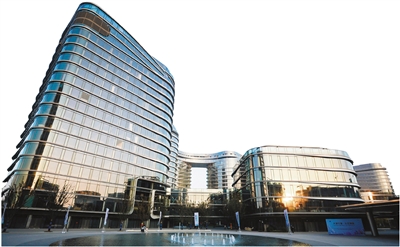
AI“搭子”在线下有了“家” “魔搭社区”(杭州)开发者中心正式启用
Mei Ri Shang Bao· 2025-11-22 22:23
Core Insights - The "Magic Community" has become the largest open-source model community in China, gathering 1.2 million models and 20 million developers since its establishment in 2022 [1] - The newly opened developer center in Hangzhou aims to provide a physical space for developers to enhance collaboration and technical exchanges beyond online platforms [1] - The center spans over 10,000 square meters and includes various functional areas such as AI application experience zones, seminar rooms, and a startup community [1] - The center's shared office space, Y/OUR SPACE, offers affordable rental options, significantly reducing startup costs for entrepreneurs [1] - The center operates under a new model of government-enterprise collaboration, with support from the West Lake District and Alibaba Group to foster development for developers and enterprises [2] - The goal is to attract over 300 companies and developers within a year, establishing the cloud valley center as a prominent AI+ industry innovation space in Hangzhou and beyond [2]