鹏华国证粮食产业ETF

Search documents
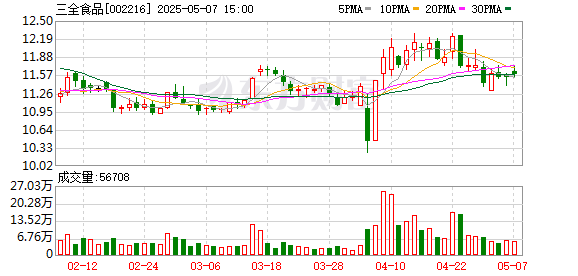
鹏华基金举办走进三全食品活动 多方共议粮食安全与ETF发展
Zheng Quan Ri Bao· 2025-05-07 12:41
Group 1 - The core viewpoint of the articles emphasizes the importance of understanding a company's core competitiveness and industry trends through direct engagement with management and employees, rather than solely relying on data and reports [2] - The event organized by Penghua Fund at the Shenzhen Stock Exchange involved a deep exploration of Sanquan Foods, the first listed company in China's frozen food industry, highlighting its innovative growth model driven by product, channel, technology, and management innovations [2][3] - Sanquan Foods is actively developing new product lines to cater to changing consumer trends, including tea-flavored and coconut latte tangyuan for younger consumers, and health-oriented products for older consumers, while also expanding its B2B market for high-quality pre-prepared ingredients [2][3] Group 2 - In 2023, Penghua Fund launched the first ETF focused on the grain industry, tracking the National Grain Industry Index and investing in listed companies related to the grain sector, which aligns with the national "food security" strategy [3] - The initiative aims to create an ecosystem involving exchanges, listed companies, fund companies, media, and investors, enhancing the understanding of the food industry as a critical component of national food security and consumer satisfaction [3] - Zhang Yuxiang from Penghua Fund highlighted investment opportunities in the domestic consumption sector, suggesting a potential recovery in the consumer market driven by fiscal and consumption stimulus policies, with a focus on sectors like liquor, beer, dairy, snacks, compound seasonings, and frozen foods [4]


ETF基金周报丨半导体相关ETF领涨,机构看好半导体国产创新良机
2 1 Shi Ji Jing Ji Bao Dao· 2025-04-14 03:35
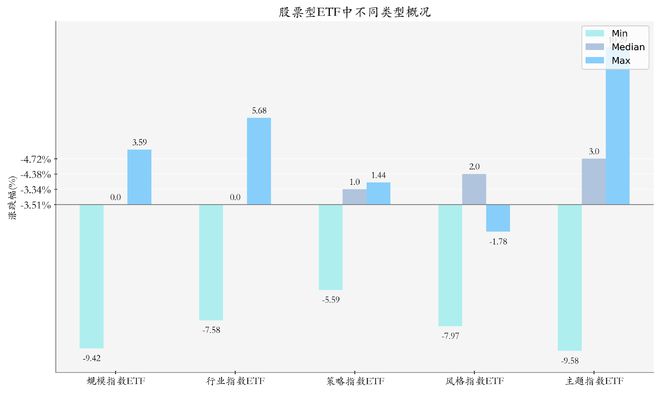
Market Performance - The Shanghai Composite Index fell by 3.11% to 3238.23 points, while the Shenzhen Component Index dropped by 5.13% to 9834.44 points, and the ChiNext Index decreased by 6.73% to 1926.37 points during the week of April 7-11 [1] - In contrast, major global indices showed mixed results, with the Nasdaq Composite rising by 7.29%, the Dow Jones Industrial Average increasing by 4.95%, and the S&P 500 up by 5.7%. In the Asia-Pacific region, the Hang Seng Index fell by 8.47%, and the Nikkei 225 decreased by 0.58% [1] ETF Market Performance - The median weekly return for stock ETFs was -4.04%. Among different categories, the Southern Deep Shenzhen 100 ETF had the highest return at 3.59%, while the Penghua National Grain Industry ETF led the industry index ETFs with a return of 5.68% [1] - The top five performing stock ETFs included the Huaxia Shanghai Stock Exchange Science and Technology Innovation Board Semiconductor Materials Equipment Theme ETF (10.29%), and the Huaxia Shanghai Stock Exchange Science and Technology Innovation Board Artificial Intelligence ETF (10.03%) [3][4] ETF Liquidity - The average daily trading volume for stock ETFs increased by 84.7%, and the average daily trading amount rose by 96.4%, with a turnover rate increase of 0.24% [1] ETF Fund Flows - The top five stock ETFs by fund inflow were the Huaxia Shanghai 50 ETF (12.18 billion), the Guotai National Defense ETF (4.24 billion), and the Guangfa National A500 ETF (2.45 billion) [7] - Conversely, the top five stock ETFs by fund outflow included the Huaxia Shanghai Stock Exchange Science and Technology Innovation Board 50 Component ETF (-11.79 billion) and the E Fund Shanghai and Shenzhen 300 ETF (-5.99 billion) [8] ETF Financing and Margin Trading - The financing balance for stock ETFs decreased from 45.5487 billion to 44.765 billion, while the margin trading volume increased from 2.1836 billion to 2.2215 billion [9] ETF Market Size - The total market size for ETFs reached 39,192.23 billion, with stock ETFs accounting for 29,065.73 billion, representing 74.2% of the total ETF market size [13][15] Institutional Insights - CITIC Securities suggests focusing on two investment logic paths in the semiconductor sector: low domestic production rates and local wafer manufacturing, as domestic analog chip companies may benefit from increased tariffs on chips made by U.S. wafer factories [15] - Galaxy Securities indicates that U.S. tariff policies may pressure companies reliant on the U.S. market in the short term, but long-term benefits may arise for companies focusing on domestic innovation and self-sufficiency in the semiconductor industry [16]


突破4万亿在即!公募如何应对这个难题?
证券时报· 2025-04-13 00:32
Core Viewpoint - The domestic ETF market is experiencing explosive growth, approaching a scale of 4 trillion yuan, but faces increasing homogenization and competition, prompting some public funds to focus on "first-mover" differentiated products to capture market opportunities [1][2][9]. Group 1: Market Dynamics - The ETF market has seen a surge in new issuances, with over ten public funds competing, leading to intense competition where smaller funds struggle to keep up with larger ones [2]. - Major public funds dominate key broad-based and thematic ETF tracks, while some are exploring niche markets and innovative strategies to differentiate themselves [2][6]. Group 2: Innovative Product Launches - Several "first" ETFs have been launched this year, including the first General Aviation ETF and the first Satellite ETF, both by Yongying Fund, indicating a trend towards innovative product offerings [3]. - Other notable launches include the first ETF linked to a high-dividend strategy and the first ETF focused on the new energy sector in the ChiNext market, showcasing the trend of differentiation among leading public funds [3][4]. Group 3: Growth of Existing Products - The first convertible bond ETF launched by Bosera Fund has seen its scale grow from 6.284 billion yuan to 38.622 billion yuan in just one year, highlighting the potential for significant growth in innovative ETFs [4]. - The unique policy financial bond ETF from Fuguo Fund has also experienced substantial growth, increasing from approximately 7.224 billion yuan to over 43.9 billion yuan within a year [5]. Group 4: Competitive Advantages of "First-Mover" ETFs - "First-mover" ETFs can quickly capture market share and build scale, as seen with the first gold industry ETFs that have gained significant traction since their launch [6]. - These products can create brand loyalty and recognition due to their unique strategies, allowing public funds to compete effectively in a crowded market [7]. Group 5: Challenges Ahead - Despite the advantages, public funds face challenges in nurturing these "first-mover" ETFs, including high initial marketing costs and the risk of low liquidity and strategy obsolescence [8]. - The competitive landscape is shifting towards a focus on existing products, with later entrants potentially leveraging cost advantages to challenge smaller funds [9].

“关税风暴”席卷A股,三大股指跌超7%,公募券商如何看后市
Bei Jing Shang Bao· 2025-04-07 11:14
Core Viewpoint - The A-share market experienced a significant decline on April 7, attributed to the global market turmoil triggered by U.S. President Trump's announcement of "reciprocal tariffs," with major indices dropping over 7% [1][3][4]. Market Performance - On April 7, the Shanghai Composite Index fell by 7.34% to close at 3096.58 points, while the Shenzhen Component Index and the ChiNext Index dropped by 9.66% and 12.5%, respectively [3][4]. - Major indices such as the CSI 300 and the CSI 500 also saw declines of 7.05% and 9.55%, closing at 3589.44 points and 5845.5 points [4]. Market Sentiment and Analysis - The market sentiment was notably low due to the impact of falling Asian and global markets during the Qingming Festival, leading to a significant drop in risk appetite [5]. - Analysts from various institutions believe that despite the short-term volatility, the Chinese capital market still exhibits resilience against declines, with potential for recovery driven by domestic demand and policy support [6][7]. Investment Strategies - Investment strategies are shifting towards defensive allocations, with a focus on consumer and dividend stocks, which are viewed as "certain" assets amidst the uncertainty created by tariffs [8][9]. - Analysts suggest that the current environment may present long-term investment opportunities, particularly in sectors benefiting from domestic consumption and government stimulus measures [9][10]. Future Outlook - The overall sentiment indicates that while the immediate impact of tariffs may pose challenges, the long-term outlook for quality Chinese assets remains positive, with potential for valuation recovery and capital inflows [10].