麻酱味魔芋素毛肚

Search documents
2026零食行业专题报告:鸣鸣很忙港股上市,关注产业链投资新趋势
Sou Hu Cai Jing· 2026-02-07 02:11
Group 1 - The core event is the planned IPO of the snack brand "Ming Ming Hen Mang" on January 28, 2026, which will become the first stock of its kind in the Hong Kong market, with a global offering of 14.1 million shares and expected net fundraising of over HKD 3 billion, leading to a market capitalization of approximately HKD 50 billion [1][8] - The market response has been enthusiastic, with a subscription rate exceeding 1500 times during the offering phase, and major cornerstone investors including Tencent, Temasek, and BlackRock collectively subscribing for HKD 1.5 billion [1][8] - This IPO marks a significant milestone in the snack retail industry, indicating a shift from rapid expansion to a focus on quality improvement and operational efficiency [1][4] Group 2 - The snack retail industry has experienced rapid growth, with the number of traditional snack retail stores increasing from about 8,000 in 2022 to over 45,000 by mid-2025, indicating a potential long-term opening space of approximately 74,000 stores nationwide, with about 20,000 additional stores possible [2][9] - As the market matures, companies are transitioning from merely increasing store numbers to enhancing operational efficiency and profitability, entering a phase of "high-quality growth" [2][4] - Leading companies like "Ming Ming Hen Mang" have improved their adjusted net profit margins from 2.3% in 2023 to 3.9% in the first three quarters of 2025, driven by reduced subsidies to franchisees and ongoing optimization of product categories [2][12] Group 3 - Developing proprietary products is becoming a key strategy for companies to enhance gross margins and brand differentiation, with over 30% of SKUs at "Ming Ming Hen Mang" being custom products developed in collaboration with suppliers [3][23] - Both "Ming Ming Hen Mang" and Wanchen Group have launched their own brand product lines, although the current sales proportion of these brands remains in the single digits, indicating significant room for growth compared to leading retailers in domestic and international markets [3][23] - Post-IPO, companies plan to allocate part of the raised funds towards product development and supply chain enhancement to further build their proprietary product systems [3][25] Group 4 - The structural changes in the industry are positively impacting upstream supply chain companies, as snack retail stores expand their offerings to include dairy, baked goods, and frozen foods, creating new growth opportunities for related suppliers [3][27] - The shift towards proprietary product development among downstream companies is leading to a more collaborative relationship with suppliers, moving from traditional trade procurement to joint product development and customization [3][27] - Manufacturers with strong R&D capabilities and the ability to respond flexibly to channel customization demands are expected to gain more orders and market share as the industry evolves [3][27]

零食行业专题报告:鸣鸣很忙港股上市,关注产业链投资新趋势
Sou Hu Cai Jing· 2026-02-01 06:56
Group 1 - The core viewpoint of the report is that the snack retail industry is entering a new development phase, with the upcoming IPO of "Ming Ming Hen Mang" on January 28, 2026, expected to enhance market attention towards the snack sector [1][9][10] - "Ming Ming Hen Mang" plans to issue 14.1 million shares, accounting for approximately 7% of the total, with expected net proceeds exceeding HKD 3 billion and a market capitalization of around HKD 50 billion [1][9][10] - The market response has been positive, with eight cornerstone investors collectively subscribing for HKD 1.5 billion, including Tencent, Temasek, and BlackRock, and the subscription rate exceeding 1500 times during the offering phase [1][9][10] Group 2 - The downstream sector is shifting from rapid expansion to high-quality growth, with revenue growth expected to be sustainable and profitability improving [2][11] - The number of traditional snack retail stores in China is projected to increase from 8,000 in 2022 to over 45,000 by mid-2025, with a total potential of approximately 74,000 stores, indicating an additional growth of over 20,000 stores [2][11] - Profitability is expected to continue improving, with adjusted net profit margins for "Ming Ming Hen Mang" rising from 2.3% to 3.9% and for "Wan Chen" from -1.6% to 4.4% between 2023 and the first three quarters of 2025, driven by reduced store opening subsidies and adjustments in product mix [2][11][13] Group 3 - The upstream sector is benefiting from the expansion of product categories and the development of private label products, creating opportunities for supply chain companies [3][26] - Downstream stores are extending their product categories to include dairy, baking, and frozen foods, which is expected to benefit upstream supply chain companies, particularly mid-tier brands with significant revenue elasticity [3][26] - The relationship between upstream and downstream is evolving from simple trade to deep product collaboration, favoring manufacturers with strong product development and customization capabilities [3][26] Group 4 - Investment recommendations highlight the potential in the snack retail industry, suggesting a shift from rapid expansion to a focus on high-quality growth, with "Wan Chen" recommended and "Ming Ming Hen Mang" to be closely monitored [32] - Upstream opportunities are identified as downstream stores expand into new categories like dairy and baking, with recommendations for companies such as "Xin Dairy" and "Li Gao Foods" [32] - The report emphasizes the importance of developing private label products, with recommendations for companies like "Jin Zai Foods" and attention to "Yan Jin Pu Zi," "Wei Long Mei Wei," and "You You Foods" [32]

【银河食饮刘光意】专题研究丨鸣鸣很忙港股上市,关注产业链投资新趋势
Sou Hu Cai Jing· 2026-01-28 00:30
Group 1 - The core viewpoint is that Ming Ming Hen Mang plans to list on the Hong Kong Stock Exchange on January 28, becoming the first stock in the "bulk snack" sector, with a global offering of 14.1 million shares, expected to raise over HKD 3 billion, and a market capitalization of approximately HKD 50 billion [1][7] - The market response has been positive, with eight cornerstone investors subscribing a total of HKD 1.5 billion, including Tencent, Temasek, and BlackRock, and the latest subscription multiple exceeding 1500 times [1][8] Group 2 - Downstream growth is shifting from rapid expansion to high-quality growth, with traditional store types still having significant opening space, projected to reach nearly 50,000 stores by 2025, with a total potential of about 74,000 stores [2][9] - Profitability is expected to continue improving, with adjusted net margins for Ming Ming Hen Mang increasing from 2.3% to 3.9% from 2023 to the first three quarters of 2025, driven by reduced opening subsidies and category structure adjustments [2][13] - New store formats are supporting store expansion and single-store improvement, with both Ming Ming Hen Mang and Wan Chen planning to open discount supermarket formats by 2025, currently accounting for less than 20% of new store types [2][17] - The development of private label products is boosting revenue and gross margins, with both companies planning to increase their private label revenue share, currently in the single digits, compared to 20-30% for similar brands [2][19] Group 3 - Upstream opportunities are emerging as downstream stores expand into categories like dairy, baking, and frozen foods, benefiting related upstream supply chain companies, particularly mid-tier brands with significant revenue elasticity [3][24] - The focus on developing private label products is leading to market share differentiation among supply chain companies, with manufacturers that have strong product development and customization capabilities likely to gain market share [3][26] Group 4 - Investment recommendations highlight the positive outlook for the bulk snack industry, emphasizing the transition to high-quality growth and the potential for upstream supply chain companies to benefit from downstream category expansions and increased private label product shares [4][28]
盐津铺子2024年财报:营收净利双增,但毛利率下滑引关注
Jin Rong Jie· 2025-04-23 08:34
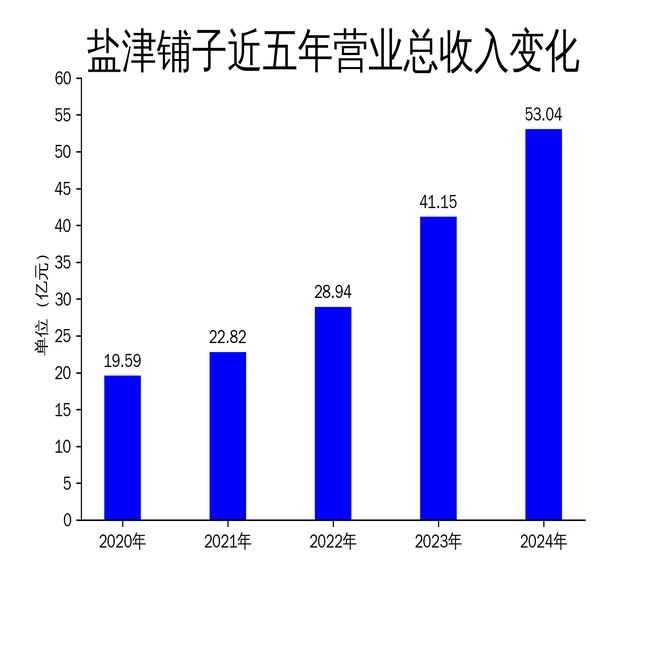
Core Insights - Salted Fish Shop (盐津铺子) reported a revenue of 5.304 billion yuan for 2024, representing a year-on-year growth of 28.89%, and a net profit of 640 million yuan, up 26.53% year-on-year [1][7] - Despite the double-digit growth in revenue and net profit, the decline in gross margin and underperformance in certain product categories raised market concerns [1][4] Financial Performance - The overall gross margin decreased from 33.54% in 2023 to 30.69% in 2024, a decline of 2.85 percentage points [4] - The drop in gross margin was primarily due to rising raw material costs and insufficient production efficiency improvements, particularly in spicy marinated snacks and baked potato products, which saw gross margin declines of 4.06 and 2.04 percentage points respectively [4] Product Performance - The company focused on six core product categories: spicy marinated snacks, baked potato products, deep-sea snacks, egg snacks, dried fruits and nuts, and konjac jelly pudding [4] - Egg snacks and konjac snacks performed exceptionally well, generating revenues of 580 million yuan and 838 million yuan, with year-on-year growth rates of 81.87% and 76.09% respectively [4] Brand and Channel Development - Significant achievements were made in brand operations and channel expansion, with the "Big Demon King" brand's sesame-flavored konjac product achieving over 1 billion yuan in sales [5] - The "Egg Emperor" quail eggs successfully entered Sam's Club, selling over 200,000 units for six consecutive months, becoming a star product in the egg snack category [5] - The company established a robust multi-channel layout, including direct sales to large chain supermarkets, distributors, and e-commerce, resulting in a 39.95% year-on-year revenue growth in the e-commerce channel [5] International Market Expansion - The company accelerated its overseas market expansion in 2024, successfully entering the Southeast Asian market with konjac products, achieving overseas sales of 62.7361 million yuan [6] - Challenges remain in the overseas market, including local competition, cultural differences, and supply chain localization issues [6] - Plans are in place to invest in a production base in Thailand to further promote overseas business expansion, although short-term financial contributions from this market are expected to be limited [6]