龍鷹一号

Search documents
芯擎智驾芯片,正式量产
半导体芯闻· 2025-12-26 10:12
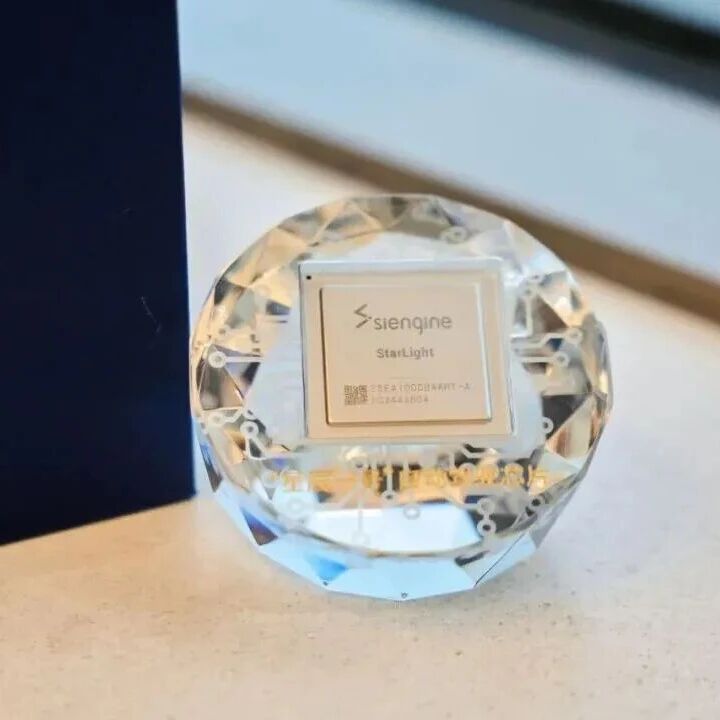
Core Viewpoint - The successful mass production of the 7nm advanced driver assistance chips "Star One" (AD1000) and "Star One Lite" (AD800) by ChipQing Technology marks a significant milestone, enabling the company to provide comprehensive, platform-based solutions for smart cockpit and smart driving [1][5]. Group 1: Product Development - "Star One" competes directly with the most advanced international smart driving products, surpassing them in CPU performance, ISP processing capabilities, NPU, and local storage capacity [3]. - The chip features a 7nm multi-core heterogeneous architecture, achieving up to 512 TOPS per chip and a maximum output of 2048 TOPS through multi-chip collaboration, with LPDDR5 memory bandwidth reaching 204 GB/s [4]. - "Star One" includes a high-performance security island for strong isolation and reliability in autonomous driving data paths, supporting EVITA Full safety standards and integrating hardware security modules [4]. Group 2: Market Position and Future Plans - ChipQing Technology is currently the only domestic supplier capable of mass-producing 7nm smart cockpit SoCs, with its previous smart cockpit chip "Dragon Eagle One" already deployed in numerous mass-produced vehicle models [4]. - The CEO of ChipQing Technology, Dr. Wang Kai, emphasized the growing demand for high-performance, high-security automotive-grade chips and the company's commitment to enhancing collaboration with industry partners for algorithm optimization and system integration [5].

奇瑞汽车开启自研芯片计划,开出13万月薪揽才
雷峰网· 2025-03-25 10:09
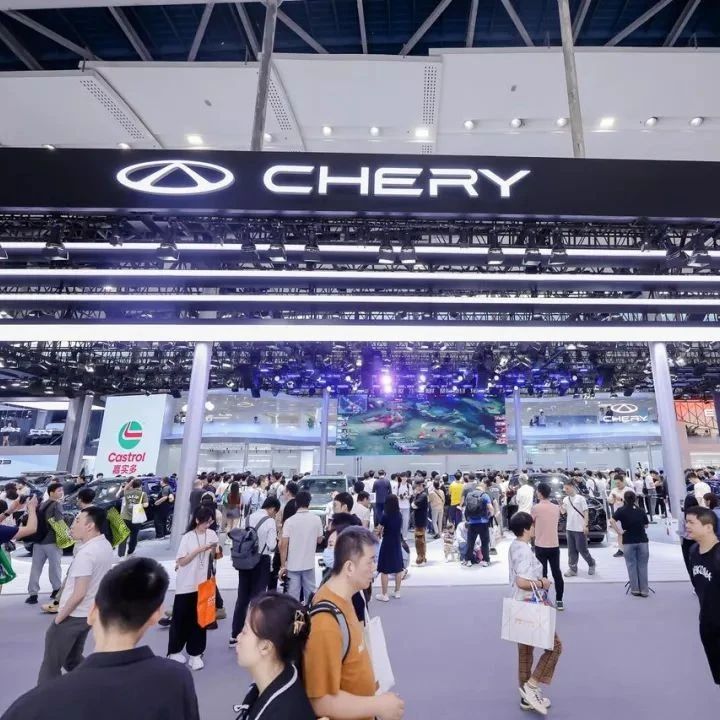
Core Viewpoint - Chery Automobile is initiating a self-research chip program to develop its own vehicle MCU and intelligent driving SoC, aiming to enhance its competitiveness in the smart vehicle sector [2][4]. Group 1: Self-Research Chip Initiative - Chery's self-research chip plan is in its early stages, with recruitment for NPU design architects and senior chip design engineers underway [3][4]. - The company aims to transition from a traditional automaker to a modern intelligent industry cluster, with a focus on AI and smart technologies as a key growth area for the next 20 years [4][5]. - Chery's goal is to enter the top tier of intelligent driving capabilities by 2025, which necessitates the development of high-level intelligent driving chips [8][9]. Group 2: Cost Reduction Strategy - The shift towards self-research chips is driven by the need to reduce costs associated with purchasing high-end intelligent driving chips from suppliers [11][12]. - For instance, the cost of high-end driving hardware based on a 100 Tops computing platform for BYD is reported to be 4,000 RMB per unit, leading to a total cost of 16 billion RMB for 4 million vehicles [11]. - Chery's projected sales of over 2.6 million vehicles in 2024 indicate that its investment in intelligent driving will also reach a significant scale, potentially exceeding 10 billion RMB [11]. Group 3: Current Market Position and Challenges - Despite the self-research initiative, Chery currently relies heavily on external suppliers for its intelligent driving capabilities, which poses a challenge in achieving its 2025 goals [13][18]. - The company has established partnerships with leading suppliers like Huawei, NVIDIA, and Horizon Robotics to enhance its smart driving solutions [13][18]. - Chery's internal R&D team consists of over 5,500 personnel, indicating a strong foundation for developing autonomous driving technologies [18]. Group 4: Future Outlook - The ideal outcome of Chery's self-research efforts is to achieve technological independence and develop advanced features, while the worst-case scenario could result in merely evaluating supplier capabilities without significant technological advancement [19]. - The company is adjusting its strategy by integrating some self-research teams into its main R&D institute to ensure timely delivery of competitive products [17].