5G基带芯片

Search documents
公司问答丨翱捷科技:ASIC定制业务目前项目储备充足 覆盖多类客户
Ge Long Hui A P P· 2026-01-06 09:04
Core Viewpoint - The company has successfully completed the wafer return for its 5G baseband chip and is currently in the testing phase [1] Group 1: Company Updates - The 5G baseband chip has recently returned from the wafer fabrication process and is undergoing testing [1] - The ASIC custom business has a sufficient project reserve that covers a variety of clients [1] - Due to client confidentiality agreements, the company is unable to disclose specific cooperation details and project progress [1]

翱捷科技:ASIC定制业务目前项目储备充足 覆盖多类客户
Xin Lang Cai Jing· 2026-01-06 09:04
Core Viewpoint - The company has successfully completed the wafer return for its 5G baseband chip and is currently in the testing phase [1] Group 1: 5G Baseband Chip - The 5G baseband chip has recently returned from the wafer fabrication process and is undergoing testing [1] - The company is unable to disclose specific details about the project due to customer confidentiality agreements [1] Group 2: ASIC Custom Business - The ASIC custom business has a sufficient project reserve that covers a variety of clients [1] - Specific cooperation details and project progress cannot be disclosed due to confidentiality restrictions [1]
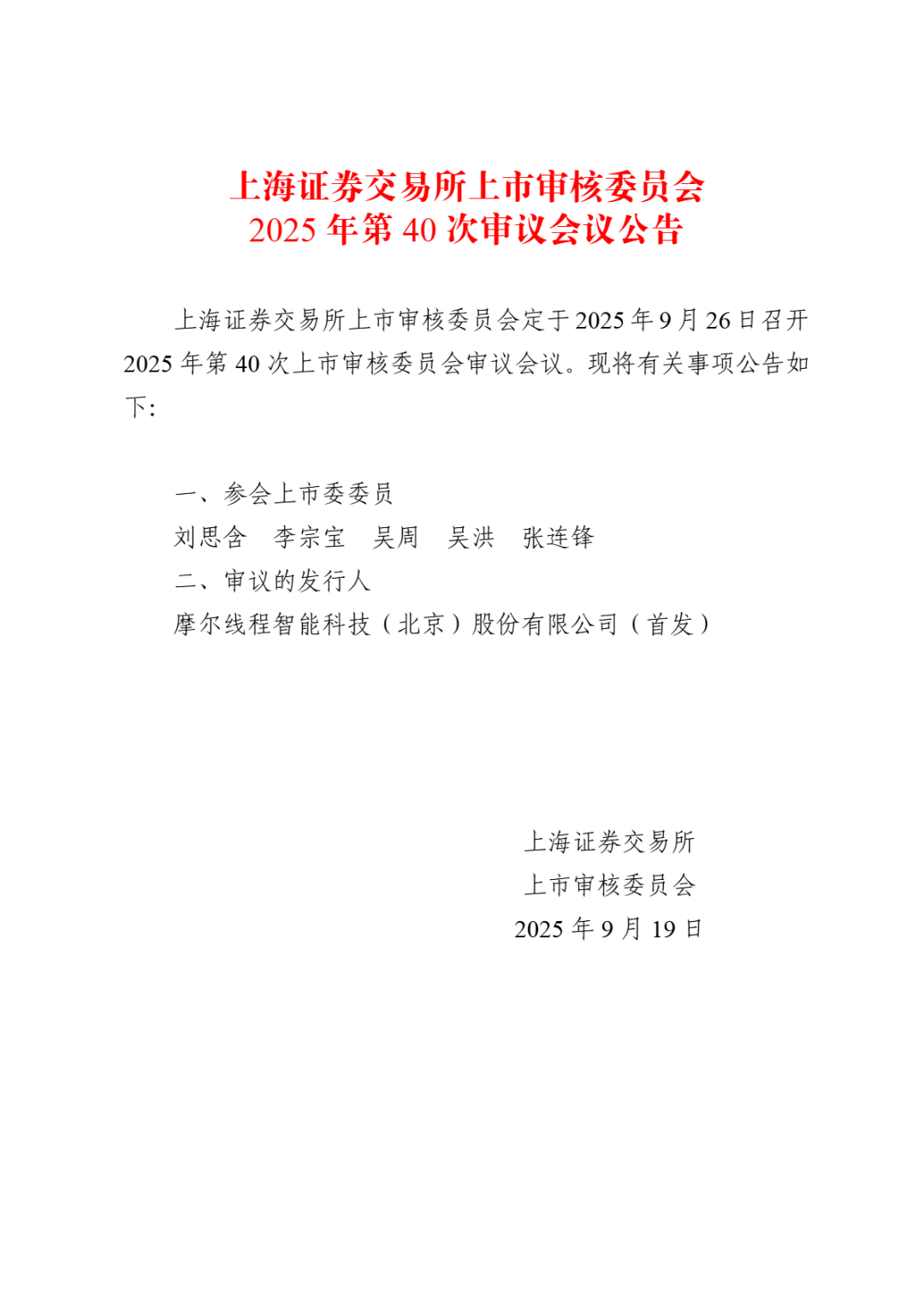
摩尔线程科创板IPO将于9月26日上会,相关核心标的梳理!
Sou Hu Cai Jing· 2025-09-19 12:59
Group 1 - The core viewpoint of the article highlights the significant investment opportunities presented by the upcoming IPOs of three major technology companies: Moer Thread, Muxi Integration, and Unisoc, driven by policy incentives and industry chain collaboration [1][3] - The recent guidelines issued by the Shenzhen Stock Exchange redefine the core thresholds for technology companies to go public, aligning with the characteristics of "high R&D, low asset" typical of sectors like semiconductors, AI, and communications [3][6] - Moer Thread, as a leading domestic GPU chip designer, is positioned to break the overseas monopoly and is expected to raise over 10 billion yuan in its IPO, potentially becoming the largest technology IPO on the STAR Market this year [3][4] Group 2 - Moer Thread's core value lies in its comprehensive GPU computing capabilities and rapid commercialization, which not only promotes its own technology but also creates direct investment opportunities for related stocks through equity appreciation and collaborative orders [4][7] - Muxi Integration focuses on high-performance GPU development, with its associated stocks benefiting from market recognition as "shadow stocks" due to their technological or business ties [4][5] - Unisoc is one of the few companies globally that masters 5G baseband chip technology, with its associated stocks gaining market attention due to the synergy within the "Unisoc system" [5][9] Group 3 - The investment opportunities are bolstered by the policy incentives from the Shenzhen Stock Exchange, which have opened a green channel for technology companies to go public, accelerating the realization of their technological advancements [8] - The technology scarcity in GPU computing and 5G communication chips presents significant potential for domestic alternatives, with the three companies expected to become benchmark stocks in the technology sector post-IPO [8] - Related stocks are expected to benefit from equity appreciation for shareholding companies and order or technical collaboration for cooperative companies, sharing in the growth dividends [8]

高通雪上加霜,联发科基带供货苹果
半导体行业观察· 2025-09-08 01:01
Core Viewpoint - Apple is set to unveil the iPhone 17 series and a new Apple Watch, with MediaTek entering the supply chain for the first time by providing 5G baseband chips, marking a significant milestone for the company [1][2]. Group 1: Apple Watch Updates - The new Apple Watch lineup will see comprehensive upgrades across all models, including the high-end Ultra and the budget SE, with the Ultra model introducing 5G and satellite communication features [1][2]. - Apple aims to increase the number of its proprietary baseband chips, reducing reliance on Qualcomm and Intel [1]. - The Apple Watch series is expected to have an annual shipment volume of at least 30 million units, capturing over 50% of the global smartwatch market [2]. Group 2: MediaTek's Role - MediaTek has been working on 5G separated chip technology for years and has successfully entered Apple's ecosystem after extensive testing and validation [2]. - The 5G functionality in the new Apple Watch will utilize low-power Redcap technology, combined with satellite communication capabilities [1][2]. - MediaTek has committed to supplying at least 5 million chipsets to meet customer demand, with potential for additional orders if Apple products are in high demand [2]. Group 3: Transition from Qualcomm - Apple is gradually moving away from Qualcomm's technology, with plans to integrate its own C1 modem into products, although the initial step involves using MediaTek's technology [3][4]. - The Apple Watch Ultra will be the first model to support 5G RedCap services, optimized for wearables and IoT devices [4]. - Apple's long-term goal includes developing its own wireless modems, with significant investments made over the past seven years [5].


苹果贡献台积电营收2397亿!
国芯网· 2025-05-12 13:41
Core Viewpoint - Apple is significantly increasing its orders for 2nm process chips from TSMC, potentially contributing up to NT$1 trillion (approximately RMB 239.7 billion) in revenue this year, representing a year-on-year growth of over 60% [2]. Group 1: Apple and TSMC Relationship - Apple has placed substantial orders for 2nm chips with TSMC, with expected revenue contribution rising to NT$800 billion to NT$1 trillion this year [2]. - The revenue forecast for 2024 from Apple to TSMC was initially estimated at NT$624.3 billion (approximately RMB 149.64 billion) [2]. - The ability to reach the NT$1 trillion target depends on the ramp-up of production capacity at TSMC's new facility in Arizona and the 2nm capacity in Taiwan [2]. Group 2: Future Plans and Innovations - Apple CEO Tim Cook announced plans to procure over 19 billion chips across multiple states in the U.S. for the fiscal year 2025, including millions of advanced process chips produced in Arizona [2]. - Since the launch of the Apple Silicon initiative, Apple's computer product line has fully adopted its self-designed M-series chips, all manufactured by TSMC [2]. - Rumors suggest that Apple's upcoming M5 chip will utilize TSMC's N3P process, with pre-orders for the first batch of 2nm and even more advanced A16 process capacity [2]. Group 3: Cost Savings and New Technologies - The recent teardown of the iPhone 16e revealed that it is the first model to use Apple's self-developed 5G modem chip, which is based on TSMC's 5nm N4P process, resulting in a cost saving of $10 per device [2].