A份额基金

Search documents
搞不好要亏麻了!
Sou Hu Cai Jing· 2026-01-05 00:36
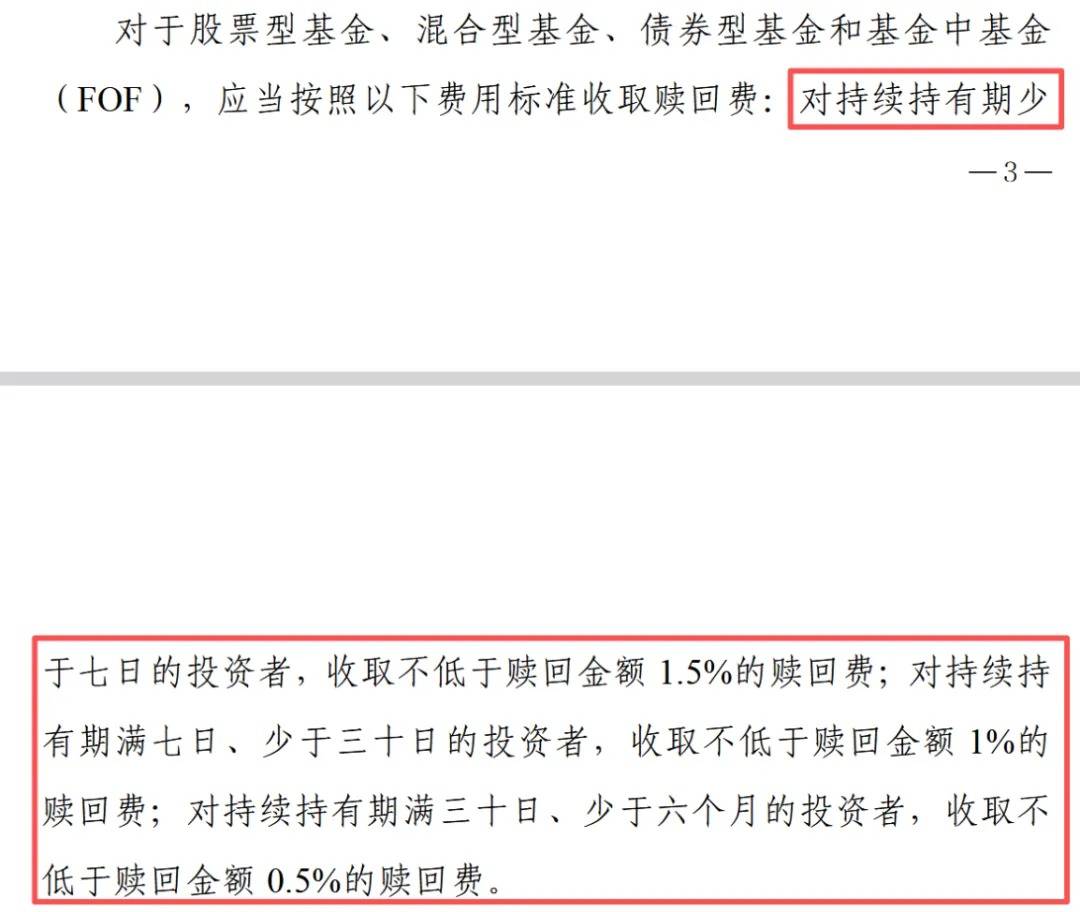
Group 1 - The new public fund sales regulations have been released, resulting in significant fee reductions across the board [3][4] - For actively managed equity funds, subscription and redemption fees cannot exceed 0.8%, while index and bond funds are capped at 0.3% [4] - The sales service fee for C shares has also been reduced, with a maximum of 0.4% for the first year of actively managed equity funds and 0.2% for index funds, with no fees applicable from the second year onward [4] Group 2 - Redemption fees for both A and C shares have a minimum threshold: 1.5% for redemptions within 7 days, 1% for 7-30 days, and 0.5% for 30-180 days [4] - The new regulations encourage long-term holding, with a specific mention of a minimum holding period of 180 days to avoid high redemption fees [5][7] - Fund companies may offer different redemption fee rates for individual investors holding for more than 7 days, but this is not mandatory [6][7] Group 3 - The article suggests that investors should consider opening an account for trading ETFs directly, as this offers better liquidity and lower transaction fees [8] - There is a note on the recent performance of the semiconductor sector, indicating that existing holders can remain optimistic, while new investors should avoid chasing prices [11]


这两类投资或迎巨变?《公募销售费用管理规定》背后的长线逻辑
Sou Hu Cai Jing· 2025-09-17 08:13
Core Viewpoint - Recent changes in redemption fees for various fund types may significantly impact investor strategies, particularly for short-term bond funds, potentially discouraging investment in these products due to increased costs [1][2][3]. Fee Structure Changes - The maximum subscription fees for equity, mixed, and bond funds have been reduced to 0.8%, 0.5%, and 0.3% respectively, while service fees for equity and mixed funds, index funds, and money market funds have been lowered to 0.4% per year, 0.2% per year, and 0.15% per year [1]. - New redemption fee requirements stipulate that investors must hold stocks, mixed, bonds, and FOF products for over six months to avoid a minimum redemption fee of 0.5% [1]. Impact on Short-term Investors - Short-term investors may face higher redemption fees, with fees of 1.5% for redemptions within 7 days, 1% for 7-30 days, and 0.5% for 30 days to 6 months, making it essential for investors in pure bond funds to prepare for a holding period of at least six months [3]. - The introduction of a 0.5% redemption fee could significantly reduce the effective yield of short-term bond funds, which currently hover around 1% [2]. C-Class Fund Implications - C-class funds, which previously offered advantages in redemption fees, will now face similar restrictions as A-class funds, as the new rule requires a six-month holding period for fee exemption, diminishing the appeal of C-class funds for short-term investors [4]. Market Trends and Regulatory Guidance - The recent regulatory guidance emphasizes the shift from scale-oriented to investor return-oriented strategies, aiming to create long-term stable returns for investors [6][7]. - The focus on long-term investment strategies is becoming a key theme in the public fund industry's development, with a push for high-quality growth and a recognition that short-term volatility is a normal aspect of market behavior [7].