AI原生应用

Search documents
万兴科技:2025年净利润预计同比减亏 全年AI调用量超13亿次
Zheng Quan Ri Bao Zhi Sheng· 2026-02-01 09:41
Core Viewpoint - Wankang Technology Group Co., Ltd. expects significant improvement in its financial performance for 2025, with a reduction in net losses and steady revenue growth driven by product matrix results and accelerated growth in new businesses [1] Financial Performance - For 2025, Wankang Technology anticipates a year-on-year reduction in net profit attributable to shareholders and net profit after deducting non-recurring gains and losses, indicating a notable overall improvement in performance [1] - The company projects that AI server calls will exceed 1.3 billion, representing a year-on-year increase of over 140% [1] Business Development - The revenue from AI-native applications and mobile products is expected to grow rapidly, contributing to the upgrade of the business structure [1] - Desktop products maintain stability, while the consolidation of Beijing Modao Keshishi will no longer be included in Wankang Technology's financial statements starting in 2025, which will impact the current consolidated revenue scale [1] Investment in AI - Wankang Technology continues to focus on technology research and product application in vertical AI fields, increasing R&D investment to strengthen product competitiveness [1] Marketing Strategy - The company is upgrading its marketing system across multiple platforms and products, enhancing multilingual localization marketing, and improving marketing efficiency management to accelerate market penetration of AI-native applications and mobile products [1]

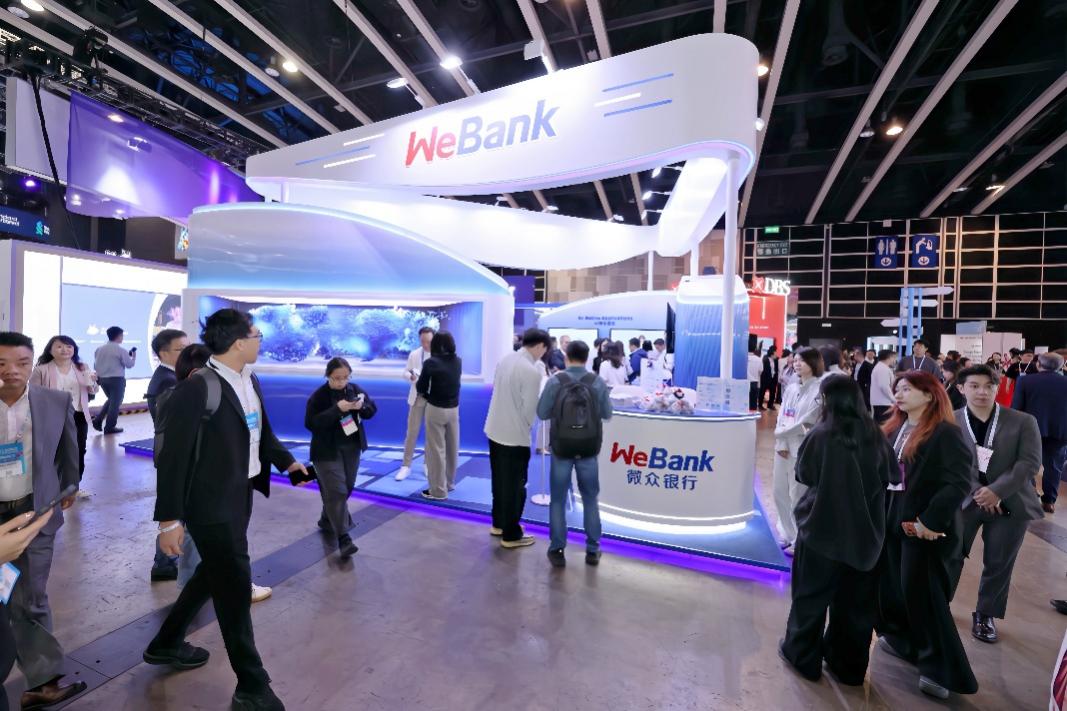
微众银行携微众科技首次亮相香港金融科技周xStartmeupHK创业节2025
Zhong Guo Jing Ji Wang· 2025-11-03 10:57
Core Insights - WeBank, China's first digital bank, and its subsidiary WeBank Technology made their debut at the Hong Kong FinTech Week x StartmeupHK Festival 2025, marking a new phase in their international development [1][3] - The event attracted over 37,000 participants from more than 100 economies, showcasing the significance of the fintech sector [3] Group 1: WeBank's Innovations and Achievements - WeBank highlighted its leading achievements in technological innovation and inclusive finance practices, showcasing its distributed core system and AI-native applications [3][4] - The bank has served over 430 million individual customers and has facilitated loans for more than 6 million small and micro enterprises [3][4] Group 2: AI Integration and Future Plans - WeBank is transitioning towards becoming an AI-native bank, with over 100 AI application scenarios and more than 700 agents deployed, enhancing organizational efficiency [4] - The bank's vice president emphasized the importance of AI in transforming financial services, aiming for smarter and more inclusive solutions [4] Group 3: International Expansion and Strategic Goals - WeBank Technology aims to establish its Hong Kong headquarters as a global sales and innovation center, leveraging the vibrant business environment to enhance local financial digitalization [4][6] - The company has expanded into markets such as Indonesia, Malaysia, and Thailand, negotiating with over 20 partner institutions and achieving cooperation intentions exceeding hundreds of millions of dollars [4][6]


AI创业的终极一问:是巨头先懂创新,还是创业公司先获渠道?
3 6 Ke· 2025-10-14 23:09
Core Insights - The article discusses the current state of AI and its potential impact on entrepreneurship, emphasizing that while AI is being heavily promoted, its practical applications in everyday tools remain limited [2][3][8] - It raises questions about how AI will change the structure of startups and whether it will lead to fewer or more employees needed in the future [3][6][7] - The article suggests that the future of entrepreneurship may see a shift in how companies are organized and funded, with implications for venture capital and the traditional startup funding stages [6][8] Group 1: Current State of AI - Despite the hype around AI, the number of "AI-native" applications on personal devices is surprisingly low, indicating that the technology has not yet been fully integrated into daily life [2] - The article highlights the potential for AI to transform work processes, but acknowledges that this transformation is still in its infancy [2][3] Group 2: Future of Startups - There is a debate on whether future startups will require fewer employees due to AI's leverage effect, or if they will still need a significant workforce for tasks that AI cannot handle [3][6] - The article posits that the barriers to entry for new startups may change, with a focus on user growth and network effects becoming more critical in a landscape where AI capabilities are easily replicated [3][6][7] Group 3: Venture Capital and Funding - The traditional venture capital model may evolve as product development becomes easier and cheaper, potentially leading to a more decentralized investment landscape [6][8] - The article questions whether the current stages of funding (seed, Series A/B/C) will remain relevant in a future where products can quickly achieve profitability with minimal investment [6][8] Group 4: Historical Context - The article draws parallels between the evolution of business structures in the past and the potential changes brought by AI, suggesting that existing frameworks may not be sufficient to harness the productivity gains from AI [5][6] - Historical examples illustrate how technological advancements have reshaped business organization, hinting at a similar transformation in the AI era [5][6] Group 5: Competitive Landscape - The competition between established companies and startups will be crucial, with the outcome depending on who can leverage innovation and distribution channels more effectively [8] - The article suggests that the next few years will be pivotal in determining how AI will be integrated into business models and the overall entrepreneurial landscape [8][9]
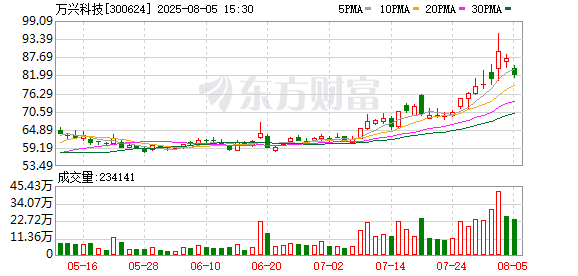
万兴科技:目前公司AI原生应用主要系基于音视频多模态大模型AI能力构建的创意应用
Mei Ri Jing Ji Xin Wen· 2025-08-05 14:23
Group 1 - The company has responded to an investor inquiry regarding its possession of AI-native website building tool technology, indicating that its current AI-native applications are primarily based on audio and video multimodal large model AI capabilities [2] - The company's AI applications aim to assist global users in creating creative content more intelligently and efficiently [2]