
数字艺术品

Search documents
大唐西市与海南国际文化艺术品交易中心股份有限公司订立谅解备忘录
Zhi Tong Cai Jing· 2026-01-23 13:59
Core Viewpoint - The company has entered into a memorandum of understanding with Hainan International Cultural and Art Trading Center Co., Ltd. to enhance collaboration in the cultural and artistic sectors, focusing on the integration of culture, art, and technology [1] Group 1: Collaboration Details - The agreement emphasizes leveraging each party's strengths, resources, and proprietary technologies for comprehensive cooperation [1] - The company's subsidiary aims to utilize Hainan International's advantages in overseas antique collection, traditional art trading, digital art circulation, and cultural IP services to upgrade its business model [1] - Hainan International plans to capitalize on the company's rich cultural heritage, international investment platforms, art auctions, art finance, and logistics resources for product development and market promotion [1] Group 2: Strategic Focus - The collaboration aims to drive the integration of culture, art, technology, digitization, industry, and finance [1] - Hainan International is committed to promoting cultural and artistic industry cooperation projects through digital technology [1]
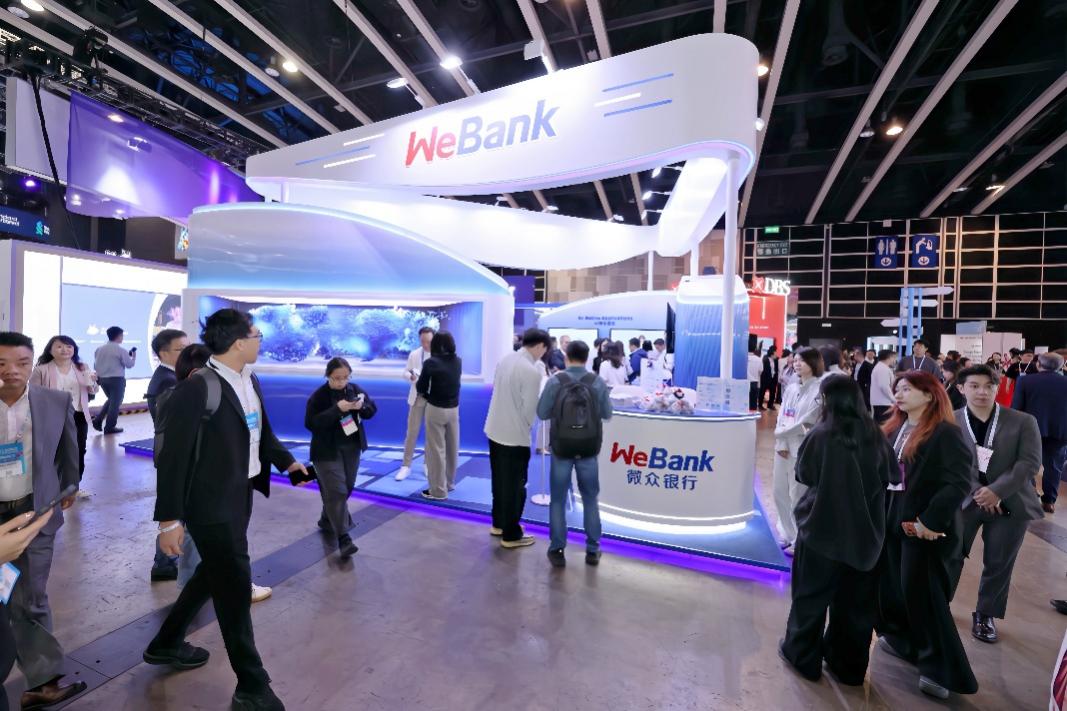
微众银行携微众科技首次亮相香港金融科技周xStartmeupHK创业节2025
Zhong Guo Jing Ji Wang· 2025-11-03 10:57
Core Insights - WeBank, China's first digital bank, and its subsidiary WeBank Technology made their debut at the Hong Kong FinTech Week x StartmeupHK Festival 2025, marking a new phase in their international development [1][3] - The event attracted over 37,000 participants from more than 100 economies, showcasing the significance of the fintech sector [3] Group 1: WeBank's Innovations and Achievements - WeBank highlighted its leading achievements in technological innovation and inclusive finance practices, showcasing its distributed core system and AI-native applications [3][4] - The bank has served over 430 million individual customers and has facilitated loans for more than 6 million small and micro enterprises [3][4] Group 2: AI Integration and Future Plans - WeBank is transitioning towards becoming an AI-native bank, with over 100 AI application scenarios and more than 700 agents deployed, enhancing organizational efficiency [4] - The bank's vice president emphasized the importance of AI in transforming financial services, aiming for smarter and more inclusive solutions [4] Group 3: International Expansion and Strategic Goals - WeBank Technology aims to establish its Hong Kong headquarters as a global sales and innovation center, leveraging the vibrant business environment to enhance local financial digitalization [4][6] - The company has expanded into markets such as Indonesia, Malaysia, and Thailand, negotiating with over 20 partner institutions and achieving cooperation intentions exceeding hundreds of millions of dollars [4][6]


南中轴崛起新地标,丰台大红门数智产业大厦启动升级改造
Xin Jing Bao· 2025-08-19 06:24
Group 1 - The project focuses on the "technology + culture" industry positioning in the South Central Axis, aiming to create a digital economy cluster featuring the metaverse and general artificial intelligence [1][2] - The total construction area of the project is 91,584.82 square meters, with completion expected in the first half of 2026 [1] - The project includes green energy renovation, structural engineering, decoration, and fire protection works, with a comprehensive energy-saving rate projected to reach 21.38% through the use of renewable energy sources [1] Group 2 - The project aims to attract leading enterprises in general artificial intelligence applications, fostering innovative business formats such as digital humans, metaverse tourism, digital art, and virtual reality experiences [2] - The upgrade of the Dahuomen Smart Industry Building is seen as a key driver for industrial upgrading and urban function optimization in the Fengtai District, injecting strong momentum into high-quality development [2]
【深圳文博会】30家优秀文化苏企携千余“新”品组团吸睛
Jiang Nan Shi Bao· 2025-05-23 02:29
Core Insights - The 21st China (Shenzhen) International Cultural Industries Fair opened on May 22, showcasing over 120,000 cultural products across 16,000 square meters with participation from 6,280 domestic exhibitors and 305 international exhibitors [1][3] - Jiangsu Province presented its cultural achievements through two exhibition areas, featuring 30 outstanding cultural enterprises and over 1,000 new products, emphasizing the integration of culture and technology [3][4] Group 1: Cultural Innovation and Technology - Jiangsu's exhibition highlighted innovative cultural products, including a wearable armor inspired by "Along the River During the Qingming Festival," which achieved sales of 5 billion yuan in the first four months of the year, marking a 91% increase year-on-year [4] - The introduction of a digital identity certification system for Yixing purple clay teapots aims to enhance trust in the art collection market, with a transaction volume of nearly 200 million yuan on the "Purple Clay·Easy" app [5] - A smart dyeing production line utilizing advanced robotics was showcased, increasing production efficiency by six times, set to launch in 2024 [6] Group 2: Cultural Heritage and Modern Aesthetics - Traditional crafts are being revitalized through modern aesthetics, with products like silk scarves and hair accessories gaining popularity among younger consumers [6] - The integration of cultural elements into contemporary products, such as the "Moli Flower Sand Flow Refrigerator Magnet," reflects a blend of traditional and modern design [9] - The "Jiangsu Cultural Heritage Sorting and Research Project" has published approximately 1,600 volumes, establishing a comprehensive cultural encyclopedia [10] Group 3: Digital and Interactive Experiences - The fair introduced an AI exhibition area with over 60 companies, showcasing innovations like an entertainment robot that provides immersive experiences [8] - A VR project recreating the Ming Dynasty capital is set to launch in July, offering an immersive cultural experience [11] - The emergence of a 4K transparent sound LED screen in cinema technology represents a significant advancement in audio-visual experiences [12]
法律如何守护“人格化”的数字遗产
Zhong Guo Qing Nian Bao· 2025-05-04 01:21
Core Viewpoint - The increasing importance of digital assets among young people necessitates a legal framework that integrates technology and regulations to protect digital inheritance rights [1][2][3]. Group 1: Digital Inheritance Trends - The number of young individuals aged 18-30 creating wills has increased by 300% over the past five years, with 21.5% of post-90s and 19.7% of post-00s including digital assets in their wills, significantly higher than the 12.7% of post-80s [1]. - Digital inheritance encompasses both economic assets like virtual currencies and digital art, as well as personal information such as social media accounts and chat records, reflecting a dual nature of property and personal identity [2]. Group 2: Legal Framework and Protection - Legal clarity is essential for the ownership of digital assets, ensuring that users can transfer their rights through wills or statutory inheritance, thus respecting user wishes and protecting heirs' rights [3]. - The EU's Digital Single Market Copyright Directive serves as a model for distinguishing between inheritable property and personal rights, providing a framework for managing digital inheritance [3]. Group 3: Legislative Improvements - Current laws do not explicitly include digital assets, leading to uncertainty in judicial practices; thus, a comprehensive legal framework is needed to define digital inheritance, inheritance rules, and platform responsibilities [4]. - Establishing a national digital inheritance database using blockchain technology can enhance the management and traceability of digital assets, while a cross-departmental coordination body can address complex issues related to digital inheritance disputes [4]. Group 4: Technological Integration - Blockchain technology offers a decentralized, immutable, and traceable solution for protecting digital inheritance, ensuring the authenticity and longevity of digital assets [5]. - The integration of digital identity verification systems can further secure the inheritance process, minimizing legal disputes arising from identity issues [5]. - A dual protection system combining legal frameworks and technological innovations is essential for safeguarding digital legacies in the digital age [5].