
AI原生开发平台

Search documents
从FPGA应用前景视角解读 Gartner 2026十大关键技术趋势
Sou Hu Cai Jing· 2025-12-25 18:41
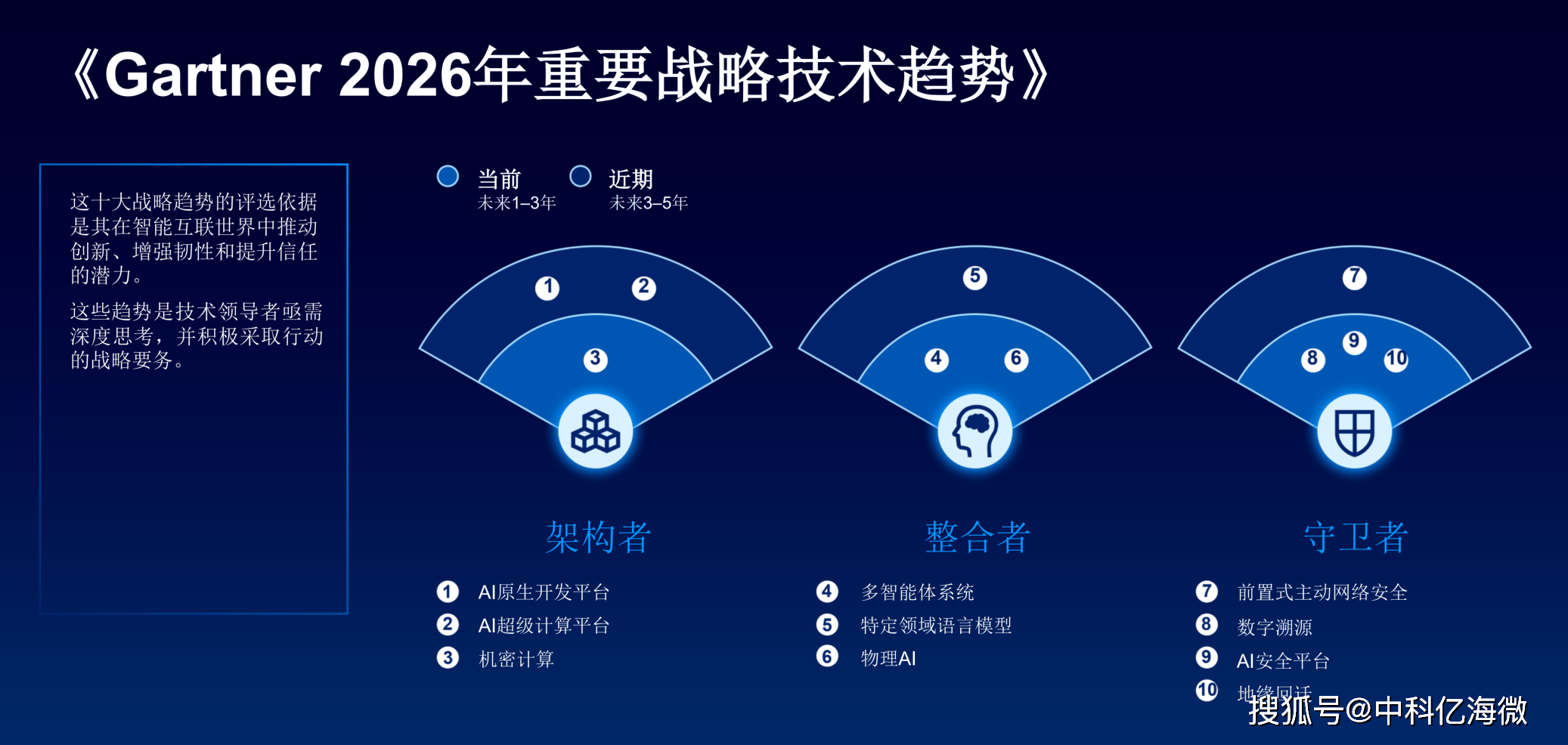
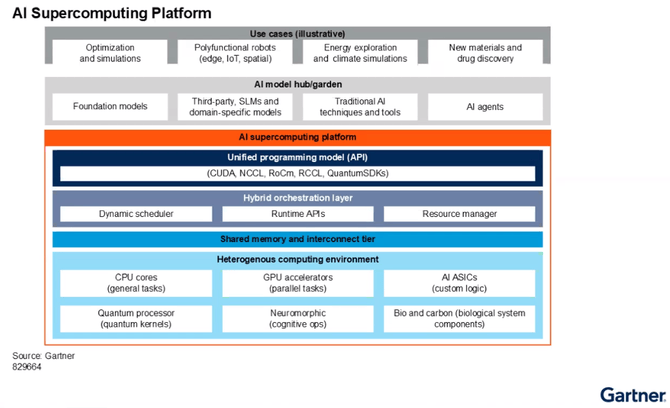
Overview - Gartner's annual report on "Top 10 Strategic Technology Trends" provides a roadmap for technological transformation and business transformation decisions for enterprises over the next five years, categorizing trends into Architect, Synthesist, and Vanguard, focusing on AI platforms and infrastructure, AI applications and orchestration, and security and trust governance [1]. Group 1: AI Native Development Platforms - AI native development platforms leverage generative AI to accelerate software development, enabling non-professionals to participate and allowing small teams to deliver multiple applications simultaneously, thus enhancing productivity and reducing costs [7]. - FPGA/EDA toolchains will be integrated into AI native development systems, automating engineering processes and significantly shortening FPGA development time [8]. - FPGA will serve as an essential prototype verification platform in the automated hardware design era, meeting the increasing demand for rapid validation due to rising chip design iterations [9]. Group 2: AI Supercomputing Platforms - AI supercomputing platforms provide massive computing power for training and running advanced AI models, addressing the challenges posed by traditional infrastructure [10]. - FPGA will handle data flow preprocessing and auxiliary computing tasks in AI supercomputing, addressing memory and I/O bottlenecks during model training and inference [10]. - FPGA will be a key component in building programmable AI data center networks, enhancing performance and security in AI clusters [11]. Group 3: Confidential Computing - Confidential computing protects data during processing using hardware-based trusted execution environments (TEE), becoming increasingly critical due to stricter privacy regulations [11]. - FPGA can create customizable hardware-level TEE, offering fine-grained security boundaries and integrating national cryptography algorithms for sensitive applications [12]. - FPGA will act as a local confidential computing node in edge and industry devices, ensuring data confidentiality and integrity throughout the processing chain [13]. Group 4: Multi-Agent Systems (MAS) - Multi-agent systems enhance efficiency and scalability by enabling collaboration among specialized AI agents, with a significant increase in interest reflected in a 1445% rise in consultations [14]. - FPGA will support concurrent reasoning and real-time control in physical environments, meeting the stringent real-time requirements of MAS applications [14]. - FPGA will facilitate automated hardware development processes driven by MAS, significantly reducing design iteration cycles and labor costs [15]. Group 5: Domain-Specific Language Models (DSLM) - Domain-specific language models provide higher accuracy and compliance in specific industries compared to general-purpose models, aiding in error reduction and cost savings [15]. - FPGA/ASIC design languages are ideal for training DSLM, which can automate code generation and optimization, enhancing the FPGA development process [16]. - Building a specialized RAG corpus for DSLM will be crucial for FPGA manufacturers and tool providers, creating a competitive advantage [17]. Group 6: Physical AI - Physical AI integrates perception, decision-making, and action capabilities into robots and smart devices, extending digital AI productivity into the physical world [18]. - FPGA will serve as the core chip in physical AI systems, integrating various sensors and AI models to form a closed-loop system [18]. - FPGA can meet functional safety requirements in critical applications, combining intelligent control with safety monitoring [18]. Group 7: Proactive Network Security - Proactive network security employs advanced AI to predict and mitigate network attacks before they occur, shifting from passive to active defense strategies [19]. - FPGA-based SmartNICs can perform deep packet inspection at high speeds, providing a programmable and secure hardware protection layer [20]. Group 8: Digital Traceability - Digital traceability ensures the integrity and origin of software and data, becoming essential due to increasing regulatory demands [21]. - FPGA can support digital traceability by providing high-performance cryptographic functions and real-time watermarking capabilities [22]. Group 9: AI Security Platforms - AI security platforms offer unified protection for third-party AI services and in-house applications, addressing emerging risks associated with AI [23]. - FPGA's role in AI security platforms is limited, primarily serving as an optional component for inference acceleration [24]. Group 10: Geopolitical Resilience - Geopolitical resilience involves migrating workloads from global cloud platforms to sovereign clouds or local environments to mitigate geopolitical risks [25]. - FPGA can serve as a hardware module in sovereign clouds, providing essential infrastructure support for localized AI and business systems [26].

AI要“干活”了!2026年这些趋势+风险必看
2 1 Shi Ji Jing Ji Bao Dao· 2025-12-04 09:47
Core Insights - AI large model technology is rapidly entering everyday life, accompanied by potential threats, as highlighted by Gartner's report on the top ten strategic technology trends for 2026, with over half related to AI [1][12] - AI plays a dual role as both a foundation for innovation and a source of new security risks, necessitating a balance between value creation and threat prevention in corporate strategies [1][12] Group 1: AI Technology Trends - Gartner emphasizes four key technologies: AI-Native Development Platforms, Domain-Specific Language Models, Multiagent Systems, and Physical AI [2] - By 2030, it is predicted that 80% of enterprises will transform large software engineering teams into smaller, agile teams empowered by AI-native development platforms [3] Group 2: Domain-Specific Language Models - Domain-Specific Language Models, particularly those trained on proprietary enterprise data, can provide significant operational value, shifting AI from general capabilities to specialized applications [6] - For instance, using internal data for AI training can enhance efficiency in manufacturing by providing quick solutions to machine faults through natural language queries [6] Group 3: Multiagent Systems - The development of multiagent systems is moving from isolated AI agents to collaborative teamwork, improving task success rates and adaptability to changing enterprise needs [6] Group 4: Physical AI - Physical AI is currently focused on fully autonomous vehicles and robotics, with two main implementation approaches: Visual Language Models and World Models [7][8] - By 2028, it is expected that 80% of warehouses will utilize robotic technology or automation [8] Group 5: AI Supercomputing Platforms - The foundation for these applications is the construction of AI supercomputing platforms, integrating various computing chips to handle complex data processing tasks [8] - Enhancing computational efficiency and connectivity is crucial, as demonstrated by NVIDIA's recent technologies that link quantum computing with traditional supercomputers [9] Group 6: Transition from Possibility to Value - The period from 2023 to 2024 is identified as the "technology explosion" phase for AI, while 2025 to 2026 will focus on delivering tangible value [10] - Companies will shift from seeking universal models to more cost-effective, domain-specific models, emphasizing practicality over model worship [10] Group 7: AI Integration Challenges - Integrating AI capabilities into existing workflows requires significant organizational changes, including software restructuring, team reorganization, and employee retraining [11] - The main challenges for AI deployment will transition from technical issues to engineering and business problems, focusing on reliable, compliant, and profitable operations [11] Group 8: AI Security Threats - The rapid advancement of AI presents significant security threats, including AI-driven attacks that can lead to identity fraud and phishing [12] - Proactive network security, utilizing AI for predictive threat intelligence and automated defenses, is projected to become a critical technology by 2026 [12] Group 9: Future of AI Security Solutions - By 2030, proactive defense solutions are expected to account for half of enterprise security spending, with AI security platforms providing unified protection mechanisms [12] - The future AI landscape will be characterized by innovation and risk, necessitating robust security measures to ensure AI serves as a catalyst for business growth [12]
Gartner 2026战略技术趋势:AI原生、多智能体与物理AI引领产业变革
Sou Hu Cai Jing· 2025-11-11 03:39
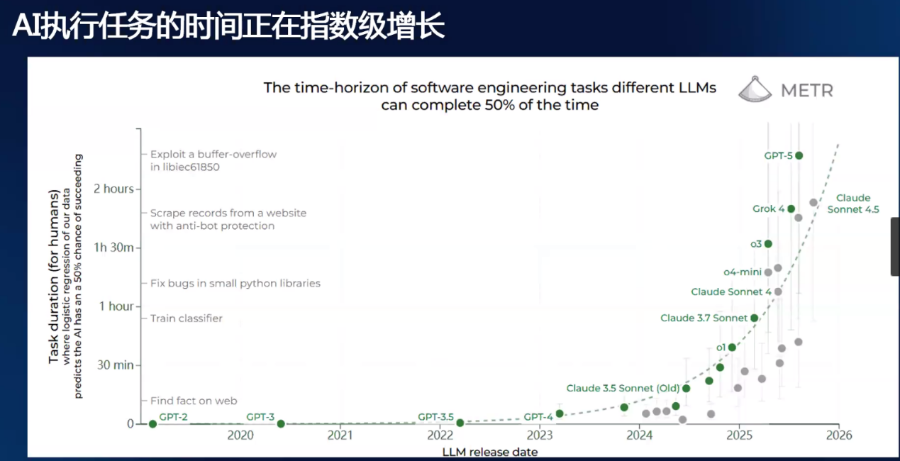
Core Insights - Gartner's Vice President, Gao Ting, presented ten strategic technology trends for 2026, focusing on themes of "architects, coordinators, and sentinels," covering areas such as AI-native development, multi-agent systems, physical AI, and cybersecurity [1] Group 1: AI Native Development - AI-native development platforms are seen as the core of next-generation software engineering, utilizing "ambient programming" to generate complete applications or assist developers in coding [2] - Currently, 20%-40% of code in some tech companies is generated by AI, indicating a shift in software development from efficiency tools to a new development paradigm [2] Group 2: AI Supercomputing Platforms - The demand for computing power in AI is growing exponentially, with AI supercomputing platforms characterized by hybrid AI computing and scheduling capabilities [3][7] - Technologies like NVIDIA's NVQLink and CUDA-Q enable the integration of quantum computing with classical supercomputing, enhancing task scheduling across architectures [3] Group 3: Multi-Agent Systems - Multi-agent systems improve reliability in executing complex tasks by breaking down tasks and allowing different agents to collaborate, addressing the limitations of single-agent systems [8][9] - This approach represents a key step in AI evolving from a "tool" to a "collaborator," reflecting a management mindset of "AI teamwork" [9] Group 4: Domain-Specific Language Models - The high failure rate of enterprise AI projects (95%) is attributed to general models lacking business understanding, which domain-specific language models aim to address through retraining with industry data [10] - Companies must invest in data governance and domain training to effectively utilize AI, avoiding the pitfall of having "models without intelligence" [10] Group 5: Physical AI - Physical AI refers to AI systems that interact with the real world, primarily in applications like autonomous driving and robotics, utilizing VLA models and "world models" [11] - This technology serves as a bridge between AI and the real economy, gradually replacing repetitive labor in sectors like manufacturing and logistics [11] Group 6: Proactive Cybersecurity - AI-driven attacks are lowering the barriers for hackers, necessitating the development of proactive cybersecurity systems that include predictive threat intelligence and automated defenses [12][14] - Companies must transition from static defenses to a proactive security framework that integrates prediction, response, and deception [14] Group 7: Digital Traceability - Digital traceability is becoming essential for building trustworthy digital supply chains, especially in light of frequent software supply chain attacks [15][16] - Establishing software SBOM and model MLBOM lists allows companies to track component origins and security, while watermarking and identification technologies for AI-generated content are being standardized [15][16] Group 8: Geopolitical Migration - Geopolitical risks are prompting companies to migrate data and applications from global public clouds to local "sovereign clouds," with European firms being the most affected [17] - Chinese companies are balancing self-sufficiency and global collaboration to avoid becoming "technology islands" [17] Group 9: Confidential Computing and AI Security Platforms - Although not the main focus, "confidential computing" and "AI security platforms" are ongoing trends that protect data and prevent new types of attacks [18] - The emphasis is on embedding AI into business processes and ensuring ecological collaboration rather than chasing technology fads [18]
提效10倍,AI颠覆软件开发,这五条经验是关键分水岭
3 6 Ke· 2025-07-04 02:15
Core Insights - AI tools are accelerating the software development process while exposing significant capability gaps among different teams, leading to output differences of up to tenfold or more [1] - The concept of "AI-native development" requires a complete redesign of the development system, integrating AI at every stage from prototyping to deployment [1] - The conversation with Cedric Ith, founder of Perceptron AI, highlights the need for developers to collaborate effectively with AI, focusing on what successful teams do right [1][2] Group 1: Key Experiences from Cedric - Taste is the new competitive advantage, shifting focus from technical skills to design thinking and product intuition in an era where AI can generate code rapidly [3] - The ability to ask precise questions and create delightful user experiences is becoming the new barrier to entry in software development [3] - AI is redefining the design process, allowing designers to explore numerous concepts quickly and generate user-centric solutions [3] Group 2: New Design Paradigms - Natural language is emerging as a primary design interface, shifting the designer's role from creating visuals to articulating product structure through language [4][5] - Designers are developing a "design vocabulary" to communicate effectively with AI, enabling rapid prototyping that previously took engineers days to complete [5][6] - The ability to break down complex requests into clear, executable language is becoming essential for effective collaboration with AI [6] Group 3: The Rise of Design Engineers - The traditional boundary between design and engineering is dissolving, with designers now able to contribute directly to code and manage the entire tech stack [7][8] - This shift enhances efficiency and redefines product manufacturing, as designers gain control over the entire delivery process [8][9] - The iterative speed of design and development has significantly increased, compressing the time between design reviews and implementation from days to hours [10] Group 4: AI-Native Design Principles - Key principles for AI product design include reducing cognitive load, accepting non-determinism, and ensuring transparency in AI reasoning processes [11][12][13] - The design focus is shifting from user execution to user orchestration, requiring designs that facilitate coordination among multiple intelligent agents [14] - Teams adopting these principles early will create more intuitive and trustworthy AI experiences [14] Group 5: Organizational Adaptation in the AI Era - Organizations must transition from building perfect products to creating rapid learning organizations to keep pace with the fast-evolving AI landscape [15][16] - Cedric emphasizes the importance of quickly producing high-fidelity prototypes to gain internal buy-in, making design a catalyst for organizational change [16] - The entire product development cycle is being compressed, leading to unprecedented innovation density [16] Group 6: Cedric's AI Design Stack - The design stack includes tools like Figma for visual design, v0 for dynamic behavior definition, and Cursor for code-level adjustments, facilitating seamless transitions between design and engineering [17] - Component libraries like Shadcn and Tailwind provide standard semantics for AI, reducing risks associated with hallucinations in code generation [17]