主权云

Search documents
瑞达期货沪锡产业日报-20260126
Rui Da Qi Huo· 2026-01-26 08:51
1. Report Industry Investment Rating - No relevant information provided 2. Core View of the Report - The report predicts that Shanghai tin will undergo short - term wide - range adjustments. It is recommended to pay attention to the support at MA10, with an expected range between 420,000 and 460,000 yuan/ton [3]. 3. Summary by Relevant Catalogs 3.1 Futures Market - The closing price of the main Shanghai tin futures contract is 425,340 yuan/ton, down 4,230 yuan; the closing price of the February - March contract is up 450 yuan. The LME 3 - month tin price is 56,605 US dollars/ton, up 4,728 US dollars. The main contract's open interest for Shanghai tin is 55,233 lots, down 1,021 lots. The net position of the top 20 futures is - 4,973 lots, up 1,468 lots. The LME tin total inventory is 7,195 tons, up 40 tons. The SHFE tin inventory is 9,720 tons, up 171 tons. The SHFE tin warrant is 8,624 tons, up 42 tons [3]. 3.2 Spot Market - The SMM 1 tin spot price is 434,850 yuan/ton, up 14,550 yuan; the Yangtze River Non - ferrous Market 1 tin spot price is 437,200 yuan/ton, up 13,460 yuan. The basis of the Shanghai tin main contract is 9,510 yuan/ton, up 18,780 yuan. The LME tin (0 - 3) spread is - 245 US dollars/ton, down 56 US dollars [3]. 3.3 Upstream Situation - The import volume of tin ore concentrates is 17,600 tons, up 2,500 tons. The average processing fee for 40% tin concentrates is 14,500 yuan/ton, unchanged. The average price of 40% tin concentrates is 420,850 yuan/ton, up 31,600 yuan; the average price of 60% tin concentrates is 424,850 yuan/ton, up 31,600 yuan. The average processing fee for 60% tin concentrates is 10,500 yuan/ton, unchanged [3]. 3.4 Industry Situation - The monthly output of refined tin is 14,000 tons, down 1,600 tons. The monthly import volume of refined tin is 2,239.1 tons, up 323.25 tons [3]. 3.5 Downstream Situation - The price of 60A solder bars in Gejiu is 274,330 yuan/ton, up 8,900 yuan. The cumulative output of tin - plated sheets (strips) is 1,528,700 tons, up 138,700 tons. The monthly export volume of tin - plated sheets is 142,900 tons, down 4,500 tons [3]. 3.6 Industry News - In January, both the US S&P Global Manufacturing and Services PMIs expanded but were slightly lower than expected. The Eurozone's January manufacturing PMI unexpectedly rose to 49.4, with Germany's contraction slowing and France reaching a 47 - month high. The EU announced a 6 - month suspension of retaliatory tariffs on the US. There are disputes over Greenland, and the US - Russia - Ukraine tripartite talks were held in the UAE, with some progress on military issues and no consensus on territorial issues [3]. 3.7 Fundamental Analysis - Supply side: The resumption of production in Myanmar and the end of the rainy season have led to an increase in domestic tin ore imports, which are expected to continue to rise in Q1. Tin ore processing fees have slightly increased, indicating a relief in the tight supply of tin ore. Smelting: Most enterprises have low raw material inventories and are in a loss - making situation. With more year - end maintenance, refined tin production is still limited, but there is pressure for production to rebound after the Spring Festival. Import: Indonesia's exports increased significantly in November, alleviating concerns about supply constraints. The recent opening of the import window has increased import pressure. Demand side: The development prospects of the AI field are strong, which will drive a significant increase in solder demand. Recently, tin prices have corrected, improving the downstream purchasing atmosphere, with a slight decline in inventory and a spot premium of 500 yuan/ton. LME inventory has increased significantly, and the spot premium has declined [3]. 3.8 Technical Analysis - The candlestick chart shows a long - upper - shadow negative line with increasing volume and decreasing positions, indicating a decline in the bullish sentiment [3].

“在几周里发生了几十年的事”:国际地缘政治正在加速变化
Guo Tai Jun An Qi Huo· 2026-01-26 04:52
Report Summary 1. Investment Ratings - Not provided in the report. 2. Core Views - The international geopolitical situation is rapidly changing, with the US - EU relationship facing a significant rift. Europe is promoting "technological sovereignty" and "sovereign cloud" strategies to reduce dependence on US tech giants, which may reshape the trans - Atlantic digital trade pattern [6]. - In the futures market, the "spring rally" in the stock index futures is ongoing, with positive policy expectations, a rising RMB exchange rate, and a strengthened re - inflation expectation. However, the withdrawal of rescue funds has led to a significant divergence in the market, which is expected to converge later [7][8]. - For various commodities, their trends are affected by different factors such as geopolitical conflicts, supply - demand relationships, and market sentiment. For example, fuel oil prices are influenced by geopolitical conflicts and supply - demand fundamentals; precious metals like gold and silver are showing strong trends; base metals such as copper and zinc are also affected by macro - economic data and industry news [10][15][19]. 3. Summary by Related Catalogs Geopolitical Situation - The US - EU relationship has deeply split due to issues like Greenland. Europe is promoting "technological sovereignty" and "sovereign cloud" strategies to reduce dependence on US tech giants, which account for 83% of the European market [6]. Stock Index Futures - The "spring rally" is in progress, with positive policy expectations, a rising RMB exchange rate, and a strengthened re - inflation expectation. The withdrawal of rescue funds has led to a significant divergence in the market, which is expected to converge later. Attention should be paid to the Fed's interest - rate meeting and the appointment of the next Fed chairman [7][8]. Commodities - **Precious Metals**: Gold has reached a new high, and silver is approaching 100. Their trends are affected by factors such as geopolitical conflicts and exchange - rate fluctuations [15]. - **Base Metals**: - **Copper**: The price is strengthening due to increased disturbances in copper mines. The macro - economic data of the US and the EU, as well as industry news such as strikes and production cuts, have an impact on the copper market [19]. - **Zinc**: It is running strongly, influenced by factors such as inventory changes and macro - economic data [22]. - **Lead**: The decrease in LME inventory supports the price [25]. - **Tin**: It is oscillating strongly, with significant increases in both futures and spot prices [29]. - **Aluminum**: It is oscillating strongly, while alumina is consolidating at the bottom, and cast aluminum alloy follows the trend of electrolytic aluminum [32]. - **Platinum and Palladium**: Platinum is rising strongly, and palladium should be vigilant about the supplementary increase momentum [34]. - **Nickel and Stainless Steel**: The situation in Indonesia is uncertain, affecting the nickel and stainless - steel markets. The price of stainless steel is supported by the increase in nickel - iron prices [39]. - **Energy and Chemicals**: - **Carbonate Lithium**: It is oscillating at a high level, supported by strong current fundamentals [45]. - **Industrial Silicon and Polysilicon**: Industrial silicon is oscillating strongly due to upstream factory production cuts, and attention should be paid to the spot trading situation of polysilicon [50]. - **Steel Products**: Rebar and hot - rolled coils are oscillating widely due to sector sentiment resonance [53]. - **Ferroalloys**: Manganese silicon and ferrosilicon are oscillating widely due to sector sentiment resonance [57]. - **Coking Coal and Coke**: They are oscillating within a range, affected by industry and capital factors [61][62]. - **Power Coal**: Supply and demand are both weak, and the price is fluctuating narrowly in the short term [66]. - **PX, PTA, and MEG**: They have a strong unilateral trend, affected by factors such as supply - demand relationships, processing fees, and market sentiment [68][74][75][76]. - **Rubber**: It is oscillating, affected by factors such as supply - demand relationships and cost support [78]. - **Synthetic Rubber**: It is running strongly, but attention should be paid to marginal valuation pressure [82]. - **LLDPE and PP**: Their trends are weak, affected by factors such as supply - demand relationships, cost, and market sentiment [85][88]. - **Caustic Soda**: It is oscillating at a low level, affected by factors such as cost decline and supply - demand collapse [91]. - **Paper Pulp**: It is oscillating, affected by factors such as downstream demand and inventory pressure [96]. - **Glass**: The price of the original sheet is stable, and the market demand is coming to an end [103]. - **Methanol**: It is oscillating with support, affected by factors such as geopolitical conflicts and inventory expectations [107]. - **Urea**: The price center is slowly rising, affected by factors such as market sentiment and supply - demand relationships [112]. - **Styrene**: It is oscillating strongly, but attention should be paid to the high - inventory situation and the restart of parking devices [115]. - **Soda Ash**: The spot market has little change, and the price is weakly stable and oscillating [118]. - **LPG and Propylene**: They are running strongly in the short term, affected by factors such as geopolitical disturbances and supply - demand relationships [123]. - **PVC**: It is oscillating within a range, affected by factors such as supply - demand relationships and market sentiment [133]. - **Fuel Oil and Low - Sulfur Fuel Oil**: Fuel oil is rising strongly, and low - sulfur fuel oil continues its upward trend [136]. - **Container Shipping Index (European Line)**: It is in an oscillating market, and short positions in the 04 contract should be gradually reduced for observation, while short positions in the 10 contract can be held as appropriate [138]. - **Agricultural Products**: - **Short Fiber and Bottle Chip**: They have a strong short - term trend, affected by factors such as raw material prices and market sentiment [149]. - **Offset Printing Paper**: It is advisable to wait and see, affected by factors such as supply - demand relationships and cost - profit situations [152]. - **Pure Benzene**: It is oscillating strongly, affected by factors such as inventory changes and market sentiment [156]. - **Palm Oil and Soybean Oil**: Palm oil is oscillating strongly in the short term, and the oil - meal ratio of soybean oil is rising [159]. - **Soybean Meal and Soybean**: Soybean meal may follow the oscillation of US soybeans, and the spot price of soybeans is stable with a rebound in the futures market [164]. - **Corn**: It is oscillating strongly, affected by factors such as supply - demand relationships and price fluctuations [167]. - **Sugar**: It is consolidating at a low level, affected by factors such as global supply - demand relationships and import policies [171]. - **Cotton**: It is oscillating strongly, affected by factors such as domestic and international supply - demand relationships and export data [176]. - **Eggs**: The spot price is strong before the Spring Festival, affected by factors such as supply - demand relationships and feed prices [181]. - **Hogs**: After the demand expectation for the Laba Festival is fulfilled, attention should be paid to the supply contradiction [184]. - **Peanuts**: It is oscillating, affected by factors such as supply - demand relationships and spot prices [188].
Arista Networks (NYSE:ANET) Conference Transcript
2025-12-09 16:02
Summary of Arista Networks Conference Call (December 09, 2025) Company Overview - **Company**: Arista Networks (NYSE: ANET) - **Industry**: Networking and Data Infrastructure - **Growth**: Expected to reach $10 billion in revenue with a 20% growth estimate for the upcoming year [8][9][13] Key Points Market Opportunity - **Total Addressable Market (TAM)**: Increased from $70 billion to $105 billion year-over-year, encompassing AI, data centers, cloud, enterprise, and campus networking [9][11] - **Market Leadership**: Arista is a market share leader in front-end data center networking and is the only vendor outside of China with significant AI networking capabilities [11][12] Customer Concentration and Diversification - **Customer Base**: Historically, 40% of revenue came from two customers; however, Arista aims to diversify its revenue streams as it approaches the $10 billion mark [12][13] - **Enterprise Growth**: Targeting $800 million in revenue from the enterprise segment in 2025, increasing to $1.25 billion in 2026, representing only 5% market share [13][14] AI Market Dynamics - **AI Spending**: Estimated $2.3 trillion in AI-related spending from 2022 to 2035, with significant opportunities in agentic AI and autonomous robotics [15][16] - **Demand Drivers**: Industries such as education, finance, and healthcare are increasingly adopting AI, leading to a surge in data demand [18][20] Customer Segmentation - **NeoCloud and Sovereign Customers**: NeoCloud customers appreciate Arista's hyperscaler experience, while sovereign customers face longer decision-making cycles due to organizational complexities [22][50] - **Enterprise Adoption**: Enterprises are shifting from cloud-based AI training to on-premise solutions, indicating a trend towards localized data processing [24][27] Technology and Product Strategy - **Scale-Up Opportunities**: Arista is exploring scale-up architectures, which are not currently included in the TAM but are expected to be significant as the market matures [55][56] - **Campus Networking**: Arista plans to leverage its existing portfolio and go-to-market strategy to capture a larger share of the campus networking market, which has a refresh cycle of five to nine years [61][62] Channel Strategy - **Channel Engagement**: Arista is enhancing its channel strategy, focusing on a mix of channel-led and channel-fulfilled approaches to improve market penetration [66][69] Future Outlook - **Growth Indicators**: Key indicators for future growth include guidance, deferred revenue growth, and purchase commitments, with optimism for the next five to ten years [71] Additional Insights - **Customer Decision-Making**: The ownership of AI initiatives within enterprises can influence whether they opt for on-premise or cloud solutions, highlighting the importance of understanding customer dynamics [30][31] - **Blurring of Front-End and Back-End**: The distinction between front-end and back-end networking solutions is becoming less clear as customers seek flexible, integrated solutions [34][36] This summary encapsulates the essential insights from the Arista Networks conference call, highlighting the company's strategic direction, market opportunities, and evolving customer dynamics in the networking industry.

周一美股为何大暴涨?真正的反弹来了,这家公司目标价还能再涨51%
3 6 Ke· 2025-11-25 04:41
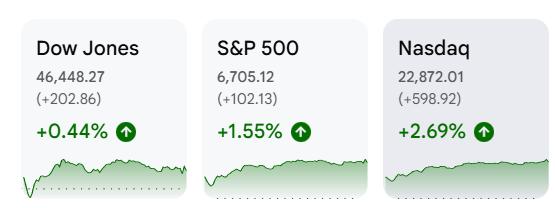
Group 1: Market Overview - The US stock market experienced a strong rebound driven by dovish signals from Federal Reserve officials and positive US-China news, with the Nasdaq rising over 2.5% and the S&P 500 up 1.5%, marking the best single-day performance in six weeks [1] - The S&P 500 index tested a key support level on October 10, and the recent market movements confirmed the expectation of a strong rebound once this support held [2] - The policy foundation for the market rebound stems from a collective shift among key Fed decision-makers, with expectations for a rate cut in December rising to over 80% following dovish comments from Fed officials [3][5] Group 2: Economic Indicators - The release of the Dallas Fed manufacturing index for November, which fell below economists' expectations, further supported the necessity for a rate cut, contributing to the stock market's upward momentum [7] - UBS Securities noted that the combination of rate cut expectations and improved external relations has restored market risk sentiment, suggesting that the previous sell-off in US stocks may have ended [9] Group 3: Company-Specific Developments - Alphabet's stock surged over 6%, with its market capitalization approaching $4 trillion, reflecting a nearly 70% increase in stock price year-to-date, significantly outperforming competitors in the cloud and AI sectors [11][14] - The recent rally in Alphabet's stock is attributed to its transformation from an "advertising giant" to a "core AI infrastructure player," driven by multiple factors including a significant cloud services contract with NATO [15][16] - Alphabet's Google Cloud has become a major growth engine, with a new multi-million dollar contract validating its security and profitability in sensitive projects [17] Group 4: Semiconductor Sector Insights - Broadcom's stock surged over 11% following a report that raised revenue forecasts and positioned the company as a preferred player in the AI semiconductor space [20][21] - The report highlighted a 66% increase in Broadcom's CoWoS (Chip-on-Wafer-on-Substrate) production capacity, indicating explosive demand for its ASIC chips from major clients [23] - Broadcom's growth potential is closely tied to demand from top AI clients, with projections for significant revenue contributions from companies like Google and Anthropic [24][25]



Gartner 2026战略技术趋势:AI原生、多智能体与物理AI引领产业变革
Sou Hu Cai Jing· 2025-11-11 03:39
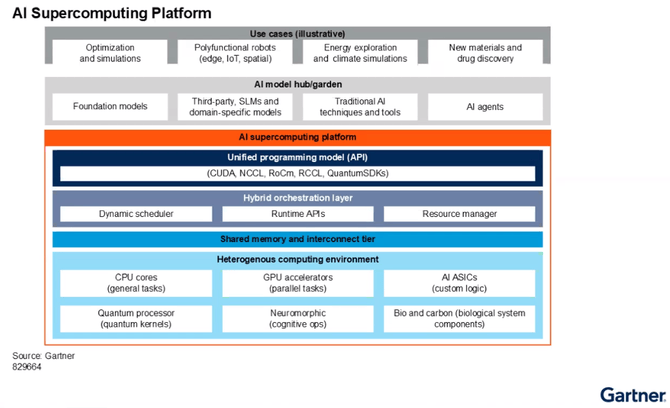
Core Insights - Gartner's Vice President, Gao Ting, presented ten strategic technology trends for 2026, focusing on themes of "architects, coordinators, and sentinels," covering areas such as AI-native development, multi-agent systems, physical AI, and cybersecurity [1] Group 1: AI Native Development - AI-native development platforms are seen as the core of next-generation software engineering, utilizing "ambient programming" to generate complete applications or assist developers in coding [2] - Currently, 20%-40% of code in some tech companies is generated by AI, indicating a shift in software development from efficiency tools to a new development paradigm [2] Group 2: AI Supercomputing Platforms - The demand for computing power in AI is growing exponentially, with AI supercomputing platforms characterized by hybrid AI computing and scheduling capabilities [3][7] - Technologies like NVIDIA's NVQLink and CUDA-Q enable the integration of quantum computing with classical supercomputing, enhancing task scheduling across architectures [3] Group 3: Multi-Agent Systems - Multi-agent systems improve reliability in executing complex tasks by breaking down tasks and allowing different agents to collaborate, addressing the limitations of single-agent systems [8][9] - This approach represents a key step in AI evolving from a "tool" to a "collaborator," reflecting a management mindset of "AI teamwork" [9] Group 4: Domain-Specific Language Models - The high failure rate of enterprise AI projects (95%) is attributed to general models lacking business understanding, which domain-specific language models aim to address through retraining with industry data [10] - Companies must invest in data governance and domain training to effectively utilize AI, avoiding the pitfall of having "models without intelligence" [10] Group 5: Physical AI - Physical AI refers to AI systems that interact with the real world, primarily in applications like autonomous driving and robotics, utilizing VLA models and "world models" [11] - This technology serves as a bridge between AI and the real economy, gradually replacing repetitive labor in sectors like manufacturing and logistics [11] Group 6: Proactive Cybersecurity - AI-driven attacks are lowering the barriers for hackers, necessitating the development of proactive cybersecurity systems that include predictive threat intelligence and automated defenses [12][14] - Companies must transition from static defenses to a proactive security framework that integrates prediction, response, and deception [14] Group 7: Digital Traceability - Digital traceability is becoming essential for building trustworthy digital supply chains, especially in light of frequent software supply chain attacks [15][16] - Establishing software SBOM and model MLBOM lists allows companies to track component origins and security, while watermarking and identification technologies for AI-generated content are being standardized [15][16] Group 8: Geopolitical Migration - Geopolitical risks are prompting companies to migrate data and applications from global public clouds to local "sovereign clouds," with European firms being the most affected [17] - Chinese companies are balancing self-sufficiency and global collaboration to avoid becoming "technology islands" [17] Group 9: Confidential Computing and AI Security Platforms - Although not the main focus, "confidential computing" and "AI security platforms" are ongoing trends that protect data and prevent new types of attacks [18] - The emphasis is on embedding AI into business processes and ensuring ecological collaboration rather than chasing technology fads [18]
AI,大消息!
券商中国· 2025-10-11 05:38
Core Viewpoint - SoftBank Group, led by Masayoshi Son, is making significant moves in the AI and robotics sectors, including a $5.375 billion acquisition of ABB's robotics business and plans to borrow $5 billion for further investment in OpenAI [1][2][4]. Group 1: Investment and Acquisitions - SoftBank Group is negotiating with global banks to secure a $5 billion loan, which will be used for additional investments in OpenAI [1][5]. - The acquisition of ABB's robotics division for $5.375 billion is seen as a strategic move to enhance SoftBank's position in the AI and robotics market [2][3]. - Following the announcement of the ABB acquisition, SoftBank's stock surged over 13% on October 9, reaching a historical high, with a market capitalization exceeding 34 trillion yen [1][2]. Group 2: Financial Performance and Market Reaction - On October 9, SoftBank's market capitalization increased by approximately 3.46 trillion yen (about 161.5 billion yuan) due to the positive market reaction to the ABB acquisition [2]. - Over the past six months, SoftBank's stock has risen nearly 300%, driven by investor enthusiasm for AI-related stocks [2]. Group 3: Strategic Vision and Future Plans - SoftBank's acquisition of ABB's robotics business is part of a broader strategy to integrate AI with robotics, which Son describes as the next frontier for the company [4]. - The deal is expected to be completed by mid-2026 and will generate approximately $5.3 billion in cash for ABB, which will be reinvested into growth and shareholder returns [3]. - SoftBank's ongoing investment in OpenAI, which includes a commitment of up to $400 billion, reflects its ambition to lead in the AI sector [4][5]. Group 4: Global Expansion and AI Infrastructure - SoftBank is also collaborating with Oracle to provide sovereign cloud and AI services in Japan, aiming to support critical infrastructure [6]. - The company plans to invest £1 billion (approximately $1.3 billion) in India through its subsidiary Graphcore, focusing on establishing a new R&D hub [6][7]. - India is viewed as a significant market for AI adoption, with the government promoting local semiconductor production to attract international investment [7].

深夜,全线上涨!黄金股爆发!
证券时报· 2025-10-08 15:00
Market Overview - The three major U.S. stock indices opened higher, with the Dow Jones up 0.27%, S&P 500 up 0.19%, and Nasdaq Composite up 0.26% [1] Gold Market - Gold stocks rose, with Hecla Mining, Alamos Gold, Kinross Gold, and Harmony Gold each gaining over 3% - On October 8, gold prices continued their upward trend, reaching intraday historical highs, with New York gold futures touching $4,071.50 per ounce and London spot gold reaching $4,049.43 per ounce - As of October 8, 20:25 Beijing time, December gold futures on the New York Mercantile Exchange were reported at $4,060.60 per ounce, up 1.40%, while London spot gold was at $4,037.35 per ounce, up 1.35% [2] Semiconductor Sector - The semiconductor sector showed mixed performance, with the Philadelphia Semiconductor Index rising 1.3% - Micron Technology increased by over 3%, while Nvidia, Broadcom, and TSMC rose over 2% - Intel and ASML saw declines of over 1% - Nvidia's CEO confirmed an investment in Elon Musk's startup xAI, expressing excitement about the deal and a desire for further investment [2] Oracle and SoftBank Collaboration - Oracle's stock rose over 1.4%, closing at $288.25 - SoftBank Group is collaborating with Oracle to provide secure, compliant, and scalable sovereign cloud and AI services for Japanese enterprises, launching a new service called Cloud PF Type A based on Oracle Alloy [2] Rare Earth Sector - Rare earth concept stocks collectively surged, with Critical Metals soaring nearly 19% after signing an agreement with Realloys Inc to secure 15% of TanBreeze's output - United States Antimony rose nearly 11%, and Energy Fuels increased by over 4% [3] Chinese Concept Stocks - Most popular Chinese concept stocks opened higher, with the Nasdaq Golden Dragon China Index up 0.5% - NetEase and NIO each rose over 3%, while Bilibili increased by over 2% [4]

甲骨文涨超1.4%,将与软银合作在日本推出主权云和人工智能服务
Xin Lang Cai Jing· 2025-10-08 13:53
Core Viewpoint - Oracle's stock rose over 1.4%, reaching $288.25, following news of a collaboration with SoftBank Group to provide secure, compliant, and scalable sovereign cloud and AI services for Japanese enterprises [1] Group 1 - SoftBank will launch a new service named Cloud PF Type A, which is based on Oracle Alloy, to offer unique cloud and AI services tailored for the Japanese market [1]
美股异动丨甲骨文涨超1.4%,将与软银合作在日本推出主权云和人工智能服务
Ge Long Hui· 2025-10-08 13:49
Core Insights - Oracle's stock rose over 1.4%, reaching $288.25, following news of a collaboration with SoftBank Group to provide sovereign cloud and AI services to Japanese enterprises [1] Company Developments - SoftBank will launch a new service named Cloud PF Type A, which is based on Oracle Alloy, aimed at delivering unique cloud and AI services specifically for the Japanese market [1]

24小时环球政经要闻全览 | 9月25日
Ge Long Hui A P P· 2025-09-25 00:57
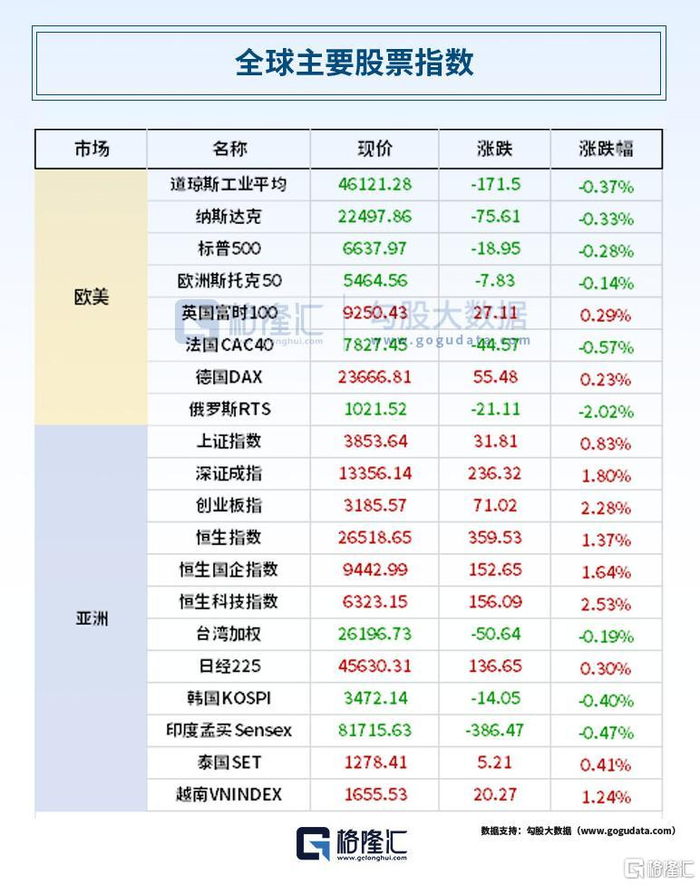
Market Overview - Major US indices experienced declines, with the Dow Jones Industrial Average down by 171.5 points (-0.37%) to 46121.28, and the Nasdaq down by 75.61 points (-0.33%) to 22497.86 [2] - European indices showed mixed results, with the UK FTSE 100 up by 27.11 points (0.29%) to 9250.43, while the German DAX rose by 55.48 points (0.23%) to 23666.81 [2] - Asian markets saw positive movements, with the Shanghai Composite Index up by 31.81 points (0.83%) to 3853.64 and the Shenzhen Component Index up by 236.32 points (1.80%) to 13356.14 [2] Trade and Economic Policies - The US government announced the implementation of a trade agreement with the EU, imposing a 15% tariff on EU imported cars and automotive products starting August 1 [4] - US Treasury Secretary Bessent criticized the Federal Reserve's current interest rate policy, advocating for a reduction of 100-150 basis points by year-end [5] - Russian Prime Minister Mishustin projected a 1.3% GDP growth for Russia in 2026, with a total expected growth of around 7% over the next three years [6] Corporate Developments - Oracle initiated a $18 billion bond issuance, marking the second-largest bond sale in the US investment-grade market since 2025, with demand reaching nearly $88 billion [8] - Intel is reportedly seeking investment from Apple as part of its recovery plan, with discussions also ongoing with other companies [10] - Amazon's autonomous driving subsidiary Zoox applied for regulatory exemptions to deploy 2500 self-driving cars, significantly expanding its operational capacity [12] - SAP and OpenAI, in collaboration with Microsoft, are developing a "German version of OpenAI" aimed at providing sovereign cloud AI services by 2026 [12] - Alibaba Cloud and NVIDIA are partnering to advance physical AI applications, integrating NVIDIA's software stack into Alibaba's AI platform [12]