机密计算

Search documents
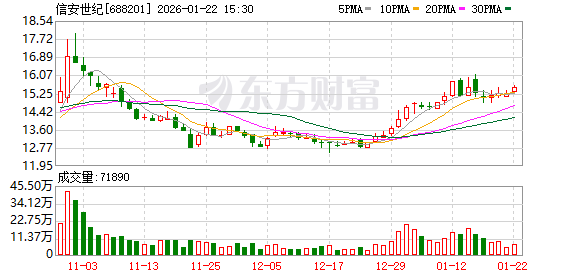
信安世纪:近年来公司与华为多方面合作
Zheng Quan Ri Bao· 2026-01-22 11:45
Core Insights - The company has been collaborating with Huawei in various aspects and has developed a cryptographic product based on the Kunpeng CPU, which has received a secondary cryptographic product certification [2] Group 1: Company Developments - The company has completed the research and development of a trusted execution environment (TEE) cryptographic product based on the Kunpeng CPU [2] - The cryptographic solution integrates hardware-level security capabilities of Kunpeng, enabling full lifecycle management of keys, core cryptographic operations, and traditional cryptographic application scenarios [2] - This solution addresses the contradiction between data circulation and data protection, establishing an independent innovation base for cryptographic security [2] Group 2: Market Applications - The solution is currently serving some financial clients, indicating its practical application in the financial sector [2]


AlphaTON 签署 4600 万美元算力协议,扩展 Telegram 生态 Cocoon AI 部署
Xin Lang Cai Jing· 2026-01-12 18:00
Core Insights - AlphaTON Capital Corp has signed a $46 million infrastructure agreement to expand its deployment on the decentralized AI network Cocoon AI based on Telegram [1] Group 1: Financial Details - The agreement includes the introduction of 576 NVIDIA B300 chips, with delivery planned for February [1] - The transaction structure consists of $4 million in cash, $32.7 million in non-recourse debt financing, and $9.3 million in equity to be paid in installments [1] Group 2: Strategic Implications - This marks AlphaTON's first large-scale deployment of "confidential computing" [1]
从FPGA应用前景视角解读 Gartner 2026十大关键技术趋势
Sou Hu Cai Jing· 2025-12-25 18:41
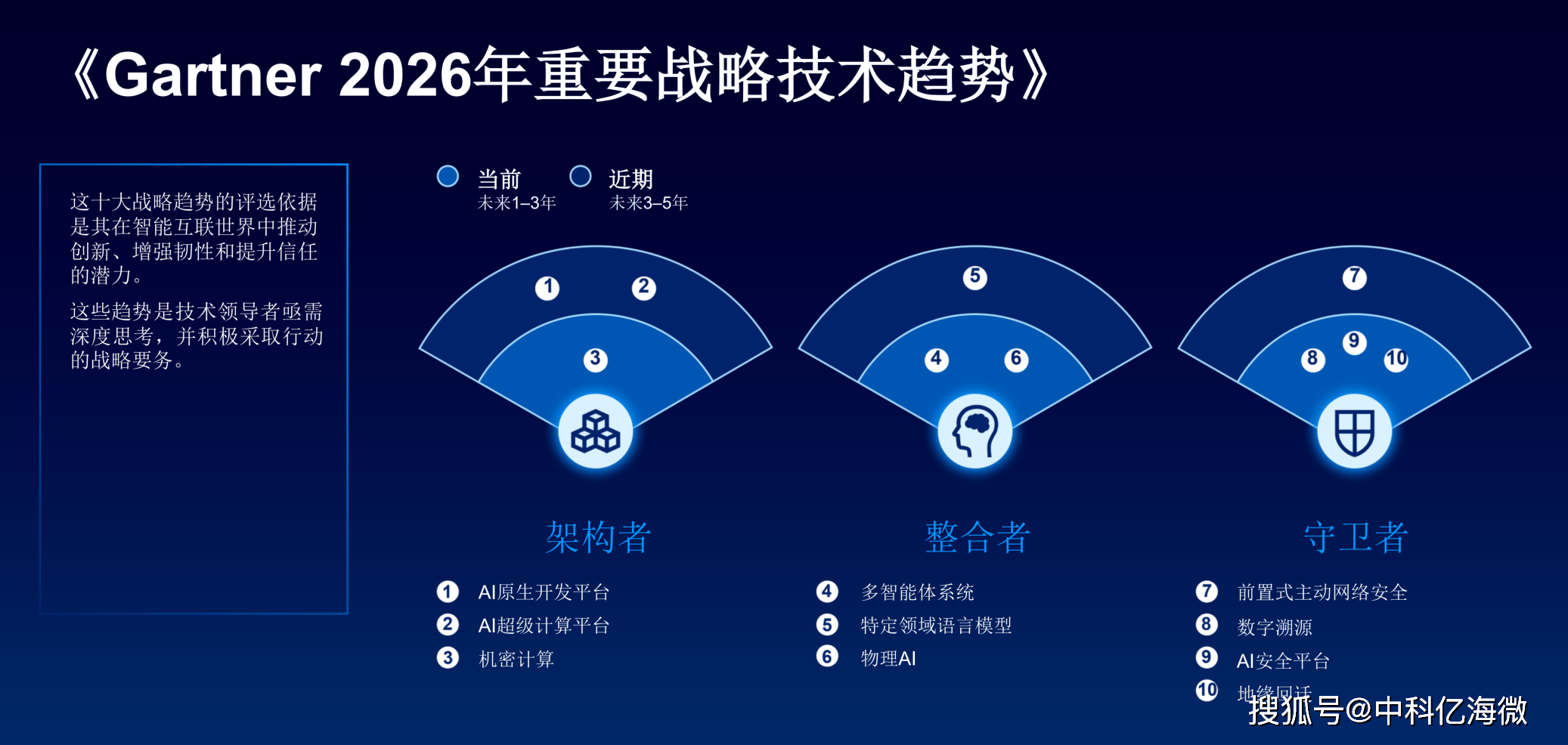
Overview - Gartner's annual report on "Top 10 Strategic Technology Trends" provides a roadmap for technological transformation and business transformation decisions for enterprises over the next five years, categorizing trends into Architect, Synthesist, and Vanguard, focusing on AI platforms and infrastructure, AI applications and orchestration, and security and trust governance [1]. Group 1: AI Native Development Platforms - AI native development platforms leverage generative AI to accelerate software development, enabling non-professionals to participate and allowing small teams to deliver multiple applications simultaneously, thus enhancing productivity and reducing costs [7]. - FPGA/EDA toolchains will be integrated into AI native development systems, automating engineering processes and significantly shortening FPGA development time [8]. - FPGA will serve as an essential prototype verification platform in the automated hardware design era, meeting the increasing demand for rapid validation due to rising chip design iterations [9]. Group 2: AI Supercomputing Platforms - AI supercomputing platforms provide massive computing power for training and running advanced AI models, addressing the challenges posed by traditional infrastructure [10]. - FPGA will handle data flow preprocessing and auxiliary computing tasks in AI supercomputing, addressing memory and I/O bottlenecks during model training and inference [10]. - FPGA will be a key component in building programmable AI data center networks, enhancing performance and security in AI clusters [11]. Group 3: Confidential Computing - Confidential computing protects data during processing using hardware-based trusted execution environments (TEE), becoming increasingly critical due to stricter privacy regulations [11]. - FPGA can create customizable hardware-level TEE, offering fine-grained security boundaries and integrating national cryptography algorithms for sensitive applications [12]. - FPGA will act as a local confidential computing node in edge and industry devices, ensuring data confidentiality and integrity throughout the processing chain [13]. Group 4: Multi-Agent Systems (MAS) - Multi-agent systems enhance efficiency and scalability by enabling collaboration among specialized AI agents, with a significant increase in interest reflected in a 1445% rise in consultations [14]. - FPGA will support concurrent reasoning and real-time control in physical environments, meeting the stringent real-time requirements of MAS applications [14]. - FPGA will facilitate automated hardware development processes driven by MAS, significantly reducing design iteration cycles and labor costs [15]. Group 5: Domain-Specific Language Models (DSLM) - Domain-specific language models provide higher accuracy and compliance in specific industries compared to general-purpose models, aiding in error reduction and cost savings [15]. - FPGA/ASIC design languages are ideal for training DSLM, which can automate code generation and optimization, enhancing the FPGA development process [16]. - Building a specialized RAG corpus for DSLM will be crucial for FPGA manufacturers and tool providers, creating a competitive advantage [17]. Group 6: Physical AI - Physical AI integrates perception, decision-making, and action capabilities into robots and smart devices, extending digital AI productivity into the physical world [18]. - FPGA will serve as the core chip in physical AI systems, integrating various sensors and AI models to form a closed-loop system [18]. - FPGA can meet functional safety requirements in critical applications, combining intelligent control with safety monitoring [18]. Group 7: Proactive Network Security - Proactive network security employs advanced AI to predict and mitigate network attacks before they occur, shifting from passive to active defense strategies [19]. - FPGA-based SmartNICs can perform deep packet inspection at high speeds, providing a programmable and secure hardware protection layer [20]. Group 8: Digital Traceability - Digital traceability ensures the integrity and origin of software and data, becoming essential due to increasing regulatory demands [21]. - FPGA can support digital traceability by providing high-performance cryptographic functions and real-time watermarking capabilities [22]. Group 9: AI Security Platforms - AI security platforms offer unified protection for third-party AI services and in-house applications, addressing emerging risks associated with AI [23]. - FPGA's role in AI security platforms is limited, primarily serving as an optional component for inference acceleration [24]. Group 10: Geopolitical Resilience - Geopolitical resilience involves migrating workloads from global cloud platforms to sovereign clouds or local environments to mitigate geopolitical risks [25]. - FPGA can serve as a hardware module in sovereign clouds, providing essential infrastructure support for localized AI and business systems [26].
震惊,英伟达GPU竟带定位器
半导体芯闻· 2025-12-10 08:14
Core Insights - Nvidia has developed a location verification technology to indicate the country of its chips, aimed at preventing smuggling to restricted export countries [1] - This feature will be available as a software option for customers, utilizing Nvidia's GPU confidential computing capabilities [1] - The software will initially be available on the latest "Blackwell" series chips, which offer enhanced security features compared to previous generations [1] Group 1: Confidential Computing Overview - Confidential computing is a technology that protects data in use, preventing unauthorized access or tampering during processing [3][4] - It creates a trusted execution environment (TEE) using encryption keys bound to the processor, ensuring data privacy and integrity [3][4] - This technology addresses the last gap in data lifecycle protection, focusing on preventing device owners from accessing user data in cloud and edge computing environments [5] Group 2: Technical Implementation - The foundation of confidential computing is the root of trust, which relies on unique security keys for each processor [8] - It utilizes a secure boot mechanism to verify firmware integrity and isolates a secure enclave for application execution [8] - Nvidia's H100 GPU is the first to support confidential computing, enabling secure operations in traditional virtual machines and Kubernetes environments [9] Group 3: Performance and Compatibility - The confidential computing mode of the H100 GPU includes various operational modes, ensuring data and instructions are encrypted during transmission [9][10] - Performance remains largely unaffected in terms of native computing power and HBM bandwidth, with overhead primarily from CPU-GPU encrypted transmission [10] - Collaboration with CPU manufacturers is essential for implementing confidential computing capabilities, ensuring device integrity and security [10]


Gartner2026预测:这十大战略技术趋势,将决定企业未来竞争力
Sou Hu Cai Jing· 2025-11-08 18:56
Core Insights - Gartner identifies ten strategic technology trends that organizations need to focus on by 2026, emphasizing the unprecedented speed of innovation and transformation in the current year [1][3]. Group 1: AI Supercomputing Platforms - AI supercomputing platforms integrate various computing resources to manage complex workloads, enhancing performance and innovation potential [6]. - By 2028, over 40% of leading companies will apply hybrid computing paradigms to critical business processes, a significant increase from the current 8% [8]. Group 2: Multi-Agent Systems - Multi-agent systems consist of multiple AI agents that interact to achieve complex individual or collective goals, enhancing automation and collaboration [10]. Group 3: Domain-Specific Language Models (DSLM) - DSLMs are tailored AI models trained on specific industry data, providing higher accuracy and compliance for specialized tasks compared to general models [11]. - By 2028, over half of generative AI models used by enterprises will be domain-specific [13]. Group 4: AI Security Platforms - AI security platforms offer unified protection mechanisms for AI applications, helping organizations monitor activities and enforce usage policies [16]. - By 2028, over 50% of enterprises will utilize AI security platforms to safeguard their AI investments [16]. Group 5: AI Native Development Platforms - AI native development platforms enable rapid software development through generative AI, allowing non-technical experts to create applications [19]. - By 2030, 80% of enterprises will transform large software engineering teams into smaller, agile teams empowered by AI [19]. Group 6: Confidential Computing - Confidential computing protects sensitive data by isolating workloads in trusted execution environments, crucial for regulated industries [20]. - By 2029, over 75% of business processes handled in untrusted infrastructures will be secured through confidential computing [22]. Group 7: Physical AI - Physical AI empowers machines and devices with perception, decision-making, and action capabilities, providing significant benefits in automation and safety [23]. Group 8: Proactive Cybersecurity - Proactive cybersecurity is becoming a trend as organizations shift from passive defense to active protection, with AI-driven solutions playing a key role [26]. Group 9: Digital Traceability - Digital traceability is essential for verifying the source and integrity of software and data, especially as reliance on third-party software increases [30]. Group 10: Geopolitical Repatriation - Geopolitical repatriation involves moving data and applications to local platforms to mitigate geopolitical risks, a trend expected to grow significantly by 2030 [33].

2025全球计算大会落地深圳,聚焦产业落地新机遇
Nan Fang Du Shi Bao· 2025-11-03 09:38
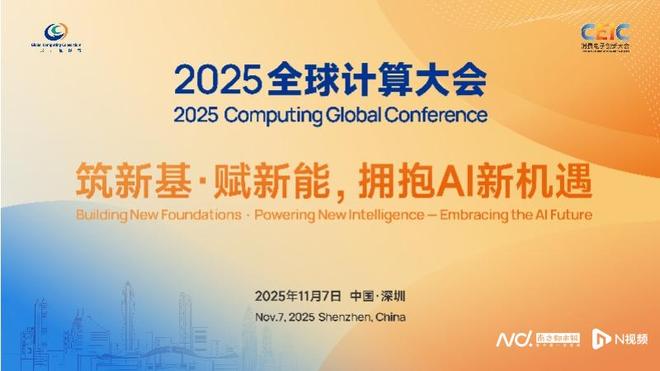
Core Points - The 2025 Global Computing Conference (CGC) is scheduled for November 7 at the Shenzhen Convention Center, focusing on six major themes: intelligent computing, embodied intelligence, open liquid cooling, confidential computing, AI cloud operating systems, and CloudDevice [1][3] Group 1: Conference Themes - The Intelligent Computing Forum will discuss pathways for improving computing efficiency and optimizing AI models [3] - The Embodied Intelligence Forum will focus on the practical applications of robotics and smart hardware in industrial and consumer scenarios [3] - The Open Liquid Cooling Technology Forum will share energy-efficient cooling solutions for high-density computing environments [3] - The Confidential Computing Forum will explore collaborative mechanisms for privacy protection and AI security in sectors like finance and the internet [3] - The AI Cloud Operating Systems Forum will release technical standards related to computing resource scheduling and heterogeneous integration [3] - The CloudDevice Forum will showcase innovative integration cases of cloud terminals in manufacturing and retail industries [3] Group 2: Interactive Exhibitions and Networking - The conference will feature a technology interaction display area, including CloudDevice XR experiences, demonstrations of embodied intelligent robots, and a mini development lab for intelligent computing [3] - The event aims to provide a platform for communication among technology research, industry applications, and cross-sector collaboration, allowing participants to understand the latest technological trends and connect with representatives from various enterprises and research institutions [3]
全球计算联盟GCC解码新机遇 锁定2025全球计算大会六大论坛
Huan Qiu Wang Zi Xun· 2025-10-30 06:37
Core Insights - The "2025 Global Computing Conference (CGC)" is set to focus on key areas such as intelligent computing, embodied intelligence, open liquid cooling, confidential computing, AI cloud operating systems, and CloudDevice, promoting a vision of "new computing empowering a digital intelligence society" [1][2][3] Group 1: Conference Overview - The conference will feature six major forums aimed at addressing industry pain points and fostering collaboration among academia, industry, and research [1] - The event will take place at the Shenzhen Convention and Exhibition Center on November 7, providing opportunities for participants to connect with leading companies and research institutions [3] Group 2: Forum Highlights - The Intelligent Computing Forum will focus on upgrading computing productivity, showcasing AI model optimization and computing efficiency improvements through algorithm innovation and hardware acceleration [1][2] - The Embodied Intelligence Forum will address challenges in industrial robot interaction and consumer-grade smart device development, using case studies to explore commercialization strategies [1][2] - The Open Liquid Cooling Technology Forum will serve as a bridge between equipment manufacturers and data center users, providing deployment guidelines and cost-saving references through thermal efficiency comparisons [2] - The Confidential Computing Forum will discuss AI-era security and privacy protection, particularly in financial and internet applications [2] - The AI Cloud Operating System Forum will break down core technologies for computing scheduling and present solutions for heterogeneous computing orchestration [2] - The CloudDevice Forum will focus on the integration of cloud terminals across various industries, sharing smart terminal implementation cases [2] Group 3: Exhibition Features - The "GCC Annual Theme Exhibition Area" will feature interactive AI experiences, including the CloudDeviceXR interactive area and embodied intelligent robot interaction zone, allowing participants to engage with cutting-edge technologies [2] - The exhibition will also include a relaxation area with AI smart massage chairs and 3,000 gift packages, blending professional exchange with enjoyable experiences [2]
Gartner《2026年重点关注的十大战略技术趋势》(下载)
欧米伽未来研究所2025· 2025-10-21 09:14
Core Viewpoint - The article emphasizes that 2026 will be a pivotal year for technology leaders, with unprecedented speed in transformation, innovation, and risk driven by artificial intelligence (AI) and a highly interconnected world [2]. Group 1: AI Supercomputing Platforms - AI supercomputing platforms integrate various computing paradigms to manage complex workloads, enhancing performance and innovation potential [5]. - By 2028, over 40% of leading companies will adopt hybrid computing architectures for critical business processes, a significant increase from the current 8% [6]. - The technology is already driving innovation across industries, significantly reducing drug modeling time in biotech and lowering portfolio risks in financial services [7]. Group 2: Multi-Agent Systems - Multi-agent systems consist of multiple AI agents that interact to achieve complex individual or collective goals, enhancing automation and collaboration [9]. - These systems allow for modular design, improving efficiency and adaptability in business processes [9]. Group 3: Domain-Specific Language Models (DSLM) - DSLMs are trained on specialized datasets for specific industries, providing higher accuracy and compliance compared to generic large language models (LLMs) [11]. - By 2028, over half of generative AI models used by enterprises will be domain-specific [12]. - Context is crucial for the success of AI agents based on DSLMs, enabling them to make informed decisions even in unfamiliar scenarios [13]. Group 4: AI Security Platforms - AI security platforms provide unified protection mechanisms for third-party and custom AI applications, helping organizations monitor AI activities and enforce usage policies [13]. - By 2028, over 50% of enterprises will utilize AI security platforms to safeguard their AI investments [15]. Group 5: AI-Native Development Platforms - AI-native development platforms enable rapid software development, allowing non-technical experts to create applications with AI assistance [17]. - By 2030, 80% of enterprises will transform large software engineering teams into smaller, more agile teams empowered by AI [17]. Group 6: Confidential Computing - Confidential computing reshapes how enterprises handle sensitive data by isolating workloads in trusted execution environments [18]. - By 2029, over 75% of business workloads processed in untrusted environments will be secured through confidential computing [18]. Group 7: Physical AI - Physical AI empowers machines and devices with perception, decision-making, and action capabilities, providing significant benefits in automation and safety-critical industries [19]. Group 8: Proactive Cybersecurity - Proactive cybersecurity is becoming a trend as organizations face increasing threats, with predictions that by 2030, proactive defense solutions will account for half of enterprise security spending [23]. Group 9: Geopolitical Data Migration - Geopolitical risks are prompting companies to migrate data and applications to sovereign or regional cloud services, enhancing control over data residency and compliance [26]. - By 2030, over 75% of enterprises in Europe and the Middle East will migrate virtual workloads to solutions that mitigate geopolitical risks, up from less than 5% in 2025 [26].

日本最强2nm芯片,深度拆解
半导体行业观察· 2025-05-03 02:05
Core Viewpoint - Fujitsu is transitioning its focus from high-performance computing to scalable traditional data center infrastructure with its next-generation processor, Monaka, which is designed for cloud-native workloads and aims for efficient, secure computing [1][2][37]. Group 1: Monaka Processor Overview - Monaka is built on a 2nm core chip with a 3D multi-core layout, optimized for air-cooled servers and conventional memory, targeting confidential computing and low-voltage operation [1][3][6]. - The processor will feature 144 Armv9-A cores per slot in a dual-slot configuration, totaling 288 cores, and is designed for standard 2U data center servers [3][6]. - Monaka aims to achieve generational improvements in application performance and performance per watt, with a projected launch in fiscal year 2027 [10][38]. Group 2: Design and Efficiency - The design incorporates advanced silicon for critical areas while using more cost-effective processes for larger SRAM and IO chips, aligning with Japan's energy efficiency goals [6][10]. - Monaka will utilize DDR5 and PCIe Gen6 for high throughput IO, avoiding special packaging or HBM to enhance memory bandwidth [6][10]. - The chip is expected to have a power consumption of less than 500W, suitable for standard server racks, focusing on scalability and efficient throughput rather than peak floating-point performance [6][10]. Group 3: Security and Reliability - Monaka emphasizes trust with hardware-level isolation, workload protection, and system resilience, positioning it as a confidential computing platform for multi-tenant environments [19][22]. - It features full memory encryption and a hardware root of trust to enhance system-level security and verify firmware authenticity [22][19]. - Reliability features include error detection and correction mechanisms, thermal control, and maintainability, aiming for high uptime in large-scale distributed deployments [22][19]. Group 4: Software and Ecosystem - Monaka is designed to run standard Linux stacks, supporting upstream distributions and common development tools, ensuring compatibility and accessibility for developers [24][27]. - The development stack will support LLVM, GCC, and Python, maintaining consistency with tools used in previous Fujitsu architectures [27][24]. - Monaka will support CXL 3.0 for composable infrastructure and PCIe Gen6 for compatibility with next-generation storage and networking devices [30][24]. Group 5: Market Positioning - Fujitsu positions Monaka as a "mainframe-class" processor, focusing on predictable behavior, lifecycle control, and secure leasing, rather than just throughput aggregation [31][34]. - The processor targets markets that require platform integrity, such as sovereign cloud deployments, telecommunications, and defense sectors, emphasizing reliability over raw performance [34][31]. - Monaka represents a continuation of Fujitsu's decades-long experience in processor design, transitioning from SPARC to Arm architecture while prioritizing control and integration [35][37].