AI超级计算

Search documents
从FPGA应用前景视角解读 Gartner 2026十大关键技术趋势
Sou Hu Cai Jing· 2025-12-25 18:41
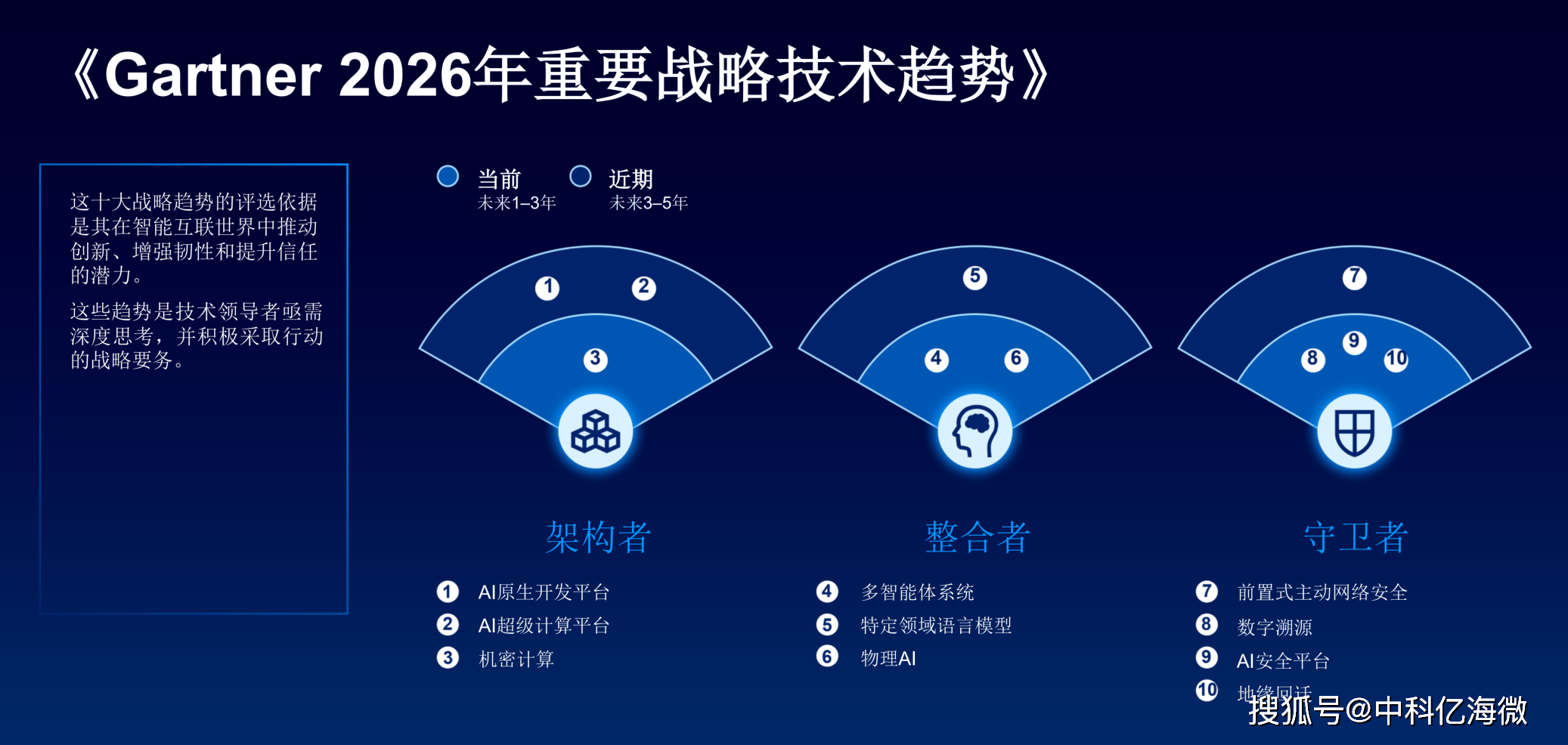
Overview - Gartner's annual report on "Top 10 Strategic Technology Trends" provides a roadmap for technological transformation and business transformation decisions for enterprises over the next five years, categorizing trends into Architect, Synthesist, and Vanguard, focusing on AI platforms and infrastructure, AI applications and orchestration, and security and trust governance [1]. Group 1: AI Native Development Platforms - AI native development platforms leverage generative AI to accelerate software development, enabling non-professionals to participate and allowing small teams to deliver multiple applications simultaneously, thus enhancing productivity and reducing costs [7]. - FPGA/EDA toolchains will be integrated into AI native development systems, automating engineering processes and significantly shortening FPGA development time [8]. - FPGA will serve as an essential prototype verification platform in the automated hardware design era, meeting the increasing demand for rapid validation due to rising chip design iterations [9]. Group 2: AI Supercomputing Platforms - AI supercomputing platforms provide massive computing power for training and running advanced AI models, addressing the challenges posed by traditional infrastructure [10]. - FPGA will handle data flow preprocessing and auxiliary computing tasks in AI supercomputing, addressing memory and I/O bottlenecks during model training and inference [10]. - FPGA will be a key component in building programmable AI data center networks, enhancing performance and security in AI clusters [11]. Group 3: Confidential Computing - Confidential computing protects data during processing using hardware-based trusted execution environments (TEE), becoming increasingly critical due to stricter privacy regulations [11]. - FPGA can create customizable hardware-level TEE, offering fine-grained security boundaries and integrating national cryptography algorithms for sensitive applications [12]. - FPGA will act as a local confidential computing node in edge and industry devices, ensuring data confidentiality and integrity throughout the processing chain [13]. Group 4: Multi-Agent Systems (MAS) - Multi-agent systems enhance efficiency and scalability by enabling collaboration among specialized AI agents, with a significant increase in interest reflected in a 1445% rise in consultations [14]. - FPGA will support concurrent reasoning and real-time control in physical environments, meeting the stringent real-time requirements of MAS applications [14]. - FPGA will facilitate automated hardware development processes driven by MAS, significantly reducing design iteration cycles and labor costs [15]. Group 5: Domain-Specific Language Models (DSLM) - Domain-specific language models provide higher accuracy and compliance in specific industries compared to general-purpose models, aiding in error reduction and cost savings [15]. - FPGA/ASIC design languages are ideal for training DSLM, which can automate code generation and optimization, enhancing the FPGA development process [16]. - Building a specialized RAG corpus for DSLM will be crucial for FPGA manufacturers and tool providers, creating a competitive advantage [17]. Group 6: Physical AI - Physical AI integrates perception, decision-making, and action capabilities into robots and smart devices, extending digital AI productivity into the physical world [18]. - FPGA will serve as the core chip in physical AI systems, integrating various sensors and AI models to form a closed-loop system [18]. - FPGA can meet functional safety requirements in critical applications, combining intelligent control with safety monitoring [18]. Group 7: Proactive Network Security - Proactive network security employs advanced AI to predict and mitigate network attacks before they occur, shifting from passive to active defense strategies [19]. - FPGA-based SmartNICs can perform deep packet inspection at high speeds, providing a programmable and secure hardware protection layer [20]. Group 8: Digital Traceability - Digital traceability ensures the integrity and origin of software and data, becoming essential due to increasing regulatory demands [21]. - FPGA can support digital traceability by providing high-performance cryptographic functions and real-time watermarking capabilities [22]. Group 9: AI Security Platforms - AI security platforms offer unified protection for third-party AI services and in-house applications, addressing emerging risks associated with AI [23]. - FPGA's role in AI security platforms is limited, primarily serving as an optional component for inference acceleration [24]. Group 10: Geopolitical Resilience - Geopolitical resilience involves migrating workloads from global cloud platforms to sovereign clouds or local environments to mitigate geopolitical risks [25]. - FPGA can serve as a hardware module in sovereign clouds, providing essential infrastructure support for localized AI and business systems [26].

不要再看英伟达的热闹了!中国的量子计算正被美国快速甩开
Xin Lang Cai Jing· 2025-10-29 20:29
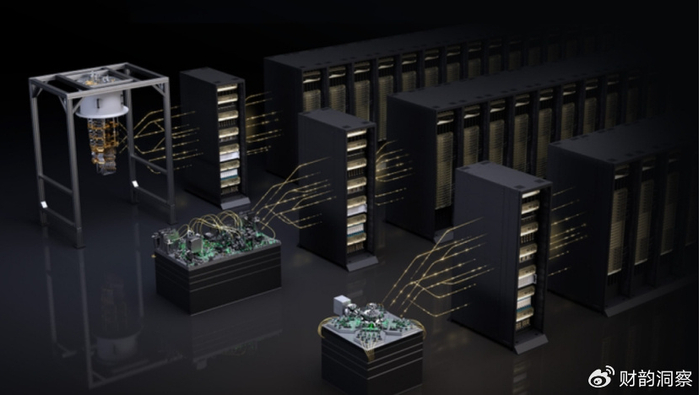
Core Insights - NVIDIA has launched NVQLink, a new interconnect architecture aimed at enhancing quantum computing capabilities by tightly coupling GPU computing with quantum processors, thereby facilitating accelerated quantum supercomputing [3][12] - The introduction of NVQLink signifies a strategic move towards establishing a robust infrastructure for fault-tolerant quantum computing (FTQC), leveraging NVIDIA's existing GPU technology and CUDA-Q ecosystem [18][20] NVQLink Overview - NVQLink is an open system architecture designed to provide low-latency and high-throughput connections necessary for large-scale quantum computing and quantum error correction (QEC) [3][5] - The architecture has garnered support from 17 quantum processing unit (QPU) manufacturers, 5 control system manufacturers, and 9 U.S. national laboratories, positioning NVIDIA as a central player in the quantum-AI integration market [5][13] Technical Specifications - NVQLink achieves a round-trip latency of less than 4 microseconds, which is critical for effective QEC cycles, ensuring that feedback and measurement processes occur within the coherence time of quantum bits [8][12] - The architecture emphasizes the need for deterministic and reliable feedback times, which are essential for maintaining the integrity of quantum information [6][9] Competitive Landscape - Prior to NVQLink, existing high-performance computing interconnect technologies like traditional NVLink and InfiniBand were inadequate for meeting the stringent real-time requirements of QEC [7][8] - NVQLink's open architecture allows for seamless integration with existing systems, enabling developers to focus on QEC algorithms rather than designing different acceleration interfaces for various QPU technologies [17][19] Strategic Implications - The launch of NVQLink represents a significant advancement in the U.S. quantum computing landscape, establishing a clear divide between U.S. and Chinese technological ecosystems, with the former focusing on a "computational ecosystem" while the latter remains in a "physical ecosystem" [18][20] - The competitive advantage held by U.S. tech giants like NVIDIA, IBM, and Google in defining quantum technology standards is crucial for maintaining global leadership in the quantum computing industry [19][20]

CPO,大有可为
半导体行业观察· 2025-07-21 01:22
Core Insights - The article discusses the growing importance of integrated semiconductor optical modules, specifically On-Board Optical (OBO), Near-Package Optical (NPO), and Co-Packaged Optical (CPO) solutions, which are expected to see a compound annual growth rate of 50% in shipment volume by 2033 [2][4]. Group 1: Market Trends - Integrated optical solutions are significantly improving transmission capacity and processing for AI systems, providing higher bandwidth at lower power consumption [2][4]. - The transition from copper to optical solutions is anticipated to lead to a non-linear performance enhancement, with potential performance increases of up to 80 times compared to existing solutions [7]. Group 2: Key Players and Future Projections - Major companies like NVIDIA, Intel, Marvell, and Broadcom are currently leading the development of CPO technology, which is expected to drive substantial revenue growth and shipment volume by 2027 [4]. - By 2033, it is projected that over half of the revenue and shipment volume will come from integrated semiconductor optical I/O solutions [4].