
AI智能医生

Search documents
2026医疗展望:百家公司港股排队,医疗板块能否再创「神话」
3 6 Ke· 2026-02-25 00:02
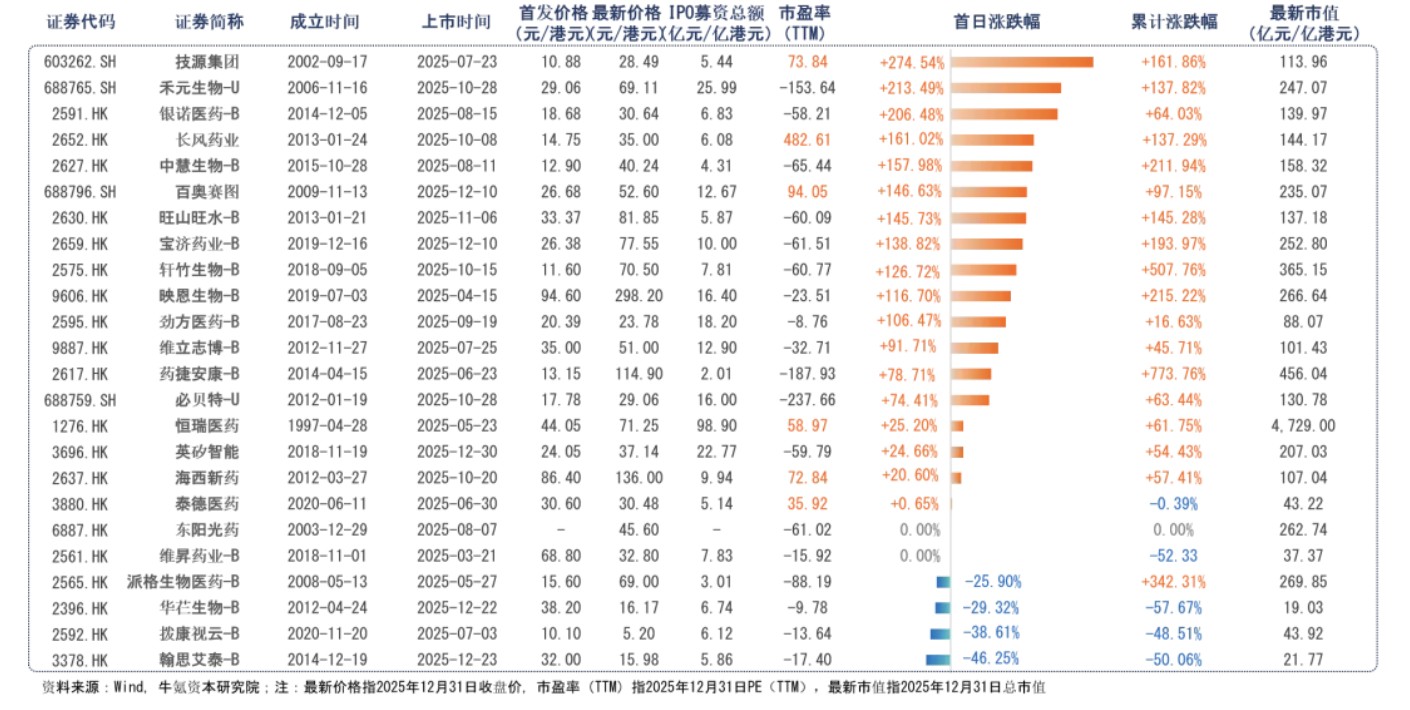
Core Insights - The medical sector is experiencing both "explosive growth" and "cooling" trends as companies like Jingfeng Medical and Beixin Life go public, with over 100 medical companies waiting for IPOs in Hong Kong amid tightening regulations [1][2] - The performance of new drug IPOs in 2026 is expected to be significantly differentiated, with investors becoming more selective and focusing on companies with successful overseas BD cases and clear product timelines [2][3] - The AI-driven pharmaceutical sector is gaining traction, with companies like InSilico Medicine and Huasheng Zhiyuan achieving significant BD transactions, indicating a growing interest in AI's potential in drug development [1][5][11] Medical Device Sector - The medical device sector is recovering at a slower pace compared to the innovative drug sector, facing challenges such as geopolitical issues and difficulties in international expansion [2][24] - Investment in the medical device market is currently low but is expected to gradually improve, with opportunities in high-end imaging, surgical robots, and AI-driven devices [22][24] - The export of innovative medical devices is anticipated to improve in 2026, with leading domestic manufacturers enhancing product quality to compete in international markets [24][25] BD Transactions and Market Trends - The global share of China's new drug BD transactions is expected to continue rising, although the growth rate may slow due to geopolitical factors and changing perceptions of value [5][6] - The oncology treatment landscape is becoming crowded, prompting a shift in focus towards autoimmune, metabolic, and central nervous system-related new drugs [7][8] - AI in drug development is seen as a significant trend, with companies needing to leverage data effectively to succeed in clinical applications [11][12] Investment Opportunities - The investment landscape for medical devices is characterized by a focus on therapeutic devices, with a shift from diagnostic to treatment-oriented products [17][22] - There is a growing interest in consumer medical devices, particularly those enhanced by AI, which are expected to see increased demand and market penetration [13][14] - The need for innovative solutions in areas like cardiovascular and neurological treatments remains strong, with potential for significant market growth [17][24]


2026医疗展望:百家公司港股排队,医疗板块能否再创“神话”
3 6 Ke· 2026-02-12 11:27
Core Insights - The medical sector is experiencing both "explosive growth" and "cooling" simultaneously, with over 100 medical companies queued for IPOs in Hong Kong, and tightening IPO policies expected [1][3] - The performance of new drug IPOs in 2026 is anticipated to be significantly differentiated, with many companies initiating Pre-IPO financing to hedge against regulatory tightening and market risks [4][5] Group 1: IPO Trends and Market Dynamics - The number of companies waiting for IPOs in Hong Kong has exceeded 400, indicating a crowded market, and the performance of these IPOs is likely to vary widely [4] - Investors are expected to favor companies with successful overseas BD (business development) cases and clear product timelines, while those lacking competitive advantages may face significant IPO pressure [4] - The market sentiment is cautious, with many companies considering Crossover financing to mitigate risks associated with the tightening IPO window [5] Group 2: BD Transactions and Investment Opportunities - The enthusiasm for BD transactions from multinational corporations (MNCs) towards Chinese new drug assets remains high, with China accounting for 50% of global BD transaction volume last year [9][8] - The valuation of Chinese new drugs is expected to stabilize, but there are concerns about rising prices that could harm the reputation of Chinese biotech in the global market [9][8] - The focus of BD transactions is shifting from oncology to other therapeutic areas such as autoimmune and cardiovascular diseases, indicating a diversification of investment interests [12] Group 3: AI in Pharmaceuticals and Medical Devices - AI-driven pharmaceutical companies are gaining traction, with significant funding and BD opportunities expected in 2026, emphasizing the importance of data in drug development [15][16] - The AI revolution is anticipated to first impact consumer medical devices, with AI enhancing product effectiveness and consumer willingness to invest in advanced home healthcare devices [17][18] - The competitive landscape for AI in healthcare is evolving, with a focus on developing tools that can integrate various data types to assist clinical decision-making [19][20] Group 4: Medical Device Market Outlook - The investment landscape for innovative medical devices is currently low but is expected to gradually improve, with structural investment opportunities emerging [26][28] - The challenges of international expansion for Chinese medical devices are significant, but improvements in product quality and performance are paving the way for better market acceptance [31][32] - The future of medical device exports is shifting towards local production and direct sales networks, enhancing profitability and market penetration [32][33]

2026医疗展望:百家公司港股排队,医疗板块能否再创「神话」
36氪· 2026-02-12 10:18
Core Viewpoint - The medical sector is experiencing both "explosive growth" and "cooling" simultaneously, with over 100 medical companies queued for IPOs in Hong Kong, while tightening IPO policies are anticipated [4][5]. Group 1: IPO Trends and Market Dynamics - The performance of new drug IPOs in 2026 is expected to be significantly differentiated, with over 400 companies currently in the queue for IPOs in Hong Kong [8]. - Investors are becoming more mature and demanding higher standards for IPO projects, focusing on companies with successful overseas BD cases and clear product sales expectations [8][9]. - Many companies are considering Pre-IPO financing to hedge against tightening regulations and market risks, with valuations typically in the range of $300 million to $500 million [9][10]. Group 2: BD Transactions and Market Sentiment - The enthusiasm for BD transactions from multinational corporations (MNCs) towards Chinese new drug assets remains high, with China accounting for 50% of global BD transaction volume last year [12]. - However, the perception of Chinese new drugs as "value for money" is diminishing, leading to a potential slowdown in the growth rate of BD transactions [12][13]. - The focus of BD transactions is shifting from oncology to autoimmune and cardiovascular treatments, with a growing interest in complementary pipelines [14][15]. Group 3: AI in Drug Development and Healthcare - AI-driven pharmaceutical companies are gaining traction, with significant funding and BD opportunities expected in 2026, although the market is becoming increasingly competitive [20][21]. - The application of AI in consumer medical devices and digital therapies is anticipated to unlock new opportunities, particularly in home healthcare products [23][24]. - AI's role in enhancing clinical decision-making and patient management is expected to revolutionize healthcare delivery, making medical information more accessible [24][25]. Group 4: Medical Device Market Outlook - The investment landscape for innovative medical devices is currently at a low point but is expected to gradually improve, with structural investment opportunities emerging [33][34]. - The challenges of international expansion for medical devices are greater than for new drugs, but there are signs of improvement as leading Chinese manufacturers enhance their product capabilities [37][38]. - The future of medical device exports is shifting towards local production and direct sales networks, moving away from simple product exports [38][39].
AI随手拍积累“安全分”
Hang Zhou Ri Bao· 2025-07-10 02:52
Core Insights - The "AI Snap" initiative launched by the Yuhang District Emergency Management Bureau has successfully engaged over 1,500 participants in identifying safety hazards through a user-friendly WeChat mini-program [1][2] - The program has led to the identification and rectification of 7,496 safety hazards, contributing to a generally stable safety production situation in the district [2] Group 1: Program Features - Participants can earn points by reporting hazards, signing in daily, learning safety knowledge, and confirming hazard rectifications, with points redeemable for practical prizes such as hair dryers and Xiaomi wristbands [2] - The platform utilizes an "AI intelligent doctor" to quickly identify common risk points and provide corresponding rectification suggestions, enhancing the efficiency of hazard detection and resolution [1] Group 2: Impact and Participation - Since June, the initiative has covered 12 towns and 610 enterprises, accumulating a total of 156,095 points [2] - In addition to the "AI Snap" program, the bureau has initiated the "'Hundred Enterprises, Thousand Employees' Hazard Inspection" campaign, resulting in over 2,000 companies establishing internal reporting reward systems [2]