AI翻译软件

Search documents
战略完美也没用,AI时代执行力为王,这三个方向决定未来
Sou Hu Cai Jing· 2026-01-06 19:28
Core Insights - The article discusses the evolving role of product managers in the age of AI, emphasizing that while AI can automate certain tasks, it cannot replace the human touch and emotional intelligence that product managers bring to their work [3][5][16] Group 1: AI Investment and Industry Trends - By 2025, 92% of global executives plan to increase AI investments, with major companies like Meta, Amazon, Alphabet, and Microsoft set to invest $325 billion in AI infrastructure [3] - The rise of AI is pushing product managers to adapt, as mechanical tasks are increasingly automated, leading to a critical juncture for this profession [3][8] Group 2: Human Insight and Emotional Intelligence - Product managers must engage with real user needs and empathize with their experiences, as AI lacks the ability to understand the emotional context behind data [5][10] - The healthcare AI sector exemplifies this need for human insight, where product managers prioritize user responsibility and empathy in their designs [5] Group 3: Skills Evolution and Talent Demand - The industry is shifting from valuing specialized skills to requiring versatile, cross-functional talents who can manage the entire product lifecycle [8][10] - Companies are increasingly seeking product managers who can integrate AI tools and simplify complex problems, leading to a rise in demand for hybrid talent capable of commanding high salaries [10] Group 4: Future Directions and Strategic Focus - By 2026, competition among product managers will hinge on mindset and comprehensive abilities rather than just technical skills, with a focus on global perspectives and local adaptability [12][14] - The emphasis will be on executing minimal viable strategies and optimizing through iterative processes, highlighting the importance of execution over perfection [16][18]


“翻译界哈佛”倒闭:有学生哭了两晚 AI冲击下译员何去何从?
Di Yi Cai Jing· 2025-11-11 00:31
Core Viewpoint - The Monterey Institute of International Studies (MIIS), a leading translation school, announced the closure of its on-campus graduate programs by summer 2027, attributing the decision to financial and structural issues, with a significant impact from the rise of AI in the translation industry [1][2]. Industry Impact - The translation industry is undergoing a profound structural transformation due to AI, with many professionals feeling the pressure to adapt or risk being left behind [1][4]. - The adoption rate of Machine Translation Post-Editing (MTPE) has surged from 26% in 2022 to nearly 46% in 2024, indicating a shift towards technology-driven translation methods [2]. Financial Implications - The cost of translation using MTPE is significantly lower than pure human translation, with estimates showing a reduction from over 200,000 yuan for 100,000 words to between 120,000 and 150,000 yuan, while the turnaround time decreases from one month to about two weeks [3]. Educational Adaptation - Educational institutions are responding to industry changes by introducing new programs that integrate technology, such as dual degree programs in translation and computer science [6]. - The demand for professionals skilled in AI translation tools is increasing, with 80% of top translation companies already deploying generative AI tools [6]. Job Market Trends - A survey by the UK Writers' Association revealed that over one-third of translators have lost jobs due to AI advancements, with more than 14% reporting reduced income [5]. - Companies are increasingly valuing candidates' technical skills and adaptability over traditional language qualifications in the hiring process [6]. Quality and Creativity Concerns - Despite the efficiency of AI, many industry professionals express concerns about the loss of nuanced translation quality, particularly in creative contexts where human translators excel [7][9]. - The unique qualities of human translators, such as emotional depth and cultural understanding, remain irreplaceable in certain translation tasks [9][10].
“翻译界哈佛”倒闭:有学生哭了两晚,AI冲击下译员何去何从?
Di Yi Cai Jing· 2025-11-11 00:23
Core Insights - The Monterey Institute of International Studies, known as the "Harvard of Translation," will close its on-campus graduate programs by summer 2027 due to financial and structural issues, with a significant decline in enrollment attributed to the impact of AI on the translation industry [1] - The translation industry is undergoing a profound structural transformation, with professionals facing a critical juncture as they adapt to the rapid advancements in AI technology [1][2] Industry Trends - The adoption of Machine Translation Post-Editing (MTPE) has surged, with its average usage rate increasing from 26% in 2022 to nearly 46% in 2024, indicating a shift towards integrating AI tools in translation processes [2] - The cost and time efficiency of MTPE compared to pure human translation is significant; for instance, translating 100,000 words can cost over 200,000 yuan with human translation but only 120,000 to 150,000 yuan with MTPE, reducing the turnaround time from one month to about two weeks [3] Impact on Professionals - Many translation professionals are experiencing a decline in income due to AI's encroachment on the market, with reports indicating that over one-third of translators have lost jobs due to generative AI advancements [5] - The demand for translators is shifting, with a growing emphasis on technical skills and the ability to use AI translation tools, as evidenced by job postings requiring proficiency in AI software [6] Educational Responses - Educational institutions are adapting to the changing landscape by introducing new programs that combine translation with technology, such as dual degree programs in translation and computer science [6] - The Shanghai International Studies University has launched a dual bachelor's degree in translation and business management, reflecting the industry's need for professionals who can navigate both language and technology [6] Future Outlook - The translation industry is expected to see a continued reliance on AI for low to mid-level translation tasks, while high-quality, creative translation work remains a domain where human translators excel [7][9] - The unique qualities of human translators, such as emotional intelligence and cultural understanding, are becoming increasingly valuable as AI handles more routine tasks [9][10]
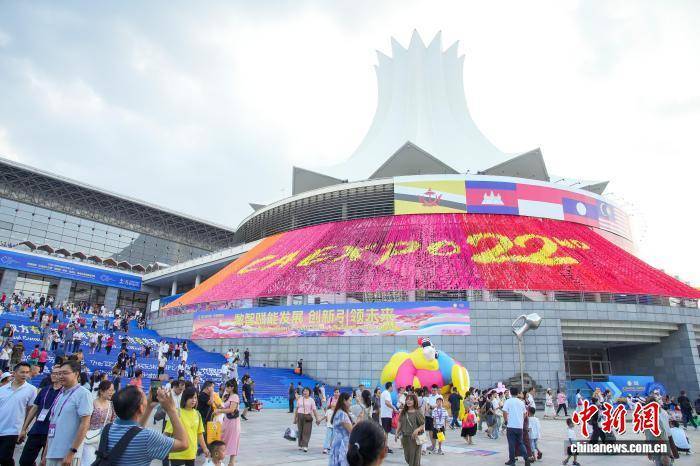
经济观察丨第22届中国—东盟博览会的变与不变
Zhong Guo Xin Wen Wang· 2025-09-22 04:24
Core Insights - The 22nd China-ASEAN Expo (CAEXPO) and China-ASEAN Business and Investment Summit concluded, showcasing the potential for regional prosperity and development [1] - This year's expo emphasized the shift from traditional commodity trade to high-tech cooperation, focusing on creating new demand scenarios and expanding into new fields [1][2] - Approximately 1,200 cutting-edge technology products were displayed in a dedicated AI pavilion, highlighting the importance of innovation [1] Group 1 - The expo featured a global debut of smart glasses designed for visually impaired individuals, demonstrating China's advanced AI technology and humanitarian focus [2] - The event facilitated significant partnerships, including a strategic cooperation agreement between a tech company and firms from Thailand and Cambodia, resulting in over 4,000 orders for AI smart glasses [1][2] - Nearly 30% of the exhibiting companies were first-time participants, showcasing products like halal pre-packaged meals from Brunei and handcrafted cultural products from Cambodia [2] Group 2 - A total of 88 trade promotion activities were held, with over 500 economic and trade project agreements signed, including nearly 100 strategic cooperation agreements [3] - The CAEXPO has evolved into a platform for promoting integration, innovation, and long-term regional growth, beyond just a trade and investment showcase [3] - The upcoming signing of the China-ASEAN Free Trade Area 3.0 protocol is expected to elevate economic cooperation to new heights, with the next expo focusing on its implementation [3]
(经济观察)第22届中国—东盟博览会的变与不变
Sou Hu Cai Jing· 2025-09-21 12:20
Core Insights - The 22nd China-ASEAN Expo (CAEXPO) and China-ASEAN Business and Investment Summit concluded, showcasing its potential to empower regional prosperity [1] - This year's expo emphasized the shift from traditional commodity trade to high-tech cooperation, focusing on creating new demand scenarios and expanding into new fields [3][5] Group 1: Event Highlights - The expo featured a dedicated 10,000 square meter AI pavilion, displaying approximately 1,200 cutting-edge technology products [3] - A notable product, AI smart glasses, gained significant attention, leading to substantial orders, including over 4,000 units from partnerships with Thai and Cambodian companies [3] - Nearly 70 new products were launched at the expo, with a focus on innovative solutions, including smart glasses designed for visually impaired individuals [5] Group 2: Cooperation and Agreements - The expo facilitated over 500 economic and trade project signings, including nearly 100 strategic cooperation agreements, highlighting the practical cooperation between China and ASEAN [7] - The event also served as a platform for high-level meetings across 13 sectors, further solidifying the "Nanning Channel" for cooperation [7] - The upcoming signing of the China-ASEAN Free Trade Area 3.0 protocol is expected to elevate economic cooperation to new heights [8]