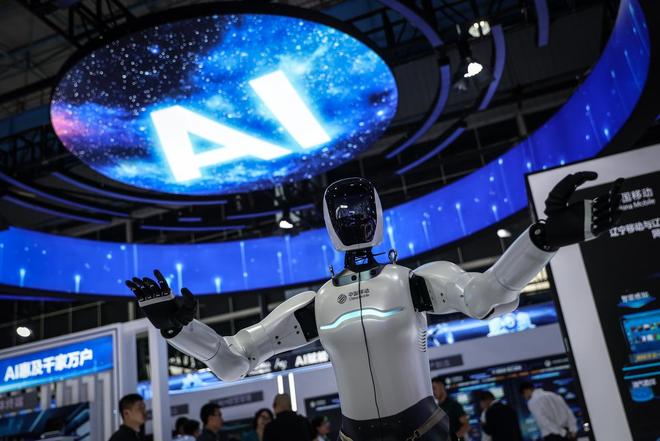
AI设计平台

Search documents
AI风起汉江湾
Chang Jiang Ri Bao· 2025-09-23 01:41
Core Insights - The transformation of Qiaokou District in Wuhan is marked by the shift from traditional manufacturing to artificial intelligence (AI) applications, particularly in quality control and industrial processes [1][2][4] - The establishment of the Hanjiang Bay AI Industrial Park signifies a strategic move to integrate AI into various sectors, enhancing efficiency and innovation [1][6][8] Group 1: Industrial Transformation - The Hanjiang Bay AI Industrial Park has evolved from the historical site of the Wuhan Diesel Engine Factory, showcasing a shift from traditional manufacturing to AI-driven solutions [1][2] - AI technologies are redefining quality control, with examples such as the Baidu Intelligent Cloud Innovation Center providing tailored AI solutions for local enterprises [2][3] - The integration of AI in healthcare is evident with intelligent robots achieving 100% accuracy in clinical sample collection and advanced detection systems for infrastructure [2][5] Group 2: Economic Revitalization - Qiaokou District is undergoing a revitalization process, transitioning from an industrial base to a hub for AI and technology, supported by favorable policies and urban renewal initiatives [4][6] - The district has implemented strategies to attract talent and investment, including the "Talent Ten Articles 2.0" policy aimed at encouraging young professionals to return [4][5] - The number of new market entities in Qiaokou has surged, with 16,000 new businesses established in the first half of the year, indicating a vibrant economic environment [5][6] Group 3: Infrastructure and Ecosystem Development - The Hanjiang Bay AI Industrial Park is part of a larger plan to create a comprehensive ecosystem that includes smart manufacturing and innovation incubation [6][7] - The district is focusing on building a data industry base in collaboration with leading digital technology companies, enhancing its technological infrastructure [6][7] - The shift from traditional infrastructure development to a focus on digital economy elements, such as data and computational resources, reflects a modern approach to urban planning [8]
中国工艺美术行业迎来华丽蝶变
Xiao Fei Ri Bao Wang· 2025-09-18 03:22
Core Viewpoint - The Chinese arts and crafts industry is undergoing a modernization transformation through the integration of traditional craftsmanship with innovative technologies and cultural elements, showcasing a successful blend of heritage and contemporary design [1][2][11]. Innovation-Driven - The China Light Industry Federation has implemented significant measures from 2020 to 2025 to promote the inheritance, innovation, and development of the arts and crafts industry, establishing 49 "Chinese Arts and Crafts Master Intangible Cultural Heritage Inheritance Bases" and 56 "Arts and Crafts Master Inheritance Innovation Bases" [2][3]. - The introduction of digital technologies has redefined the creative paradigm in arts and crafts, with platforms like the "Jingchu Pattern AI Design Platform" improving design efficiency by over 70% [3][4]. Breakthroughs in New Materials and Techniques - Innovations such as the integration of shape memory metals into Suzhou embroidery have transformed traditional two-dimensional pieces into interactive three-dimensional artworks [4]. - The development of titanium alloy-based jade porcelain paintings has positioned them as new favorites in the international high-end decoration market due to their unique properties [4]. Standardization and Legal Protection - The establishment of national standards, such as the "Zhuang Brocade" standard set to be implemented in May 2025, aims to unify quality and safety standards in the industry [5][6]. - The comprehensive approach to intellectual property protection has fostered innovation, with regions like Fujian and Jiangxi leading in patent applications and protections [7]. Industry Upgrade - The market size of China's traditional handicraft cultural heritage industry has surpassed 580 billion yuan, reflecting a nearly 150% increase since 2020, with a compound annual growth rate of 30% [8]. - The establishment of 67 national-level arts and crafts industrial clusters has become a crucial pillar for local economic development, with significant contributions from regions like Quanzhou and Putian [8]. Internationalization and Talent Development - The period from 2020 to 2025 is critical for the internationalization of the Chinese arts and crafts industry, with cultural product exports reaching approximately 148.4 billion USD in 2023 [9]. - A multi-faceted talent cultivation system, including 49 "Chinese Arts and Crafts Master Intangible Cultural Heritage Inheritance Bases," is being developed to support the industry's growth [9].
具身智能机器人有多“灵”?
Sou Hu Cai Jing· 2025-09-07 22:33
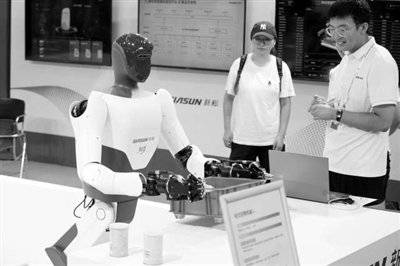
Core Insights - The 2025 Global Industrial Internet Conference was held in China, focusing on "Artificial Intelligence+" as the core theme, showcasing cutting-edge technology and discussing innovative development paths for the industrial internet [3][8] - The conference highlighted the significant role of "embodied intelligence" in transforming industrial applications, featuring various AI-driven technologies and solutions [3][8] Group 1: AI Innovations - The conference showcased a humanoid robot from Shenyang Xinsong Company, which demonstrated multi-modal interaction capabilities and precise water pouring through visual recognition and autonomous path planning [4][5] - Tencent's Tairos platform enabled robots to engage in intelligent conversations, integrating multi-modal perception and task planning, with applications in home appliances and automotive industries [5][6] - The intelligent inspection robot dog from Liaoning Shuangzhi Empower Technology Co., Ltd. autonomously conducted inspections in simulated dark environments, capable of scanning and analyzing structural damages while returning to charge when low on battery [6][7] Group 2: Advanced Robotics - The Chinese Academy of Sciences' Shenyang Institute of Automation presented various robots capable of performing multiple industrial tasks independently, supported by a self-developed "industrial embodied intelligence control core platform" [6][8] - The platform features millisecond-level response capabilities and supports diverse robot configurations for multi-process training and generalized learning across different scenarios [6][8] Group 3: AI in Design - Shenyang Feitu Brush Artificial Intelligence Technology Co., Ltd. demonstrated an AI design platform that rapidly generates original scarf designs based on user-input keywords, addressing high costs and low efficiency in the textile industry's design process [7][8]



在2025全球工业互联网大会上感受“聪明的机器”
Xin Hua She· 2025-09-07 08:42
Group 1 - The 2025 Global Industrial Internet Conference was held from September 5 to 8 in Shenyang, showcasing leading companies in the industrial internet sector and their applications of advanced technologies such as large models, AR/VR, and intelligent products [2] - The conference featured a variety of exhibits, including a humanoid robot with multimodal interaction capabilities, demonstrating high precision in tasks such as pouring water, highlighting advancements in robotics and automation [2][5] - The event emphasized the transition from Industry 4.0 to Industry 5.0, where "smart machines" provide vast amounts of data for analysis and decision-making, significantly improving industrial efficiency and reducing production costs [4] Group 2 - The conference included interactive experiences, such as an AI design platform that quickly generated original scarf design patterns based on user input, showcasing the creative potential of AI in design [2] - A large-scale IoT platform was presented, developed by China Tower Corporation, which utilizes extensive communication tower and data center resources for applications in fire prevention and resource monitoring [4] - The integration of industrial internet technologies is making advanced machinery more accessible and practical for everyday industrial applications, enhancing operational efficiency and benefiting consumers [4]