
AI魔镜系统

Search documents
新华财经|从“技术概念”迈向“产业现实”人工智能加速赋能千行百业
Xin Hua She· 2026-01-07 03:49
Core Insights - Artificial intelligence (AI) is transitioning from a "technical concept" to "industrial reality," becoming a core engine for enterprise operational innovation and providing strong momentum for industrial digitalization [1][4]. Group 1: AI Applications in Food Safety and Customer Service - AI systems in the food industry allow kitchen staff to use mobile devices to print labels with expiration dates, enabling real-time monitoring and management of food safety [2]. - In customer service, AI has improved response times and accuracy by creating a dedicated knowledge base, allowing for instant retrieval of structured answers based on keywords [4]. Group 2: AI in Retail Management - AI has transformed retail management by automating the evaluation of staff appearance through an "AI magic mirror" system, freeing supervisory teams to focus on training and service improvement [4][5]. - The integration of AI into retail operations has led to a more humane and efficient management approach, shifting roles from error correction to empowerment [5]. Group 3: AI in Traditional Industries - In traditional industrial sectors, AI is enhancing decision-making processes by converting operational data into high-value insights, thus improving production stability and efficiency [5][6]. - AI is facilitating a shift from traditional "value procurement" to proactive "strategic procurement" by analyzing vast amounts of market data [6]. Group 4: AI as a Core Engine for Business Growth - AI is evolving from a tool to a core engine that drives business upgrades and strategic decisions, supporting companies in exploring new growth paths and optimizing supply chain management [5][6]. - The integration of AI into various business scenarios is seen as a way to uncover new consumer needs and create innovative service categories, contributing to brand growth [5][6]. Group 5: AI's Role in Industry Evolution - AI is recognized as a key force driving the transition from digitalization to intelligent operations, optimizing decision-making and fostering new products and business models [7].

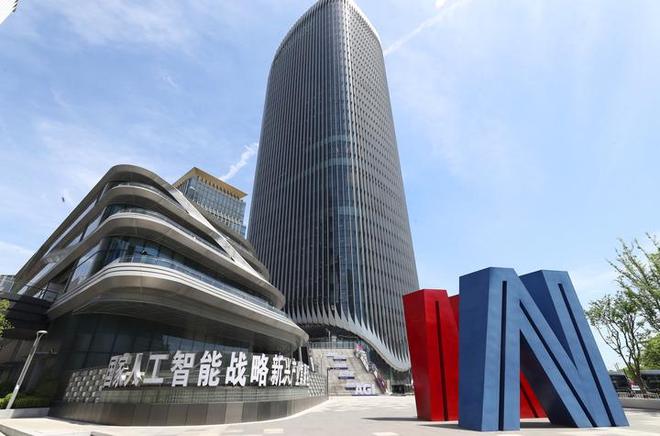
从“技术概念”迈向“产业现实” AI大模型技术在千行百业释放转型动能
Xin Hua Cai Jing· 2026-01-06 03:23
Core Insights - AI large model technology is transitioning from a "technical concept" to "industrial reality," becoming a core engine for driving enterprise operational innovation and creating new development advantages [1][2][3] Group 1: AI Applications in Various Industries - AI systems are enhancing food safety management by enabling real-time monitoring and analysis of kitchen data, allowing for automated calculations of ingredient shelf life and label printing [2] - In customer service, AI has improved response times and accuracy by creating specialized knowledge bases that allow for instant retrieval of structured answers based on keywords [2] - Retail management has been transformed through AI, with systems like "AI Magic Mirror" providing automated assessments and improvement suggestions for staff appearance, freeing management to focus on training and service [2] Group 2: AI as a Core Engine for Business Strategy - AI is evolving from an efficiency tool to a core engine that drives business upgrades and strategic decision-making, supporting growth paths and injecting strong momentum into industrial digitalization [3][4] - Companies are leveraging AI for supply chain management to achieve more accurate demand forecasting and inventory optimization, thereby reducing response times and costs [3] - AI's role in strategic decision-making is expanding, with applications in procurement that analyze market supply and demand to optimize raw material purchasing strategies [4] Group 3: Future Prospects and Broader Applications - Companies are planning to expand AI technology applications beyond customer service to various business scenarios, recognizing it as a crucial engine for finding new growth opportunities [4] - AI is seen as a business partner that drives operations towards precision and intelligence, playing a significant role in the transition from digitalization to intelligentization [4] - The integration of AI with internal and external data is expected to optimize decision-making and foster new products, business types, and models, which is strategically significant for enterprise and industry upgrades [4]
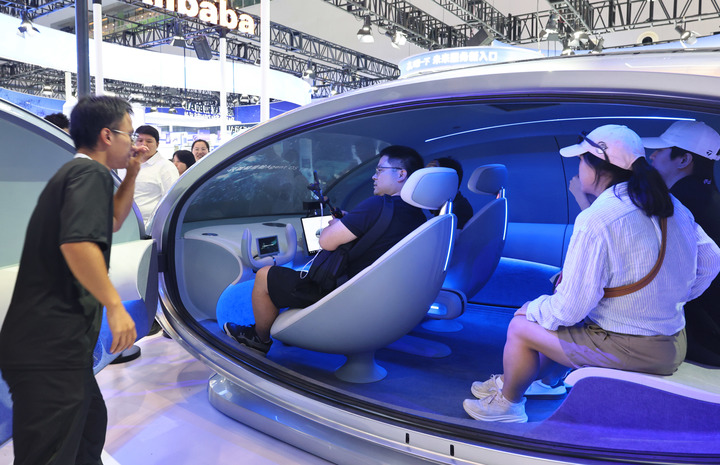
从“车间老师傅”到“门店销冠”:飞书AI正在重塑吉利汽车研究院、亚朵酒店的一线战场
Jiang Nan Shi Bao· 2025-12-02 07:32
Core Insights - The article highlights the role of frontline business personnel as the true drivers of the AI technological transformation, showcased through the first "Feishu AI Efficiency Pioneer National Competition" in East China, where six notable companies advanced to the finals with innovative AI applications [1] Group 1: Service Industry Empowerment - AI is significantly enhancing efficiency in service industries by standardizing operations and improving employee training, as demonstrated by Luolai Super Soft Bedding's AI "Magic Mirror" system, which automates appearance checks and has led to increased sales and operational efficiency [1] - The "Yadu 1900+ Store AI Food Safety Guardian Plan" by Yadu Hotel integrates multiple technologies to create an intelligent management loop, reducing manual workload and providing valuable insights for management [2] Group 2: Manufacturing Innovation - In the manufacturing sector, AI is breaking traditional models, as seen with Geely Automobile Research Institute's intelligent size detection system, which has halved measurement time and significantly improved efficiency while saving labor costs [3] - Yongzhuo Holdings has utilized AI to address challenges in steel production, creating a smart management system that provides real-time alerts and actionable insights, transforming experience-based decision-making into data-driven strategies [3] Group 3: Cross-Industry Integration - AI is proving to be a universal capability that transcends specific industries, as evidenced by Jitu Express's use of AI for video production, enhancing exposure while reducing costs, and New City Holdings' development of an intelligent operational platform that integrates previously isolated data systems [4] - The practices of these six East China companies illustrate that AI is no longer a distant concept but a practical tool embedded in various business scenarios, setting the stage for a nationwide impact as they approach the finals [4]
