
产业数智化

Search documents
研报掘金丨信达证券:居然智家发力AI设计构建新流量入口,海外扩张加速
Ge Long Hui A P P· 2026-02-02 06:37
Core Viewpoint - The report from Cinda Securities indicates that the company, Juran Smart Home, is expected to report a net profit attributable to shareholders of between -1.15 billion to -0.85 billion yuan in 2025, a significant decline from 769 million yuan in the same period last year [1] Group 1: Financial Performance - The estimated median net profit for Q4 2025 is projected to be -1.398 billion yuan, compared to 38 million yuan in the same quarter last year [1] - The fair value of the company's investment properties is expected to decrease by approximately 1 billion to 1.6 billion yuan in 2025 due to special unexpected events affecting rental income and leasing [1] Group 2: Business Operations - As of the first half of 2025, the company operates four "Zhongshang World" shopping centers in cities like Changchun and Wuhan, along with three modern department stores and 125 various supermarkets in key urban areas [1] - The company anticipates a gradual recovery in sales revenue and profitability, driven by macroeconomic recovery and optimization of its business model [1] Group 3: Strategic Outlook - The company plans to accelerate its overseas expansion and focus on deepening its core home furnishing business in 2026, while actively exploring home consumption scenarios related to children, pets, and the elderly [1] - The company aims to transform from a "home furnishing retail operator" to a "full-industry digital service provider" by leveraging AI design as a new traffic entry point and smart home solutions as new consumption scenarios [1]


今年 央企有哪些大国重器值得期待
Ren Min Ri Bao· 2026-01-15 22:16
Group 1: Central Enterprises' Responsibilities and Innovations - Central enterprises are urged to recognize their responsibilities and contribute to high-quality economic and social development, improve people's livelihoods, and support the modernization of China [1] - The State-owned Assets Supervision and Administration Commission has selected the top ten national key projects and super-engineering initiatives for central enterprises in 2025 [1] Group 2: China National Petroleum Corporation (CNPC) - CNPC's ethylene project in Dushanzi, Tarim, with a capacity of 1.2 million tons/year, is set to be completed in 2026, featuring over 98% localization of equipment and a green production model [2] - CNPC aims to enhance energy security by accelerating domestic oil and gas exploration and development, and expanding international energy cooperation [2] Group 3: National Petroleum and Natural Gas Pipeline Group - The Sichuan section of the "West-to-East Gas Transmission" project has been completed, increasing gas transmission capacity by approximately 14 billion cubic meters annually [4] - The company plans to implement innovative actions to support the construction of a new energy infrastructure focused on flexible energy conversion and efficient distribution [5] Group 4: China Electronics Corporation - The company aims to develop a complete domestic EDA tool system and high-performance chips by 2026, enhancing the "China Chip" capability [6] - China Electronics will focus on integrating the entire semiconductor industry chain, including design, manufacturing, and supply chain [7] Group 5: China Coal Energy Group - The liquid sunshine demonstration project in Inner Mongolia is expected to be operational in 2026, utilizing renewable energy to produce green hydrogen and methanol [8] - The company emphasizes the importance of technological innovation and aims to optimize its industrial layout towards clean and efficient coal utilization [9] Group 6: China National Building Material Group - The world's first zero-carbon intelligent manufacturing base for fiberglass is expected to be operational in 2026, using 100% green electricity [10] - The company plans to enhance its research and development efforts to support the modernization of the materials industry [11] Group 7: China Railway Rolling Stock Corporation (CRRC) - The CR450 high-speed train, capable of reaching speeds of 400 km/h, will undergo comprehensive testing in 2026, marking a significant advancement in China's high-speed rail technology [12] - CRRC aims to strengthen its innovation capabilities and maintain its leadership in the rail transportation equipment sector [12]



广州先进制造业强市蓝图出炉 到2035年率先实现新型工业化 工业增加值翻一番
Guang Zhou Ri Bao· 2026-01-12 09:45
Core Insights - Guangzhou aims to establish itself as a world-class advanced manufacturing hub, a global innovation center, a benchmark city for digital and manufacturing integration, and a model for new industrialization by 2035, with a target to double industrial added value [1][2] Strategic Goals - By 2030, significant progress is expected in building a modern industrial system, enhancing overall industrial efficiency, and establishing a new economic structure driven by trillion-level industries and billion-level support [2] - By 2035, Guangzhou's advanced manufacturing status will be solidified, with a modern industrial system in place, high-level talent, and a focus on cultivating world-class enterprises [2] Industry Development Plans - The "12218" modern industrial system will be developed, focusing on the integration of advanced manufacturing and modern services, as well as the digital and green transformation of industries [3] - Key industries include the smart connected vehicle sector, which aims to create a trillion-level "Smart Vehicle City," and several others targeting 500 billion levels in biomedicine, smart construction, and rail transportation [3] Future Industries - Future industries driven by cutting-edge technologies will include intelligent unmanned systems, embodied intelligence, cell and gene technology, future networks and quantum technology, advanced materials, and deep-sea and deep-space technologies [4] - The plan aims for these industries to achieve exponential growth within 5 to 10 years through innovative applications and platforms [4] Spatial Layout - The spatial layout for advanced manufacturing will consist of an "innovation development axis" and three major growth poles, enhancing the resilience of the industrial chain and promoting high-end, intelligent, and green development [5][6] - Key areas include Nansha New District for smart vehicles, the Eastern Center for integrated circuits, and the Northern Growth Pole for aerospace and advanced rail transportation [6] Industry Categories - Six emerging pillar industries: smart connected vehicles, ultra-high-definition displays, biomedicine and health, green petrochemicals and new materials, software and internet, intelligent equipment and robotics [7] - Five strategic leading industries: artificial intelligence, semiconductors and integrated circuits, new energy and storage, low-altitude economy and aerospace, biomanufacturing [7] - Four characteristic advantage industries: fashion consumer goods, rail transportation, shipbuilding and marine engineering, intelligent construction [7]
广州加快建设先进制造业强市 力争十年工业增加值翻一番 到2035年建成万亿级“智车之城”
Nan Fang Ri Bao Wang Luo Ban· 2026-01-09 07:44
Group 1 - The core viewpoint of the news is the release of the "Guangzhou Plan for Accelerating the Construction of a Strong Advanced Manufacturing City (2024-2035)", which aims to double the industrial added value by 2035 and establish Guangzhou as a globally competitive advanced manufacturing hub [1][2] - By 2030, Guangzhou plans to build several world-class advanced manufacturing clusters and achieve significant breakthroughs in key core technologies, positioning itself at the high end of the global value chain [1][2] - The plan outlines four strategic positions for Guangzhou's advanced manufacturing development: a world-class advanced manufacturing base, a global manufacturing innovation center, a benchmark city for digital-physical integration, and a model city for new-type industrialization [1][2] Group 2 - The plan specifies development directions for emerging pillar industries, including the intelligent connected new energy vehicle sector, which aims to reach a trillion-level scale by 2035, establishing Guangzhou as a "Smart Car City" [2] - In the ultra-high-definition and new display sector, the industry scale is projected to reach 300 billion by 2035, while the intelligent equipment and robotics sector is also expected to achieve a scale of 300 billion [2] - The plan emphasizes the introduction and cultivation of leading enterprises in the semiconductor and integrated circuit fields, as well as the development of key aerospace bases in the low-altitude economy sector [2][3] Group 3 - The spatial layout of advanced manufacturing is defined by "one axis, three poles, and multiple points," with the "one axis" representing the innovation development axis that connects key national development zones [3] - The "three poles" refer to important advanced manufacturing bases in Nansha New Area, Eastern Center, and Northern Growth Pole, which will drive the transformation of manufacturing towards high-end, intelligent, and green directions [3] - The "multiple points" strategy aims to leverage key industrial platforms to create high-quality industrial clusters by linking surrounding advantageous industries [3]
新华财经|从“技术概念”迈向“产业现实”人工智能加速赋能千行百业
Xin Hua She· 2026-01-07 03:49
Core Insights - Artificial intelligence (AI) is transitioning from a "technical concept" to "industrial reality," becoming a core engine for enterprise operational innovation and providing strong momentum for industrial digitalization [1][4]. Group 1: AI Applications in Food Safety and Customer Service - AI systems in the food industry allow kitchen staff to use mobile devices to print labels with expiration dates, enabling real-time monitoring and management of food safety [2]. - In customer service, AI has improved response times and accuracy by creating a dedicated knowledge base, allowing for instant retrieval of structured answers based on keywords [4]. Group 2: AI in Retail Management - AI has transformed retail management by automating the evaluation of staff appearance through an "AI magic mirror" system, freeing supervisory teams to focus on training and service improvement [4][5]. - The integration of AI into retail operations has led to a more humane and efficient management approach, shifting roles from error correction to empowerment [5]. Group 3: AI in Traditional Industries - In traditional industrial sectors, AI is enhancing decision-making processes by converting operational data into high-value insights, thus improving production stability and efficiency [5][6]. - AI is facilitating a shift from traditional "value procurement" to proactive "strategic procurement" by analyzing vast amounts of market data [6]. Group 4: AI as a Core Engine for Business Growth - AI is evolving from a tool to a core engine that drives business upgrades and strategic decisions, supporting companies in exploring new growth paths and optimizing supply chain management [5][6]. - The integration of AI into various business scenarios is seen as a way to uncover new consumer needs and create innovative service categories, contributing to brand growth [5][6]. Group 5: AI's Role in Industry Evolution - AI is recognized as a key force driving the transition from digitalization to intelligent operations, optimizing decision-making and fostering new products and business models [7].

朱雀基金陈飞:AI催生人机交互范式创新 产品与应用迎全面革新
Zhong Guo Zheng Quan Bao· 2025-12-22 00:57
Core Viewpoint - The AI industry is experiencing significant growth, with a focus on the interplay between capital, talent, and data, which is crucial for the success of AI enterprises [1] Group 1: AI Industry Trends - AI is expected to drive innovations in human-machine interaction, leading to comprehensive product and application transformations by 2026 [3] - Companies with "extreme collaborative design capabilities" are highlighted as key players, capable of optimizing the entire industry chain from chips to applications [3] - Domestic tech giants are anticipated to increase capital expenditures significantly in late 2024, aligning with trends observed in overseas counterparts [3][4] Group 2: Financial Performance and Growth - Domestic tech companies are projected to see a stabilization and increase in quarterly revenue growth rates and gross margins starting in 2024 [4] - The acceleration of cloud business revenue is expected in late 2025, reflecting the growing demand for AI infrastructure [4] Group 3: Industry Digitization - The integration of AI into various sectors is seen as a vital path for enhancing competitiveness, particularly in content creation and smart manufacturing [5] - AI's role in optimizing processes and improving efficiency is emphasized, with specific examples in the IP content creation field [5] Group 4: Robotics Market Outlook - The humanoid robot sector is anticipated to experience a market resonance by 2026, despite current challenges in algorithm capabilities [6] - The robotics industry is categorized into three player types: startups with vertical expertise, automotive companies leveraging existing technologies, and tech giants with strong model capabilities [7] Group 5: Investment Focus - Investment strategies will prioritize companies with strong core competencies in robotics, including hardware capabilities and supply chain maturity [8] - Key investment opportunities are identified in the robotics supply chain, particularly in areas with high elasticity and low domestic production rates [8]

朱雀基金陈飞:AI催生人机交互范式创新,产品与应用迎全面革新
Zhong Guo Zheng Quan Bao· 2025-12-21 23:22
Core Insights - The AI industry is experiencing significant growth, with a focus on the interplay between capital, talent, and data, which is crucial for the success of AI enterprises [1] - Despite concerns about an AI bubble, the long-term outlook for the AI industry remains positive, driven by innovations in human-machine interaction and comprehensive product and application transformations [2] Group 1: Domestic Tech Giants - By 2026, AI is expected to drive innovations in human-machine interaction, leading to comprehensive product and application transformations, significantly enhancing decision-making and execution capabilities [2] - Domestic tech giants with "extreme collaborative design capabilities" are highlighted as key players, capable of synchronizing optimizations across the entire industry chain, leading to performance leaps and cost reductions [2] - The capital expenditure trends of domestic internet giants are expected to rise significantly in the latter half of 2024, aligning with the capital expenditure increases observed in overseas tech giants starting from December 2022 [2][3] Group 2: Financial Performance and Growth - Domestic tech giants are projected to stabilize and improve their quarterly revenue growth rates and gross margins starting in 2024, with accelerated growth in cloud business revenue anticipated by late 2025 [3] - The financial characteristics of domestic companies are expected to mirror those of their overseas counterparts, with cloud business revenues showing a significant increase by the third and fourth quarters of 2025 [3] Group 3: Industry Digitalization - The integration of AI into various sectors to optimize processes and enhance efficiency is seen as a vital path for traditional enterprises to improve their competitive edge [4] - AI-driven innovations in content creation, such as multi-modal algorithms, are addressing production bottlenecks and enhancing the likelihood of successful IP creation [4] Group 4: Humanoid Robots - The humanoid robot sector is anticipated to experience a market resonance by 2026, despite current challenges related to algorithm capabilities and cross-scenario generalization [5] - The humanoid robot industry is categorized into three player types: startups with strong vertical technology, automotive companies leveraging multi-modal technologies, and tech giants with robust model integration capabilities [6] Group 5: Investment Opportunities in Robotics - Investment opportunities in the robotics sector are identified in three key areas: robot manufacturers and supply chain companies, new business models emerging from the proliferation of robots, and segments of the supply chain with high elasticity and low domestic production rates [6][7] - The selection criteria for robotics companies will focus on core capabilities such as hardware standardization, supply chain maturity, and ecological integration [7]
朱雀基金陈飞:AI产业趋势下 关注国内科技大厂、产业数智化、实体AI投资机遇
Zhong Zheng Wang· 2025-12-18 06:05
Core Insights - The AI industry is characterized by capital, talent, and data intensity, with the ability to create a flywheel effect between applications, data, and models being crucial for success [1] - AI is expected to drive innovations in human-machine interaction, leading to comprehensive product and application transformations, significantly enhancing decision-making and execution capabilities [1] Group 1: Industry Trends - The competition in the AI field has shifted from point competition to systemic competition, emphasizing the "extreme collaborative design capability" of major tech companies [2] - These companies can optimize the entire industry chain, achieving significant performance improvements and cost reductions through integrated AI stack capabilities [2] - Domestic tech giants are expected to catch up with their overseas counterparts, which have been increasing capital expenditures since late 2022, with noticeable revenue growth in cloud computing [3] Group 2: Financial Performance - Domestic tech companies are projected to stabilize and improve their revenue growth rates and gross margins starting in 2024, with accelerated growth in cloud business and AI's impact on existing operations becoming evident [4] - The focus is shifting from capital expenditures to actual operational data of AI businesses, with significant increases in public network consumption and open-source model downloads [3] Group 3: Key Focus Areas - The first focus area is major domestic tech companies, which are expected to maintain strong performance in AI investments while providing shareholder returns [4] - The second focus area is "X+AI," where companies provide smart upgrades for physical enterprises, accumulating proprietary data for product iteration [4] - The third focus area is the innovation of new hardware carriers like robots, with a positive outlook for the industry due to advancements in algorithms and cross-scenario capabilities [5] Group 4: Investment Opportunities - Investment opportunities in the robotics industry are categorized into three segments: robot manufacturers and supply chain companies, new business models emerging from robot proliferation, and high-barrier supply chain segments with low domestic production rates [6] - The selection criteria for investments include assessing core capabilities such as hardware standardization, supply chain maturity, and ecological integration [6] - Companies with strong existing business capabilities and innovative AI applications or robotics are seen as having significant growth potential, providing a safety margin for investments [6]
国内“AIoT第一股”特斯联赴港IPO的背后
Sou Hu Cai Jing· 2025-12-01 17:01
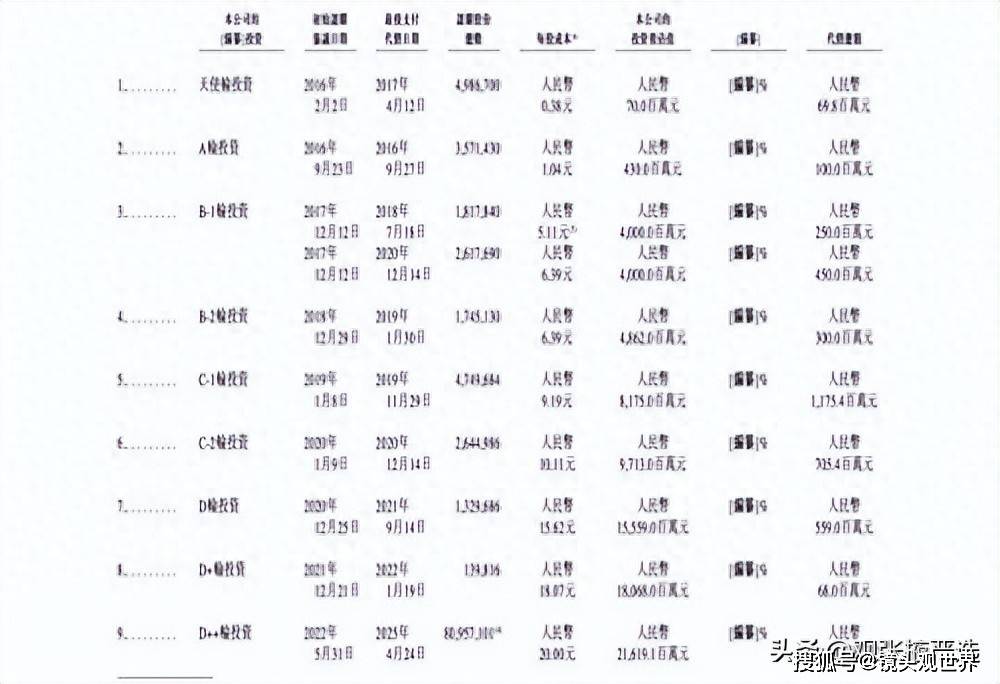
Core Viewpoint - Teslin Smart Technology Co., Ltd. has submitted its application for a mainboard IPO to the Hong Kong Stock Exchange, marking its third attempt to enter the capital market. The funds raised will be used to enhance R&D capabilities, develop green computing systems, improve large model advantages, expand commercialization and market reach, and seek strategic investment and acquisition opportunities [1][2]. Company Overview - Founded in December 2015, Teslin is led by CEO Ai Yu, who has over ten years of experience in private equity investment and new economy businesses. The chairman, Jin Zheng, has over 16 years of experience in private equity investment [1]. - The company has completed nine rounds of financing totaling approximately 5.297 billion yuan, with notable investors including JD.com, iFlytek, SenseTime, and IDG. Following a 1.619 billion yuan D++ round in April, Teslin's valuation reached 21.619 billion yuan [2]. Financial Performance - Teslin's revenue from AI industrial digitization for the years 2022 to 2024 and the first half of this year was approximately 472 million, 624 million, 1.641 billion, and 577 million yuan, accounting for 64.0%, 62.0%, 89.0%, and 91.3% of total revenue, respectively. The AI industrial digitization business saw a year-on-year revenue increase of 191% in the first half of this year [8]. - The company's revenue for the same period was approximately 738 million, 1.006 billion, 1.843 billion, and 632 million yuan, with a compound annual growth rate of 58% from 2022 to 2024 and a year-on-year increase of 77% in the first half of this year [10]. R&D and Innovation - Teslin has invested approximately 329 million, 322 million, and 377 million yuan in R&D from 2022 to 2024, with R&D spending of about 162 million yuan in the first half of this year, reflecting an 11.4% year-on-year growth. The company holds 1,057 patents, 346 copyrights, and 590 trademarks, supported by a high-quality R&D team comprising 255 members [11]. Market Position and Product Offerings - Teslin is recognized as one of the top five public domain AIoT product providers in China, with its TacOS system serving as a preferred infrastructure for industrial digitization. The company has developed four major AIoT application scenarios covering public domain spaces, including AI industrial digitization, AI city intelligence, AI smart living, and AI smart energy [7][5]. - As of June 30, the company's products have been deployed by over 900 clients across 172 cities globally, including China, the UAE, Singapore, and Australia, with a backlog of orders amounting to approximately 2.6 billion yuan [10].
京东工业与铜化集团签署战略合作协议
Zheng Quan Shi Bao Wang· 2025-10-28 04:09
Core Viewpoint - On October 27, Tongling Chemical Industry Group Co., Ltd. signed a strategic cooperation agreement with JD Industrial, aiming to enhance the efficiency of procurement management and accelerate the digital transformation of the chemical industry through an integrated smart supply chain solution [1]. Group 1 - The strategic cooperation agreement was officially signed between Tongling Chemical Industry Group and JD Industrial [1]. - JD Industrial will provide an integrated and intelligent supply chain solution for Tongling Chemical Group [1]. - The collaboration aims to build a digital supply chain platform for the chemical industry, facilitating precise supply and demand matching [1]. Group 2 - The initiative is expected to significantly improve the procurement management efficiency of Tongling Chemical Group [1]. - The partnership will accelerate the digital transformation process within the industry [1].