AI MV

Search documents
(新春走基层)AI春晚、赛博年俗升温 “科技风”浸润中国年
Zhong Guo Xin Wen Wang· 2026-02-23 06:02
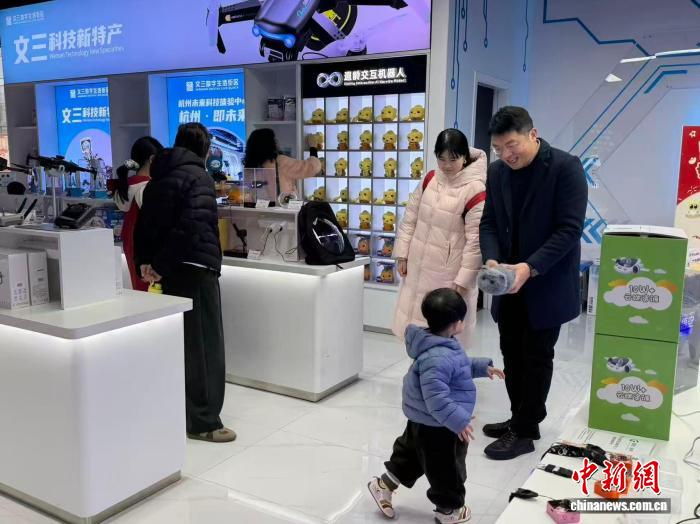
Core Insights - The integration of technology into the Chinese New Year celebrations has gained significant traction, with AI and digital products becoming popular choices for festive purchases [1][3]. Group 1: Technology Adoption - The "Tech New Specialty" store in Hangzhou has seen a noticeable increase in visitors since January, with AI companion robots achieving a monthly sales peak of 100 units [3]. - Young consumers are actively engaging with technology, as evidenced by the popularity of VR headsets and smart luggage during the holiday season [1][3]. Group 2: AI in Cultural Events - An AI New Year gala, featuring over 50 programs including AI music videos and digital idol performances, attracted more than 11.94 million viewers on its premiere night [3]. - The "Children's AI Spring Festival Gala," initiated by the AI community, involved over 150 young creators from 40 cities worldwide, showcasing the innovative spirit of the younger generation [3]. Group 3: Innovative Festive Practices - New ways of celebrating the New Year have emerged, such as generating personalized Spring Festival couplets and custom electronic red envelopes using AI [3]. - Baidu's "Digital God of Wealth" and Meitu's "AI Hug" feature exemplify how technology is enhancing traditional practices, allowing users to interact and create festive content [3][4]. Group 4: Community Engagement - Various local events, such as the New Year technology fair in Beijing and the "Fourth New Year Shopping Festival" in Qingdao, have incorporated AI into their programming, enriching the cultural experience for attendees [4].

AI走进KTV,年轻人会买单吗?
投中网· 2026-01-27 06:52
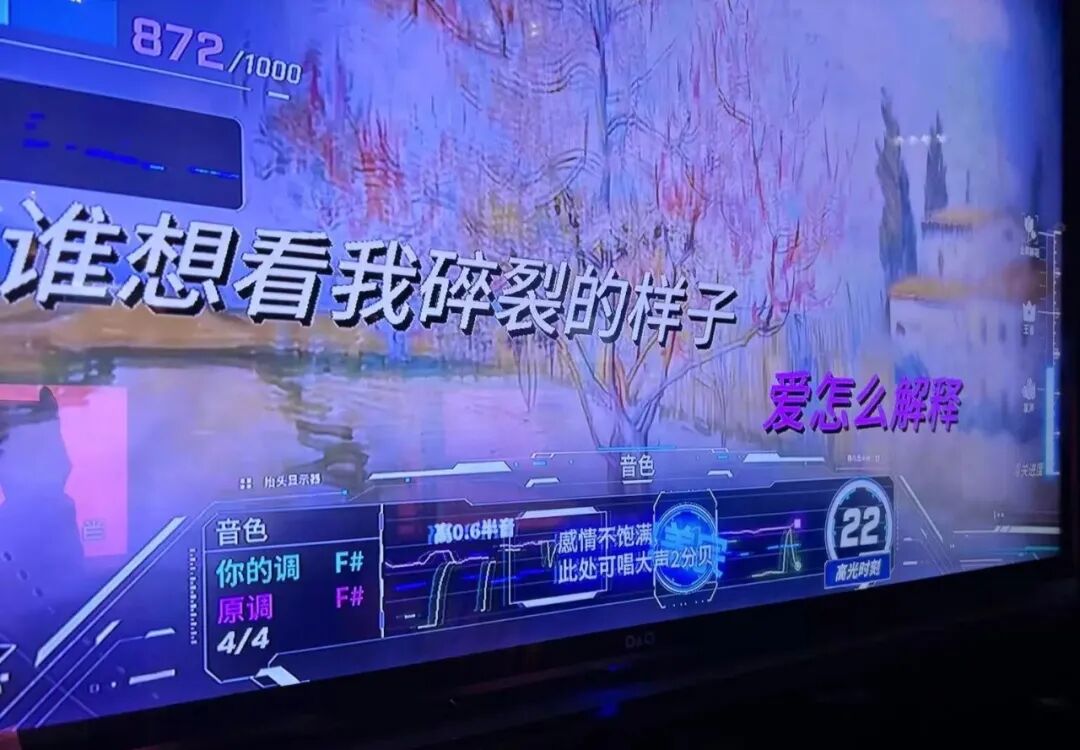
Core Viewpoint - The KTV industry is undergoing a transformation driven by AI technology, aiming to attract younger consumers and adapt to changing entertainment preferences. However, the integration of AI raises questions about user experience and emotional connection in a traditionally social environment [5][21][30]. Group 1: AI Integration in KTV - KTV is leveraging AI technology to enhance user experience, including AI scoring systems and AI-generated music videos (MVs) to reduce costs [5][22][27]. - The AI scoring system in KTVs, such as those implemented by Mei KTV, provides real-time feedback on singing performance, which can create pressure and alter the social dynamics of singing [9][19][24]. - Despite the technological advancements, the subjective nature of singing and emotional expression poses challenges for AI to accurately evaluate performance, leading to mixed user experiences [25][30]. Group 2: Market Dynamics and Challenges - The KTV industry has seen a significant decline, with the number of KTV outlets dropping from over 120,000 to less than 50,000 by 2024, as younger consumers shift towards diverse entertainment options [21]. - KTV brands are exploring new business models, such as integrating gaming and fitness elements, to attract a broader audience and enhance the overall experience [21][22]. - The introduction of AI technology is part of a broader strategy to revitalize the KTV market, but the effectiveness of these innovations in driving consumer engagement remains uncertain [19][30]. Group 3: Consumer Engagement and Rewards - Mei KTV's marketing strategy includes a competition where consumers can win luxury items by achieving high scores through the AI system, which has successfully drawn customers back to KTV [16][19]. - Users have reported engaging in repetitive singing to achieve high scores, indicating that the reward system is a significant motivator for participation [19][30]. - The reliance on rewards to drive engagement raises questions about the sustainability of consumer interest in KTV without these incentives [19][30].

花2亿给KTV装上AI,年轻人会买单吗?
3 6 Ke· 2026-01-26 11:40
Core Insights - The KTV industry is experiencing a revival with the integration of AI technology, leading to a new trend of "one room hard to book" during New Year's Eve 2026, despite previous predictions of its decline [1] - AI systems are being implemented to enhance the KTV experience, including scoring and competition mechanisms, but this has raised concerns about the emotional disconnect in social interactions [1][2] Group 1: AI Integration in KTV - KTV brands are adopting AI technology to innovate, with features like AI scoring and competition to attract younger audiences [1][10] - The AI scoring system evaluates singing performance based on pitch and rhythm, providing immediate feedback, which some users find stressful and competitive [2][4] - Users can participate in competitions for rewards, such as COACH brand bags, by achieving high scores through the AI system [6][8] Group 2: Market Dynamics and Challenges - The KTV market has seen a significant decline, with the number of KTV outlets dropping from over 120,000 to less than 50,000 by 2024, largely due to changing entertainment preferences among younger consumers [9] - KTV establishments are struggling to attract younger customers, who are increasingly drawn to alternative entertainment options like escape rooms and mobile karaoke [9] - To combat this, KTV brands are diversifying their offerings, integrating elements like gaming and fitness into the traditional karaoke experience [9][10] Group 3: Cost Efficiency vs. User Experience - The use of AI-generated music videos (AIMV) helps KTVs reduce copyright costs associated with traditional music videos, which have been a financial burden for the industry [14] - However, the quality of user experience has been compromised, as AI-generated videos often lack relevance to the songs, leading to a disjointed experience for consumers [15] - The success of AI in KTV will depend on its ability to enhance the overall experience rather than just serve as a marketing gimmick [16]
“满屏满地铁的AI广告,差点把我吓出心脏病”
Hu Xiu· 2025-09-03 09:07
Group 1 - The article discusses the pervasive influence of AI in various aspects of daily life, highlighting its presence in advertising, food delivery, and entertainment, often leading to a disconnect between consumer expectations and reality [5][9][38] - AI-generated content is criticized for lacking authenticity and quality, with examples of misleading advertisements and subpar products that do not match their AI-enhanced representations [19][27][38] - The cost-effectiveness of AI in advertising is emphasized, with reports indicating that AI-generated ads can be produced at approximately one-fourth the cost of traditional methods, raising concerns about the impact on brand image and consumer trust [36][37][38] Group 2 - The article notes that brands are increasingly adopting AI technologies, with major companies like H&M and Levi's utilizing AI models to create diverse marketing images without human involvement, which may lead to a decline in the perceived value of human creativity [23][48] - There is a growing trend of AI-generated models in e-commerce, with platforms like Taobao and Pinduoduo facing challenges related to authenticity and consumer trust, as AI-generated images often do not reflect the actual products [19][20][27] - The introduction of regulations requiring clear labeling of AI-generated content is mentioned, indicating a shift towards greater transparency in the use of AI in marketing and advertising [50][51]