AMiner

Search documents
AI公司员工,正在批量成为千万富翁
36氪· 2026-03-06 13:35
Core Viewpoint - The article discusses the rapid wealth creation in the AI sector, highlighting the significant stock price increases of companies like Zhihui and MiniMax, and the unique employee stock ownership structures that contribute to this phenomenon [4][10][26]. Group 1: Market Performance - The Hong Kong stock market has recently experienced a rare surge, with Zhihui's stock price increasing over 500% and MiniMax's nearly 490%, leading to market capitalizations exceeding those of established companies like JD.com and Kuaishou [5][6]. - Zhihui's market capitalization reached approximately 323.2 billion HKD (around 300 billion RMB) shortly after its IPO, with a significant increase in stock price from its initial offering [14][10]. Group 2: Employee Ownership and Incentives - A high proportion of employees in AI companies hold stock, with Zhihui having over 51% of its 883 employees as shareholders, indicating a strong alignment of interests between employees and the company [9][17]. - MiniMax has adopted an aggressive incentive strategy, offering substantial rewards based on employee contributions, with some employees receiving bonuses in the hundreds of thousands of dollars [22]. Group 3: Investment and Financing - Zhihui has raised over 8 billion RMB through multiple funding rounds, with significant investments from various venture capital and industry players, which has allowed it to maintain a robust cash reserve [34][23]. - The rapid growth of AI companies is attributed to a compressed timeline for IPOs, with MiniMax achieving a record time from establishment to public listing in under five years [28][30]. Group 4: Market Dynamics and Future Outlook - The AI sector is characterized by high volatility, with stock prices influenced by market expectations rather than stable cash flows, leading to potential risks for investors and employees alike [42][43]. - The article suggests that as the technology matures and becomes more widespread, the scarcity of top AI talent may decrease, impacting future valuations and compensation structures [40][42].


AI公司员工,正在批量成为千万富翁
盐财经· 2026-03-03 10:27
Core Viewpoint - The recent surge in the Hong Kong stock market has been marked by significant increases in the stock prices of AI companies, particularly Zhipu and MiniMax, which have seen their market capitalizations soar dramatically within a short period [3][4][6]. Group 1: Company Performance - Zhipu's stock price has increased by over 500%, with its market capitalization briefly surpassing that of major companies like JD.com and Kuaishou [4]. - MiniMax's stock price has risen nearly 490%, reaching a market capitalization of approximately 300 billion HKD within weeks [4]. - As of March 3, 2026, Zhipu's market capitalization was 235.4 billion HKD, while MiniMax's was 257.5 billion HKD, indicating substantial growth from their initial public offering prices [10]. Group 2: Employee Ownership and Incentives - A high proportion of employees at these AI companies hold shares, with over 51% of Zhipu's employees being shareholders [9][16]. - MiniMax has a broad employee incentive program, with nearly all of its 385 full-time employees holding shares [10]. - The stock ownership structure has translated into significant wealth for employees, with average holdings valued at approximately 39 million RMB per employee [16]. Group 3: Investment Dynamics - Early employees who joined when Zhipu had only about 30 staff members have seen substantial wealth increases due to the company's rapid growth [12]. - The capital market's enthusiasm for AI companies has led to a rapid increase in valuations, with MiniMax achieving a market cap of over 300 billion HKD shortly after its IPO [14]. - The investment landscape for AI companies has accelerated, with many tech firms initiating IPO processes in a much shorter timeframe compared to previous generations [26]. Group 4: Market Trends and Future Outlook - The AI sector is experiencing a wave of wealth creation, with at least 53 new billionaires emerging from AI-related ventures in 2025 [25]. - The time from establishment to IPO for companies like MiniMax has been significantly compressed, allowing for quicker capital accumulation [25]. - The valuation of AI companies is heavily influenced by future potential rather than current profitability, as evidenced by Zhipu's substantial losses despite high revenue expectations [35]. Group 5: Challenges and Volatility - The high valuations of AI companies are based on speculative future earnings, leading to potential volatility in stock prices [40]. - Market corrections can occur rapidly, as seen when Zhipu's stock price dropped significantly following a public relations issue [40]. - The long-term sustainability of these valuations remains uncertain, especially as competition and technological advancements continue to evolve in the AI space [41].

智谱1000亿 , 清华赚翻了
3 6 Ke· 2026-01-18 09:22
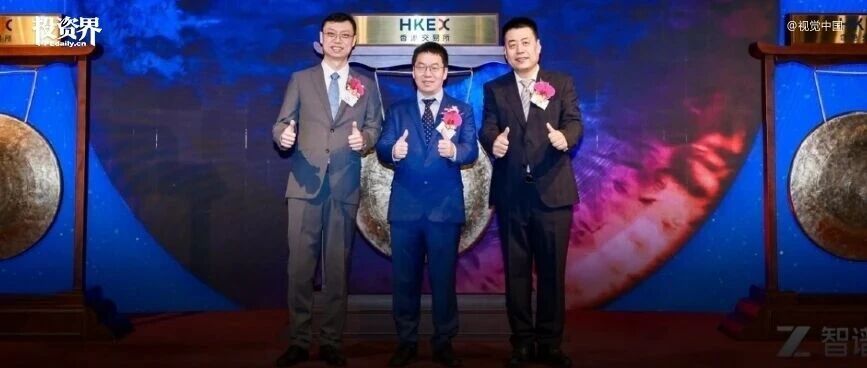
Group 1 - The core point of the article highlights the remarkable market performance of Zhipu, which has seen its market value increase by over 500 billion HKD within a week of its listing on the Hong Kong Stock Exchange, reaching a total market value of 1.1 trillion HKD [1][2] - Zhipu was established in 2019, leveraging the technological foundation laid by Tsinghua University's KEG laboratory, which developed the AMiner product in 2006, focusing on AI-driven research insights [2][3] - The initial shareholding structure of Zhipu included significant stakeholders such as Huakong Technology, which held 11.99% of shares at the time of establishment, and has since seen its stake value rise to approximately 38.83 billion HKD [2][3] Group 2 - The company has completed at least 8 rounds of financing, raising over 8.3 billion CNY, and has attracted more than 50 institutional investors, indicating strong backing from the investment community [4][5] - Following its IPO, Zhipu's stock price surged by over 126% within the first seven trading days, driven by strategic partnerships and technological advancements, including a collaboration with Didi and the launch of a new image generation model with Huawei [5][6] - The success of Zhipu is part of a broader trend in China where university-led technology transfer initiatives are yielding significant financial returns, with Tsinghua University leading in technology commercialization efforts [7][9]
智谱1000亿,清华赚翻了
投资界· 2026-01-18 08:31
Core Viewpoint - The article highlights the remarkable success of Zhipu, a company that has achieved a market value of HKD 1,100 billion shortly after its IPO, showcasing the potential of technology transfer from universities, particularly Tsinghua University [2][3]. Group 1: Company Overview - Zhipu was established in 2019, leveraging technology from Tsinghua University's Knowledge Engineering Group, which dates back to 2006 with the development of the AMiner product [3]. - The company has completed at least 8 rounds of financing, raising over HKD 8.3 billion, and has attracted more than 50 institutional investors, resulting in a total of 87 shareholders [2][6]. - The initial shareholding structure included Huakong Technology, which held 11.99% of Zhipu's shares at the time of its founding [4]. Group 2: Financial Performance - On its first day of trading, Zhipu's market value exceeded HKD 500 billion, and within a week, it surged to over HKD 1,100 billion, marking a 126% increase in stock price [6][7]. - The company has established strategic partnerships, including collaborations with Didi and Huawei, which have contributed to its stock price increase [6][7]. Group 3: Technology Transfer and Impact - Huakong Technology, established in 2014, serves as a platform for technology transfer from Tsinghua University, managing and holding equity from various projects [4][5]. - Tsinghua University has successfully incubated numerous projects, including Zhipu, and has established a comprehensive system for technology transfer, leading to significant financial returns [9][10]. - The university has completed approximately 450 technology transfer projects in the past three years, generating over HKD 1.5 billion in total [9].
智谱与MiniMax港股上市、巨头加速收购新势力...2026 AI 世界的开年大戏正在上演
3 6 Ke· 2026-01-15 07:19
Core Insights - The AI sector witnessed significant developments in 2025, highlighted by the launch of the DeepSeek-R1 model, which achieved over 22.15 million daily active users within 21 days, sparking widespread AI adoption during the Chinese New Year [1] - Major transactions included Meta's acquisition of Manus for between $2 billion and $3 billion, and the IPOs of Chinese AI unicorns Zhiyuan and MiniMax on the Hong Kong Stock Exchange, marking them as the first and second publicly listed companies in the global large model space [1] Group 1: Manus and Meta - Manus, founded by Xiao Hong, initially gained attention with a successful test video and $75 million in funding, but faced challenges including layoffs and a potential crisis before being acquired by Meta [4][6] - Xiao Hong will take on a significant role at Meta, focusing on AI strategy and product development, following Meta's history of acquiring key talent in the AI field [6][10] - Meta's strategy appears to be shifting towards commercialization, as evidenced by the acquisition of Manus and the integration of its team into Meta's AI initiatives [11][12] Group 2: Zhiyuan and MiniMax IPOs - Zhiyuan, a project stemming from Tsinghua University, successfully transitioned from academic research to commercial success, becoming the first independent company to develop a large model with over 1 trillion parameters [15][16] - MiniMax, founded by former SenseTime executive Yan Junjie, focuses on multi-modal AI models and has attracted significant investment from major gaming companies, positioning itself as a key player in the AI landscape [17][18] - Both companies' IPOs reflect a broader trend of AI firms seeking to capitalize on their technological advancements and market potential, despite facing challenges such as legal disputes over intellectual property [19][20]

首个「AI六小虎」上市,海淀收获「全球大模型第一股」
Sou Hu Cai Jing· 2026-01-08 07:01
Core Insights - Beijing Zhiyu AI Technology Co., Ltd. (referred to as "Zhiyu AI") officially listed on the Hong Kong Stock Exchange on January 8, 2026, marking it as the world's first IPO of a large model company [1] - The listing signifies a critical breakthrough for China's large model technology, transitioning from laboratory to capital market, and highlights Haidian's role as a global innovation hub [1][10] - Zhiyu AI's IPO raised approximately HKD 4.173 billion, with a share price set at HKD 116.20, and the company experienced a market capitalization of HKD 55 billion shortly after listing [2][1] Group 1: Haidian's Innovation Ecosystem - Zhiyu AI's journey began in Haidian's academic labs, showcasing the integration of research and industry within this innovation-rich area [5] - The company was founded in 2019, evolving from the AMiner project at Tsinghua University, and has established itself as a leader in the large model sector [6][9] - The success of Zhiyu AI is attributed to Haidian's supportive ecosystem, which includes policies that facilitate technology transfer from research to industry [9][17] Group 2: Financial Performance - Zhiyu AI's revenue growth from 2022 to 2025 shows a compound annual growth rate of 130%, with revenues of CNY 57.4 million, CNY 124.5 million, and CNY 312.4 million respectively [8] - In the first half of 2025, the company reported a revenue of CNY 190.9 million, reflecting a year-on-year increase of 325% [8] Group 3: Haidian's Competitive Advantage - Haidian is home to a significant concentration of AI talent, with 37 universities and a large number of AI experts, which fosters innovation and collaboration between academia and industry [12] - The region has developed a comprehensive industrial ecosystem that spans from chip production to application development, enabling a full-cycle support for hard technology companies [13][12] - Market-driven innovation is supported by diverse application scenarios in Haidian, allowing companies to test and iterate their technologies effectively [14]
今天智谱IPO敲锣,市值550亿
Sou Hu Cai Jing· 2026-01-08 03:06
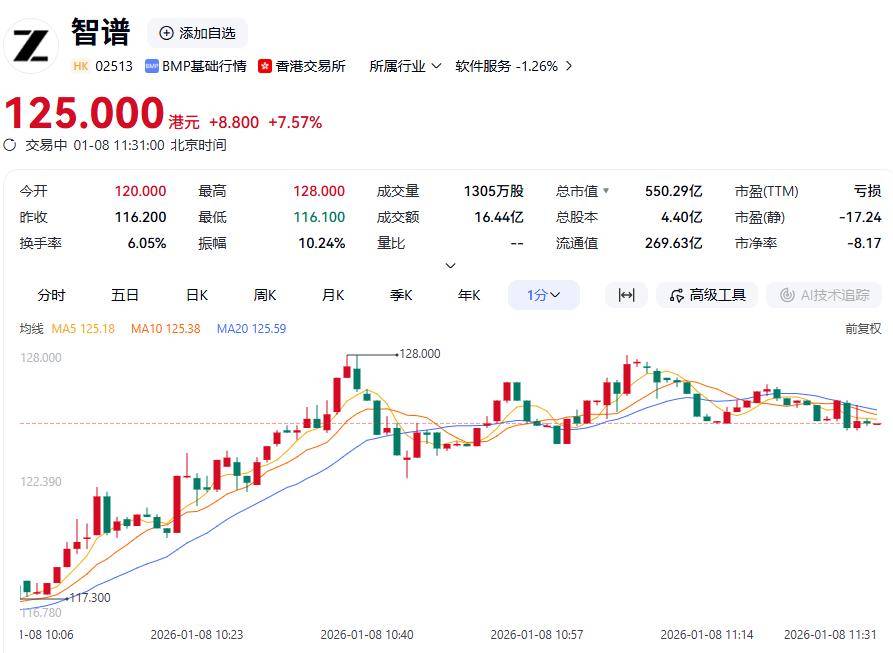
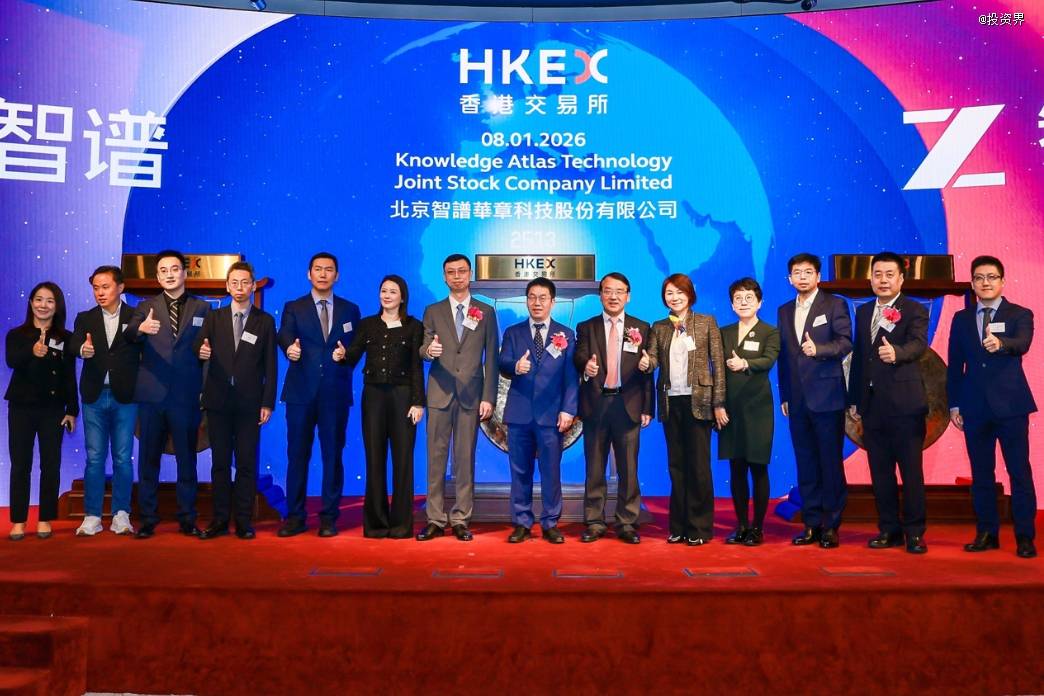
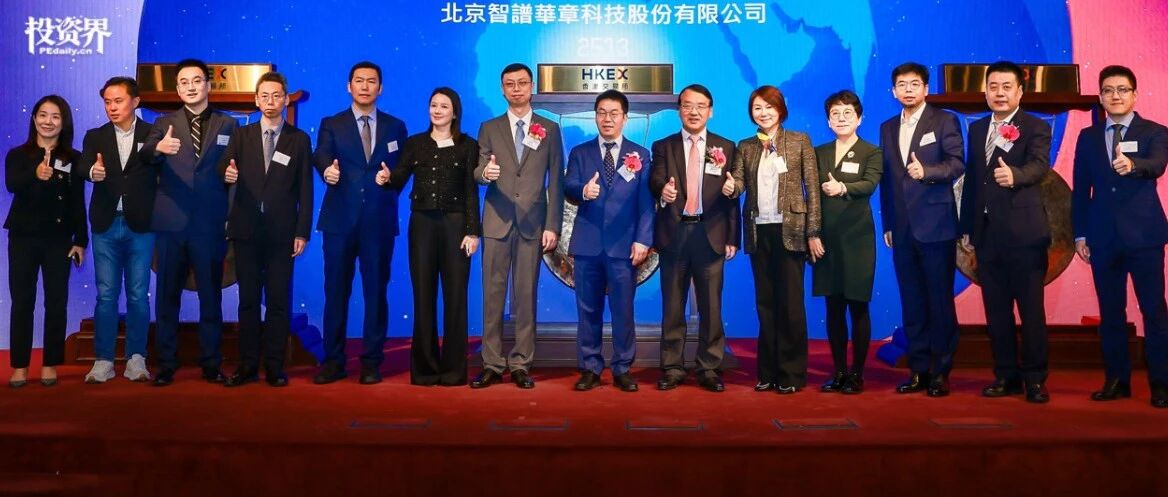
Core Viewpoint - Beijing Zhiyu Huazhang Technology Co., Ltd. (Zhiyu) has officially listed on the Hong Kong Stock Exchange, becoming the "first global large model stock" with an opening price of HKD 116.20 per share and a market capitalization exceeding HKD 55 billion [2][4][8]. Company Overview - Zhiyu was founded in 2019 by a group of scientists from Tsinghua University, with initial funding of CNY 40 million from Zhongke Chuangxing, marking it as one of the earliest investors [2][5]. - The company has a strong foundation in both research and commercial applications, having generated revenue from day one [5][9]. IPO Details - The IPO saw a significant response, with 11 cornerstone investors committing to approximately HKD 3 billion and an oversubscription rate of 1164 times [2][4]. - The listing is expected to provide substantial returns for the investors involved, particularly in the context of the AI boom [4][8]. Financial Performance - Zhiyu's revenue has shown rapid growth, with figures of CNY 57.4 million in 2022, CNY 124.5 million in 2023, and CNY 312.4 million in 2024, projecting CNY 190 million in the first half of 2025 [6][9]. - The company has served over 12,000 enterprise clients and more than 45 million developers, establishing itself as the largest independent large model vendor in China [6][9]. Competitive Position - Zhiyu is positioned among the top tier of domestic large model companies, with its models, such as GLM-4.5/4.6, consistently ranking in the top 10 globally in terms of usage [6][8]. - The company plans to release new flagship models by 2025 that will integrate reasoning, coding, and intelligent agent capabilities [6]. Investment Journey - The initial angel investment of CNY 40 million from Zhongke Chuangxing has yielded a return of approximately 100 times, highlighting the successful foresight in investing in natural language processing and knowledge graphs [9][10][11]. - Zhiyu has completed eight rounds of financing prior to the IPO, raising over CNY 8.3 billion and attracting more than 50 institutional shareholders [10][11]. Future Outlook - The company is expected to continue its growth trajectory in the AI sector, with ongoing investments in research and development to maintain its competitive edge [12][15]. - Zhongke Chuangxing has been actively investing in various AI-related projects, indicating a broader strategy to capitalize on emerging technologies [12][15].
今天智谱IPO敲锣,市值550亿
投资界· 2026-01-08 02:54
Core Viewpoint - Beijing Zhiyu Huazhang Technology Co., Ltd. (Zhiyu) has officially listed on the Hong Kong Stock Exchange, becoming the "first global large model stock" with an IPO price of HKD 116.20 per share and a market capitalization exceeding HKD 550 billion [2][3]. Group 1: Company Background and Development - Zhiyu was founded in 2019 by a group of scientists from Tsinghua University, with initial investment from Zhongke Chuangxing of RMB 40 million [2][4]. - The company has evolved from a research lab to a commercial entity, launching its first proprietary pre-trained large model framework, GLM, in 2021, and open-sourcing a 130 billion parameter model, GLM-130B, in 2022 [4][5]. - By 2025, Zhiyu aims to release its next-generation flagship models, GLM-4.5, GLM-4.6, and GLM-4.7, which will integrate reasoning, coding, and intelligent capabilities [5]. Group 2: Financial Performance and Market Position - Zhiyu has experienced rapid revenue growth, with revenues of RMB 57.4 million in 2022, RMB 1.245 billion in 2023, and RMB 3.124 billion in 2024, projecting RMB 1.9 billion in the first half of 2025 [5][8]. - The company has served over 12,000 enterprise clients and more than 45 million developers, establishing itself as the largest independent large model vendor in China [5][8]. Group 3: Investment and Funding History - Zhiyu has completed eight rounds of financing before its IPO, raising over RMB 8.3 billion and attracting more than 50 institutional investors, including major players like Meituan, Ant Group, Alibaba, Tencent, and Xiaomi [11][12]. - The initial angel investment of RMB 40 million from Zhongke Chuangxing in 2018 has yielded a return of approximately 100 times, highlighting the significant growth potential in the AI sector [9][12]. Group 4: Future Outlook and Industry Trends - The company is positioned in a highly competitive landscape, emphasizing innovation to stand out among numerous players in the large model sector [5]. - The ongoing AI boom presents vast opportunities for growth, with Zhiyu's models consistently ranking among the top globally in terms of usage and revenue [5][8].
智谱上市,起底全球大模型第一股资本版图丨创投智库
Zheng Quan Shi Bao· 2026-01-08 01:02
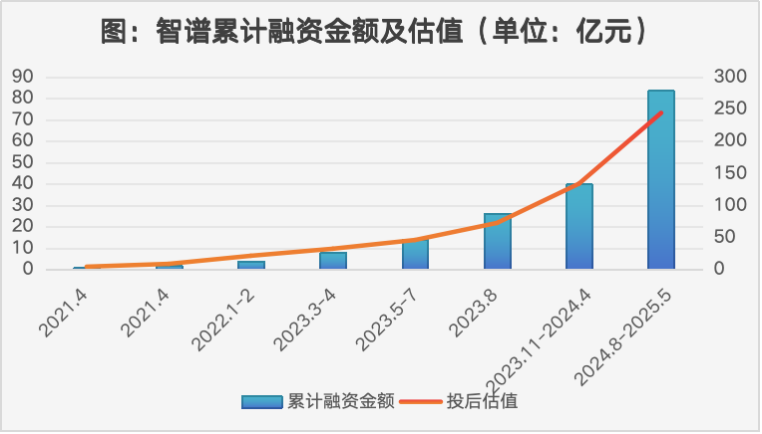
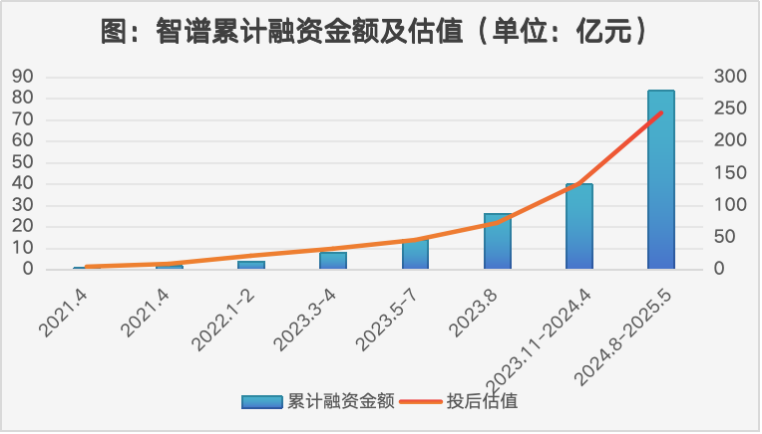
Core Viewpoint - The company Zhiyu has successfully launched on the Hong Kong stock market, becoming the "first global AI large model stock," with an IPO price of HKD 116.2 per share, resulting in a market capitalization exceeding HKD 51.1 billion, leading to significant paper gains for state-owned investors [1] Group 1: Company Background and Investment History - Zhiyu AI was established in June 2019, originating from Tsinghua University's Knowledge Engineering Laboratory, and has raised over CNY 8.3 billion, with more than 90% of the funding occurring after the release of Chat GPT [1] - The founding team, led by Liu Debing, consists mainly of Tsinghua alumni or individuals associated with Tsinghua-related laboratories [1] - Initial funding came from Zhongke Chuangxing, which invested CNY 40 million in 2019, valuing the company at CNY 375 million post-investment [2] Group 2: Strategic Positioning and Product Development - In May 2020, following the release of GPT-3, Zhiyu decided to enter the large model sector, leveraging the founder's connections to top research resources [2] - The company participated in the development of China's first large model "Wudao," which positioned it favorably in the market [2] - By September 2021, Zhiyu launched the GLM-10B model, attracting significant attention and further investment [6] Group 3: Financing Rounds and Valuation Growth - The company has undergone multiple financing rounds, with significant investments from various institutions, including a total of CNY 1.21 billion from Dachen Capital across several rounds [6] - The valuation surged from CNY 2.11 billion in the B1 round to CNY 24.38 billion before the IPO, with a total of CNY 8.36 billion raised, primarily in 2023-2025 [8] - Major investments in recent rounds included CNY 30 million from Tianjin San Kuai and CNY 20 million from Tencent, among others [10] Group 4: Market Position and Future Challenges - Following the release of Chat GPT, Zhiyu launched several products, including Zhiyu Qingyan and the GLM-4 model, leading to a surge in financing and valuation [8] - The company faces challenges with rising computing service costs, projected to reach CNY 1.55 billion in 2024, while revenue is expected to be only CNY 312 million, raising concerns about cash flow sustainability [11] - Zhiyu's long-term strategy includes providing localized AI solutions to government and large enterprise clients, with over 80% of revenue expected to come from this sector by mid-2025 [12]
智谱上市,起底全球大模型第一股资本版图
Zheng Quan Shi Bao· 2026-01-08 00:57
Core Insights - Zhipu AI, known as the "first global AI large model stock," debuted on the Hong Kong stock market with an issue price of HKD 116.2 per share, resulting in a market capitalization exceeding HKD 51.1 billion, leading to a paper profit of approximately 89% for recent state-owned investors [1][8] Investment Background - Zhipu AI was established in June 2019, originating from Tsinghua University's Knowledge Engineering Laboratory, with a founding team primarily composed of Tsinghua alumni [3] - The company initially focused on the development and commercialization of the academic technology intelligence mining system "AMiner," attracting early investment from Zhongke Chuangxing, which recognized the potential in natural language processing and knowledge graphs [3][4] - The strategic decision to enter the large model arena was made in May 2020, following the release of GPT-3, leveraging the founder's connections to top research resources [3][4] Financing Rounds - Zhipu AI completed three financing rounds before the release of Chat GPT, with significant investments from various institutions, including a total of 1.52 billion yuan in the A round [4][6] - The B1 round in early 2022 raised 12.5 billion yuan, increasing the post-money valuation to 21.1 billion yuan, indicating strong investor confidence [6][7] - Subsequent financing rounds saw a surge in investment, particularly after the launch of Chat GPT, with the company's valuation skyrocketing from 21.1 billion yuan to 243.8 billion yuan before its IPO [8][11] Industry and Capital Dynamics - The influx of industrial capital and state-owned institutions became prominent in the later financing rounds, with significant investments from major players like Ant Group, Tencent, and Meituan [11][12] - The collaboration with state-owned enterprises not only provided funding but also facilitated real industry applications, exemplified by partnerships to develop large model spaces and provincial-level projects [12][13] - Zhipu AI's revenue model is heavily reliant on providing localized and customized AI solutions to large clients, with over 80% of revenue projected to come from government and state-owned enterprises by mid-2025 [13] Challenges and Future Outlook - The company faces challenges in balancing high computational costs with revenue growth, as expenses for computational services have surged significantly [11][12] - The lack of recurring contracts with major clients raises concerns about the sustainability of its revenue model, as evidenced by the changing list of top clients over the years [13] - The ability to leverage state and industrial capital resources into a sustainable business model will be crucial for Zhipu AI's long-term success and profitability [13]