
AR导览

Search documents
深圳市决策咨询专家(经济组)、和君咨询合伙人熊时实: 从“造设备”升级到“定标准”
Shen Zhen Shang Bao· 2026-01-29 17:38
Core Insights - The competition in the new quality imaging industry has shifted from hardware production to ecosystem definition, emphasizing the need for comprehensive solutions that integrate hardware, software, and application scenarios [1][2] Group 1: Industry Trends - Bao'an District's core advantage lies in its ability to rapidly convert technology into market products, supported by a complete industrial chain and quick supply-demand matching [1] - The future competition will focus on defining products that encompass a full chain solution, including hardware, software, and scenarios [1] Group 2: Short-term Strategies - In the short term (1-2 years), resources should be concentrated on developing three demonstration scenarios: 1. "AI + E-commerce" to provide multilingual marketing video generation services for overseas enterprises 2. "Virtual Shooting" to create low-cost, high-efficiency digital studios to attract film crews 3. "Interactive Cultural Tourism" to offer AR-guided experiences for attractions and exhibitions [1] Group 3: Long-term Strategies - In the long term (3-5 years), Bao'an should focus on standard-setting and transaction system development, fostering a "New Quality Imaging Industry Alliance" to establish digital work rights and valuation systems [2] - The goal is to leverage platforms like Shenzhen Cultural Exchange to explore cross-border digital copyright transactions, aiming to gain pricing power in the global digital content market [2] Group 4: Collaborative Solutions - A new approach involves promoting collaboration between AI technology firms and Tencent's cloud and advertising services to create comprehensive industry solutions branded as "Bao'an Intelligent Manufacturing" [2] - The ultimate goal for Bao'an is to become a rule-maker in the industry, collaborating with leading enterprises to establish standards in emerging fields like AIGC content copyright certification and immersive experience standards [2]
从“冰雪游”到“文化行”:入境游“热潮”涌动 中华文化魅力引外国游客深度打卡
Yang Shi Wang· 2025-12-09 07:53
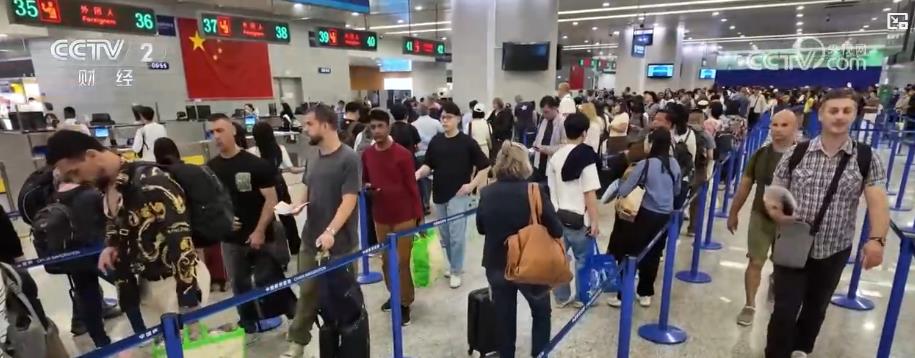
Group 1 - The inbound tourist volume in traditional popular destinations like Beijing, Shanghai, and Chengdu has increased by over 90% this year, driven by the rising popularity of "cultural experience tours" and "in-depth travel" [1] - The number of non-Chinese passport holders booking domestic flights has increased by 13.58% this ice season, covering 101 cities, with Harbin, Dalian, Changchun, and Yining in Xinjiang emerging as popular inbound destinations [3] - The "Haya Snow" tourism route connecting Harbin, Yabuli, and Snow Town has become a favorite among foreign tourists, with over 3,700 foreign visitors enjoying the local cuisine and cultural experiences since its opening on November 17 [5] Group 2 - In Zhejiang, Malaysian tourists have engaged with ancient civilization through AR glasses at the Liangzhu Museum, allowing them to interact with holographic artifacts, enhancing their cultural experience [7] - Approximately 590,000 foreign travelers have entered through Fujian ports this year, marking a 16.7% increase compared to the same period in 2024, with new "premium inbound routes" introduced to offer diverse and high-quality travel options [10]

游天下:数字赋能,让山水更懂人心
Sou Hu Cai Jing· 2025-10-29 08:45
Group 1 - The integration of digital technology in scenic areas is transforming visitor experiences, enhancing efficiency and safety through systems like time-slot reservations and facial recognition [1][3] - Smart management tools allow for real-time monitoring of visitor flow, enabling better resource allocation and improved visitor services [1][3] - The use of VR and AR technologies provides immersive experiences for remote visitors and enhances on-site navigation and storytelling [3][4] Group 2 - Social media platforms are reshaping how scenic spots are marketed, with user-generated content driving interest and foot traffic to lesser-known attractions [4] - There is a risk of losing local cultural authenticity due to an over-reliance on digital solutions and uniform commercial offerings [4] - A balanced approach is necessary for smart scenic areas, where technology enhances rather than overshadows the human experience [4][6] Group 3 - The industry is moving towards an "internet-based marketing" strategy, utilizing online platforms for promotion and sales while maintaining a strong offline presence [7]

激发消费活力 国庆消费月将发放超4.8亿元消费补贴
Zheng Quan Ri Bao Wang· 2025-09-26 10:07
Core Insights - The National Cultural and Tourism Consumption Month aims to stimulate consumer activity through a series of events and subsidies totaling over 480 million yuan [1][2][3] Group 1: Economic Impact - The consumption subsidies are designed to lower the barriers for travel, benefiting various income groups, particularly families and seniors [2] - The initiative is expected to create a virtuous cycle where consumers benefit from discounts while suppliers gain market vitality, supporting overall market growth [2][3] Group 2: Event and Activity Highlights - Over 29,000 cultural and tourism activities will be organized nationwide, focusing on themes such as cultural experiences and scenic tours [2] - Specific regional initiatives include promotional activities in Shandong, Zhejiang, Guangdong, and Qinghai, each offering unique tourism packages and discounts [2] Group 3: Market Dynamics - The consumption month is anticipated to significantly boost domestic travel and tourism revenue, leveraging the holiday effect of the Mid-Autumn Festival and National Day [3] - The focus on immersive experiences and the integration of tourism with sports and technology is expected to shift the market towards higher quality consumption [3] Group 4: Future Strategies - To further enhance consumption, policies should aim to increase residents' income and innovate consumer experiences, such as developing immersive shopping spaces and personalized products [3]