ASIMO机器人

Search documents
从工厂到客厅,人形机器人要进家门,先过“降本”这道坎
Sou Hu Cai Jing· 2025-12-15 03:25
Core Insights - The interest in humanoid robots is high, but there is a significant gap between consumer desire and actual purchases due to concerns over functionality and pricing [3][12][40] Consumer Perception - 65% of consumers find the concept of "advanced home robots" appealing, but only 15% understand the technical details [5][6] - Consumers prioritize practical tasks such as cleaning, laundry, and cooking over entertainment functions like chatting or dancing [9][11] Pricing Challenges - Consumers are willing to spend around $5,000 if a robot can save them 300 hours of household chores annually, but current offerings like Tesla's Optimus are priced around $20,000, making only 5% of consumers willing to buy [12][15] - The cost of humanoid robots has decreased by 40% in the past year due to industrial applications, but further reductions are necessary for consumer adoption [18][20] Technological and Design Considerations - Robots need to navigate complex home environments, which presents challenges in environmental perception and flexible actuation [23][25] - Current designs are either too robotic or cold, while consumer preferences lean towards more approachable and aesthetically pleasing designs [30][32] Safety and Privacy Concerns - There is a lack of standardized safety protocols for home robots, leading to consumer fears about safety and data privacy [33][35] - Implementing safety features and data encryption is essential for consumer trust [35] Market Strategy - Companies like Tesla aim for a universal humanoid robot, while others like UBTECH focus on a rental model to test functionalities in real-world settings [27] - Successful market penetration may require a phased approach, starting with high-end models and gradually moving to more affordable options [29][40] Consumer Engagement - Direct consumer experiences, such as hands-on demonstrations, are crucial for building trust and understanding of robot capabilities [36][40] - The evolution of consumer electronics, like smartphones, illustrates that technology must mature and become affordable to achieve widespread adoption [40][42]



“工业机器人曾是日本的堡垒,但中国已开始在新轨道上竞争”
Guan Cha Zhe Wang· 2025-12-14 11:06
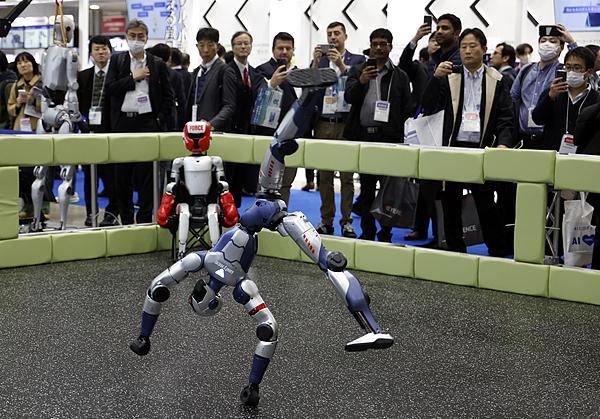
Core Insights - Japan has historically been a stronghold in industrial robotics, but China is now emerging as a competitor in the humanoid robot sector driven by AI advancements [1][4][6] - The Tokyo International Robot Exhibition (IREX) showcased a record 673 exhibitors, with a notable presence of 84 Chinese companies, indicating China's growing influence in the robotics market [1][2] Industry Overview - Japan remains focused on mature industrial applications, while China is rapidly advancing in humanoid robotics, an area where Japan's traditional dominance is being challenged [1][6] - The global market for humanoid robots is seeing significant investment, with around 50 companies raising at least $100 million, including 20 in China [7] Competitive Landscape - Japan's industrial robots account for 38% of global production, but its strategic transition to AI-driven technologies is lagging [6] - Chinese companies are now leading in domestic market share, capturing 57% of the local market, and are projected to install 295,000 industrial robots in 2024, representing over 54% of global installations [6][7] Technological Advancements - The current wave of humanoid robots emphasizes AI-driven capabilities, moving beyond pre-programmed actions to self-learning abilities [5][6] - The advancements in AI models are enhancing the operational capabilities of robots, making them more adaptable and efficient in various tasks [6][7]