Alpamayo开源模型家族

Search documents
黄仁勋罕见提前宣布:新一代GPU全面投产
2 1 Shi Ji Jing Ji Bao Dao· 2026-01-06 05:27
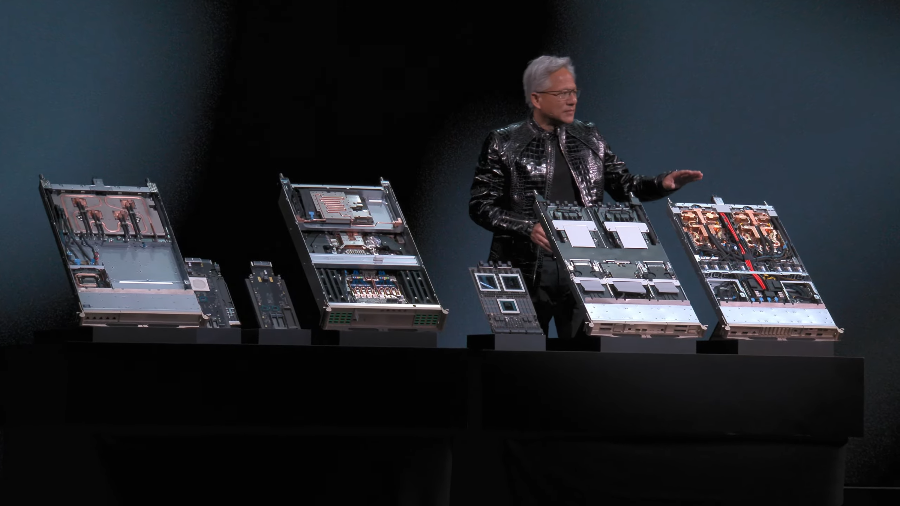
Core Insights - NVIDIA has accelerated its product release schedule by unveiling the next-generation AI chip platform "Rubin" earlier than usual at CES 2026, breaking its traditional March GTC announcement timeline [2][3] - The Rubin platform is designed to meet the increasing computational demands of AI for both training and inference, featuring a collaborative design of six new chips [5][6] Group 1: Rubin Platform Details - The Rubin platform integrates six chips: NVIDIA Vera CPU, Rubin GPU, NVLink 6 switch chip, ConnectX-9 SuperNIC, BlueField-4 DPU, and Spectrum-6 Ethernet switch chip, covering multiple layers from computing to networking, storage, and security [5] - Compared to the previous Blackwell architecture, Rubin accelerators improve AI training performance by 3.5 times and operational performance by 5 times, with a new CPU featuring 88 cores [5] - The Rubin platform can reduce inference token costs by up to 10 times and decrease the number of GPUs required for training MoE (Mixture of Experts) models by four times compared to the Blackwell platform [5] Group 2: Ecosystem and Market Response - The NVL72 system, which includes 72 GPU packaging units, was also announced, with each unit containing two Rubin dies, totaling 144 Rubin dies in the system [6] - Major cloud providers and model companies, including AWS, Microsoft, Google, OpenAI, and Meta, have responded positively to the Rubin platform and are among the first adopters [6][7] Group 3: Strategic Shift in AI Focus - NVIDIA's presentation at CES included a broader AI ecosystem strategy, shifting focus from "training scale" to "inference systems," with the introduction of an Inference Context Memory Storage Platform designed for efficient management of KV Cache [9] - The company is also advancing its long-term vision of physical AI, releasing open-source models and frameworks aimed at extending AI capabilities into robotics, autonomous driving, and industrial edge scenarios [9][10] - The introduction of the Alpamayo open-source model family for autonomous driving, along with a high-fidelity simulation framework, indicates NVIDIA's commitment to enhancing inference-based autonomous driving systems [13]


黄仁勋罕见提前宣布:新一代GPU全面投产
21世纪经济报道· 2026-01-06 05:23
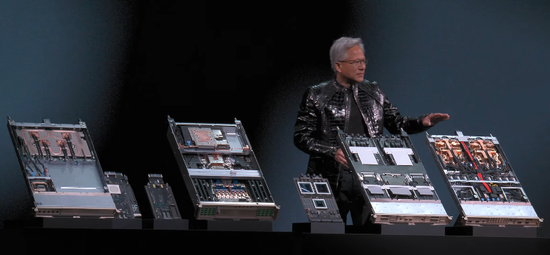
Core Viewpoint - NVIDIA has accelerated its AI chip platform release with the introduction of the "Rubin" platform at CES 2026, marking a shift in its product announcement strategy and emphasizing the growing demand for AI computing in both training and inference [2][4]. Group 1: Rubin Platform Overview - The Rubin platform, which integrates six chips including the NVIDIA Vera CPU and Rubin GPU, is designed for extreme collaborative performance, enhancing AI training performance by 3.5 times and operational performance by 5 times compared to the previous Blackwell architecture [4]. - The Rubin platform's inference token cost can be reduced by up to 10 times, and the number of GPUs required for training MoE models is decreased by four times [5]. - The NVL72 system, which includes 72 GPU packaging units, was also announced, with each unit containing two Rubin dies, totaling 144 Rubin dies in the system [5]. Group 2: Ecosystem and Market Response - Major cloud providers and model companies such as AWS, Microsoft, Google, OpenAI, and Meta have shown strong interest in the Rubin platform, indicating a positive market response [6]. - NVIDIA's early announcement of Rubin aims to provide engineering samples to ecosystem partners for preparation of subsequent deployment and scaling applications [6]. Group 3: Full-Stack AI Strategy - NVIDIA's presentation at CES included a range of AI products, signaling a shift from training scale to inference systems, with the introduction of the Inference Context Memory Storage Platform designed for efficient management of KV Cache [8]. - The company is expanding its focus on physical AI, releasing open-source models and frameworks that extend AI capabilities into robotics, autonomous driving, and industrial edge scenarios [8][9]. - The Cosmos and GR00T series models were introduced for robotics, enabling machines to understand and act in the physical world, while the Alpamayo model family was launched for autonomous driving, supported by a high-fidelity simulation framework [11].
AI竞赛转向推理,英伟达宣布Rubin芯片平台全面投产
2 1 Shi Ji Jing Ji Bao Dao· 2026-01-06 00:40
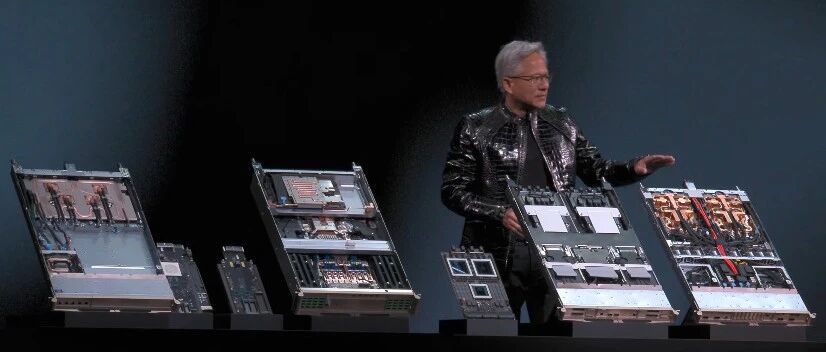
Core Insights - NVIDIA has accelerated its AI chip platform release schedule by unveiling the next-generation AI chip platform "Rubin" earlier than usual at CES on January 5, 2026, breaking its traditional March GTC announcement pattern [1][2] Group 1: Rubin Platform Overview - The Rubin platform, which includes six new chips, is designed for extreme collaboration and aims to meet the increasing computational demands of AI for both training and inference [4] - Compared to the previous Blackwell architecture, Rubin accelerators improve AI training performance by 3.5 times and operational performance by 5 times, featuring a new CPU with 88 cores [4] - Rubin can reduce inference token costs by up to 90% and decrease the number of GPUs required for training mixture of experts (MoE) models by 75% compared to the Blackwell platform [4] Group 2: Ecosystem and Market Response - The NVL72 system, which includes 72 GPU packaging units, was also announced, with each unit containing two Rubin dies, totaling 144 Rubin dies in the system [5] - Major cloud providers and model companies, including AWS, Microsoft, Google, OpenAI, and Meta, have responded positively to Rubin, indicating strong market interest [5] - NVIDIA aims to provide engineering samples to ecosystem partners early to prepare for subsequent deployment and scaling applications [5] Group 3: AI Strategy and Product Launches - NVIDIA's focus is shifting from "training scale" to "inference systems," as demonstrated by the introduction of the Inference Context Memory Storage Platform, designed specifically for inference scenarios [6] - The company is also advancing its long-term strategy in physical AI, releasing open-source models and frameworks that extend AI capabilities to robotics, autonomous driving, and industrial edge scenarios [6] - The launch of the Cosmos and GR00T series models aims to enhance robotic learning, reasoning, and action planning, marking a significant step in the evolution of physical AI [7] Group 4: Autonomous Driving Developments - NVIDIA introduced the Alpamayo open-source model family for autonomous driving, targeting "long-tail scenarios," along with a high-fidelity simulation framework and an open dataset for training [9] - The first autonomous vehicle from NVIDIA is set to launch in the U.S. in the first quarter, with plans for expansion to other regions [9] - The overall strategy emphasizes that the competition in AI infrastructure is moving towards "system engineering capabilities," where the complete delivery from architecture to ecosystem is crucial [9]