Amazon Nova Forge

Search documents
揭秘Agent落地困局!93%企业项目卡在POC到生产最后一公里|亚马逊云科技陈晓建@MEET2026
量子位· 2025-12-25 06:08
Core Insights - The true value of Agents lies not in their impressive demonstrations but in their ability to operate effectively in production environments. Data indicates that over 93% of enterprise Agent projects get stuck in the transition from Proof of Concept (POC) to production [1][17]. Group 1: Agent Development and Challenges - A successful Agent requires three essential modules: the model (brain), code (logic), and tools (connecting to the physical world). The effective integration of these three components presents the greatest engineering challenge [7][9]. - The transition from POC to production is hindered by significant obstacles, primarily due to data quality discrepancies and a lack of engineering capabilities [7][17]. - The best time for model customization is during the foundational model training phase, similar to how humans learn languages more effectively at a young age [21][23]. Group 2: Engineering and Deployment Solutions - To address the challenges faced during the deployment and production phases, the company has introduced Amazon Bedrock AgentCore, a comprehensive toolbox designed to manage foundational infrastructure dynamically [20]. - The introduction of Strands Agents simplifies the development process, allowing complex functionalities to be achieved with significantly less code, enhancing efficiency [13][30]. - The company has also launched features to support TypeScript and edge device deployment, expanding the applicability of Agents across various platforms [15][30]. Group 3: Automation and Workflow Integration - The emergence of large models has opened new possibilities for workflow automation, with the development of Amazon Nova Act, which integrates large model capabilities with engineering functionalities for end-to-end automation [29]. - The success rate of automation using Nova Act can reach over 80%, showcasing its effectiveness compared to traditional RPA tools [29]. Group 4: Case Studies and Industry Impact - Blue Origin has built over 2,700 internal Agents using Bedrock and Strands Agents, achieving a 75% improvement in delivery efficiency and a 40% enhancement in design quality [30]. - Sony has developed an internal "Data Ocean" platform, serving over 57,000 internal users and processing up to 150,000 inference requests daily, while also improving compliance review efficiency by 100 times through model fine-tuning [30].



一朵诞生众多独角兽的云,正在用AI落地Agent
3 6 Ke· 2025-12-04 02:45
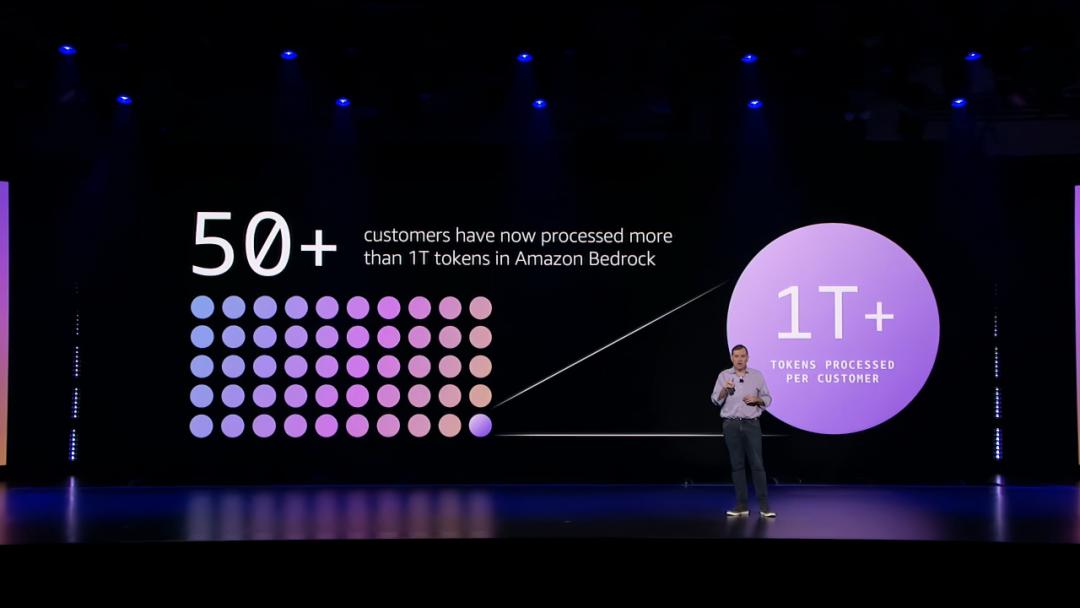
Core Insights - The article emphasizes the transformative impact of AI, particularly through Amazon Web Services (AWS), which has innovated a comprehensive suite for Agent development, enhancing efficiency and capabilities across various industries [1][4][19]. Group 1: AI Adoption and Market Impact - All enterprises are embracing AI, with significant examples such as Sony's use of large models to enhance compliance processes by 100 times and Adobe's AI tool generating 29 billion creative assets [2][3]. - AWS's generative AI platform, Amazon Bedrock, has served over 100,000 customers in the past year, with over 50 companies processing more than 1 trillion tokens daily [5][10]. - AWS's revenue reached $132 billion in the past year, marking a 20% year-over-year increase, with an absolute growth of $22 billion [6]. Group 2: Infrastructure and Technological Advancements - AWS's AI infrastructure, including the Amazon Trainium3 UltraServers, has significantly improved performance, with a 4.4 times increase in computing power and a 5 times increase in token processing per megawatt [21][25]. - The number of models available on Amazon Bedrock has nearly doubled, reflecting a growing diversity in high-performance models [26]. Group 3: Agent Development and Future Trends - The concept of Agents is seen as a pivotal point for AI value realization, with predictions that billions of Agents will exist across various sectors [9][37]. - AWS has introduced new services for Agent management and evaluation, addressing the need for real-time performance monitoring and control [35][36]. - The emergence of low-code and no-code development tools is lowering the barrier for Agent development, but new challenges in performance assurance and management are arising [34][42]. Group 4: Entrepreneurial Landscape and Innovation - Startups are increasingly leveraging AWS, with a notable example being Audio Shake, which developed an AI audio separator for ALS patients [39][41]. - The article highlights the shift in organizational structures due to AI, where smaller teams can achieve significant outputs, exemplified by a project that required only 6 developers and 76 days to complete [47].
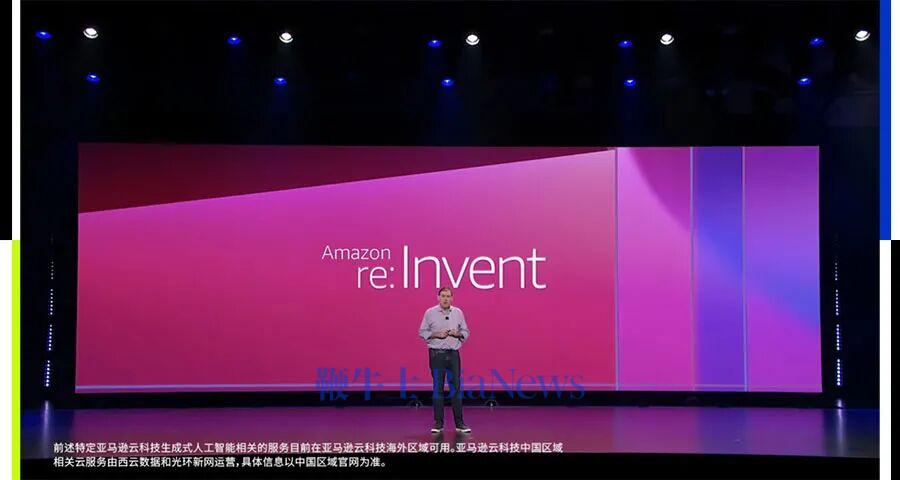
数十亿AI员工上岗倒计时,云计算一哥“没有魔法,只有真能解决问题的Agent”
3 6 Ke· 2025-12-04 01:41
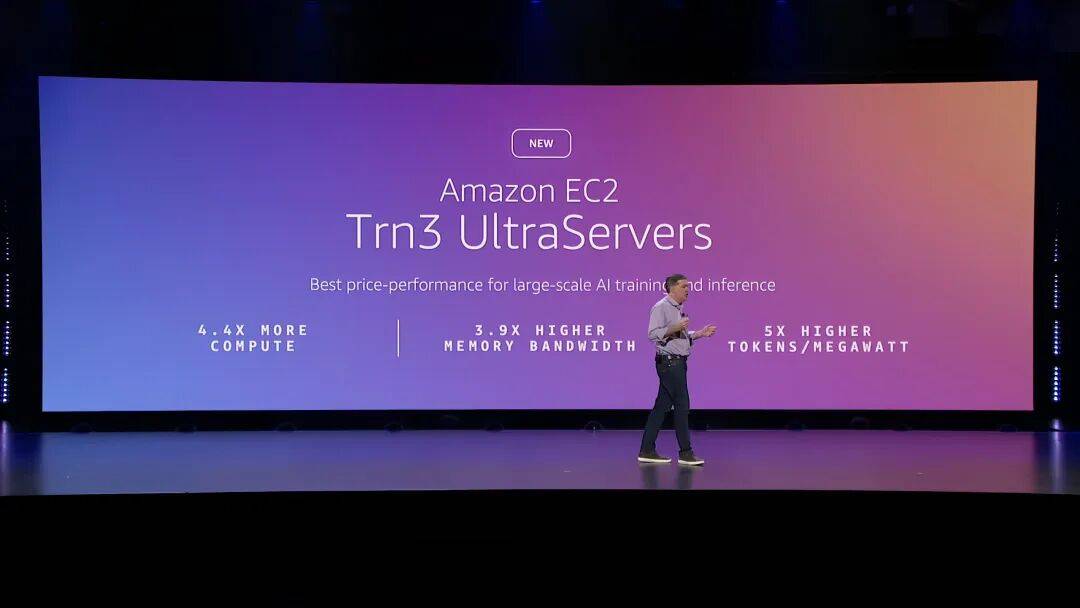
Core Insights - The AI industry is experiencing a silent differentiation, shifting from "model capability demonstration" to "Agent actual deployment" as the path to realizing AI value [1][24] - Amazon Web Services (AWS) CEO Matt Garman emphasized that the emergence of Agents marks a transition from a technological marvel era to a time of actual value realization [1][24] Group 1: AI Infrastructure Revolution - AWS introduced the Amazon EC2 Trainium 3 UltraServers, powered by self-developed 3nm chips, showcasing a significant leap in computing power with 362 PFLOPS and over 700 TB/s bandwidth [5][6] - The new Trainium 3 servers offer 4.4 times the computing performance and 3.9 times the memory bandwidth compared to the previous generation [6] - AWS plans to launch the next-generation Trainium 4, promising 6 times the FP4 performance and 4 times the memory bandwidth, addressing the needs of large model training [8] Group 2: Diverse Model Ecosystem - AWS adopts a diversified model strategy, rejecting the notion of a single "universal model" and instead promoting multiple excellent models [9] - The number of models available on the Amazon Bedrock platform has doubled, with 18 new managed open-source models, including four top Chinese models [9][12] - The newly launched Amazon Nova 2 series models cater to various needs, outperforming existing lightweight models in several areas [10][12] Group 3: Data and Model Integration - AWS introduced the Amazon Nova Forge service, allowing businesses to mix proprietary data with AWS training datasets to create customized models [14][16] - This service addresses the limitations of traditional data-model integration methods, enabling models to retain core reasoning abilities while learning new domain knowledge [13][16] - Sony is an early adopter of this service, successfully creating a customized model that significantly improves compliance review efficiency [16] Group 4: Advanced Agent Deployment - AWS unveiled three types of "frontier Agents" that demonstrate a significant leap in AI capabilities, showcasing their potential to transform software development and operations [17][19] - The Kiro autonomous agent can autonomously handle complex tasks, drastically reducing the time and manpower required for software projects [17][19] - The Amazon Security Agent and Amazon DevOps Agent enhance security and operational response mechanisms, ensuring continuous validation and efficient troubleshooting [19][20] Group 5: Comprehensive Agent Ecosystem - AWS's AgentCore features provide real-time control and evaluation of Agent interactions with enterprise tools and data, addressing core concerns in Agent deployment [20][22] - The introduction of new instances and services across various domains supports the infrastructure needed for effective Agent deployment [23] - The overall strategy positions AWS as a leader in the Agent era, emphasizing a full-stack capability to convert AI investments into tangible business returns [24]
当亚马逊云科技拿到“麦克”,一年的云计算叙事都被改写了
Sou Hu Cai Jing· 2025-12-03 16:43
Core Insights - Analysts from Oppenheimer and JPMorgan reaffirmed a positive outlook on Amazon Web Services (AWS), highlighting significant growth opportunities in the cloud computing sector, particularly with the focus on Agentic AI [1][2] - The annual AWS re:Invent event showcased a strong emphasis on Agentic AI, with CEO Matt Garman's keynote defining the evolution of cloud computing and the importance of AI infrastructure [1][3] Group 1: Agentic AI and Infrastructure - Matt Garman identified four key pillars necessary for the realization of Agentic AI: AI Infrastructure, model ecosystem, data foundation, and developer tools [2] - AWS introduced several significant products and enhancements aimed at supporting Agentic AI, including Amazon Trainium3 UltraServers and the Amazon Nova 2 series of models [2][6] - The Amazon Trainium series has become a core business for AWS, with a reported quarterly growth of 150%, emphasizing its importance in building AI infrastructure [4][5] Group 2: Product Innovations - The Amazon Trainium3 UltraServers, designed for intensive parallel workloads, offer substantial performance improvements, including a 4.4 times increase in computational capability compared to its predecessor [6][8] - AWS announced the Amazon Nova 2 series, which includes models tailored for various applications, such as Amazon Nova 2 Lite for everyday workloads and Amazon Nova 2 Omni for multi-modal input and output [15][18] - The introduction of Amazon Nova Forge allows enterprises to create customized models by integrating their proprietary data with AWS's pre-trained models [24] Group 3: Developer Tools and Agentic AI - AWS emphasized the importance of developers in the AI landscape, introducing updates to Amazon Bedrock AgentCore that allow for clearer boundaries on AI capabilities [25][27] - The launch of three Frontier Agents—Kiro Autonomous Agent, Amazon Security Agent, and Amazon DevOps Agent—demonstrates AWS's commitment to enhancing developer experience and operational efficiency [30][31] - The focus on private data as a critical differentiator for enterprises was highlighted, with AWS advocating for the integration of proprietary data into AI models to enhance their effectiveness [21][22]
一朵诞生众多独角兽的云,正在用AI落地Agent
36氪· 2025-12-03 13:41
Core Insights - The article emphasizes the transformative impact of AI on various industries, highlighting that all companies are embracing AI technologies [3] - Amazon Web Services (AWS) is at the forefront of this AI revolution, providing a comprehensive suite of tools and infrastructure for AI development [2][5] Group 1: AI Adoption and Impact - The global box office success of the animated film "Demon Slayer," which grossed nearly $800 million, showcases the efficiency gains achieved by companies like Sony through AI, improving compliance review processes by 100 times [4] - Adobe's AI creative design tool, Adobe Firefly, has generated 29 billion creative assets this year, reflecting the significant impact of AI on creative industries [4] - AWS's generative AI development platform, Amazon Bedrock, has served over 100,000 customers in the past year, with over 50 companies processing more than 1 trillion tokens daily [6] Group 2: Infrastructure and Tools - AWS's revenue reached $132 billion in the past year, a 20% year-over-year increase, with an absolute growth of $22 billion, surpassing the annual revenue of over half of the Fortune 500 companies [7] - The introduction of Amazon Trainium3 UltraServers has significantly enhanced performance, increasing computational power by 4.4 times and memory bandwidth by 3.9 times [31] - The new Amazon Nova Forge platform allows for customized model training, combining proprietary business data with AWS's training datasets, thus lowering the barriers for companies to develop tailored AI models [43] Group 3: Agent Development and Management - The concept of "Agent" is identified as a pivotal point for AI value realization, with predictions that billions of Agents will exist across various sectors [10][48] - AWS has launched new services for Agent management, including Gateway for policy control and Evaluations for performance assessment, addressing the challenges of deploying and managing Agents effectively [46][47] - The emergence of low-code and no-code development tools is lowering the barriers for Agent development, but new challenges arise in ensuring the reliability and effectiveness of these Agents [45] Group 4: Future Directions and Innovations - The article discusses the need for continuous innovation in AI infrastructure, with AWS focusing on enhancing the capabilities of its AI chips and expanding its model offerings [32][34] - The trend towards open-source models is highlighted, allowing developers to access training data and resources at lower costs, fostering innovation in AI applications [34] - The article concludes with a vision for the future where every company will have numerous Agents, fundamentally changing organizational structures and productivity [48][59]

云巨头锁定AI Agent未来现金流 直击2025 re:Invent
美股研究社· 2025-12-03 11:42
Core Insights - Amazon Web Services (AWS) has officially entered the "Agentic AI" era, showcasing its commitment to AI infrastructure and cloud services [3] - AWS reported an annual revenue of $132 billion, with a year-on-year increase of approximately $22 billion, driven by strong demand for AI infrastructure and accelerated cloud adoption [4] - The company anticipates a capital expenditure increase to $125 billion for the year, indicating a robust investment in AI and cloud capabilities [4] Group 1: AI Infrastructure and Market Position - AWS is focusing on four core elements necessary for the AI Agent era: AI infrastructure, reasoning systems, data, and development tools, to solidify its leadership in global cloud computing and AI [8] - The company has made significant advancements in its Amazon Trainium chip series, including the introduction of the first 3nm AI chip, enhancing the cost-performance ratio for training and inference [10] - AWS's model ecosystem aims to address the critical issue of model selection and adaptation for enterprises, with the launch of the Amazon Nova 2 series models [11][12] Group 2: Data and AI Tools - The introduction of the "open training model" concept allows enterprises to inject proprietary data into cutting-edge model training, marking a new competitive threshold in the industry [13] - AWS's Amazon Bedrock AgentCore provides a comprehensive suite of components for building, deploying, and managing AI agents, addressing the trust issues associated with agent deployment [14] Group 3: Future of AI Agents - The transition from generative AI to AI Agents is seen as inevitable, with agents capable of executing tasks and providing significant efficiency improvements for businesses [16] - Deloitte reports that by 2025, 73% of companies deploying agents will see cost reductions, and 58% will experience revenue growth [17] - Gartner predicts that over 15% of daily business decision-making will be autonomously handled by AI agents [18] Group 4: Competitive Landscape and Innovations - AWS has established a significant data gap in terms of reasoning and inference capabilities, supporting over 100,000 enterprises with generative AI inference [19] - The introduction of three advanced agents—Kiro, Amazon Security Agent, and Amazon DevOps Agent—demonstrates AWS's focus on transforming software development, security processes, and operational management [21][26] - Kiro has drastically reduced the time and personnel required for large engineering projects, indicating a shift towards agent-centric software development [24] Group 5: Long-term Strategy and Growth - AWS is positioning itself for long-term cash flow and infrastructure value as enterprises adopt agents on a large scale [30] - The company has expanded its global data center network to 38 regions and 120 availability zones, increasing data center capacity by 50% over the past year [30][31] - AWS is accelerating the construction of a complete AI value chain, preparing for the intelligent transformation in the Agentic AI era [33]
云计算一哥10分钟发了25个新品!Kimi和MiniMax首次上桌
量子位· 2025-12-03 02:38
Core Insights - Amazon Web Services (AWS) showcased an unprecedented number of product launches at the re:Invent 2025 event, with CEO Matt Garman challenging himself to release 25 products in 10 minutes, ultimately unveiling 40 new products in just over two hours, emphasizing practicality and addressing challenges in AI applications [1][7][9]. Group 1: AI Computing Power - AWS has restructured its AI computing supply model by focusing on self-developed chips, specifically the Trainium series, which has grown into a multi-billion dollar business with over 1 million chips deployed, outperforming competitors by four times in speed [15][20]. - The latest Trainium3 Ultra Servers, based on 3nm technology, offer a 4.4 times increase in computing performance and a 3.9 times increase in memory bandwidth compared to the previous generation [18]. - The upcoming Trainium4 chip promises significant advancements, including a 6 times increase in FP4 computing performance and a 4 times increase in memory bandwidth, tailored for large model training needs [20][22]. - AWS introduced AI Factories, allowing clients to deploy AWS AI infrastructure within their data centers, thus maintaining control and security while accessing top-tier AI computing power [23][24]. Group 2: Model Development and Integration - AWS launched Amazon Bedrock, a flexible and customizable model platform, which now includes Chinese models Kimi and MiniMax, marking their entry into the global developer ecosystem [26][28]. - The new Amazon Nova 2 series includes various models designed for different tasks, with Nova 2 Light focusing on cost-effectiveness and low latency, Nova 2 Pro excelling in complex tasks, and Nova 2 Sonic optimizing real-time voice interactions [30][32]. - Nova Forge introduces the concept of Open Training Models, allowing enterprises to integrate their proprietary data with AWS's training datasets, creating specialized models that retain general reasoning capabilities while understanding unique business knowledge [40][41]. Group 3: AI Agents - AI Agents emerged as a key focus, with Garman stating that the era of AI assistants is being replaced by AI Agents, which will be widely adopted across companies [45][46]. - AWS introduced several new Agents, including Kiro Autonomous Agent for complex development tasks, AWS Security Agent for proactive security measures, and AWS DevOps Agent for continuous system monitoring and troubleshooting [50][52][56]. - AWS provides tools like AWS Transform Custom for code migration and Policy in AgentCore for defining agent behavior, ensuring that agents operate within controlled parameters [58][61]. Group 4: Strategic Vision - AWS's strategy emphasizes the importance of practical applications of AI technologies, focusing on building a comprehensive, secure, and scalable enterprise-level infrastructure rather than solely on technological breakthroughs [68][70]. - The company aims to address challenges related to computing costs, model understanding of proprietary knowledge, and the controllability of AI Agents through its innovative solutions and partnerships [70].

AWS Powers Sony's Enterprise AI and Engagement Platforms
Businesswire· 2025-12-02 16:00
Core Insights - Sony Group Corporation is leveraging Amazon Web Services (AWS) to enhance its enterprise AI capabilities and build an Engagement Platform that fosters deeper connections between fans and content creators [1][2][8] Group 1: AI and Technology Integration - Sony is utilizing AWS's AI services, including Amazon Bedrock AgentCore, to empower its global workforce with generative and agentic AI capabilities, enhancing innovation and operational efficiency [3][4] - The internal AI platform processes 150,000 inference requests daily, with expectations to grow 300-fold in the coming years, aiding employees in various tasks such as content drafting and fraud detection [3] - The Amazon Nova Forge program is being used to develop advanced AI models, significantly improving the efficiency of review and assessment processes by 100 times [4] Group 2: Engagement Platform Development - The Sony Engagement Platform is a key component of Sony's business strategy, integrating various elements to enhance fan experiences [5][6] - Sony Data Ocean, a comprehensive data platform, processes up to 760 terabytes of data from over 500 datasets, providing AI-enhanced insights for audience engagement [5] - The platform extends core functions of PlayStation's online service, streamlining operations and enhancing customer experiences across different entertainment categories [6] Group 3: Strategic Vision and Future Outlook - Sony aims to fill the world with emotion through creativity and technology, with the partnership with AWS representing a significant step in transforming the entertainment industry [8] - The collaboration is evolving from enhancing gaming experiences to delivering deep emotional connections at an unprecedented scale, with 57,000 employees utilizing AI agents [8]