CRIC深度智联

Search documents
上海市新增3款已完成登记的生成式人工智能服务
Zheng Quan Shi Bao Wang· 2025-11-19 11:48
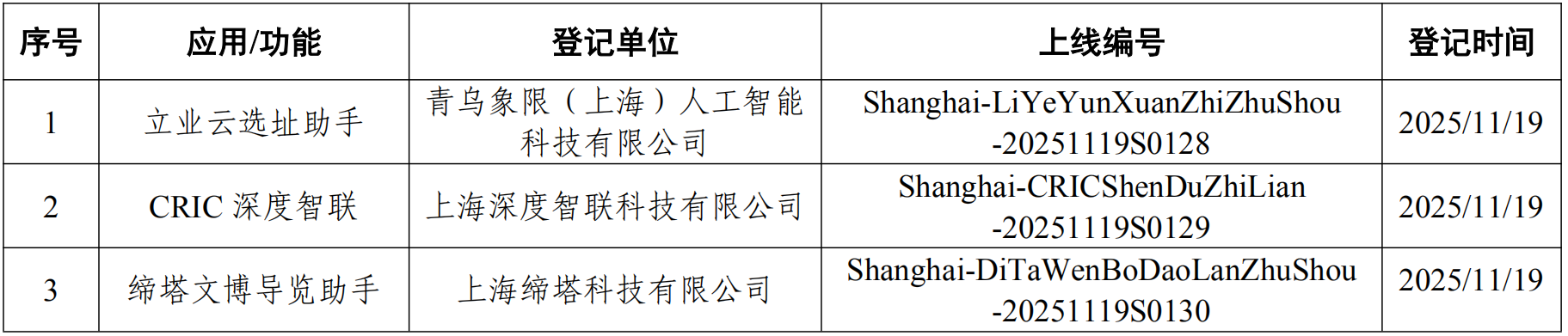
Core Insights - As of November 19, Shanghai has registered 3 new generative artificial intelligence services, bringing the total to 130 registered services [1] Group 1: New Registrations - The newly registered generative AI services include: - Liyue Cloud Site Selection Assistant by Qingniao Xiangxian (Shanghai) AI Technology Co., Ltd [2] - CRIC Deep Intelligence Link by Shanghai Deep Intelligence Technology Co., Ltd [2] - Tita Cultural Tour Guide Assistant by Shanghai Tita Technology Co., Ltd [2]

实测AI找房:1分钟内做好方案,还扒出了短板
Mei Ri Jing Ji Xin Wen· 2025-10-05 22:43
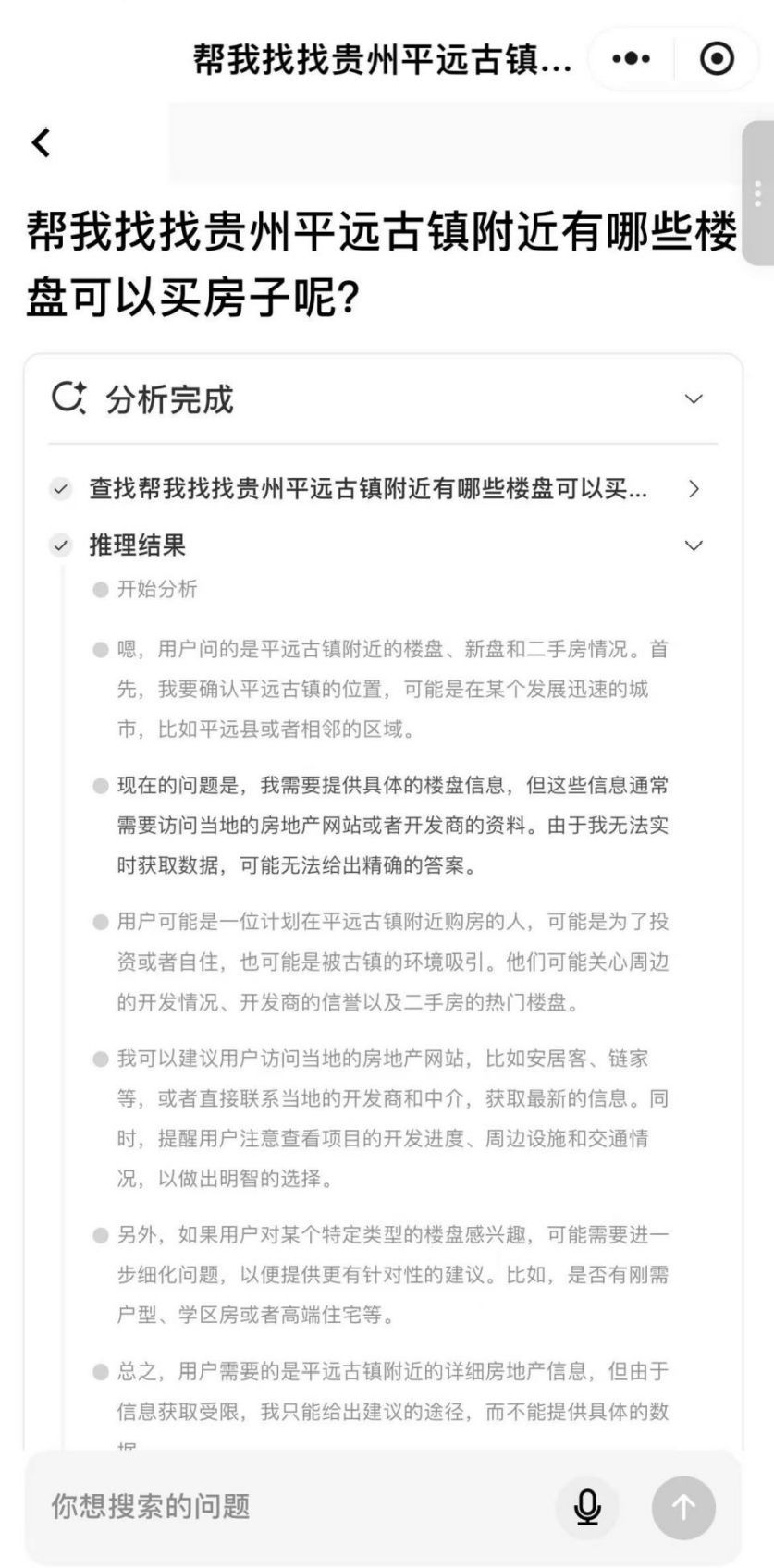
Core Insights - The integration of artificial intelligence (AI) into various industries is transforming traditional practices, enhancing efficiency and creating new market opportunities [3][18][20] - The "AI+" initiative has become a national strategy, emphasizing the deep fusion of information technology and modern industries, leading to innovative business models and service scenarios [3][20] Industry Applications - AI is being utilized in urban management, with systems like "city brain" optimizing the deployment of resources such as cleaning robots and water trucks to maintain city aesthetics during high traffic periods [2] - In the real estate sector, AI tools are being employed to analyze market data and generate buying reports, significantly improving the efficiency of property searches and transactions [7][17] - The use of AI in real estate is shifting the focus from experience-driven recommendations to data-driven insights, enhancing the role of real estate agents as trusted advisors [17][18] Market Trends - The demand for AI in the real estate industry is on the rise, with over 90% of leading real estate companies expecting AI to be operational within 1 to 2 years, and nearly 40% anticipating an annual growth rate of 10% to 30% in AI investments [20]
地产研究革新利器!CRIC深度智联重新定义行业效率
克而瑞地产研究· 2025-06-08 03:08
Core Viewpoint - The article emphasizes the transformative impact of CRIC Deep Intelligence in the real estate industry through the integration of data, AI, and practical applications, marking a significant shift towards efficiency in research outcomes [1][2]. Group 1: Data Infrastructure - CRIC Deep Intelligence leverages 20 years of data accumulation from the real estate sector, covering 426 cities and 11 major real estate fields, creating a comprehensive professional database [4]. - The data system includes exclusive industry data sourced from offline research and authoritative channels, ensuring authenticity and timeliness [4]. - A dynamic knowledge graph integrates policy documents, market reports, and case studies, forming a four-dimensional network that supports cross-dimensional research analysis [4]. - The platform allows companies to build personalized knowledge bases, enabling customized research foundations for AI-generated reports [4]. Group 2: AI Capabilities - CRIC Deep Intelligence creates a closed research loop covering search, analysis, creation, and validation, transforming data handling into value production [6]. - The intelligent search feature allows natural language queries, providing structured results in seconds, thus avoiding fragmented manual searches [6]. - Advanced analysis capabilities utilize professional models to conduct multi-factor correlation analysis, revealing insights that are difficult for humans to detect [6]. - The system can generate over a hundred types of reports and articles quickly, significantly enhancing report production efficiency [7]. Group 3: Application Scenarios - The platform offers customized solutions for various stakeholders in the real estate industry, including developers, financial institutions, and research organizations [8]. - For developers, it provides comprehensive support from land acquisition to marketing, including feasibility studies and competitive analysis [9][10]. - Financial institutions benefit from improved risk management and asset evaluation, with faster credit assessments and more accurate risk identification [11][12]. - Research institutions can produce industry reports and track policy developments efficiently, enhancing content production capabilities [13]. Group 4: Future Outlook - CRIC Deep Intelligence signifies the beginning of a new era in real estate research, promoting three major transformations: democratization of research capabilities, expansion of cognitive boundaries, and leap in industry efficiency [15]. - The platform aims to automate 80% of foundational research tasks, allowing human resources to focus on strategic thinking [15]. - As the industry evolves, companies embracing AI-driven transformations will gain structural competitive advantages, with CRIC Deep Intelligence leading the way [16].

5月上海二手房成交量同比上涨31.6%,AI解读:改善型需求释放
Guan Cha Zhe Wang· 2025-05-30 05:18
Group 1 - The Shanghai real estate market showed a mixed performance in May, with second-hand home transactions reaching 19,333 units, a month-on-month decrease of 11.7% but a year-on-year increase of 31.6% [1] - The second-hand housing market has remained above the "prosperity line" of 15,000 units for seven consecutive months, indicating active market conditions and good liquidity [1] - New home prices in Shanghai averaged 69,020 yuan per square meter in the first week of May, with a slight month-on-month increase of 0.03%, while some peripheral areas experienced a decrease of 0.39% [1] Group 2 - Recent financial measures from the central bank have effectively stimulated demand for improved housing in Shanghai, leading to a "sell old buy new" cycle in the market [2] - The market is characterized by "core area resilience, improvement-driven demand, and diminishing policy effects," with expectations for steady progress in the Shanghai real estate market [2] - CRIC Deep Insight, launched in late May, utilizes AI technology to provide comprehensive industry information and improve efficiency in data collection and analysis for real estate professionals [2][3] Group 3 - Over 90% of leading real estate companies recognize the transformative value of AI, with 72% expecting substantial impacts within 2-3 years, particularly in marketing [3] - 70% of real estate firms have initiated AI applications, while 43% believe current AI products have high application barriers, indicating a need for industry-level solutions [3] - The real estate market is currently in an "L-shaped bottoming" phase, and companies are encouraged to leverage AI to enhance decision-making efficiency and product capabilities [3]

中国房地产首个AI智能体:CRIC深度智联正式上线
克而瑞地产研究· 2025-05-27 09:27
Core Viewpoint - CRIC Deep Intelligence, the first AI agent in China's real estate sector, has been launched by Ke Rui, integrating 20 years of industry experience and data with advanced AI technology to enhance efficiency and reduce costs for real estate professionals [1][6]. Group 1: Product Features - The CRIC Deep Intelligence offers four main functions: search, article generation, report creation, and knowledge base application [1]. - The search function connects real estate news and professional databases, enabling deep data retrieval and automatic generation of core conclusions with visual charts [2]. - The article generation feature supports various types of content across residential, commercial, and policy areas, utilizing industry data to create outlines and visual aids [3]. - The report generation capability allows users to create market reports with automated outlines, data collection, and visual formatting, enabling real-time adjustments and multi-format exports [4]. - The knowledge base application organizes extensive literature using Ke Rui's AI model, ensuring professional output and allowing users to create personalized knowledge bases [5]. Group 2: Industry Impact - The launch of CRIC Deep Intelligence marks a significant milestone for Ke Rui and a crucial step towards the intelligent development of the real estate industry [6]. - Ke Rui plans to sign strategic cooperation agreements with leading real estate companies to explore the deep application of AI technology across various real estate scenarios [6]. - The company aims to collaborate with industry peers to unlock the potential of AI in professional applications within the real estate sector [6]. Group 3: Company Background - Founded in 2006, Ke Rui is a leading digital service platform in the real estate sector, covering 400 cities and serving over 95% of the top 100 real estate companies in China [8]. - The company has developed a closed-loop big data system in real estate, providing comprehensive online and offline information services to government, enterprises, and homebuyers [8]. - Ke Rui's services span residential development, property management, and real estate operations, supported by various innovative data systems for decision-making [8].

深度研究 |“十五五”房地产业数智变革的三大引擎
3 6 Ke· 2025-05-26 02:16
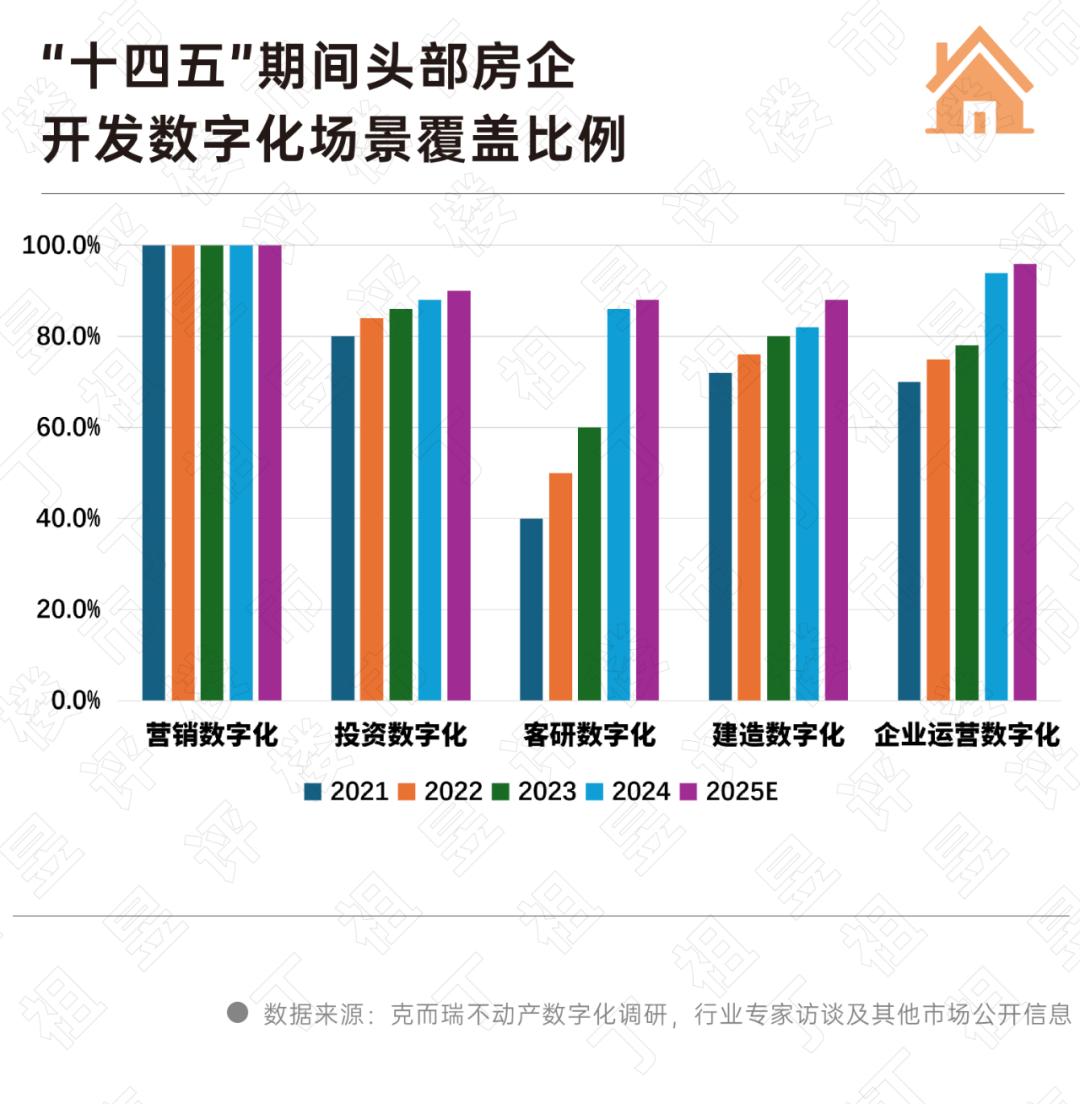
Core Insights - Digital transformation is becoming a core driver for high-quality development in China's real estate industry, especially during the upcoming "15th Five-Year Plan" period (2026-2030) [1] - The real estate sector is undergoing deep adjustments and transformations, with digitalization being crucial for enhancing competitiveness and achieving cost reduction and efficiency [1] Group 1: Digitalization Progress During the 14th Five-Year Plan - Leading real estate companies have established a comprehensive digital foundation, covering marketing, investment, customer research, construction, and enterprise operations [1] - Digital marketing has reached a 100% coverage rate, while investment digitalization is expected to rise from 80% in 2021 to 90% by 2025, and customer research digitalization is projected to increase from 40% to 88% [1] - Construction and enterprise operation digitalization are also expected to reach 88% and 96%, respectively, by 2025 [1] Group 2: Challenges and Strategic Focus - The tightening financing environment has led to a reduction in annual digital investment by leading companies, from 150 million yuan in 2021 to an estimated 60 million yuan in 2025 [4] - 88% of companies prioritize improving internal operational efficiency and reducing costs as their primary digitalization goals, while 71% emphasize the value of data assets [6] - Companies are increasingly focusing on practical benefits from digitalization, with 63% aiming to integrate multi-platform data for management and decision-making support [6] Group 3: AI and Digital Marketing Innovations - The acceptance of AI technology in the real estate sector is gradually increasing, with 72% of digital leaders in top firms expecting AI to have a substantial impact within 2 to 5 years [9] - The focus for the "15th Five-Year Plan" period will shift towards integrating customer lifecycle management with digital tools, moving from a tool-centric to a systematic approach [14] - AI-driven marketing strategies will enhance planning efficiency and customer management, allowing firms to build private customer pools and break down resource monopolies [14] Group 4: Structural Opportunities in Construction Digitalization - The "Digital Construction" initiative aims for significant breakthroughs during the "15th Five-Year Plan," with a focus on creating resilient and smart cities [24] - The integration of BIM (Building Information Modeling) and CIM (City Information Modeling) is expected to enhance project precision and operational efficiency, transforming real estate companies into urban service providers [27][28] - The deep integration of BIM and CIM will facilitate a comprehensive digital infrastructure that supports the entire lifecycle of construction and operation [28] Group 5: Long-term Strategic Planning - Companies need to adopt a systemic and long-term approach to digitalization, focusing on core capabilities rather than merely adding functionalities [29] - Digitalization should be closely aligned with business operations and industry ecosystems to maximize its impact on collaborative innovation and service enhancement [30] - By effectively leveraging digital opportunities, real estate firms can drive high-quality development and secure a competitive edge in the future [30]