
Classic Flap手袋

Search documents
涨价不灵的香奈儿,开始换个姿势「吃老本」
36氪· 2026-01-11 13:35
Core Viewpoint - Chanel is undergoing a significant transformation under the new artistic director Matthieu Blazy, moving away from its traditional designs to embrace a more modern and diverse aesthetic, reflecting a shift in brand strategy amidst a challenging luxury market [5][16][39]. Summary by Sections Design Changes - The Spring/Summer 2026 collection showcased at the Palais de Tokyo marked a departure from Chanel's classic styles, featuring a more casual and modern approach, with the first look inspired by men's tailoring [6][8]. - The iconic tweed suits appeared later in the show, indicating a shift towards a more relaxed and less formal style, moving away from the "elegant socialite" image [8][9]. - Blazy's design philosophy includes a "de-symbolization" of the brand, with a conscious effort to tone down recognizable elements like the double C logo [9][12]. Leadership Transition - Matthieu Blazy, appointed as the artistic director, aims to redefine Chanel's identity by revisiting its roots and incorporating modern elements, contrasting with the previous leadership's approach [12][31]. - The management's concern about Chanel's relevance in contemporary fashion is highlighted by a pivotal conversation between Blazy and chairman Alain Wertheimer, emphasizing the need for modernization [19][21]. Market Performance - Despite a decline in creativity, Chanel's sales surged to nearly $20 billion in 2023, largely due to aggressive price increases, with a reported 16% growth, 9% of which was attributed to price hikes [23][24]. - The brand's pricing strategy has led to significant increases in product prices, such as the Classic Flap bag, which has more than doubled since 2019 [24][26]. Consumer Perception - The brand's recent collections have sparked polarized reactions, with some critics questioning the shift towards a more accessible aesthetic, while others praise the representation of diverse and modern femininity [14][16]. - Social media has amplified concerns regarding product quality, leading to a growing perception of Chanel as relying on its legacy rather than innovation [26][39]. Future Outlook - Chanel is at a critical juncture, with leadership changes and a new creative direction aimed at revitalizing the brand's image and relevance in a competitive luxury market [36][39]. - The company is expected to take a long-term view on its transformation, allowing Blazy the time to implement changes that resonate with contemporary consumers [39].

供应链锁死,皮革制品遭关税“精准阻击”明年美国涨价冲击将更明显?
Feng Huang Wang· 2025-12-26 05:10
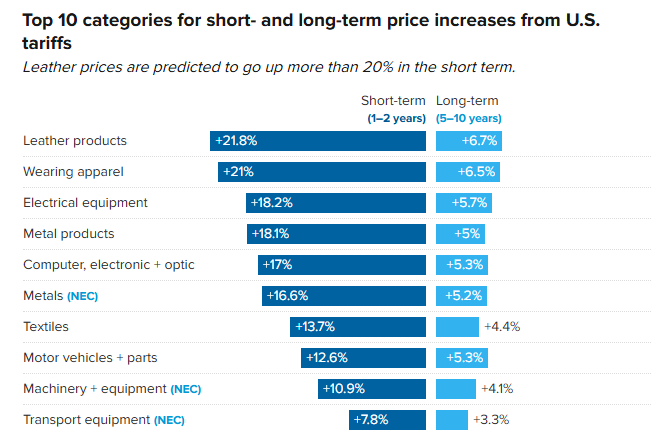
Group 1 - The core impact of tariffs on leather products has led to significant price increases, with an estimated rise of nearly 22% over the next one to two years due to inflation, supply chain bottlenecks, and high tariffs, particularly affecting imports from China, Vietnam, Italy, and India [1][6] - Major companies like Tapestry, which owns brands such as Coach and Kate Spade, are facing substantial tariff-related costs, potentially reaching $160 million, and are warning of unexpected profit pressures [3][6] - The leather industry is heavily reliant on imports, with the U.S. importing $1.37 billion worth of leather apparel in 2023 while only exporting $92.7 million, resulting in a trade imbalance of approximately 15 to 1 [5][6] Group 2 - The global supply chain model, which previously reduced costs, is now becoming a liability due to new tariffs, as manufacturers like Twisted X struggle with increased production costs and longer delivery times from alternative sourcing countries [4][6] - The U.S. leather industry is experiencing a significant decline, with the number of tanneries dropping from about 1,000 in the 1950s to a projected 500 by 2025, leading to a workforce reduction from over 300,000 to around 50,000 [6][7] - The current shortage of raw materials, particularly due to a decrease in cattle numbers, is exacerbating the cost of leather production, as fewer cattle lead to higher prices for the remaining leather [8][9]
欧美奢侈品牌正在为过度涨价付出代价
Hua Er Jie Jian Wen· 2025-05-28 13:26
Core Insights - Luxury brands that significantly raised prices during periods of high consumer spending are now facing severe sales declines [1][4] - LVMH's Christian Dior and Chanel reported substantial sales drops, with Dior's fashion and leather goods sales down 5% and Chanel's sales down 4% in 2024 [1][2] - In contrast, Hermès and Richemont continue to experience strong growth, with both companies reporting a 7% increase in sales in the first quarter of this year [1] Price Increase Analysis - During the pandemic, luxury brands raised prices significantly, with an average increase of 36% from 2020 to 2023, double the U.S. inflation rate [2] - Chanel and Dior's price hikes were particularly aggressive, at 59% and 51% respectively, while Hermès only increased prices by 20% [2] - Chanel's Classic Flap handbag exemplifies this trend, rising from $5,800 in 2019 to $10,800 today [2] Market Share Dynamics - Price is not the sole factor in the performance decline of brands like Chanel and Dior; Chanel is also undergoing a creative transition with a new designer [3] - Chanel has halted price increases in the U.S. market since March 2024, a departure from its usual practice of biannual price hikes [3] - Luxury brands face challenges in lowering prices without damaging their brand image, as they invest heavily in advertising to justify high prices [3] Long-term Implications - Brands that maintained moderate pricing during the pandemic, like Hermès and Richemont, may be better positioned to avoid potential tariff impacts and protect profit margins [3] - Hermès has successfully passed on tariff costs to U.S. consumers, while Richemont's strong demand allows for potential price increases without immediate hikes [3]