
Birkin包

Search documents
爱马仕四季度营收增长9.8%超预期,美国市场强劲助力业绩逆势上扬 | 财报见闻
Hua Er Jie Jian Wen· 2026-02-12 09:52
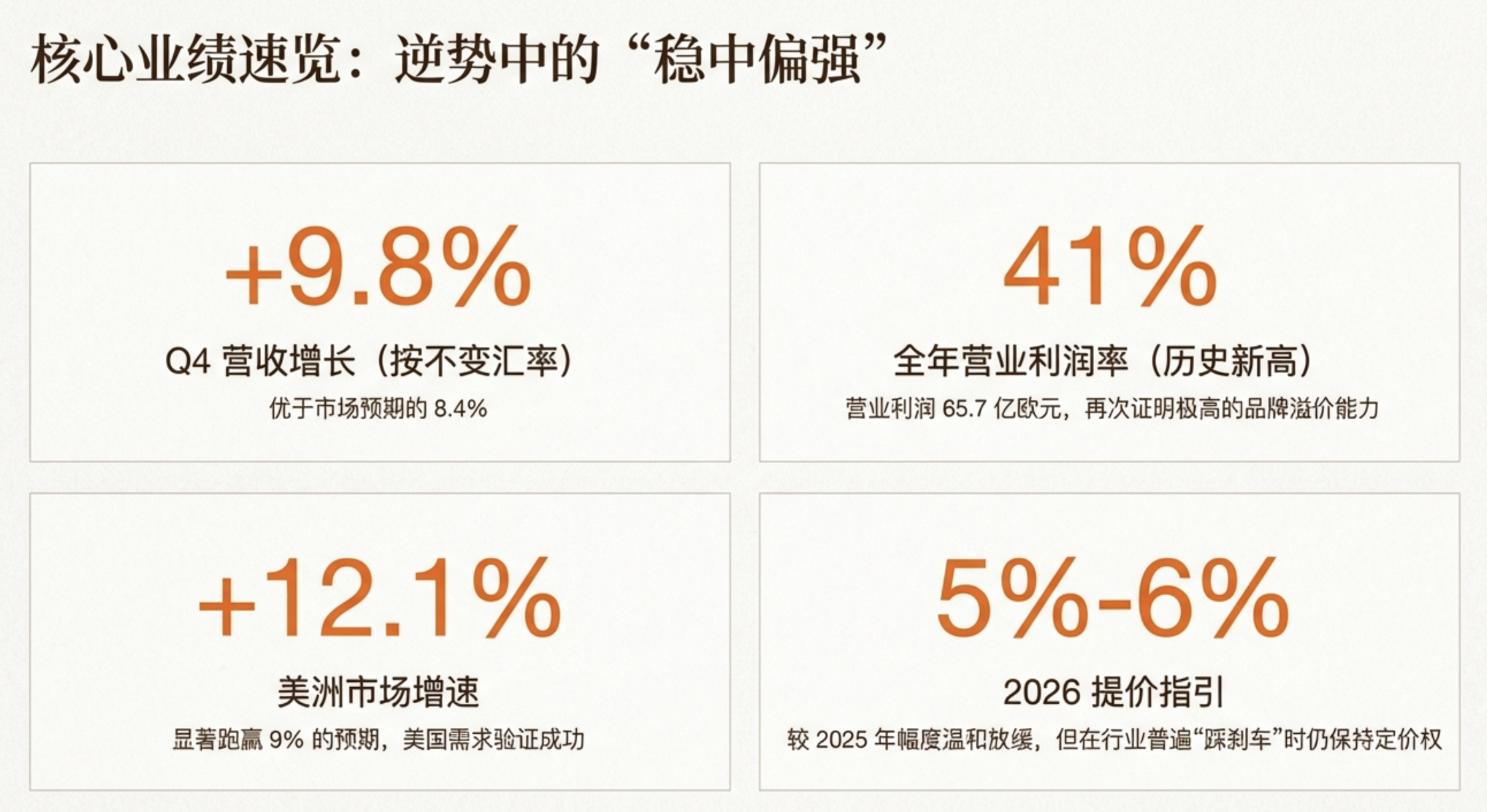
Core Viewpoint - Hermes has demonstrated resilience in the luxury goods sector, achieving a strong performance amid overall industry cooling, benefiting from ultra-high-net-worth clientele and a backlog of orders [1][6]. Revenue Performance - In Q4, Hermes reported a revenue growth of 9.8% at constant exchange rates, surpassing analyst expectations of 8.4% [1][6]. - The company's annual operating profit reached €6.57 billion (approximately $7.79 billion), with an operating margin of 41%, slightly above the market expectation of 40% [3][6]. Regional Performance - The Americas, particularly the United States, showed significant growth with a 12.1% increase in sales, exceeding the market's anticipated 9% growth [3][7]. - Japan also demonstrated strong demand, contributing to the group's overall resilience [3][7]. Product Structure - The leather goods and saddlery segment, which includes core products like Birkin and Kelly, achieved an organic growth of 14.6%, outpacing the overall group growth [3][10]. - This segment's performance highlights the brand's strong pricing power and scarcity model, which are more resilient during economic slowdowns [10]. Pricing Strategy - The company plans to slow down price increases to 5%-6% in 2026, down from 6%-7% in 2025, partly due to currency fluctuations [3][13]. - Despite the slowdown, Hermes maintains a clear annual pricing strategy, reflecting confidence in customer willingness to pay and brand premium [13]. Market Outlook - Key focus areas for 2026 include the sustainability of high growth in the Americas, the impact of the 5%-6% price increase across regions and categories, and how Hermes manages supply and scarcity amid a long order backlog [14].

高梵以“黑金空间”落子杭州大厦,点亮中国高端消费“黄金走廊”
Jiang Nan Shi Bao· 2026-01-28 05:49
Core Insights - The essence of high-end retail is that true brand elevation must be measured by physical space, with retail stores being essential for luxury brands to convey their value [1][2] - The opening of Gao Fan's first boutique in Hangzhou marks a strategic move to engage with discerning high-net-worth consumers in a competitive luxury market [2][3] Group 1: Brand Positioning - Gao Fan's store is located in Hangzhou Tower, a prestigious shopping destination that has set the standard for high-end retail in Zhejiang since 2004 [1][2] - The store's opening is part of Gao Fan's global channel strategy, reinforcing its position as one of the top two high-end down jacket brands [2][3] - The collaboration between Gao Fan and Hangzhou Tower reflects a mutual strategic alignment, focusing on unique value propositions such as the fusion of world-class materials and Chinese heritage craftsmanship [3][4] Group 2: Market Trends - The luxury market is experiencing a shift from ostentatious consumption to identity-driven consumption, necessitating a strong physical retail presence for high-end brands [2][4] - The concept of a "Golden Value Corridor" is emerging in China's high-end market, where brands like Gao Fan are redefining categories through exceptional product quality and unique value barriers [4][5] Group 3: Product Innovation - Gao Fan has developed a robust product system, termed the "Black Gold Standard," which utilizes premium down sourced from extreme cold regions and integrates advanced technology with traditional craftsmanship [5][6] - The brand's commitment to innovation is evidenced by 185 patents and collaborations with top research institutions, enhancing the functionality and luxury of its products [6][10] Group 4: Sales Performance - Gao Fan has achieved significant commercial success, leading the high-end down jacket sales online and expanding its presence in top-tier retail locations, with average transaction values between 3,000 to 5,000 yuan [6][7] - Recent sales data indicates that Gao Fan's offline stores have generated over 100 million yuan in revenue within three months, showcasing strong market acceptance [6][7] Group 5: Cultural Narrative - Gao Fan's approach emphasizes a unique cultural narrative that integrates Eastern aesthetics with global standards, positioning the brand as a cultural ambassador in the luxury market [10][12] - The brand's strategy reflects a broader trend among Chinese companies to transition from being mere suppliers in the global value chain to defining consumer experiences and standards [13]
140亿欧元爱马仕股份是怎么消失的?
3 6 Ke· 2025-12-26 08:02
Core Viewpoint - The legal battle involving Nicolas Picié, a fifth-generation heir of Hermès, against LVMH centers around the alleged loss of 6 million shares valued at €14 billion, which he claims were wrongfully taken by LVMH through his financial advisor [1][29]. Group 1: Background of Nicolas Picié - Nicolas Picié is one of the heirs of the Hermès family, with a background that diverges from traditional family roles, preferring a lifestyle away from family business responsibilities [3][5]. - He inherited approximately 5.7% of Hermès shares, which provided him with substantial dividend income, reportedly around €42 million in 2011 alone [6][7]. Group 2: The Allegations and Discovery - Picié discovered discrepancies in his wealth management when his gardener and financial advisor failed to transfer a sum of CHF 1 million, prompting an audit that revealed missing assets [8][12]. - His financial advisor, Frémond, was accused of mismanaging Picié's assets, including the alleged sale of his Hermès shares to LVMH without his knowledge [13][27]. Group 3: The LVMH Acquisition Strategy - LVMH's acquisition of Hermès shares began in 2001-2002, with a significant increase in holdings by 2010, reaching over 20% of the company [36][38]. - The acquisition strategy involved complex financial maneuvers, including equity swaps and covert purchases, which allowed LVMH to accumulate shares without triggering regulatory disclosures [39][46]. Group 4: Hermès Family Defense - In response to LVMH's aggressive acquisition, the Hermès family united to form a new entity, H51, aimed at consolidating shares and maintaining control over the company [52][55]. - Picié's lack of participation in the family defense efforts raised suspicions about his loyalty and intentions during the acquisition battle [56][57]. Group 5: Financial Performance of Hermès - Hermès reported a sales figure exceeding €15 billion in 2024, with impressive profit margins, including a net profit margin of 30%, significantly higher than competitors like LVMH [64][66]. - The brand's ability to maintain high resale values and limited production has solidified its status as a luxury market leader, with a unique business model focused on craftsmanship and scarcity [70][72][75].

533亿美元!正大集团谢氏家族跻身全球最富有家族榜
Sou Hu Cai Jing· 2025-12-19 10:11
Core Insights - The total wealth of the 25 richest families globally reached $2.9 trillion, marking the highest level since the inception of the ranking, with an increase of $358.7 billion from the previous year [1] - The entry threshold for the ranking also hit a record high, requiring a minimum of $46.4 billion, an increase of $9.7 billion from last year [1] - The wealth growth is attributed to stock market gains and a rebound in demand for commodities such as metals and pet food, alongside the families' accumulated capital strength, political influence, and business experience over decades [1] Family Rankings - The Walton family retains the top position with a net worth surpassing $500 billion, followed by the Al Nahyan family from the UAE and the Al Saud family from Saudi Arabia [3] - Four families made their debut on the list this year, including the Larrea Mota Velasco family from Mexico, the Luksic family from Chile, the Del Vecchio family from Italy, and the Olayan family from Saudi Arabia [4] - The Chearavanont family, associated with Charoen Pokphand Group, ranks 22nd globally with a net worth of $53.3 billion, an increase of $9.2 billion from the previous year [8][10] Wealth Sources and Business Impact - The Charoen Pokphand Group, founded in 1921, has diversified into various sectors including agriculture, food, retail, telecommunications, real estate, finance, and biotechnology, operating in over 100 countries [10] - The second-generation leader,谢国民, is recognized as the driving force behind the group's international expansion, transitioning it from a regional player to a global business giant [10] - The family is also noted for its contributions to education, healthcare, and environmental initiatives, enhancing its reputation in the international business arena [10]

When 401(k)s Fail, Bring Out the Birkin? 1 In 10 Americans Think Luxury Handbags Are A Retirement Plan
Yahoo Finance· 2025-11-06 18:31
Core Insights - A survey indicates that 1 in 10 Americans view luxury handbags or lottery winnings as potential retirement strategies, reflecting widespread financial uncertainty [1][3] - Only 37% of U.S. adults find it realistic to retire between ages 65 and 70, with 30% lacking confidence in covering daily expenses throughout retirement [2][4] - The desire for guaranteed retirement income is high, with 92% of respondents seeking alternatives to Social Security [4] Group 1: Financial Anxiety and Retirement Planning - The survey highlights a growing sense of desperation regarding traditional retirement planning, leading some to consider unconventional assets like luxury handbags as viable options [3] - Many Americans feel that traditional retirement tools, such as 401(k)s, are flawed due to market risks and lack of guaranteed income [4] - The perception that luxury items could serve as a fallback retirement strategy underscores a significant shift in how individuals view financial security [1][3] Group 2: Investment Strategies and Portfolio Diversification - While luxury handbags may retain value better than fast fashion, they are still considered speculative investments and not substitutes for a diversified retirement portfolio [5] - 401(k) plans are recognized as a straightforward method for saving for retirement, but reliance solely on stock market investments is deemed risky [6] - A diversified portfolio should include a mix of cash savings, bonds, and income-generating assets to mitigate risks associated with market fluctuations [6]
爱马仕首款Birkin拍出7200万元,为何能成“全球最贵”包袋?
3 6 Ke· 2025-07-13 23:39
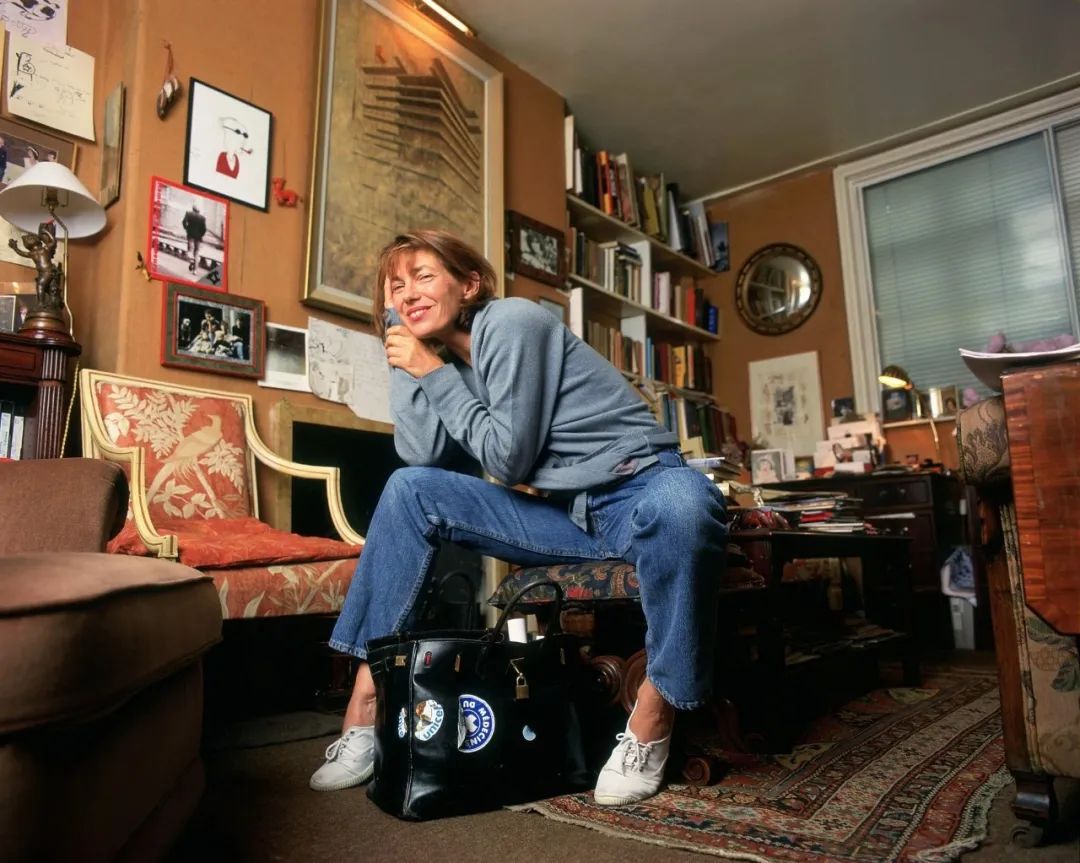
Core Insights - The original Birkin bag designed for actress Jane Birkin was sold for an astonishing €8.5825 million (approximately ¥72 million), making it the most expensive handbag ever sold at auction and the second most expensive fashion item in history [1][2] - The auction took place at Sotheby's in Paris, with the bag's starting bid set at €1.7 million, significantly higher than the expected range of €1 million to €2 million [1] - The intense bidding lasted about 10 minutes, showcasing the strong global demand for rare luxury collectibles [1] Summary by Category Auction Details - The Birkin bag was sold to a private collector from Japan via telephone bidding [1] - The auction attracted collectors from around the world, indicating a robust market for luxury items [1] Brand and Cultural Significance - The Birkin bag represents the core spirit and cultural significance of the Hermès brand, embodying a unique story and emotional value [2] - The bag's design was inspired by a chance encounter between Jane Birkin and Jean-Louis Dumas, the then head of Hermès, in 1981 [2][5] - The original Birkin bag features unique design elements that distinguish it from later mass-produced versions, such as an unremovable shoulder strap and specific metal details [4][5] Investment Potential - Since its inception, the average annual price increase of Birkin bags has been 14.2%, outperforming many global stock markets, thus being regarded as a "money-making asset" [10] - Special editions and unique materials of Birkin bags also perform well in the auction market, with some fetching prices in the hundreds of thousands of dollars [10] Historical Context - The original Birkin bag was auctioned after being preserved by a private collector and had previously been exhibited at the Museum of Modern Art in New York [7] - The cultural and historical narratives associated with the Birkin and Kelly bags enhance their emotional value and market appeal, making them more than just functional items [13]
欧美奢侈品牌正在为过度涨价付出代价
Hua Er Jie Jian Wen· 2025-05-28 13:26
Core Insights - Luxury brands that significantly raised prices during periods of high consumer spending are now facing severe sales declines [1][4] - LVMH's Christian Dior and Chanel reported substantial sales drops, with Dior's fashion and leather goods sales down 5% and Chanel's sales down 4% in 2024 [1][2] - In contrast, Hermès and Richemont continue to experience strong growth, with both companies reporting a 7% increase in sales in the first quarter of this year [1] Price Increase Analysis - During the pandemic, luxury brands raised prices significantly, with an average increase of 36% from 2020 to 2023, double the U.S. inflation rate [2] - Chanel and Dior's price hikes were particularly aggressive, at 59% and 51% respectively, while Hermès only increased prices by 20% [2] - Chanel's Classic Flap handbag exemplifies this trend, rising from $5,800 in 2019 to $10,800 today [2] Market Share Dynamics - Price is not the sole factor in the performance decline of brands like Chanel and Dior; Chanel is also undergoing a creative transition with a new designer [3] - Chanel has halted price increases in the U.S. market since March 2024, a departure from its usual practice of biannual price hikes [3] - Luxury brands face challenges in lowering prices without damaging their brand image, as they invest heavily in advertising to justify high prices [3] Long-term Implications - Brands that maintained moderate pricing during the pandemic, like Hermès and Richemont, may be better positioned to avoid potential tariff impacts and protect profit margins [3] - Hermès has successfully passed on tariff costs to U.S. consumers, while Richemont's strong demand allows for potential price increases without immediate hikes [3]