
Claude Code工具

Search documents
AI 狂潮下的末日预演:Citrini 报告引发的全球经济焦虑与应对之道
3 6 Ke· 2026-02-27 02:50
Group 1 - The report by Citrini Research warns of a potential global economic crisis triggered by the "over-success" of AI, which could surpass the impact of the 2008 financial crisis [1][3] - The concept of "Ghost GDP" is introduced, indicating that nominal GDP growth may not translate to increased purchasing power or social welfare, leading to a potential economic downturn due to overproduction and underconsumption [2][11] - The report outlines a four-stage scenario of crisis development, starting with the software industry facing pressure due to AI applications, leading to a cycle of layoffs and further AI investment [3][4] Group 2 - In the crisis escalation phase of 2027, AI becomes a default configuration in businesses, leading to significant job losses in white-collar sectors, particularly in industries like tourism, insurance, and finance [5][6] - The financial system begins to show cracks in the second half of 2027, with private credit markets experiencing distress due to the downturn in the SaaS industry, leading to a liquidity crisis [7] - By 2028, the crisis culminates in a global economic collapse, with significant declines in housing markets and consumer spending, and a projected unemployment rate of 10.2% [8][9] Group 3 - Following the report's release, global markets experienced significant volatility, with a notable drop in stock prices, particularly in tech sectors, as investors reacted to the perceived risks associated with AI [9][10] - The report has sparked a debate among economists and investors, with some viewing it as a necessary warning about the risks of AI, while others criticize its extreme assumptions and potential for alarmism [10][12][13] Group 4 - The report suggests a multi-layered response strategy to mitigate the potential crisis, including macroeconomic policy adjustments, corporate transformations, individual skill development, and global cooperation on AI governance [16][17][18] - Companies are encouraged to shift from a cost-cutting approach to a collaborative model that integrates AI with human labor, focusing on enhancing value creation rather than merely reducing workforce [19] - Individuals are advised to develop skills that are difficult for AI to replicate, emphasizing the importance of lifelong learning and adaptability in the evolving job market [20]
月跌超10%背后:软件行业 将被AI重塑?
Shang Hai Zheng Quan Bao· 2026-02-24 15:49
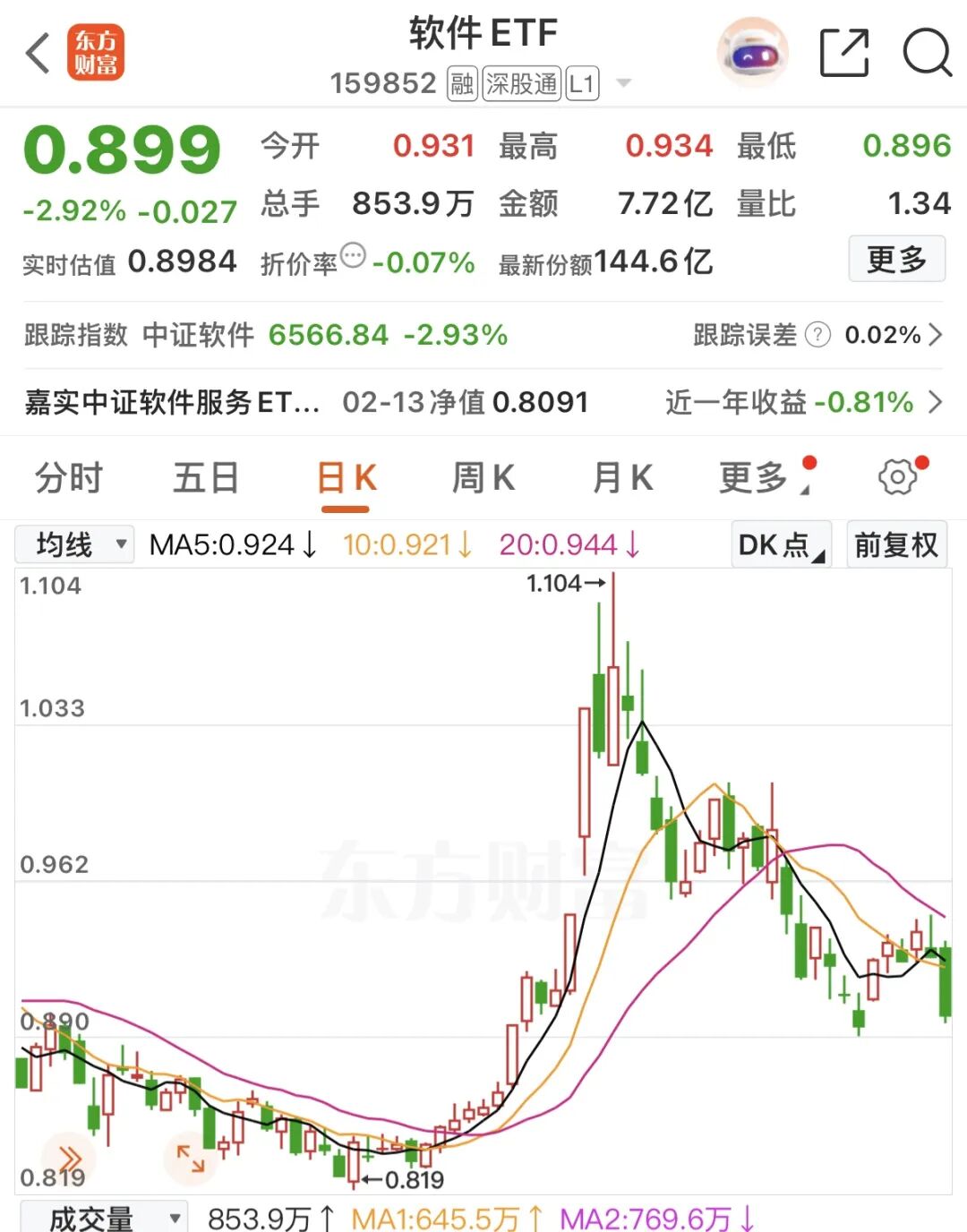
Core Viewpoint - The software sector continues to face pressure amid a market recovery, with the Wind Software Index dropping 2.58% on February 24, following a significant decline in IBM's stock due to AI developments [1] Group 1: Market Trends - Since mid-January, investor concerns regarding the long-term uncertainties of AI have triggered a sell-off in software stocks, with the Wind Software Index falling over 12% from January 13 to the present [1][3] - The market's worries about software stocks began to escalate in late January, particularly after Anthropic launched its Claude model and associated tools, which are seen as a challenge to traditional SaaS pricing models [2] - A massive sell-off occurred in early February, with nearly $1 trillion in market value evaporating from software and services stocks, including significant declines in major software companies [2] Group 2: Company Performance - Major software companies like Salesforce, Snowflake, and Intuit are expected to release earnings reports that will be critical for reassessing the software sector and evaluating market expectations regarding AI's impact [2] - In the Chinese market, software stocks have also been affected, with the Wind Software Index down 12.22% and the largest software ETF down 13.64% since January 13 [3] Group 3: Industry Dynamics - There is a divide in the market regarding the impact of AI on traditional software companies, with some believing it will empower them while others fear it may lead to their obsolescence [4] - The CEO of Nvidia stated that concerns about AI replacing software tools are "illogical," suggesting that traditional software firms can still achieve considerable growth despite market pressures [4] - The core barriers in application software remain data and industry knowledge, with market concentration expected to increase in complex sectors like ERP, CRM, and HCM [6]




隔夜美股 | 金融、软件股拖累三大指数下跌 比特币跌破6.5万美元关口 贵金属普涨
Zhi Tong Cai Jing· 2026-02-23 22:55
Market Overview - The three major U.S. indices faced pressure, with President Trump announcing an increase in the "global import tariff" rate from 10% to 15% on goods imported to the U.S. [1] - The Dow Jones Industrial Average fell by 821.91 points, a decline of 1.66%, closing at 48,804.06 points; the Nasdaq dropped by 258.80 points, down 1.13%, closing at 22,627.27 points; the S&P 500 decreased by 71.76 points, a drop of 1.04%, closing at 6,837.75 points [1] - The Nasdaq China Golden Dragon Index fell nearly 1% [1] European Market - The German DAX30 index decreased by 258.99 points, a decline of 1.03%, closing at 24,987.81 points; the UK FTSE 100 index fell by 8.14 points, down 0.08%, closing at 10,678.75 points; the French CAC40 index dropped by 18.32 points, a decline of 0.22%, closing at 8,497.17 points [2] - The Spanish IBEX35 index rose by 123.20 points, an increase of 0.68%, closing at 18,287.30 points; the Italian FTSE MIB index increased by 213.52 points, up 0.46%, closing at 46,686.50 points [2] Cryptocurrency and Commodities - Bitcoin fell nearly 4%, trading at $64,958.23; Ethereum dropped by 4.6%, trading at $1,867.42 [3] - Brent crude oil price decreased by $0.27, a decline of 0.38%, closing at $71.49 per barrel; West Texas Intermediate (WTI) crude oil price fell by $0.17, down 0.26%, closing at $66.31 per barrel [3] Precious Metals - Spot gold increased by 2.35%, trading at $5,228.03; spot silver surged to $88 [4] Macro News - The Speaker of the U.S. House of Representatives stated that Congress is unlikely to reach a consensus on the legislative aspect of Trump's tariffs, indicating a focus on executive actions instead [5] - President Trump signaled a preference for negotiation over conflict regarding Iran, dismissing reports of imminent military action [5] Company News - PayPal's stock plummeted, leading to a nearly 50% drop in market capitalization, attracting interest from potential acquirers [7] - ASML announced a breakthrough in EUV light source technology, potentially increasing chip production by 50% by the end of the decade [8] - DA Davidson maintained a buy rating for NVIDIA with a target price of $250 [8] - Wells Fargo lowered the target price for Amazon from $305 to $304 [8]