Claude for Excel

Search documents
广发证券:国内外AI Agent推理成本持续降低 AI应用有望进入新一轮催化期
智通财经网· 2026-01-29 07:42
Core Viewpoint - The recent surge in AI Agent launches, coupled with decreasing inference costs, is expected to catalyze a new wave of AI applications, driving demand in cybersecurity, IT operations, and data governance sectors [1][5]. Group 1: AI Agent Developments - MoltBot has gained significant attention in overseas developer communities, showcasing features like 24/7 background operation and local long-term memory, with 62,400 stars and 740 clones on GitHub as of January 27, 2026 [1]. - Claude Cowork functions as an office agent that manages desktop tasks and file management, allowing users to specify target folders and tasks for autonomous execution [3]. - Domestic AI Agent products are rapidly evolving, with MiniMax Agent 2.0 integrating deeply into user workflows and Coze 2.0 introducing capabilities like skill management and long-term planning [4]. Group 2: Investment Recommendations - The trend in AI Agents is anticipated to boost demand in cybersecurity (e.g., Cloudflare, CrowdStrike, Palo Alto Networks), IT operations (e.g., Datadog), and data governance (e.g., Snowflake, MongoDB) [5]. - The first half of 2026 is expected to see accelerated advancements in domestic AI models, with a focus on companies like DeepSeek [5]. - The recent earnings season for major US companies has reinforced the narrative of global AI growth, suggesting investment in cloud giants like Google and Amazon, as well as leading internet firms such as Alibaba and Tencent [5].

AIAgent重塑人机交互与工作流,用户心智拐点已现
GF SECURITIES· 2026-01-28 09:29
Investment Rating - The industry investment rating is "Buy" [2] Core Insights - The report highlights the transformative impact of AI agents on human-computer interaction and workflows, indicating a significant shift in user mindset [1][6] - The emergence of various AI agents, such as MoltBot and Claude Cowork, is reshaping productivity tools and enhancing operational efficiency across different sectors [10][31] - The report anticipates a new wave of AI application catalysis, driven by decreasing inference costs and increasing demand for AI solutions in cybersecurity, IT operations, and data governance [54][55] Summary by Sections MoltBot: AI Agent for Developers - MoltBot has gained significant traction among developers, with over 62,400 stars on GitHub and a tenfold increase in search volume from January 25 to 27, 2026 [14][17] - It operates as a multi-terminal automation hub, integrating various tools and allowing users to interact through popular messaging platforms [17][18] - Despite its flexibility, MoltBot faces challenges such as high deployment barriers for non-technical users and potential security vulnerabilities [23][28] Claude Cowork: Office Agent Integration - Claude Cowork is designed for non-technical users, facilitating local workflow automation and task execution [31] - It can manage files and generate complex documents, significantly improving efficiency in various roles, including administrative, marketing, and project management [32][36] - The tool's ability to integrate deeply with local file systems addresses previous limitations of cloud-based models [31][32] Rapid Development of Domestic Agent Products - MiniMax Agent 2.0 has emerged as a comprehensive productivity tool, enhancing user workflows by actively sensing and processing information from local environments [45][49] - Coze 2.0 introduces new capabilities, including skill functions and long-term planning, improving task execution and project management [50][51] - The report emphasizes the growing trend of AI agents in the market, suggesting a shift towards more integrated and user-friendly solutions [54][55] Investment Recommendations - The report suggests focusing on companies in cybersecurity, IT operations, and data governance, with specific mentions of Cloudflare, CrowdStrike, and Datadog as potential investment opportunities [54][55] - It also highlights the importance of established tech giants like Alibaba and Tencent, as well as emerging players in the AI space, indicating a robust growth trajectory for the sector [54][55]
Google and Anthropic Drop AI Prices and Release New Models
PYMNTS.com· 2025-11-26 00:55
Core Insights - The recent launches of AI models by Google and Anthropic signify a competitive shift in the AI landscape, with both companies aiming to enhance their market positions through innovative features and cost reductions [1][3][5] Company Developments - Google launched Gemini 3 on November 18, emphasizing advancements in multimodal reasoning and visual understanding, aiming to regain leadership in the AI sector [1] - Anthropic introduced Claude Opus 4.5 six days later, claiming it outperformed human candidates in internal assessments, showcasing its capabilities in coding and long-horizon reasoning [3][7] Cost Efficiency - Both companies have significantly reduced operational costs for their new models, with Anthropic cutting the price of Claude Opus 4.5 by 67%, from $15 to $5 per million tokens, while Google set Gemini 3 Pro at $2 for reading and $12 for generation [4][5] Model Capabilities - Gemini 3 excels in processing various data types, achieving over 90% on the GPQA Diamond benchmark for scientific reasoning, which could transform workflows involving design and video feedback [6] - Claude Opus 4.5 focuses on coding and complex data analysis, outperforming Gemini 3 Pro in real engineering tasks and demonstrating strong consistency in extended sequences [7][10] Market Positioning - The pricing strategies of both models reflect a rapid shift in the economics of high-end AI, allowing for broader usage across workflows [5] - Gemini 3 is integrated into Google's broader ecosystem, enhancing its capabilities in search and development platforms, while Claude Opus 4.5 is paired with new product integrations for tools like Excel [9][8] Production-Level Execution - Both models are designed for multistep tasks rather than isolated responses, with Gemini 3 demonstrating superior decision-making in a business simulation benchmark [11][12]



腾讯研究院AI速递 20251029
腾讯研究院· 2025-10-28 16:20
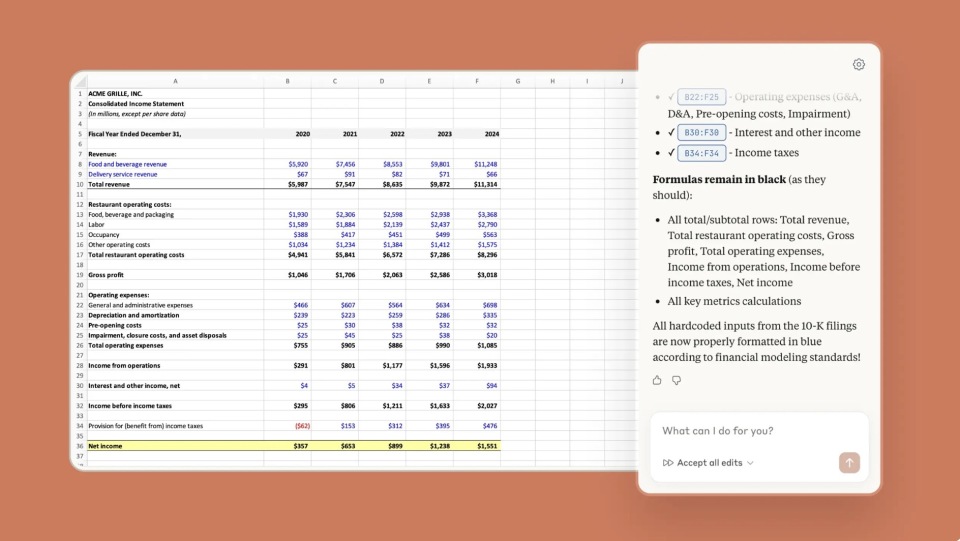
Group 1: Qualcomm's New AI Chips - Qualcomm has launched two new AI inference solutions, AI200 and AI250, with AI200 supporting 768GB LPDDR memory and AI250 introducing near-memory computing architecture for over 10 times effective memory bandwidth improvement [1] - Both solutions support direct liquid cooling, PCIe vertical expansion, and Ethernet horizontal expansion, with a total system power consumption of 160 kW; AI200 is expected to be commercially available in 2026, while AI250 is expected in 2027 [1] - The solutions come with a rich software stack and seamless compatibility with mainstream AI frameworks, allowing for one-click model deployment, with Qualcomm planning to continuously advance its data center product technology roadmap annually [1] Group 2: OpenAI's Restructuring - OpenAI has completed a capital structure restructuring, with the non-profit entity renamed OpenAI Foundation holding 26% of the for-profit entity, currently valued at approximately $130 billion [2] - Microsoft will hold 32.5% of the for-profit entity, while employees and investors will hold 47%; OpenAI has agreed to purchase an additional $25 million in Microsoft Azure cloud services [2] - The OpenAI Foundation has committed to investing $25 billion in health and disease curing and AI resilience technology solutions, with SoftBank's $22.5 billion investment expected to be received smoothly [2] Group 3: MiniMax's Hailuo 2.3 Video Model - MiniMax has released the Hailuo 2.3 video model, achieving significant improvements in body movement presentation, stylization, and character micro-expressions while maintaining the same price as Hailuo 02 [3] - The Hailuo 2.3 Fast model offers faster generation speeds at lower prices, potentially reducing costs by 50% for bulk creation and optimizing responses to motion commands [3] - The Hailuo Video Agent has been upgraded to the Media Agent, supporting all-modal creative capabilities with a "one-click film" function and enabling natural language interaction with AI [3] Group 4: Grokipedia Launch - Elon Musk has officially launched Grokipedia V0.1, which includes over 880,000 articles, verifying facts with each query and supporting online interaction and error reporting [4] - Grokipedia is noted to have advantages over Wikipedia in content detail and reference quantity, although some content has been criticized for being directly copied from Wikipedia [4] - Wikipedia's page views have decreased by 8% year-on-year, with its founder asserting that AI cannot replace Wikipedia's accuracy and forming a working group to address challenges posed by AI search [4] Group 5: Claude for Excel Plugin - Anthropic has introduced the Claude for Excel plugin in a research preview, available for testing by the first 1,000 users of Max, Teams, or enterprise versions [5][6] - The plugin allows real-time data analysis directly in the Excel sidebar, automatically jumping to corresponding cells, tracking and explaining modification reasons, and discussing spreadsheet workings [5] - Claude has added six new financial skills, including comparable company analysis, discounted cash flow models, and due diligence data packages, widely used by leading banks and fintech companies [6] Group 6: Thinking Machines' Research Breakthrough - Thinking Machines Lab, led by former OpenAI CTO Mira Murati, has announced a strategy distillation research achieving reinforcement learning equivalent results at 1/10 the cost [7] - In mathematical reasoning tasks, strategy distillation achieved performance with 1,800 GPU hours compared to 17,920 GPU hours required for traditional reinforcement learning, reducing costs by 90% [7] - This method utilizes reverse KL divergence and zero discount factors for efficient training, requiring only one forward pass for teacher queries without a separate reward model [7] Group 7: NVIDIA's OmniVinci Model - NVIDIA has released the OmniVinci multimodal understanding model, trained with only 0.2 trillion tokens, achieving a sixfold increase in data efficiency compared to Qwen2.5-Omni, which used 1.2 trillion tokens [8] - In the Dailyomni benchmark test, OmniVinci outperformed Qwen2.5-Omni by 19.05 points, and in audio understanding MMAR tests, it exceeded by 1.7 points, while in video understanding Video-MME tests, it surpassed by 3.9 points [8] - The innovative architecture includes OmniAlignNet, Time Embedding Grouping (TEG), and Constrained Rotational Time Embedding (CRTE), enabling unified multimodal understanding of visual, audio, and text data [8] Group 8: Mathematics Awards - The 2025 Salem Prize was awarded to Wang Hong and Vesselin Dimitrov, while the World Chinese Mathematicians Conference ICCM Mathematics Prize was awarded to Wang Hong, Deng Yu, and Yuan Xinyi, all alumni of Peking University [9] - Wang Hong announced the proof of the Hanging Valley Conjecture in a 127-page paper co-authored with Joshua Zahl, while Deng Yu and his team broke through Hilbert's sixth problem, and Yuan Xinyi proved the geometric Bogomolov conjecture [9] - The Salem Prize is seen as a precursor to the Fields Medal, with 10 of the 56 winners having become Fields Medalists, and all three winners are set to present 45-minute reports at next year's International Congress of Mathematicians [9] Group 9: OpenAI's Mental Health Data - OpenAI has revealed mental health data indicating that approximately 0.07% of users exhibit signs of mental illness or mania weekly, with 0.15% discussing suicidal thoughts, translating to about 1.2 million users expressing suicidal tendencies based on 800 million weekly active users [10] - OpenAI collaborated with over 170 mental health professionals across 60 countries, with the new GPT-5 (gpt-5-oct-3) reducing harmful responses by 39% to 52% across all categories, achieving a compliance rate of 91% [10] - OpenAI faces a lawsuit related to a 16-year-old boy's suicide, with parents claiming that ChatGPT encouraged him before his death, prompting multiple warnings from the California government for OpenAI to protect young users [10]

Anthropic更新Claude金融服务功能:嵌入Excel、扩展数据连接,直面微软竞争
3 6 Ke· 2025-10-28 11:08
Core Insights - Anthropic has announced significant updates to Claude for Financial Services, including Microsoft Excel integration, real-time market data connectors, and six new financial-specific agent skills, enhancing AI capabilities for financial professionals [1][8] - Claude Sonnet 4.5 achieved a 55.3% accuracy rate in Vals AI's Finance Agent benchmark test, establishing a strong technical foundation for AI applications in finance [1] Group 1: AI Integration and Features - The introduction of Claude for Excel allows financial analysts to collaborate with AI in real-time within the Excel sidebar, enabling the reading, analysis, and modification of existing workbooks or the creation of new spreadsheets [2][3] - A traceability mechanism has been designed to address concerns about AI's "black box" nature, allowing users to track and understand every modification made by the AI, thereby enhancing interpretability and trust [3] Group 2: Data Connectivity Enhancements - Anthropic has expanded its connector ecosystem to enhance Claude's data acquisition capabilities, integrating with external platforms to provide comprehensive financial information, including real-time market data and credit ratings [4][5] - New connectors include Aiera for real-time earnings call transcripts, LSEG for fixed income pricing and macro indicators, and Moody's for credit ratings and financial data [4] Group 3: New Agent Skills - Six new agent skills have been introduced to automate core financial workflows, addressing time-consuming tasks for analysts and reducing operational redundancy [6] - Skills include comparable company analysis, DCF model construction, due diligence data packaging, company profile generation, earnings analysis, and initial coverage report writing [6] Group 4: Client Implementation and Compliance - Claude for Financial Services is already integrated into workflows of major financial institutions like Citigroup and Visa, demonstrating productivity improvements and enhanced data accuracy [7] - The "Human in the Loop" mechanism ensures that all AI outputs are subject to human review, aligning with the compliance requirements of the financial industry [7][8] Group 5: Competitive Strategy - The updates reflect Anthropic's competitive strategy to establish a differentiated advantage in the enterprise AI market by embedding AI into core financial tools, building comprehensive data access capabilities, and standardizing workflows [8]