Comex白银期货合约

Search documents
历史性崩盘后,CME再上调金银交易保证金
Hua Er Jie Jian Wen· 2026-01-31 06:32
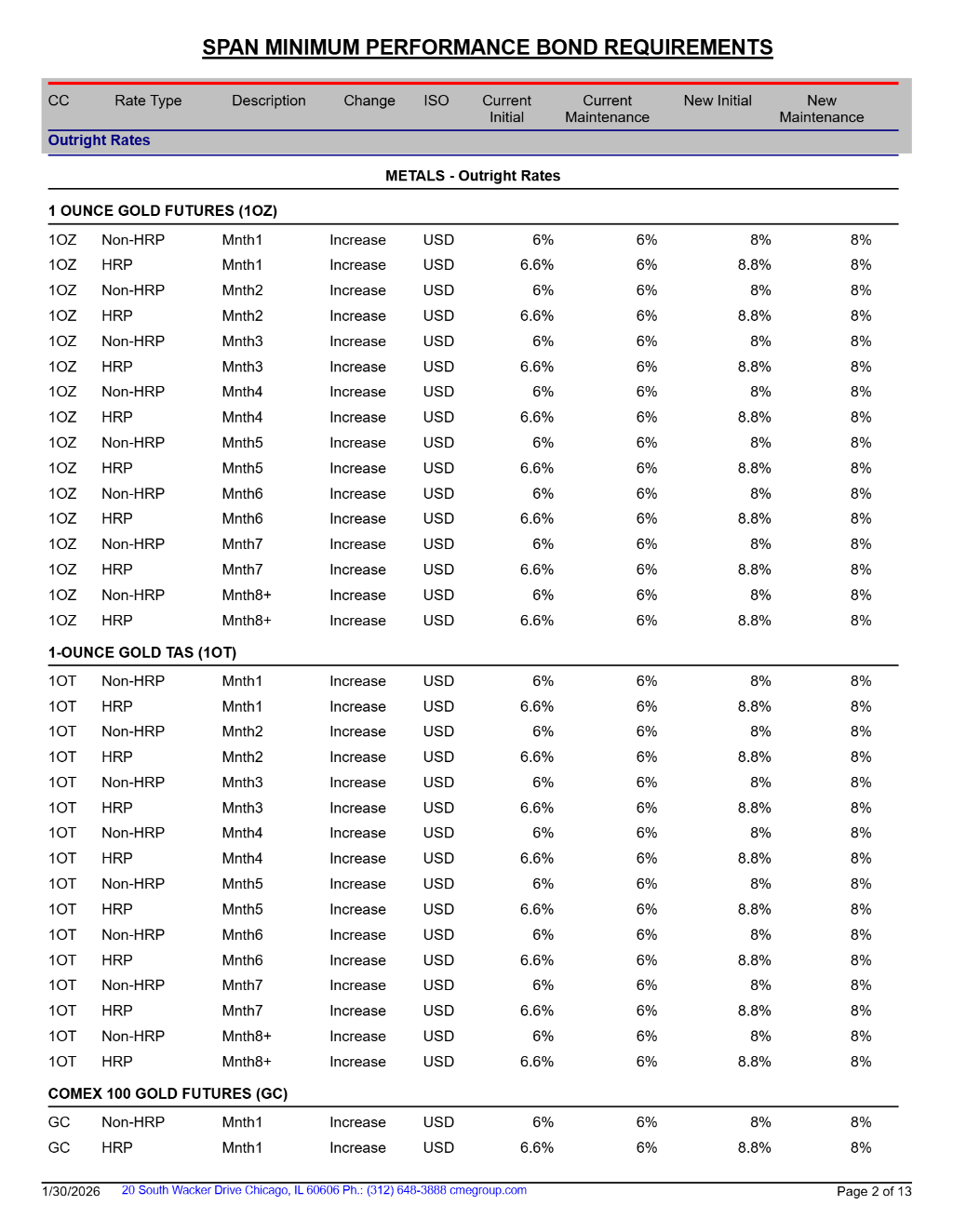
Core Viewpoint - The Chicago Mercantile Exchange (CME Group) has announced an increase in margin requirements for gold, silver, and other precious metal futures contracts following significant price declines, aiming to ensure adequate collateral coverage amid heightened market volatility [1][10]. Margin Requirement Adjustments - CME has raised margin requirements for gold futures from 6% to 8% for non-high-risk accounts and from 6.6% to 8.8% for high-risk accounts [3][4]. - Silver futures have seen a similar increase, with non-high-risk accounts' margin rising from 11% to 15% and high-risk accounts from 12.1% to 16.5% [5][6]. Market Context and Mechanism Changes - The margin increase is part of a broader trend of risk management enhancements by CME, transitioning from fixed margin amounts to a dynamic percentage of contract value [6][8]. - This change means that during periods of market turbulence, higher collateral will be automatically required, increasing the cost of leverage for traders [8][9]. Historical Precedents and Market Impact - Historical data suggests that when exchanges raise margin requirements, it often indicates the end of bullish trends or the beginning of significant corrections [11][12]. - The increased margin requirements may marginally push out traders who cannot quickly meet the new collateral demands, potentially leading to reduced market liquidity [12][13]. Systemic Risk Management - CME's actions reflect a consensus among global exchanges to prioritize the suppression of systemic risk over allowing leverage expansion, especially in the context of heightened volatility in precious metals [15][16].


新年行情告终?投资者“获利了结”,金银重挫
美股IPO· 2025-12-30 04:48
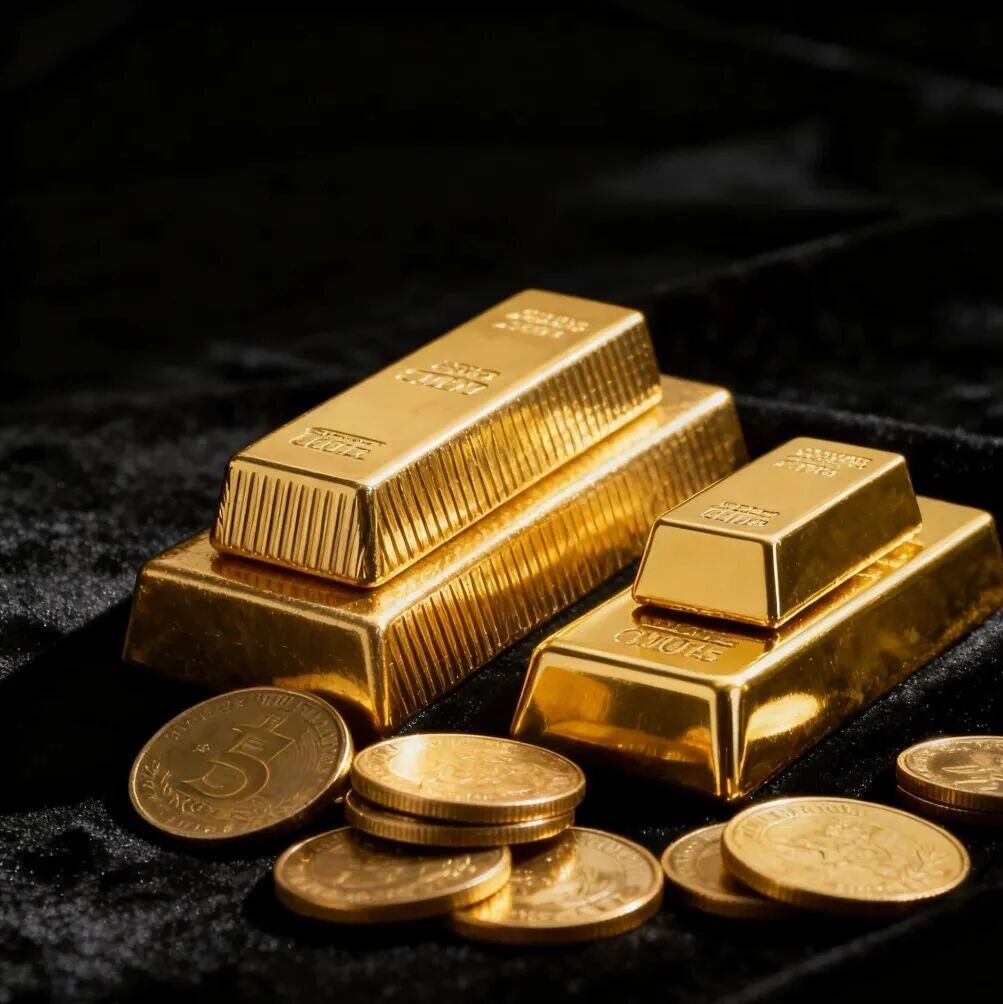
Core Viewpoint - The article discusses the significant decline in gold and silver prices, with gold dropping 5% and silver plummeting 11%, marking the largest single-day declines since September 2020. This downturn follows a period of strong seasonal performance for precious metals, typically characterized by gains of approximately 4% for gold and nearly 7% for silver during the year-end period. The recent price corrections are attributed to profit-taking by investors and a lack of market liquidity [1][3][6]. Group 1: Market Performance - Gold experienced a maximum intraday drop of 5%, the largest single-day decline since October 21, and this marks the second occurrence of such a significant drop this year [4]. - Silver's decline was even more severe, with an intraday drop of 11%, the largest single-day decline since September 2020 [5]. - Both metals have retreated significantly from their recent historical highs, raising concerns about an overheated market [6]. Group 2: Investor Behavior and Market Dynamics - Following a strong year-end rebound, the gold and silver markets faced severe sell-offs due to thin market liquidity, leading traders to take profits and ending a recent upward trend [3]. - Michael Haigh from Societe Generale noted that the year-end period typically sees extreme liquidity shortages, which can exacerbate price volatility. He emphasized that the recent declines were primarily driven by profit-taking after a strong seasonal rebound [7]. - Technical indicators, such as the 14-day Relative Strength Index (RSI), indicated that gold had been in an overbought territory, suggesting a potential correction was imminent. Silver's situation was more extreme, with a rise of over 25% since mid-December, pushing its RSI well above 70, indicating excessive buying pressure [7]. Group 3: Speculation and Margin Adjustments - The reversal in silver prices occurred shortly after they surged above $84 per ounce, driven by strong investment demand from China, which led to a record premium of over $8 per ounce for Shanghai spot silver compared to London prices [8]. - Analysts highlighted a highly speculative atmosphere in the market, with current conditions being described as extreme due to tight spot supply [9]. - To mitigate risks, exchanges have begun to take action, with CME Group announcing an increase in margin requirements for certain Comex silver futures contracts. This move requires traders to deposit more cash to maintain their positions, potentially forcing undercapitalized speculators to reduce or close their positions [12]. Group 4: Market Pressures and Inventory Status - The recent volatility in silver prices has drawn attention to the severely pressured spot market, with the latest rebound occurring just two months after a comprehensive short squeeze in the London silver market [14]. - Despite significant inflows into London vaults since then, most available silver remains in New York, as traders await the results of a U.S. investigation that could lead to tariffs or other trade restrictions [14].
新年行情告终?投资者“获利了结”,金银重挫
Hua Er Jie Jian Wen· 2025-12-30 00:15
Core Viewpoint - The gold and silver markets experienced significant sell-offs after a strong year-end rebound, with traders cashing in profits leading to sharp price declines, marking the end of a recent upward trend [1][5]. Group 1: Market Performance - Spot gold saw a drop of up to 5%, the largest single-day decline since October 21, and the second occurrence of such a significant drop this year [1]. - Silver's decline was even more severe, with intraday losses reaching 11%, the largest single-day drop since September 2020 [3]. - Both metals retreated significantly from their recent historical highs, raising concerns about an overheated market [5]. Group 2: Investor Behavior - The sell-off was primarily driven by investors taking profits after a strong seasonal rebound in gold and silver prices, which typically see robust increases before the New Year [5]. - Over the past decade, gold has risen approximately 4% during this period, while silver's gains are usually close to 7% [5]. Group 3: Technical Indicators - The 14-day Relative Strength Index (RSI) indicated that gold had been in the overbought territory for the past two weeks, suggesting a potential correction was imminent [5]. - Silver's situation was more extreme, with a rise of over 25% since mid-December, and its RSI significantly exceeding 70, indicating excessive buying pressure [5]. Group 4: Speculative Environment and Margin Adjustments - The reversal in silver prices occurred shortly after they surged above $84 per ounce, driven by strong investment demand from China [6]. - The CME Group announced an increase in margin requirements for certain Comex silver futures contracts, which could force undercapitalized speculators to reduce or close their positions [6]. - The iShares Silver Trust, the largest physical silver ETF, also experienced a significant drop, with intraday losses reaching 10%, the largest since 2020 [6]. Group 5: Supply and Inventory Pressure - The recent silver rebound followed a period of severe pressure in the London silver market, which had faced a short squeeze just two months prior [7]. - Despite a recent influx of funds into London vaults, most available silver remains in New York, as traders await the results of a U.S. investigation that may lead to tariffs or other trade restrictions [7].