
DDR5 RAM

Search documents
Before you buy the software and Big Tech dips, take a closer look at this overseas stock market
Yahoo Finance· 2026-02-19 01:26
Core Insights - The market has overlooked significant developments in AI technology application, with many businesses still exploring how to implement these technologies effectively [2] - There is a notable disconnect between Wall Street's perception of AI's success and the actual challenges faced by companies in implementing AI solutions [4][5] - The costs associated with AI development are substantial, with companies currently operating at a loss while trying to establish their AI models [10][12] Group 1: AI Implementation and Market Perception - Companies face internal constraints and political challenges when implementing AI in the workplace, which complicates the process [1] - Investors are uncertain about the impact of rapidly advancing AI models from companies like Anthropic, Google, and OpenAI, leading to declines in software-focused ETFs [8][9] - The market has shown a tendency to misjudge the timeline and feasibility of AI's widespread adoption, as evidenced by historical trends in other industries [3] Group 2: Financial Performance and Investment Opportunities - Major tech companies like Microsoft, Amazon, and Tesla have seen stock declines due to the high costs of their AI initiatives, with year-to-date losses of -15%, -9.6%, and -6.13% respectively [7] - The SPDR S&P Software & Services ETF has fallen more than 17.9% year-to-date, while the iShares Expanded Tech-Software Sector ETF is down 20.1% [8] - South Korean companies Samsung and SK Hynix are positioned as key players in the AI-capable flash memory market, with significant production capabilities compared to U.S.-based Micron Technology [17][18] Group 3: Valuation and Market Dynamics - The "Korea Discount" affects the valuation of South Korean companies, which are seen as undervalued despite their importance in the AI sector [20][21] - Increased foreign investment is helping to improve the P/E ratios of South Korean firms, although the market still trades at a discount compared to U.S. equities [22][23] - Investing in South Korean ETFs, such as the Franklin FTSE South Korea ETF and iShares MSCI South Korea ETF, provides exposure to leading companies in the AI space while mitigating risks associated with direct stock purchases [24][25][26]

存储芯片,何以至此?
Xin Lang Cai Jing· 2026-02-08 18:26
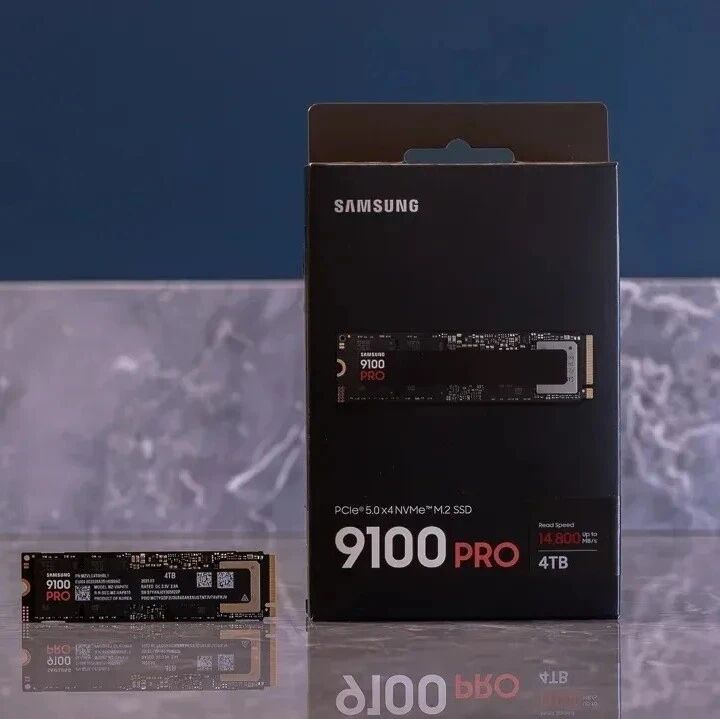
Group 1 - The price of RAM, particularly DDR5, has skyrocketed, with 64GB desktop memory kits becoming more expensive than a Sony PlayStation 5 and some larger kits exceeding high-end desktop GPUs [1] - The surge in RAM prices is primarily driven by overwhelming demand from AI computing giants, which are consuming a significant portion of available memory manufacturing capacity [2][3] - TrendForce predicts that AI-centric memory will account for 70% of global memory hardware output this year, leaving little capacity for consumer products [2] Group 2 - Major memory chip manufacturers are reallocating production capacity towards high-bandwidth memory (HBM) and server-grade DDR5, further reducing supply for consumer-grade chips [3] - Micron has exited the consumer memory market entirely, closing its long-standing sub-brand Crucial, which will impact supply for PC manufacturers as well [3] - The price increases are expected to persist for a year or longer, as AI software and hardware companies secure supply contracts for unproduced wafers and chips [3] Group 3 - The price increases are not limited to DDR5 memory modules; DDR4 and DDR3 prices are also rising, affecting older memory standards that still meet basic needs [4] - The supply shortage is impacting other components that rely on memory, such as graphics cards, which use dedicated memory for rendering and AI workflows [4] - Prices for GDDR6 and GDDR7 memory have more than tripled in the past six months, leading to higher costs for both desktop and laptop graphics cards [4] Group 4 - As PC users face memory shortages, they may turn to high-speed solid-state drives (SSDs) and software solutions, but the companies producing DRAM also manufacture the NAND chips used in SSDs [5] - The demand for DRAM is diverting production capacity away from NAND chips, causing NAND wafer prices to rise, with a month-over-month increase of 60% reported last November [5]
存储芯片,何以至此?
半导体行业观察· 2026-02-07 03:31
公众号记得加星标⭐️,第一时间看推送不会错过。 众所周知,个人电脑(PC)主系统内存——正式名称为随机存取存储器,简称 RAM——的价格已经 失控。在过去的几个月里,DDR5 RAM(最新标准)模组的价格一路飙升,翻了一倍甚至更多。一 套 64GB 的台式机内存套件迅速变得比索尼 PlayStation 5 还要昂贵,而一些更大容量的套件现在的 价格甚至超过了高端台式机 GPU。这种疯狂的价格上涨也开始蔓延到较旧的内存类型,比如 DDR4 和 DDR3。 这些价格上涨将影响每一个依赖内存或存储的产品——但我现在想专注于笔记本电脑。笔记本电脑使 用的物理模组与台式机不同,但底层的内存颗粒是相同的,且容易受到相同的价格压力影响。作为 PCMag 领先的笔记本电脑专家之一,我可以告诉你:对于今年需要新电脑的人来说,情况即将变得 困难。 此外,这种供应短缺正在影响其他将内存作为整体一部分的组件。最直接的连锁反应将冲击显卡,显 卡依赖专用显存来辅助图形渲染和本地 AI 工作流。(撇开内存紧缺不谈,显卡本身的需求也在大幅 增加。)这些显卡所使用的 GDDR6 和 GDDR7 显存价格也因同样的原因上涨:每 Gb 的成本在 ...


Samsung Co-CEO warns unprecedented technology shortage could affect smartphone, TV prices
Yahoo Finance· 2026-01-05 07:51
Group 1: Memory Shortage Impact - Samsung Co-CEO TM Roh highlighted an "unprecedented" shortage in computer memory, affecting the entire consumer hardware industry and likely leading to increased prices for TVs, home appliances, and smartphones [1] - The memory market is primarily divided into volatile memory (DRAM) for short-term data access and non-volatile memory (NAND flash) for long-term storage [2] Group 2: Demand Dynamics - The demand for memory has surged due to hyperscalers like Alphabet, Meta, and Oracle investing billions in data centers for AI, significantly impacting the semiconductor industry [3] - Global memory producers are shifting focus towards high-performance computing (HPC) equipment, with Samsung, SK Hynix, and Micron dominating the DRAM market [4] Group 3: Price Trends - Prices for current-generation DDR5 RAM have more than doubled, while DDR4 RAM has also seen significant price increases, affecting the PC computing business [5] - NAND flash prices are expected to rise by "up to 50, 75%" due to competition among hyperscalers, positively impacting shares of storage makers like Western Digital and Seagate [6] Group 4: Market Reactions - The memory shortage has positively influenced stock market benchmarks in South Korea and Taiwan, with both regions' indexes reaching record highs, driven by optimism for companies like TSMC, Samsung, and SK Hynix [7]