DeepSeek技术

Search documents
2025,我在乌鲁木齐见证不断发展的新疆
Xin Lang Cai Jing· 2025-12-30 09:46
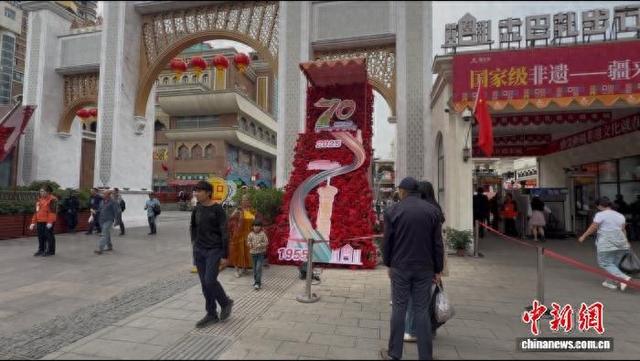
Core Insights - The article highlights the vibrant cultural and infrastructural developments in Urumqi, Xinjiang, as it celebrates the 70th anniversary of the Xinjiang Uyghur Autonomous Region in 2025 [2][4][7]. Cultural Celebrations - Urumqi's streets are adorned with red flags and anniversary decorations, creating a festive atmosphere that permeates daily life [2][4]. - The city showcases a unique cultural rhythm, exemplified by local festivals like Nowruz and Eid al-Fitr, which blend traditional elements with community celebrations [4][7]. - The Third Xinjiang Cultural Arts Festival, held in April 2025, emphasizes the region's unity and cultural richness through various performances and exhibitions [7][9]. Infrastructure and Transportation - Urumqi has introduced a new electric BRT bus system, featuring modern designs and accessibility improvements for elderly and disabled passengers [10]. - The BRT5 route, launched on April 15, 2025, includes features like low-floor designs and user-friendly handrails, enhancing public transport for all demographics [10]. Technological Advancements - The integration of artificial intelligence in daily life is becoming increasingly significant, particularly through the "12345" government hotline, which utilizes DeepSeek technology to streamline service [11][12]. - The average waiting time for hotline services has decreased from 8 minutes to 2 minutes since the implementation of the AI system, showcasing improved efficiency [12]. - AI applications extend beyond hotlines, with smart guide robots in cultural centers providing assistance and information in multiple languages, contributing to a modernized and internationalized urban environment [12].

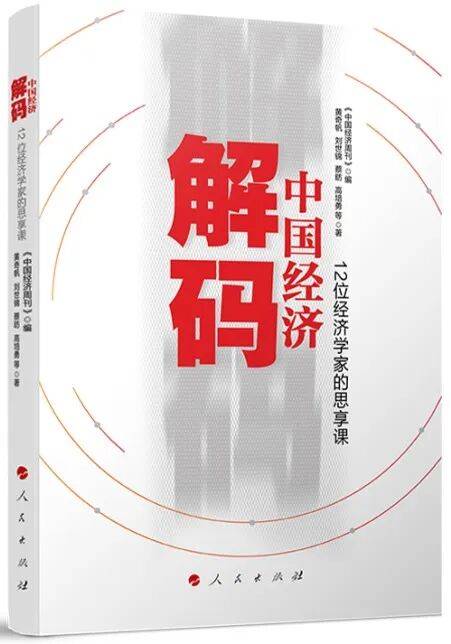
解码中国经济:12位经济学家的思享课 | 新书速递2025年12月第3期
Sou Hu Cai Jing· 2025-12-19 09:35
Core Viewpoint - The book "Decoding China's Economy: Insights from 12 Economists" aims to address fundamental questions regarding the future of China's economy, focusing on confidence, resilience, and vitality [3]. Group 1: Economic Analysis - The book is structured into twelve lectures, each led by a prominent economist, covering key areas of macroeconomics [3]. - Huang Qifan discusses new characteristics and tasks of China's opening-up, emphasizing the necessity of constructing a new development pattern [4]. - Liu Shijin highlights that the primary reason for the slowdown in economic growth is insufficient demand, advocating for consumption expansion through source governance and institutional development [4]. - Cai Fang addresses the challenges of declining birth rates and aging population, suggesting the creation of a family-friendly society and improvement of population development strategies [4]. - Gao Peiyong analyzes local fiscal issues, asserting that enhancing local fiscal autonomy is essential for implementing proactive fiscal policies [4]. - Wu Xiaoqiu points out that China's capital market is undergoing structural transformation and significant institutional changes, stressing that stabilizing the capital market is crucial for development confidence and expectations [4]. Group 2: Policy Recommendations - The book discusses various macroeconomic topics, including boosting consumption, developing new productive forces, and advancing the "AI+" initiative, while linking theoretical analysis with practical examples [5]. - The authors provide new research findings rather than rehashing old content, ensuring the book's authority and timeliness [5]. - The content balances professional depth with readability, addressing complex issues like tax-sharing systems and capital market transformations alongside case studies in cultural and digital economies [5]. - The collective insights from top economists reflect mainstream judgments on core policy issues in China's economic landscape, serving as a window into the evolving official economic thought [6].
外媒称DeepSeek爆火后,中国AI创企正彻底调整商业模式
Guan Cha Zhe Wang· 2025-03-25 12:29
Core Insights - The Chinese AI startup landscape is undergoing significant changes as companies adjust their business models in response to the success of DeepSeek, which has led to a concentration of market power among a few leading firms [1][2][3] Group 1: Business Model Adjustments - Many Chinese AI startups are shifting resources towards application development rather than foundational model development due to the competitive pressure from DeepSeek [1] - Zero One Everything, founded by former Google China head Kai-Fu Lee, is transitioning its business to align with what it calls the "DeepSeek era," ceasing pre-training of large language models by the end of 2024 [1] - The company announced it will offer enterprise-level DeepSeek deployment customization solutions, leveraging its expertise in hybrid expert models [1] Group 2: Funding and Investment - The startup Moonlight is reducing its marketing budget for its chatbot Kimi and focusing on model training to enhance performance, having raised over $1.3 billion (approximately 9.4 billion RMB) in funding in 2024 [2] - Alibaba has shown interest in acquiring Moonlight, having invested $800 million, which includes rights for future purchase, although recent shifts in focus may lower the likelihood of this acquisition [2] Group 3: Sector Focus Changes - Baichuan Intelligence is pivoting towards the healthcare sector, having dissolved its financial AI sales team to concentrate on developing AI technologies for medical diagnostics [3] - Zhipu AI, founded by renowned computer scientist Tang Jie, is exploring multiple business avenues and aims for an IPO by the end of 2025, although DeepSeek's growth may impact this plan [3] - Zhipu AI reported sales of 300 million RMB in 2024, with losses amounting to 2 billion RMB [3]