DiDi Food

Search documents
透视滴滴2025年报:国际业务超预期,持续加码拉美市场
3 6 Ke· 2026-03-17 09:59
Core Insights - Didi's international business performance exceeded expectations in Q4 2025, with GTV growing by 47.1% year-on-year to 36.6 billion yuan and order volume increasing by 24.5% to 1.265 billion orders [1][3] - The company plans to enhance its investment in key overseas markets, particularly in Latin America, following the relaunch of its food delivery service in Brazil [1][3] Financial Performance - In Q4 2025, Didi's international business GTV reached 36.6 billion yuan, with a year-on-year growth of 47.1% and a total order volume of 1.265 billion, marking a 24.5% increase [1] - For the entire year of 2025, international business order volume grew by 24.7% to 4.505 billion orders, with a compound annual growth rate of 32% over the past three years [3] - The total GTV for international business in 2025 was 117 billion yuan, reflecting a year-on-year increase of 28.2% [3] Market Expansion - Didi's international ride-hailing business has been profitable for two consecutive years, serving over 100 million users across 14 countries, with a significant presence in Latin America [4] - In Brazil, Didi's ride-hailing service has captured approximately 40% market share, covering over 3,300 towns [4] - In Mexico, Didi has expanded from a ride-hailing platform to include financial and food delivery services, achieving the top market share in both sectors [5] Localized Operations - Didi's success in Latin America is attributed to its localized operational strategy, including the acquisition of the Brazilian 99 platform and maintaining its brand and core team [7] - The introduction of the 99Moto service in Latin America has seen significant growth, with a 30% increase in motorcycle drivers and a 60% rise in delivery orders [7] Service Diversification - Didi has expanded its service offerings in Latin America to include food delivery, financial services, and instant delivery, creating a one-stop service platform for users [9] - The company has successfully launched its food delivery service, 99Food, in over 60 cities in Brazil, with plans to expand to 100 cities by mid-2026 [10] Sustainability Initiatives - Didi has formed a "Sustainable Mobility Alliance" in Brazil and launched its electric vehicle service, 99electric-Pro, in major cities [11] - By November 2025, this service had served over 27 million passengers and reduced carbon emissions by approximately 31,200 tons [12]



滴滴驶向更远航道
3 6 Ke· 2025-12-03 06:03
Core Insights - Didi's Q3 2025 financial results show total revenue of approximately 58.6 billion, a year-on-year increase of 8.6%, with a net profit of 1.5 billion, meeting expectations [1] - The core platform's order volume, including domestic and international businesses, grew by 13.8% year-on-year to 4.685 billion orders, with daily average orders exceeding 50 million [1] - Didi's domestic business remains robust despite macroeconomic challenges, holding the highest market share and demonstrating resilience [2][4] - The international business, particularly in Latin America, is expanding into a "mobility+" ecosystem, enhancing Didi's future growth potential [1][5] Domestic Business Performance - In Q3, Didi's domestic GTV increased by 10.1% to 86 billion, with a 10.7% rise in order volume and an 8% revenue growth [2] - Didi's scale provides a competitive advantage, with a projected market share of 70% in 2024 [2] - The company is focusing on optimizing user experience and improving driver satisfaction as part of its growth strategy [2][4] Supply and Demand Strategies - Didi is launching various segmented services to stimulate potential travel demand while providing drivers with better order opportunities [3] - The upgraded driver welfare initiatives aim to enhance driver satisfaction and service quality, reinforcing the platform's operational foundation [4] International Business Expansion - Didi's international order volume grew by 24.3% year-on-year to 1.162 billion, with revenue increasing by 35% [5] - The relaunch of the "99 Food" brand in Brazil has expanded to over 30 cities, integrating ride-hailing and delivery services into a super app [5][6] - Didi's international strategy emphasizes local adaptation and ecosystem extension, with successful operations in Mexico validating the "mobility+" model [7][8] Sustainability and Future Outlook - Didi is actively promoting sustainable transportation initiatives in Brazil, including the introduction of electric vehicle services [10] - The company aims to invest 20 billion Brazilian Reais in its Brazilian food delivery business over the next year, targeting expansion to 100 cities by mid-2026 [6] - Didi's international operations are characterized by stable growth and profitability, contributing to its overall business resilience [9]
出海观察|加码巴西外卖,滴滴能否赢得下一城?
Xin Lang Ke Ji· 2025-11-21 03:47
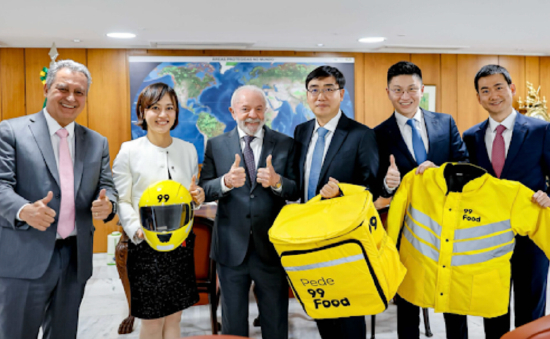
Core Insights - Didi is re-entering the Brazilian food delivery market with its "99 Food" brand, planning to invest 2 billion reais by June 2026, which is double its initial plan [2] - The Brazilian food delivery market is experiencing rapid growth, with a market size of 139 billion reais in 2023 and an annual growth rate of 15% to 20% from 2019 to 2023 [6] - iFood dominates the market with an 80% market share, making it challenging for new entrants like Didi and Uber to gain traction [4][5] Company Strategies - Didi aims to leverage its experience from Mexico, where it has successfully integrated ride-hailing and food delivery services, to establish a foothold in Brazil [8] - The company has a significant user base in Brazil, with over 55 million users and 1.5 million registered drivers, which can be utilized for food delivery [8] - Didi's strategy includes reusing existing transportation capacity to reduce delivery costs and improve response times [8] Market Dynamics - The Brazilian food delivery market is characterized by a high concentration of power with iFood, leading to complaints from riders about low wages and long hours, creating an opportunity for new players [6][11] - iFood is responding to competition by investing 17 billion reais and integrating with Uber to enhance its service offerings [7] - The competitive landscape is shifting as Didi and Meituan introduce different operational models, making the market less monotonous [10][11] Consumer Behavior - Consumers in Brazil show a strong preference for iFood due to its extensive restaurant partnerships and established brand loyalty, making it difficult for new entrants to attract users [4][10] - Local consumers express a willingness to try new platforms if they offer unique services or better value propositions, indicating potential for market disruption [10] Regulatory Environment - The Brazilian government has introduced regulations requiring platforms to provide benefits to delivery workers, increasing operational costs for companies like Uber [5] - The evolving regulatory landscape may impact the expansion strategies of new entrants like Didi, as they navigate different local laws and labor standards [9][11]
加码巴西外卖 滴滴能否赢得下一城?
Xin Lang Cai Jing· 2025-11-21 01:51
Core Insights - The 30th United Nations Climate Change Conference (COP30) is taking place in Brazil, highlighting the reliance on transportation apps like Uber and 99 for mobility in unfamiliar environments [1] - Didi has announced a significant investment of 2 billion Brazilian Reais in the food delivery sector by June 2026, doubling its initial plan, as it aims to compete in Brazil's growing market [2] Group 1: Market Dynamics - The Brazilian food delivery market is dominated by iFood, which holds an 80% market share, making it challenging for new entrants like Uber and Didi to gain traction [4] - iFood's success is attributed to its extensive partnerships with restaurants, exclusive agreements that limit competition, and its established brand recognition among consumers [4] - The Brazilian food delivery market is experiencing rapid growth, with a market size of 139 billion Reais in 2023 and an annual growth rate of 15% to 20% from 2019 to 2023, indicating potential opportunities for new players [6] Group 2: Competitive Landscape - Didi's previous attempts to enter the Brazilian market were unsuccessful due to iFood's dominance and regulatory challenges, leading to the suspension of its food delivery service in 2023 [5] - iFood is responding to competitive pressures by investing 17 billion Reais by March 2026 and exploring partnerships with Uber to enhance its service offerings [7] - Didi's strategy for re-entering the market is informed by its experience in Mexico, where it successfully integrated ride-hailing and food delivery services, and it aims to leverage its existing user base and delivery network in Brazil [8] Group 3: Challenges and Opportunities - Despite Didi's improved capabilities, the entrenched position of iFood presents significant challenges, as consumer loyalty and restaurant partnerships are difficult to disrupt [9] - Local consumers express a strong preference for iFood's comprehensive offerings, indicating that new entrants must provide unique value propositions to attract and retain users [10] - The evolving competitive landscape in Brazil's food delivery market is prompting stakeholders, including restaurants and riders, to reassess their positions and seek better profit-sharing arrangements [11]

美团Keeta入局巴西先投10亿美金,部分沙特团队已转战巴西
雷峰网· 2025-05-13 12:24
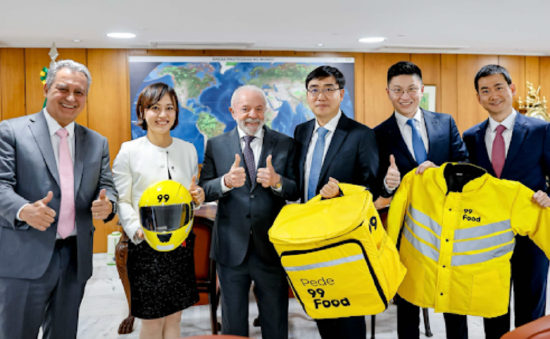
Core Viewpoint - The consensus in the industry is that Brazil's market is larger than Saudi Arabia's, with considerable order volume [1] Group 1: Meituan's Investment in Brazil - Meituan plans to invest $1 billion in Brazil over the next five years to expand its international food delivery service, Keeta [2][3] - The CEO of Meituan, Wang Xing, and Brazilian President Lula attended the signing of the investment agreement [5] - Meituan is establishing a customer service center in Northeast Brazil, expecting to hire over a thousand local employees [3] Group 2: Market Potential and Competition - Brazil's food delivery market has a daily order volume of nearly 5 million, with the leading platform, iFood, accounting for approximately 360 million daily orders [3] - iFood dominates the Brazilian market with over 80% market share, backed by investment firm Prosus [6] - Competitors in the Brazilian market include Rappi and local players, with Rappi implementing a "zero commission" policy to attract more merchants [7] Group 3: Meituan's Strategy and Market Dynamics - Meituan's entry into Brazil is seen as a significant variable in the market, following its success in Hong Kong and Saudi Arabia [8] - The company aims to build a nationwide instant delivery network in Brazil and apply its established marketing and digital operations tools [3] - The Middle East market, where Meituan has captured 20% market share in Saudi Arabia, is also a focus, with plans to become the market leader there [3]