EMS系统

Search documents
400MWh储能电站正式并网!昱能科技组串式储能再拓新局
中关村储能产业技术联盟· 2025-12-16 09:42
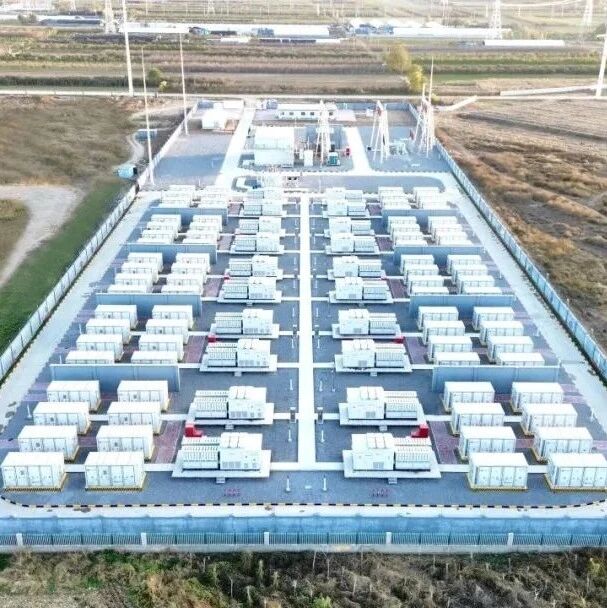
Core Viewpoint - The article highlights the successful commissioning of the 100MW/400MWh energy storage power station in Shenzhou, Hebei, constructed by Jiangsu Lingchu YN Technology Co., a subsidiary of YN Technology, showcasing the company's strength in large-scale energy storage projects and its role in promoting regional green development [2][4]. Project Overview - The Shenzhou Kunteng energy storage station has a total installed capacity of 100MW/400MWh, utilizing 80 self-developed Ocean 5000L energy storage modules and an EMS system, enhancing safety and efficiency through advanced design and management strategies [5][7]. - The project is expected to reduce coal consumption by approximately 31,000 tons annually, equivalent to a reduction of 82,000 tons of CO2 emissions, significantly contributing to low-carbon transformation and environmental protection in the region [7]. Technological Advancements - The Kunteng energy storage station employs a modular distributed energy storage system, which features adaptive temperature control strategies and a dual-driven health state estimation method to enhance reliability and safety [9]. - The project offers flexible energy storage capacity leasing services, providing a strong guarantee for power supply stability and grid safety during peak demand periods [11]. Strategic Development - The energy storage station represents a significant achievement for Lingchu YN in enhancing its capabilities in large-scale energy storage project development and operation, aligning with YN Technology's strategy to build a dual-driven development system [13][15]. - The successful delivery of this project serves as a benchmark for expanding the commercial energy storage market, enhancing the brand's credibility and competitiveness in the sector [13][15].


聚焦孟加拉国、越南储能市场!ESIE 2026第二批国际采购需求发布
中关村储能产业技术联盟· 2025-11-18 04:15
Core Insights - The article highlights the rapid emergence of the energy storage market in Bangladesh and Vietnam, driven by specific policies and national plans aimed at boosting solar energy and storage capacity [2] - Bangladesh's policies include net metering for surplus electricity, a low inverter tariff, and mandatory installation of solar in government buildings, leading to a surge in solar capacity and storage demand [2] - Vietnam's national power plan aims to increase pumped storage and energy storage capacity from 2.7 million kW to 15.26 million kW by 2030 [2] Bangladesh International Buyer Procurement Needs - Buyers are seeking energy storage systems, inverters, and energy management systems (EMS) for power generation and renewable energy project development [3][5] - Specific procurement needs include commercial energy storage solutions and integrated energy management systems [4][10] Vietnam International Buyer Procurement Needs - Buyers require energy storage systems ranging from 500 kWh to 5 MWh for commercial and microgrid projects [7][8] - There is a demand for high-power inverters compatible with Southeast Asian grid standards and integrated solar plus storage project solutions [7][9] ESIE 2026 International Business Matching Highlights - The event will feature over 50 countries and regions, including Australia, the USA, Germany, India, and Brazil, facilitating connections to core market resources [22] - A diverse matching matrix will be constructed through business meetings, forums, and networking events to support global cooperation [22] Future Opportunities - The ESIE 2026 will focus on popular markets in Europe, Australia, the Middle East, and Southeast Asia, inviting energy authorities and enterprises to participate [23] - Continuous updates on international buyer procurement needs will be provided, encouraging participation from interested companies [23]

“源-网-荷-储-算”五维协同 绿电点亮三江源零碳算力工厂
Zhong Guo Chan Ye Jing Ji Xin Xi Wang· 2025-09-28 23:31
Core Viewpoint - The Sanjiangyuan region is crucial for ecological security and water conservation in China, and it is becoming a key node for green computing power due to its abundant renewable energy resources and land space, especially with the advancement of the "East Data West Computing" project [1] Group 1: Project Overview - The project integrates a smart microgrid system that operates on 100% clean energy, supporting high-performance computing in high-altitude areas [1][2] - The project utilizes Trina Solar's N-type 720Wp TOPCon bifacial modules, which have a first-year degradation of only 1% and an average annual degradation of 0.4% [2][3] - The project is expected to generate over 10 million kWh annually, significantly reducing carbon emissions by 8,196 tons per year and lowering electricity costs by 20% compared to conventional power sources [2][3] Group 2: Technical Features - The project features a "source-network-load-storage-computing" five-dimensional collaborative system, integrating 6.18MWp of solar power, 30kW of wind power, and a 500kW/1044kWh energy storage system [3] - The energy management system (EMS) developed by the company can predict short-term wind and solar power output with over 92% accuracy, enhancing the efficiency of energy storage dispatch [3][4] - The system is designed to respond to grid commands in milliseconds, ensuring stable operation of computing equipment by dynamically matching energy supply and demand [3][4] Group 3: Environmental Considerations - The project is designed to minimize environmental impact in the ecologically sensitive Sanjiangyuan region, utilizing components that ensure long-term weather resistance and thermal stability [4][5] - The solar panel installation is elevated 0.3 meters above ground to reduce surface disturbance and promote natural grassland restoration [5] - The project aims to create a new energy system that is efficient, stable, and environmentally friendly, with plans to replicate the model in other high-altitude and desert areas [5]


储能电站运行效果核心影响因素分析
中关村储能产业技术联盟· 2025-09-18 11:53
Core Viewpoint - The article emphasizes the importance of four key indicators—equipment online rate, operational efficiency, depth of discharge (DOD), and battery capacity degradation rate—in determining the performance and economic viability of energy storage stations, which are crucial for the new power system construction [2][27]. Group 1: Equipment Online Rate - The equipment online rate is the foundation of the station's "availability," with a 1% decrease leading to an annual discharge loss of up to 1200 MWh for a 200MW/400MWh station [3][6]. - Key factors affecting online rate include equipment stability, maintainability, and flexible redundancy mechanisms [6][8]. - High stability equipment can achieve a 99% online rate, resulting in a revenue loss of only 360,000 yuan annually, compared to 1.8 million yuan for average equipment at 95% [5]. Group 2: Equipment Operational Efficiency - Operational efficiency measures the energy conversion efficiency from charging to discharging, with a 1% increase potentially adding 600,000 yuan in annual revenue for a 200MW/400MWh station [9][10]. - Key factors influencing efficiency include energy conversion, thermal management, and system synergy [9][12]. - The average system efficiency is 85%, while leading solutions can achieve 89%, resulting in an additional 2.4 million yuan in annual revenue [10]. Group 3: Depth of Discharge (DOD) - DOD indicates the ratio of actual discharge capacity to rated capacity, directly affecting the station's peak shaving capability; a reduction from 90% to 80% DOD results in a 40 MWh decrease in discharge for a 400MWh station [15][16]. - Factors affecting DOD include battery characteristics, system topology, and control protection [15][19]. - Advanced string topology can support a DOD of 98%, leading to an additional 3.45 million yuan in revenue compared to a traditional centralized system [16]. Group 4: Battery Capacity Degradation Rate - The degradation rate indicates the percentage loss of battery capacity over cycles, with a 1% reduction in degradation potentially increasing lifecycle revenue by millions [20][24]. - Key factors influencing degradation include operating temperature, cycle count, and cell quality [20][22]. - High temperatures can significantly increase degradation rates, with a 15% degradation observed at 45°C after 1000 cycles [25]. Group 5: Synergistic Optimization of Indicators - The four indicators are interrelated; excessive focus on one may negatively impact others, such as increasing temperature to boost efficiency, which can accelerate capacity degradation [27]. - Achieving optimal performance requires a holistic approach across the entire lifecycle of selection, operation, and maintenance [27].
弘正储能杨晓光:拥抱AI,智能化运维可降低度电成本 | 对话能源大咖
Hua Xia Shi Bao· 2025-06-19 11:45
Core Viewpoint - The rise of AI is enhancing the efficiency of energy storage systems in the new energy power sector, allowing for better regulation and management of energy resources [2][3]. Group 1: Company Strategy and Differentiation - Hongzheng Energy Storage aims to differentiate itself by integrating AI into its products, focusing on smart operations and maintenance to reduce the cost of electricity over the entire lifecycle of energy storage [3][4]. - The company is transitioning from being a simple product supplier to a long-term service provider, emphasizing the importance of operational convenience and efficiency for users [5][6]. - Hongzheng Energy Storage is developing a closed-loop system to address operational issues, utilizing a knowledge base to automate processes that were previously manual, thereby reducing costs and improving user experience [4][5]. Group 2: AI Integration and R&D Focus - The integration of AI into energy storage projects is expected to lower costs and improve efficiency in the long term, despite a short-term increase in development costs due to the need for additional R&D resources [6][11]. - The company is expanding its EMS (Energy Management System) team to enhance its capabilities, with plans to grow from 70 to 100 members, reflecting a strong commitment to AI and algorithm development [11][13]. - Hongzheng Energy Storage recognizes the need for multidisciplinary talent to effectively implement AI in energy storage, combining knowledge of energy management systems and battery technology [7][8]. Group 3: Market Position and Competitive Landscape - The energy storage industry is experiencing intense competition, leading to price wars; however, Hongzheng Energy Storage views this "involution" as a natural part of industry evolution, which can enhance capabilities and service quality [10]. - The company is focusing on maintaining a balance between low costs, safety, and high quality, believing that those who can endure and adapt during this competitive phase will succeed [10]. - Hongzheng Energy Storage is targeting commercial energy storage applications, with plans to expand into various scenarios, including peak-valley arbitrage and power quality optimization [12][13]. Group 4: Future Development and Expansion - The company is prioritizing commercial applications over residential storage, with a focus on optimizing energy distribution and service quality in the commercial sector [12]. - Hongzheng Energy Storage has completed product iterations and certifications for overseas markets, indicating readiness to expand its international presence [13].