Epyc处理器

Search documents
AMD连涨7日背后:AI服务器CPU“卖到断货”,华尔街开始重新定价
Jin Shi Shu Ju· 2026-01-22 03:46
Core Viewpoint - AMD's stock price has risen for the seventh consecutive trading day, driven by optimism surrounding its AI server CPU sales [1][2] Group 1: Financial Performance and Projections - KeyBanc analyst John Vinh expects AMD's revenue to exceed expectations in the upcoming fourth-quarter earnings report, primarily due to strong demand for server CPUs, particularly the latest Turin data center CPU [1] - AMD's server CPU business is projected to grow by at least 50% this year, driven by robust demand, with average selling prices expected to increase by 10% to 15% as large cloud providers secure capacity [1] - Bernstein analyst Stacy Rasgon has raised AMD's fourth-quarter revenue expectations, citing increased optimism regarding the company's server business momentum, with a projected 30% growth in sales of AMD Epyc processors, including the fifth-generation Turin CPU [1] Group 2: Market Sentiment and Competitive Landscape - AMD's stock rose nearly 8% on Wednesday, marking the longest consecutive gain since February 19, 2025, although Wall Street's view on AMD remains "divided" due to uncertainties regarding its GPU competitiveness against Nvidia [2] - Investors are focused on AMD's production timeline for its first rack-level solution, Helios, and the progress of the accompanying Instinct MI455 series GPUs, as well as updates on AI-related revenue expectations [2] - AMD has reportedly secured an agreement with OpenAI to begin deploying Helios later this year, but currently, OpenAI is the only significant customer [2][3] Group 3: AI Business Outlook - The narrative surrounding AMD's AI business heavily depends on the progress of its collaboration with OpenAI and its ability to attract more substantial clients for Helios [3] - Short-term pressure on AI prospects may be limited, as AMD is likely to benefit more from strong server demand and market share gains in its core business while waiting for results from its AI chip initiatives [3]
英特尔,错在了哪里?
半导体芯闻· 2025-08-26 10:09
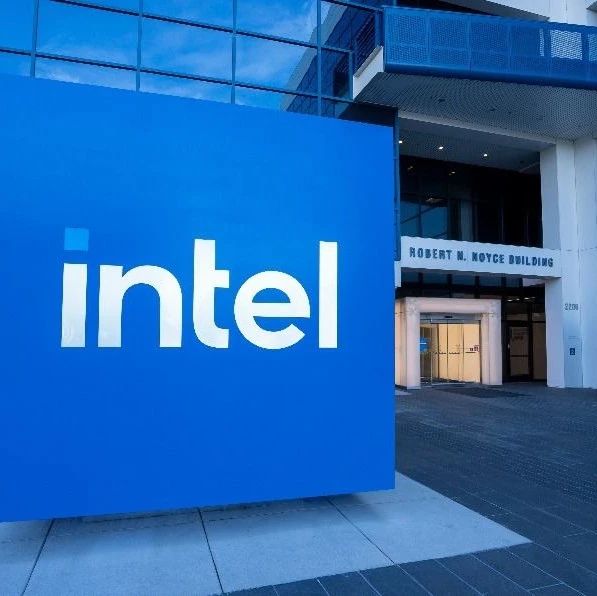
Core Viewpoint - Intel has made significant strategic missteps, particularly in the context of the AI wave, which has led to its decline in the semiconductor industry [2] Group 1: Historical Context and Missteps - Intel's historical misjudgment began with a belief in its manufacturing dominance, which led to complacency and a lack of competition awareness [2] - The 2012 Q&A session highlighted a misguided confidence in Intel's integrated device manufacturing (IDM) model, which underestimated the capabilities of competitors like TSMC, Apple, NVIDIA, and AMD [2] Group 2: Technical and Product Development Failures - Intel lost its leading position in process technology due to multiple delays in its 10nm project, which was hampered by overly ambitious transistor density goals and reliance on complex techniques instead of adopting EUV technology sooner [3] - The classic "Tick-Tock" development model was abandoned in 2016, leading to a slower "process-architecture-optimization" approach, coinciding with the 10nm issues and resulting in stagnation in product updates [5] - The launch of the Sapphire Rapids Xeon processors faced multiple delays and significant redesigns, allowing AMD's Epyc processors to gain market share in the server segment [6] Group 3: Strategic Market Decisions - Intel exited the smartphone SoC market in 2016 and sold its 5G modem business to Apple in 2019, effectively abandoning the mobile market [7] - The cancellation of the Larrabee discrete GPU project delayed Intel's credible GPU roadmap, further impacting its competitive position [7] Group 4: Security and Trust Issues - The discovery of vulnerabilities like Meltdown and Spectre forced Intel to implement remedial measures that compromised performance and eroded trust during a critical period of technological challenges [8] Group 5: Competitive Landscape - AMD capitalized on Intel's manufacturing delays, steadily increasing its market share in x86 servers and desktops, with projections indicating AMD's server market share could exceed 20% by 2025 [9] - NVIDIA has dominated the AI accelerator market, shifting focus away from traditional CPU roadmaps [9] Group 6: Corporate Culture and Financial Management - Intel's extensive stock buybacks and complex investments, such as the later-closed Optane and sold NAND business, coincided with poor performance in its core manufacturing operations [10] - In 2024, Intel's stock price plummeted, prompting a large-scale cost-cutting plan [10] Group 7: Shift in Manufacturing Strategy - Increasingly, Intel has relied on TSMC for chip manufacturing, undermining its historical IDM advantage [11] - The company is at a critical juncture, needing to innovate and adapt to regain its competitive edge in the semiconductor industry [11]


AMD利润大跌后,市场警告泡沫破裂风险
Guo Ji Jin Rong Bao· 2025-08-06 10:19
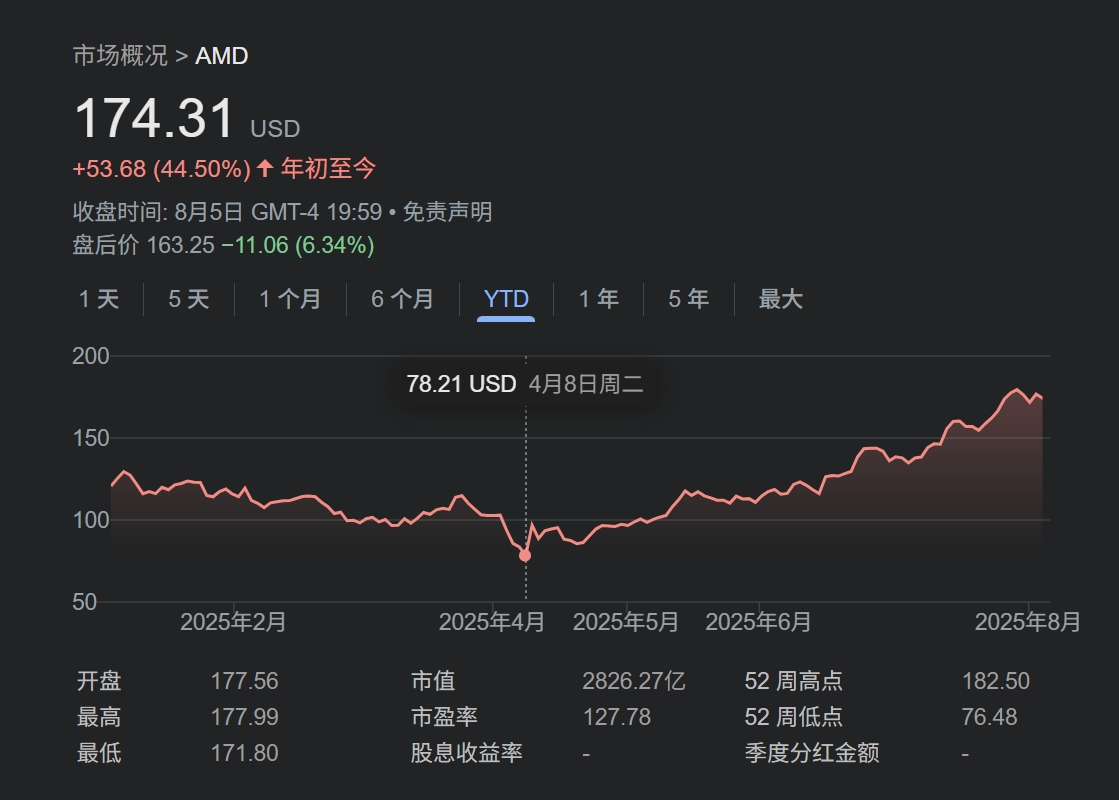
Group 1: Financial Performance - AMD reported a record revenue of $7.67 billion for Q2, maintaining over 30% year-on-year growth, although net profit decreased by 31% year-on-year and 50% quarter-on-quarter [1][2] - The company's gross margin fell by 10 percentage points to 43%, with earnings per share (EPS) down 30% year-on-year [2][4] - AMD's data center revenue for the quarter was $3.2 billion, aligning with average expectations, but was impacted by U.S. government restrictions on the MI308 data center GPU [4][5] Group 2: Market Reaction and Stock Performance - Following the earnings report, AMD's stock price dropped over 5% in after-hours trading, indicating that the current situation is insufficient to sustain the stock's previous gains [1][2] - Since the beginning of the year, AMD's stock has risen over 40%, and it has rebounded approximately 120% from its year-to-date low [1][4] Group 3: Product Developments and Future Outlook - AMD launched the Instinct MI350 series GPU in June, with the MI355X expected to be released later this year, showing performance comparable to NVIDIA's B200 chip [5] - The company anticipates strong demand for its Epyc processors, which is expected to offset the negative impacts from restrictions on shipments to China [4][5] - AMD's CEO expressed optimism about the company's position compared to 90 days prior, highlighting the potential of new products and AI opportunities [4][5]