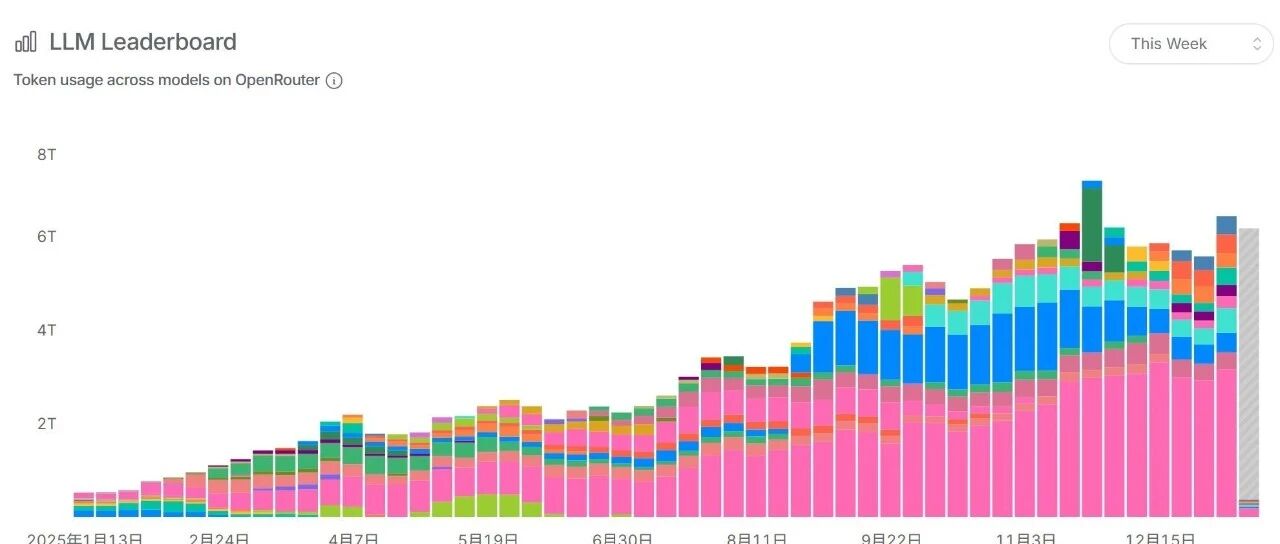
Gemini 3 Flash Preview

Search documents
国产大模型周调用量再超美国
第一财经· 2026-03-16 10:19
Core Insights - The article highlights that domestic AI models in China have surpassed U.S. models in weekly usage for two consecutive weeks, indicating a significant shift in the AI landscape [5][6]. Group 1: Domestic Model Performance - The weekly usage of domestic AI models reached approximately 4.69 trillion tokens, an increase of 11.82% from the previous week [6]. - The top three domestic models by usage are MiniMax M2.5 (1.75T tokens), Step 3.5 Flash (1.34T tokens), and DeepSeek V3.2 (1.04T tokens) [5][6]. - In contrast, U.S. AI models had a weekly usage of 3.294 trillion tokens, which represents a decline of 9.33% [6]. Group 2: Emergence of New Models - The newly launched Hunter Alpha model, with 1 trillion parameters and support for 1 million tokens context, has gained attention for its capabilities in long-term planning and complex reasoning [6][7]. - Hunter Alpha topped the daily ranking on OpenRouter shortly after its release, alongside another model, Healer Alpha, which also made it to the top ten [7]. Group 3: Market Dynamics and Pricing - The increasing demand for domestic models is driven by the rise of intelligent agent scenarios, which require high token consumption, making cost-effective domestic models appealing to overseas developers [7]. - For instance, MiniMax M2.5 offers a competitive pricing structure at $0.3 per million tokens for input and $1.1 for output, significantly lower than the prices of U.S. models like Claude Opus 4.6 [7]. Group 4: Commercialization Challenges - While domestic models are gaining traction in international markets, U.S. models are focusing on pragmatic commercialization, such as discontinuing lower-priced versions and tightening usage limits [8]. - The departure of a key figure from Alibaba's AI division highlights the tension between revenue pressures and open-source strategies [8]. - MiniMax's first financial report indicates a revenue of approximately $79.04 million for 2025, a year-on-year increase of 159%, but also reveals a significant loss of $1.87 billion, up 302% year-on-year [8].


霸榜全球大模型,MiniMax凭什么力压Claude、GPT?
阿尔法工场研究院· 2026-03-12 11:34
Core Viewpoint - MiniMax M2.5 has achieved the top position in global large model usage rankings due to its affordability and suitability for real-world applications, particularly in the growing demand for agent-based functionalities [6][10][29]. Group 1: MiniMax M2.5 Performance - MiniMax M2.5 has maintained the number one spot in the global large model usage rankings since its release on February 12, 2026, with a total of 8.43 trillion tokens consumed [6][8]. - The model is significantly cheaper compared to competitors, with input costs at $0.27 per million tokens and output costs at $0.95 per million tokens, making it approximately 18 times cheaper than Claude Opus 4.6 [13][14]. - The model's architecture, MoE, allows for fast inference and low latency, making it ideal for agent workflows that require multiple calls [21][23]. Group 2: Market Trends and Demand - The demand for agent-based applications has surged, with OpenClaw, Kilo Code, and BLACKBOXAI leading the charge in token consumption, indicating a shift in how large models are utilized [19][20]. - MiniMax M2.5's success is attributed to its alignment with this trend, as it was designed for programming, tool usage, and workflow tasks rather than just conversational capabilities [16][18]. Group 3: Commercial Viability - MiniMax reported a revenue increase of 158.9% in 2025, reaching $79.04 million, with a gross margin improvement from 12.2% to 25.4% [42][44]. - The revenue structure includes approximately two-thirds from AI-native products and one-third from enterprise services, showcasing a diversified approach to monetization [46][48]. - Over 70% of MiniMax's revenue comes from international markets, indicating a broad acceptance beyond the Chinese developer community [51][53]. Group 4: Competitive Landscape - The competitive landscape is intensifying, with other models like Step 3.5 Flash and Kimi K2.5 also targeting the agent market, emphasizing the need for MiniMax to solidify its position [36][37]. - MiniMax's rapid iteration and updates, with the release of M2.5 just months after M2.1, demonstrate a commitment to enhancing developer capabilities [32][34]. Group 5: Future Outlook - The ongoing competition in the agent model space suggests that MiniMax must convert its current usage into long-term commercial success [39][40]. - The industry is shifting towards evaluating models based on their practical application and cost-effectiveness, rather than theoretical performance [55].

悬赏5000刀!148局AI斗蛐蛐世界杯官方战报出炉,全球赛邀你接棒来战
量子位· 2026-03-05 06:33
Core Viewpoint - The article discusses the differences in performance among AI large models, questioning whether their rankings truly reflect their capabilities in complex interactive scenarios, such as social deduction games like "Werewolf" [4][5]. Group 1: AI Model Competition - Taobao organized an "AI Werewolf World Cup," bringing together 12 top AI models to compete under a unified framework, emphasizing direct competition [7][12]. - The competition involved 150 rounds of gameplay, focusing on the models' reasoning abilities in a complex social deduction environment [10][17]. - The models included notable names like GPT, Gemini, and Qwen, showcasing the latest versions from various companies [9][19]. Group 2: Evaluation Metrics - The evaluation criteria for the competition included vote accuracy, divine skill efficiency, kill precision, and overall scores, providing a detailed profile of each model's capabilities [24][25]. - Vote accuracy measures the model's ability to identify the "werewolf" amidst misinformation, while divine skill efficiency assesses decision-making during critical game moments [28][29]. - Kill precision reflects the model's ability to collaborate and deduce the location of opponents, while werewolf win rates indicate the model's effectiveness in deception and social strategy [31][32]. Group 3: Insights from Gameplay - The competition revealed that some models struggled with advanced strategies, highlighting the limitations of even the most advanced AI in high-stakes scenarios [35]. - AI models exhibited a more polite and measured approach in conflict situations compared to human players, indicating a unique strategic style [36][40]. - The ongoing matches and results are available on the WhoisSpy.ai platform, which aims to evaluate AI performance in social reasoning and gaming contexts [41]. Group 4: Future Developments - The article mentions an upcoming international competition that invites global developers to participate, expanding the scope of AI model testing [46][47]. - The competition will allow developers to utilize provided templates to create agents, making participation accessible even for those without extensive experience [55][56]. - Incentives for the competition include cash prizes, with the first place receiving $5,000, encouraging innovation and continuous improvement among participants [63][64].



Token 出海,将中国电力卖给全世界
Xin Lang Cai Jing· 2026-03-01 03:27
Core Insights - The significance of the undersea cable network lies not in transmission speed but in the power structure it creates, where those who lay the cables can control information flow [1][2] - In 2026, Chinese AI models are capturing a significant share of the global developer market, with Chinese models accounting for 61% of token consumption on the OpenRouter platform [3][4] Group 1: AI Model Migration - As of February 24, 2026, the top ten models on OpenRouter consumed approximately 8.7 trillion tokens, with Chinese models dominating at 5.3 trillion tokens [4] - The leading model, MiniMax M2.5, consumed 2.45 trillion tokens, followed by Kimi K2.5 and Zhiyu GLM-5, all from China [4] - The introduction of OpenClaw, an open-source tool, has enabled AI to perform complex workflows, leading to exponential increases in token consumption for developers [6][9] Group 2: Cost Structure of Tokens - The cost structure of tokens primarily consists of computing power and electricity, with a single NVIDIA H100 GPU costing around $30,000 and consuming approximately 700 watts [11] - The process of a developer's API request involves data traveling from the U.S. to a Chinese data center, where GPU clusters operate, showcasing the cross-border flow of value through tokens [12][13] - China's electricity prices are about 40% lower than those in the U.S., contributing to the competitive advantage of Chinese AI models [15] Group 3: Strategic Implications - The migration of developers to Chinese models is driven by significant cost differences, with MiniMax M2.5 costing $0.3 per million tokens compared to $5 for Claude Opus 4.6 [8][9] - The transition to Chinese AI models is occurring globally, with developers increasingly relying on these models for their workflows, raising concerns about data sovereignty and compliance [28][30] - The competition in AI models and tokens is becoming a new strategic battleground between the U.S. and China, akin to the semiconductor and space races of the past [30][31]


中国AI模型登顶全球Token使用量榜单
Huan Qiu Wang· 2026-02-28 02:54
Core Insights - The M2.5 model by MiniMax has achieved a usage of 4.55 trillion tokens, making it the most popular AI model among developers globally within two weeks of its release [1] - The Kimi K2.5 model from Moonshot AI ranks second with a usage of 4.02 trillion tokens [1] - Token usage reflects the actual application scale and developer acceptance of AI models [1] Company Performance - MiniMax, Moonshot AI, and DeepSeek are the three Chinese companies that have models in the top five, collectively accounting for nearly two-thirds of the token usage in this ranking [1] - The other two models in the top five are Google's DeepMind Gemini 3 Flash Preview and Anthropic Claude Sonnet 4.5 [1]
AI数据继续上攻
小熊跑的快· 2026-01-25 23:07
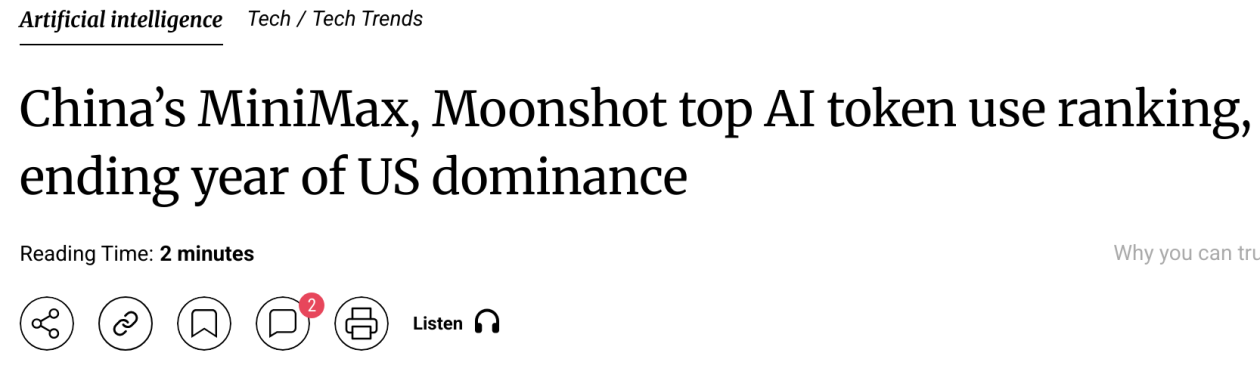
Core Insights - The article highlights significant growth in mobile data for ChatGPT, indicating a clear upward trend in user engagement and usage metrics [4] - OpenRouter continues to reach new highs, suggesting increasing adoption and popularity within the market [4] - As predicted last week, the domestic MiMo-V2 has surged to the second position, reflecting strong competitive performance [4] Group 1 - ChatGPT mobile data shows a noticeable month-on-month increase [4] - OpenRouter data continues to set new records [4] - Domestic MiMo-V2 has climbed to the second position as anticipated [4]
数据漂亮
小熊跑的快· 2026-01-18 13:21
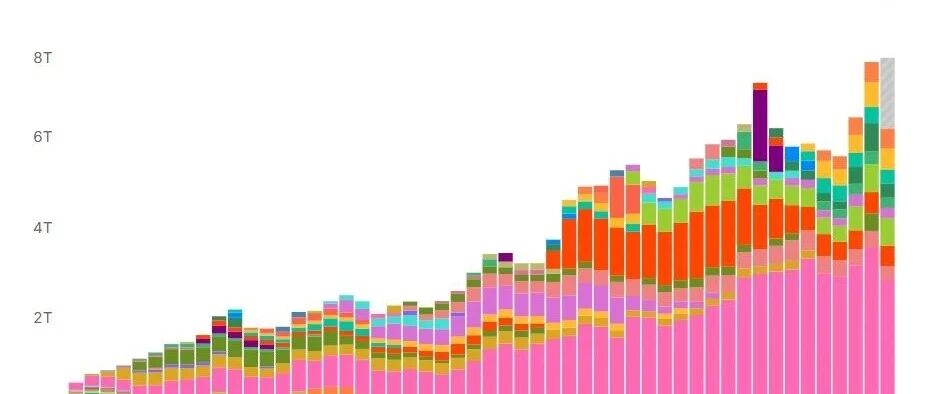
Core Insights - The article highlights a significant increase in third-party API token usage, reaching a new high, which was predicted two weeks prior [3] - The domestic MiMo platform ranks third globally in terms of performance [3] Group 1 - The total API token usage reached 7.11 trillion, with a weekly increase of 547 billion [2] - The top contributors to the API token usage include Claude Opus 4.5 at 599 billion and Claude Sonnet 4.5 at 580 billion [2] - Other notable contributors include MiMo-V2 -Flash at 506 billion and Grok Code Fast 1 at 432 billion [2]
圣诞节后 数据又新高
小熊跑的快· 2026-01-13 23:32
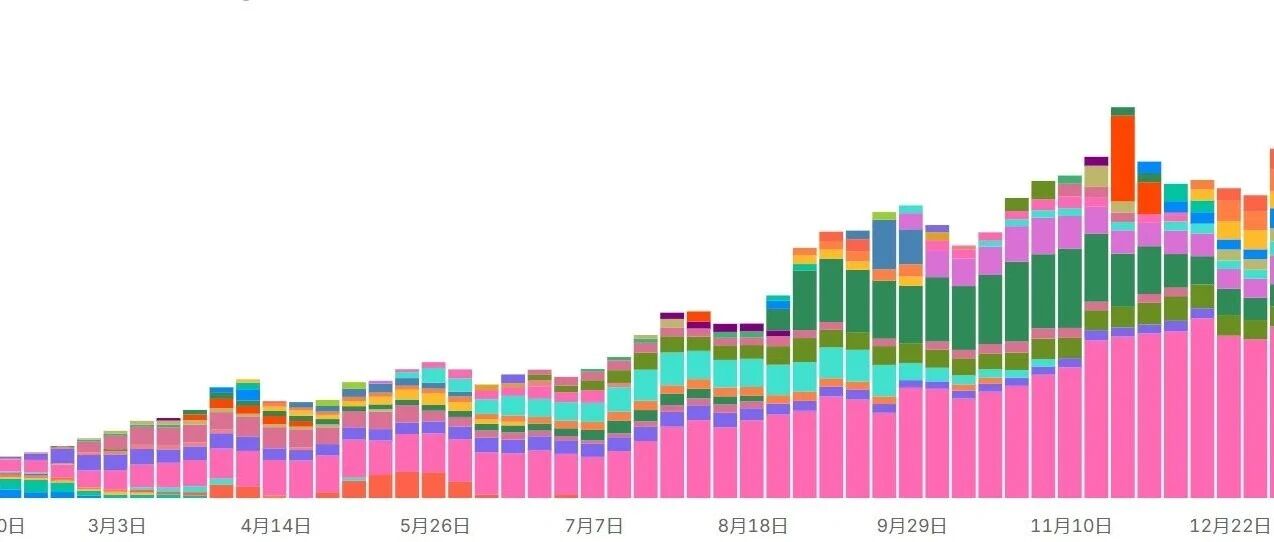
Core Insights - The article discusses the competitive landscape of AI models, highlighting the performance of various models including Grok, Mimo-V2, and others, indicating a rapid evolution in the sector [2][4]. Group 1: AI Model Performance - Grok has surpassed Gemini in terms of performance, indicating a significant shift in the competitive dynamics of AI models [2]. - Mimo-V2 from Xiaomi is noted as a strong contender, ranking third in the performance metrics [2]. - The overall performance of AI models is expected to reach new highs in the upcoming week, suggesting ongoing advancements in technology [2]. Group 2: Performance Metrics - The total performance of the AI models listed amounts to 6.43 trillion (T) [4]. - Claude Sonnet 4.5 leads with a performance of 531 billion (B), followed by Grok Code Fast 1 at 413 billion (B) and MiMo-V2-Flash at 398 billion (B) [4]. - Other notable models include Gemini 3 Flash Preview at 387 billion (B) and DeepSeek V3.2 at 312 billion (B), showcasing a diverse range of capabilities among the top performers [4].