GenSci098

Search documents
股市必读:长春高新(000661)12月23日董秘有最新回复
Sou Hu Cai Jing· 2025-12-23 16:45
Core Viewpoint - The company is actively pursuing business development (BD) opportunities and diversifying its product pipeline, while facing various uncertainties in achieving these collaborations [2]. Group 1: Company Performance - As of December 23, 2025, the company's stock price closed at 93.69 yuan, down 1.58%, with a turnover rate of 1.35%, a trading volume of 54,000 shares, and a transaction amount of 508 million yuan [1]. Group 2: Business Development (BD) Efforts - The company is committed to enhancing its intrinsic value and promoting high-quality development through BD collaborations, although the success of these efforts is subject to multiple uncertainties [2]. - The company has ongoing discussions regarding potential BD projects, but specific details will be disclosed only when they meet legal disclosure standards [2]. - The company is focused on leveraging its strengths in brand, channels, and quality to adapt to regulatory requirements and enhance product sales [2]. Group 3: Market and Investor Relations - On December 23, there was a net outflow of 80.74 million yuan from institutional investors, while retail investors saw a net inflow of 48.95 million yuan [3][4]. - The company emphasizes the importance of investor relations and is utilizing various communication methods to maintain close contact with investors [2].

Patent cliffhanger: will China biotech throw Big Pharma a lifeline?
Yahoo Finance· 2025-12-20 09:30
Core Insights - The biopharma industry is facing a significant "loss of exclusivity" wave, with estimates indicating a potential revenue loss of between US$17 billion and US$18 billion for Pfizer alone, starting gradually in 2026 and peaking in 2028 [2][12][28] - Morgan Stanley projects that US$171 billion of revenue from large-cap biopharma companies will go off-patent by the end of 2030, prompting a race to replace aging blockbusters [3][28] - The patent cliff is expected to be one of the largest since 2010, with a substantial impact on pricing power as generics and biosimilars enter the market [6][11] Industry Dynamics - The Biosecure Act is adding uncertainty to the industry, as US drug makers navigate a tougher political environment and seek to refill their pipelines [4][21] - The impending patent expirations are creating a competitive landscape where generics and biosimilars can enter at significant discounts, leading to rapid price erosion [7][12] - Drug prices have historically decreased by 30% to 82% over eight years following patent expiration, with the US experiencing the steepest declines [12][17] Chinese Biotech Opportunities - Chinese biotech firms are positioned to capitalize on the patent expirations, offering lower costs and faster clinical execution, making them attractive partners for global pharmaceutical companies [9][28] - The trend of in-licensing assets from Chinese companies is growing, with Chinese firms accounting for 32% of out-licensing deals to multinationals by value in the first half of 2025, up from 21% in previous years [15][27] - Upfront payments to Chinese biotech companies are estimated to be 60% to 70% lower, with timelines for development being accelerated by 30% to 50% [16][28] Strategic Shifts in Big Pharma - As timelines tighten, pharmaceutical companies are increasingly willing to license earlier-stage candidates rather than only late-stage assets, reflecting a shift in strategy to mitigate the impact of patent expirations [10][11] - Major companies like Merck have invested US$40 billion over the past five years in acquisitions and collaborations, particularly with Chinese biotech firms specializing in cancer therapies [14][28] - The urgency to rebuild pipelines before pricing power diminishes is driving Big Pharma to seek innovative solutions, including partnerships with Chinese biotech [28][29]
“东北药茅”转型创新药
Hua Er Jie Jian Wen· 2025-12-17 03:28
Core Viewpoint - Changchun High-tech has historically been perceived as a single-dimensional company focused on growth hormone, overshadowing its potential in innovative pharmaceuticals. The recent licensing deal with Yarrow Bioscience marks a significant shift, indicating the company's entry into the global innovative drug market [1][5]. Group 1: Transaction Details - Changchun High-tech's subsidiary, Gensai Pharmaceutical, licensed overseas rights for its SHR antibody GenSci098 to Yarrow Bioscience for a total of $1.365 billion, including an upfront payment of $120 million and milestone payments [1][2]. - The upfront payment includes a non-refundable $70 million and an additional $50 million for recent development milestones, highlighting the asset's value in the early clinical stage [1][2]. Group 2: Buyer Profile - Yarrow Bioscience, backed by the renowned RTW Investments, is not an unknown entity; it is known for its strategic investments in the biotech sector, including the early investment in Prometheus Biosciences, which was later acquired by Merck for $10 billion [2][3]. - The acquisition of GenSci098 as a core asset reflects Yarrow's confidence in its potential to disrupt existing treatment paradigms for thyroid eye disease [2][3]. Group 3: Product Potential - GenSci098 offers a novel mechanism by directly blocking the binding of pathogenic antibodies to the TSH receptor, potentially treating both the eye disease and the underlying hyperthyroidism, unlike the current market leader, Tepezza [2][3]. - The drug avoids the hearing toxicity risks associated with Tepezza and provides greater convenience through subcutaneous injection, positioning it as a best-in-class candidate [3]. Group 4: Strategic Implications for Gensai - This transaction signifies a major milestone for Gensai Pharmaceutical, validating its capability to produce globally competitive assets and demonstrating its ability to generate revenue through technology transfer [5][6]. - The $120 million influx will support further research and development, accelerating the advancement of other promising pipelines within the company [5][6]. - The deal is expected to reshape market perceptions of Changchun High-tech, transitioning it from a company primarily viewed through the lens of growth hormone to one recognized for its global intellectual property capabilities and comprehensive pipeline [5][7].
意外BD,炸出新潜力靶点
Xin Lang Cai Jing· 2025-12-16 14:40
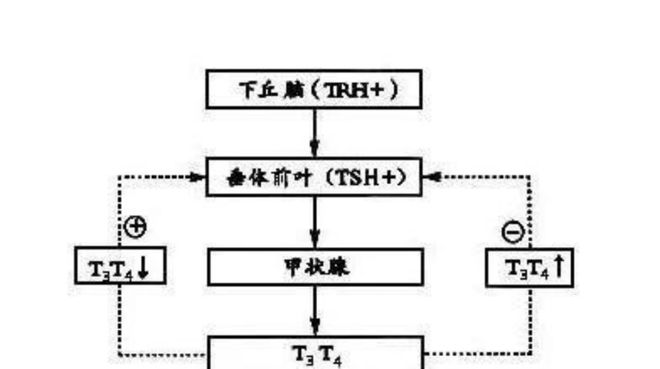
Core Insights - Changchun High-tech announced a collaboration with Yarrow Bioscience for the GenSci098 pipeline, which includes an upfront payment of $120 million and potential milestone payments totaling up to $1.365 billion, along with over 10% royalties on net sales [1] Group 1: Financial Aspects - The agreement includes a non-refundable upfront payment of $70 million and a subsequent milestone payment of $50 million [1] - The total potential milestone payments could reach $1.365 billion, indicating significant future revenue potential for the company [1] Group 2: Product and Target Information - GenSci098 targets the TSH receptor (TSHR), which is involved in the hypothalamic-pituitary-thyroid (HPT) axis and is crucial for regulating thyroid hormone levels [2][3] - The drug is aimed at treating Graves' disease, an autoimmune condition characterized by the overproduction of thyroid hormones due to TSH receptor antibodies [4][6] Group 3: Competitive Landscape - K1-70 was a previous TSHR monoclonal antibody that entered clinical trials but was discontinued for unspecified reasons, indicating challenges in this therapeutic area [6][7] - Other companies like IMVT and Viridian Therapeutics are also developing treatments targeting similar pathways, with IMVT focusing on a next-generation pipeline [9][11] Group 4: Market Potential - If GenSci098 proves successful in treating Graves' disease and thyroid eye disease (TED), it could potentially achieve sales figures comparable to Tepezza, which has around $2 billion in sales [12]

生长激素风光不再的长春高新计划港股二次上市
Xin Lang Cai Jing· 2025-10-09 09:02
Core Viewpoint - Changchun High-tech aims to enhance its international presence and innovation capabilities by issuing H-shares for listing on the Hong Kong Stock Exchange, with funds primarily allocated for R&D, clinical trials, and international market expansion [1][3]. Fundraising Purpose - The funds raised will be used for two main directions: advancing the innovation pipeline, including clinical trials and regulatory affairs, and establishing a commercial team overseas for global collaboration and market expansion [1][3]. Financial Performance - Since 2022, Changchun High-tech's stock price has experienced significant fluctuations due to rumors surrounding the centralized procurement of growth hormones, culminating in a decline in both revenue and net profit for the first time in nearly two decades in 2024 [3]. Innovation Pipeline - The company has over 40 projects in clinical stages or IND applications, including 11 Class I innovative biological agents and 4 Class I innovative chemical drugs, focusing on endocrine and metabolic diseases, women's health, immune and respiratory systems, and oncology [3][4]. Key Products - GenSci134, a long-acting growth hormone, is currently undergoing Phase I clinical trials for adult growth hormone deficiency and has received IND approval for pediatric growth hormone deficiency and idiopathic short stature [4][5]. - GenSci074, an NK3R antagonist for treating vasomotor symptoms in menopausal women, is in Phase II clinical trials, with competition from other drugs in the same category [7][8]. Oncology Pipeline - The company is developing several innovative drugs targeting prostate, breast, and ovarian cancers, including GenSci139, GenSci140, and GenSci143, which are expected to enter Phase I clinical trials by Q4 2025 [10][11]. - GenSci139 targets low-expressing HER2 tumors and faces a competitive landscape with existing ADC therapies [11][12]. - GenSci140 aims to expand patient coverage for FRα-positive cancers and is the only FRα dual-target ADC in development in China [13][14]. - GenSci143 targets both B7-H3 and PSMA antigens, potentially offering broader patient coverage but is still in early development stages [15]. Other Therapeutic Areas - GenSci098 is a TSHR antagonist for treating thyroid-associated ophthalmopathy, indicating the company's diversification into immune and respiratory diseases [16].