
H酸

Search documents
聚炳析-化工核心资产-黄金坑
2026-03-30 05:15
Summary of Conference Call Records Industry Overview - The chemical industry in China is experiencing enhanced export competitiveness, with 80% of major chemical products expected to be above the 80th percentile of the past six years by 2025. In contrast, the EU's capacity utilization has dropped to 74.6%, indicating a shift in the global chemical landscape towards the East and away from the West [1][3] - Geopolitical tensions in the Middle East threaten 27% of global oil supply, impacting olefin production capacities in Southeast Asia and Central Europe, with affected proportions of 20.4% and 60% respectively. High oil prices may accelerate the exit of outdated capacities, potentially bringing forward the olefin cycle [1][4] Company-Specific Insights - Wanhua Chemical's profit forecast for Q1 2026 is estimated to be between 3.5 billion to 4 billion yuan, benefiting from geopolitical challenges affecting overseas supply stability in the MDI/TDI market [1][4] - The polyester filament industry has seen its CR6 increase to 79%, with capacity growth expected to slow to 4% by 2026, indicating a more favorable supply-demand balance compared to 2022. Current inventory levels are low at 20-25 days, and profitability is expected to improve as downstream restocking begins in April [1][5] Market Dynamics - The dye industry is currently facing extremely low inventory levels, with production-side stocks below 7 days and client-side stocks below 5 days. A supply-demand gap of over 10% exists for H-acid due to safety incidents and environmental pressures, which could lead to price increases [1][8][9] - The active dye market is expected to see price elasticity release driven by supply issues with H-acid, which has faced production challenges due to environmental regulations and safety incidents. If H-acid prices rise to 80,000 yuan/ton, it could increase active dye costs by 8,000 yuan/ton [1][10] Fertilizer Industry Insights - The sulfur market is under threat from Middle Eastern supply issues, with a projected shortfall exceeding 10 million tons by 2026. The global supply of potassium fertilizer is also expected to be less than anticipated, while diammonium phosphate is benefiting from the expansion of iron phosphate production, closely tied to the new energy sector [2][10] - The fertilizer industry is experiencing a resonance of short-term supply disruptions and seasonal demand due to the spring farming season. The geopolitical situation is significantly impacting sulfur supply, while potassium fertilizer supply is constrained by geopolitical risks and limited net increases in global supply [10][11] Future Trends - The phosphoric acid market is entering a phase of stock optimization from 2026 to 2030, with limited new capacity expected. The demand for diammonium phosphate is closely linked to the expansion of iron phosphate production, which is projected to increase significantly in the coming years [12] - China's export capacity for phosphoric acid products is expected to grow significantly, driven by domestic and international price differentials, enhancing the bargaining power and profitability of leading domestic companies [12]
基础化工行业专题:染料产业链格局改善,景气度有望迎来修复
Huaan Securities· 2026-02-12 08:01
Investment Rating - The industry investment rating is "Overweight" [2] Core Insights - The dye industry is expected to see a recovery in demand due to both domestic and international factors, with China maintaining its position as the world's largest producer, consumer, and exporter of dyes, with an annual production exceeding 900,000 tons [5][18] - The supply structure of dyes is improving, with leading companies possessing significant pricing power due to the elimination of smaller, less compliant enterprises [7][29] - The price increase of dyes is driven by the intermediate production process, benefiting companies with integrated supply chains [8][48] Summary by Sections Demand and Supply Dynamics - The dye industry is characterized by diverse products and applications, with significant growth in downstream printing and dyeing fabric production, which is projected to grow at a compound annual growth rate (CAGR) of 2.59% from 2018 to 2024 [20] - China's dye export volume is expected to reach 272,000 tons in 2024, reflecting an 11% year-on-year increase, supported by a compound annual growth rate of 7.51% from 2020 to 2025 [23] Environmental and Regulatory Landscape - The dye industry faces stringent environmental regulations, leading to the gradual elimination of high-pollution, low-compliance small enterprises, thus optimizing the industry structure [26][29] - Recent regulatory changes have increased compliance costs for smaller players, further consolidating market share among larger firms [30] Intermediate Supply and Price Trends - The production of key intermediates, such as H acid and reducing agents, is critical for dye manufacturing, with recent supply disruptions leading to price increases [40][45] - The price of reducing agents has surged from 25,000 yuan/ton to approximately 50,000 yuan/ton, directly impacting the production costs of disperse dyes [43] Key Companies in the Industry - Zhejiang Longsheng is a leading enterprise with a dye production capacity of 300,000 tons and a strong integrated supply chain [51] - RunTu Co. has a well-established dye industry system with a total dye production capacity of 238,000 tons [53] - Annoqi focuses on differentiated dye products and is integrating AI technology into its production processes [54] - Jinhua Group has a dye production capacity of 95,000 tons and is expanding its product portfolio through strategic acquisitions [56]




锦鸡股份:H酸产能为8000吨/年
Zheng Quan Ri Bao· 2026-02-11 13:08
Group 1 - The company, Jinji Co., announced on February 11 that its fine chemical products project (Phase I) includes H-acid products, with an annual production capacity of 8,000 tons [2]

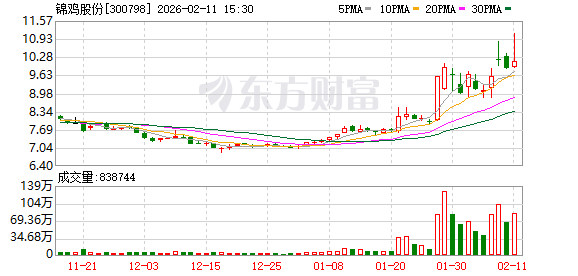
锦鸡股份:公司精细化工产品项目(一期)包括H酸产品,H酸产能为8000吨/年
Mei Ri Jing Ji Xin Wen· 2026-02-11 09:00
Group 1 - The company is currently developing a production capacity of 13,000 tons per year for H acid [1] - The first phase of the fine chemical product project includes H acid with a production capacity of 8,000 tons per year [1] - For specific trial production progress, the company advises referring to relevant periodic reports or temporary announcements [1]
太平洋证券:上下游产品价格同时上涨 染料行业有望迎来景气回升
Zhi Tong Cai Jing· 2026-02-10 07:09
Core Viewpoint - The dye industry is experiencing a recovery in market conditions after years of stagnation, driven by rising prices of key intermediates and dyes [1][2]. Price Trends - As of February 8, the price of H acid is 40,250 yuan/ton, an increase of 11.81% year-on-year [2]. - The price of the core intermediate for disperse dyes, 2-amino-4-acetamidobenzene ether, has risen from approximately 25,000 yuan/ton to 38,000 yuan/ton, reflecting a growth of over 50% [2]. - Disperse dye prices have increased to 19 yuan/kg, up 11.76% since the beginning of the year, while reactive dye prices have reached 23 yuan/kg, a rise of 4.55% [1][2]. Supply Dynamics - The supply of H acid is tightening due to factors such as the Uhai Yadong fire, intensified safety and environmental inspections, and concentrated maintenance activities by companies [1][2]. - H acid prices are expected to remain in a historical low range of approximately 16,000 to 20,000 yuan/ton around Q3 2024 [1]. Industry Concentration - The dye industry exhibits high concentration, with the top five companies (CR5) accounting for approximately 77.6% of disperse dye production capacity and 75.9% of reactive dye production capacity by the end of 2025 [3]. - Major players like Zhejiang Longsheng, Runtu Co., and Jihua Group dominate the market, holding about 80% of the total capacity for disperse dyes [3]. Environmental Regulations - The dye industry is characterized by high pollution levels, with significant wastewater generation during production processes [3]. - Recent environmental inspections and incidents have led to the exit of many small and non-compliant producers, increasing industry concentration [3]. - The Ministry of Emergency Management has set a deadline of March 2026 for the rectification of certain chemical processes, indicating potential further supply reductions in the dye intermediate sector [3].

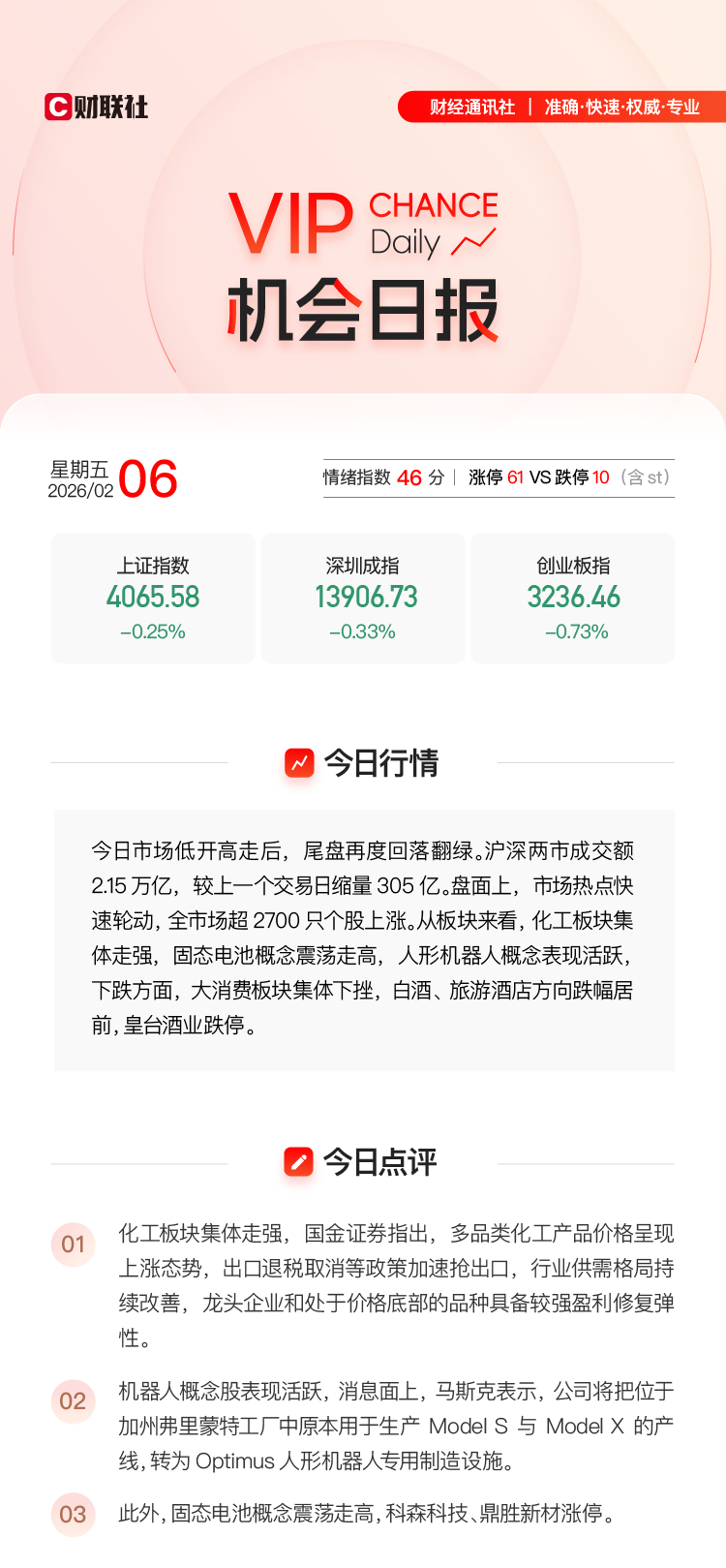
【VIP机会日报】化工板块集体走强 栏目精选染料行业研报并解读 相关公司收获涨停
Xin Lang Cai Jing· 2026-02-06 08:16
Group 1: Chemical Industry - The prices of various chemical products are on the rise, and the cancellation of export tax rebates is accelerating exports, leading to an improved supply-demand balance in the industry. Leading companies and products at price bottoms have strong profit recovery potential [6] - China, as the world's largest dye producer, is experiencing a concentration increase due to high pollution causing small and medium enterprises to exit the market. The price of disperse dyes has risen for the first time since October 2025, with a production gap of over 10% for intermediates like H acid, potentially benefiting leading companies [6] - Runhua Co. announced a price increase for disperse dyes starting February 5, 2026, due to significant increases in raw material prices. The company has strategically extended its industrial chain to secure raw material supply [6] Group 2: Robotics Industry - Tesla plans to convert its Fremont factory production line, originally for Model S and Model X, to manufacture Optimus humanoid robots. The company is entering the technical finalization and capacity construction phase for its robots, with China having a complete supply chain and large-scale manufacturing capabilities [10] - Wuzhou Xinchun, involved in the robotics sector, saw its stock price surge on February 6, reflecting positive market sentiment towards the robotics industry [11] Group 3: Photovoltaic Industry - Musk's team is reportedly assessing the Chinese photovoltaic supply chain. GCL-Poly announced a significant breakthrough in its perovskite tandem solar cell technology, achieving a certified photoelectric conversion efficiency of 33.31%, leading to a stock price increase [14] - Analysts are optimistic about the demand for space photovoltaics, which is expected to grow significantly, and they are particularly bullish on photovoltaic equipment suppliers like Aotewei, which saw a maximum stock price increase of 15.5% [16]


扣非净利再陷亏损!吉华集团控制权生变
IPO日报· 2026-02-05 11:09
Core Viewpoint - Zhejiang Jihua Group Co., Ltd. is undergoing a potential change in its controlling shareholder, which may impact its strategic direction and financial stability [1][8]. Group 1: Company Background - Jihua Group, founded in 1990 and headquartered in Hangzhou, Zhejiang, was listed on the Shanghai Stock Exchange in June 2017 [9]. - The company specializes in the research, production, and sales of dyes, dye intermediates, and other chemical products, recognized as the third-largest dye production base globally [10]. Group 2: Financial Performance - For the first three quarters of 2025, Jihua Group reported total revenue of 1.056 billion yuan, a year-on-year decline of 8.87%, with a net profit attributable to shareholders of only 14.44 million yuan, down 88.74% [11]. - The company has faced recurring losses in its net profit excluding non-recurring items, with figures of -244 million yuan in 2022 and -243 million yuan in 2023, before a slight recovery to 30 million yuan in 2024 [11]. - Accounts receivable surged by 101.95% in the first half of 2025, attributed to a decline in sales collection rates amid intense market competition [13]. Group 3: Industry Challenges - The dye industry is characterized by fierce competition and declining product prices, leading to poor performance in recent years [11]. - The global demand for textiles has weakened, and competition from Southeast Asia, along with high raw material prices, has contributed to a slow recovery [14]. - The chemical industry faces increasing environmental pressures under the "dual carbon" policy, necessitating a transformation for traditional high-pollution and high-energy-consuming dye enterprises [15]. Group 4: Potential Changes in Control - The planned transfer of shares by the controlling shareholder, Jinhui Electromechanical, is interpreted as a strategic adjustment by the actual controller, Shao Bojin, possibly in response to long-term capital needs [8]. - Market speculation suggests that potential new controlling parties could include industrial capital with chemical industry integration capabilities or local state-owned platforms aiming to facilitate the company's green transformation [16][18].

中邮证券:染料价格接连上涨 环保政策趋严下关注龙头优势
智通财经网· 2026-02-03 04:01
Group 1 - The dye industry is experiencing a significant price increase in disperse and reactive dyes, driven by soaring prices of key raw material reducing agents and stricter environmental policies [1][2] - The price of disperse dyes rose by 1,000 CNY/ton to 18,000 CNY/ton on January 22, 2026, marking the first price adjustment since mid-October 2025, with further increases to 19,000 CNY/ton by January 29 [1] - Reactive dyes also saw a price increase from 22,000 CNY/ton to 23,000 CNY/ton on January 29, with traders receiving price adjustment notices for various dye products [1] Group 2 - The primary driver for the price increase in disperse dyes is the sharp rise in the price of upstream key intermediate reducing agents, which increased from 25,000 CNY/ton last year to 38,000 CNY/ton, a rise of over 50% [2] - Reducing agents account for 20%-30% of dye production costs, and their price increase directly impacts downstream dye prices, creating unsustainable cost pressures for small enterprises lacking integrated supply chains [2] - Stricter environmental regulations in China, the world's largest dye producer, are expected to further compress the operational space for small enterprises, enhancing the competitive advantage of larger firms [2] Group 3 - Investment recommendations include focusing on dye manufacturers with key intermediate capabilities and large-scale production, such as Zhejiang Longsheng, which has an annual dye production capacity of 300,000 tons and a complete supply chain [3] - Runtao Co., Ltd. has a total dye production capacity of approximately 238,000 tons, maintaining a top market share in China [3] - Jihua Group possesses a disperse dye capacity of 75,000 tons and reactive dye capacity of 20,000 tons, along with key intermediate production capabilities [3]
抓住化工涨价行情系列之一-染料
2026-02-02 02:22
Summary of Key Points from the Conference Call Industry Overview - The conference call focuses on the dye industry, particularly the market dynamics surrounding reducing agents and their impact on dye prices. [1][12] Core Insights and Arguments - **Supply Tightness**: The primary reason for the increase in dye prices is the tight supply of reducing agents, with major producers including Ningxia Zhongsheng New, Longsheng, and Runtu. Actual production capacity is not fully utilized, with operating rates below 80%, leading to strong market expectations for price increases. [1][4] - **Price Increases**: Baotai Co. was the first to raise prices due to insufficient inventory, which intensified market supply tightness and pushed overall prices higher. Other companies like Longsheng and Runtu followed suit, indicating a coordinated effort among leading firms to further increase market prices. [5][1] - **Market Acceptance**: Downstream customers are currently accepting the price increases due to prior insufficient inventory, which forces them to buy at new prices. Most dye factories have low inventory levels and are primarily making immediate purchases, indicating that small price increases are still manageable for them. [13][1] - **Raw Material Costs**: The prices of raw materials such as H acid have also risen, with some major manufacturers halting production for maintenance, possibly related to market regulation. If the price of H acid remains high, transaction prices could reach 35,000 yuan per ton. [16][1] - **Future Price Trends**: If leading companies like Zhongsheng New and Longsheng can reach an agreement, there is potential for significant price increases in reducing agents and related products. [8][9] Additional Important Content - **Production Capacity**: The current production capacity of reducing agents is concentrated among three companies: Ningxia Zhongsheng New, Longsheng, and Runtu. Zhongsheng New has a designed capacity of about 20,000 tons, while Longsheng and Runtu have capacities of less than 10,000 tons each. [4][10] - **Challenges in Expansion**: Expanding production of reducing agents is challenging due to high energy consumption and low yield issues with existing processes. New capacity approvals are difficult to obtain, limiting market supply. [2][11] - **Competitive Dynamics**: There is a competitive relationship between Zhongsheng New and Longsheng, which has historically led to price declines in the dispersed dye market. If these companies can align, prices could increase significantly. [18][19] - **Market Pricing**: Current market prices for dispersed dyes are significantly higher than before, with specific prices for various dye types noted, indicating a shift in market dynamics. [14][1] - **Inventory Levels**: While major producers do not lack reducing agent inventory, Baotai Co. halted supply due to insufficient stock, which has contributed to the price increase. [7][1] This summary encapsulates the key points discussed in the conference call, highlighting the current state of the dye industry, the factors driving price changes, and the competitive landscape among major producers.
未知机构:国投证券化工关键中间体H酸供应紧张活性染料潜在涨价弹性或释放0130-20260202
未知机构· 2026-02-02 02:15
Summary of Key Points from Conference Call Industry Overview - The conference call discusses the chemical industry, specifically focusing on the supply and pricing dynamics of H acid and active dyes, which are critical intermediates in the dye manufacturing process [1][2]. Core Insights and Arguments - **H Acid Supply Tightness**: Major H acid production facilities, including Dabaidan Leqing Technology Co., Ltd. and Dabaidan Hexin Technology Co., Ltd., have undergone maintenance, leading to a supply shortage. The average market price of H acid increased by 0.63% (+250 CNY/ton) to 40,300 CNY/ton, while the average price of active dyes rose by 4.55% (+1,000 CNY/ton) to 23,000 CNY/ton [1]. - **Environmental and Safety Pressures**: The production of H acid faces significant environmental and safety challenges due to difficult wastewater treatment and hazardous reactions, resulting in the gradual elimination of many small and outdated production capacities [1]. - **Cost Transmission Mechanism**: Historical data indicates that during the 2019 Q1 incident, H acid prices reached 80,000 CNY/ton, causing active dye prices to spike to 33,000 CNY/ton. H acid consumption in active dye production is substantial, accounting for 30-50% of production costs, which facilitates effective cost transmission [2]. - **Production Capacity Concerns**: Current effective H acid production capacity is below 60,000 tons, with a supply gap exceeding 10%. The recent maintenance of two major H acid manufacturers may further reduce effective capacity by over 25% [2]. Potential Investment Opportunities - **Jinji Co., Ltd.**: With an active dye production capacity of 45,000 tons and H acid capacity of 5,000 tons, the company has a market capitalization of approximately 4.3 billion CNY. A 10,000 CNY/ton increase in active dye prices could contribute an estimated 400 million CNY to performance [3]. - **Runtu Co., Ltd.**: The company has an active dye production capacity of 100,000 tons and a disperse dye capacity of 118,000 tons, with a market capitalization of around 13.6 billion CNY. A 10,000 CNY/ton increase in active dye prices could yield an estimated 880 million CNY in performance [3]. - **Zhejiang Longsheng**: This company possesses 70,000 tons of active dye capacity and 140,000 tons of disperse dye capacity, along with H acid and related reductants. A 10,000 CNY/ton increase in active dye prices could lead to an estimated 620 million CNY in performance [3]. Additional Important Information - The ongoing environmental inspections and incidents, such as the fire at the Yadong Fine Chemical Plant in Inner Mongolia, may exacerbate supply pressures for H acid, further impacting the active dye market [2].