
HJT晶硅电池

Search documents
下一个光伏大风口: 不是地面,而是太空!
Ge Long Hui· 2026-02-13 07:15
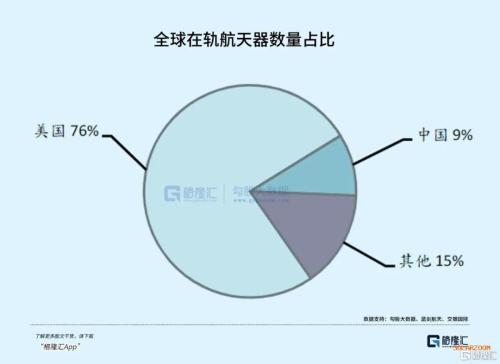
Core Insights - The global commercial space industry is experiencing rapid growth, driven by the explosive demand for AI computing power and the emergence of space photovoltaic technology as a cost-effective energy solution for space activities [1][5] Group 1: Commercial Space Industry - The commercial space sector is entering a high-growth phase, with the US and China as the leading players. By the end of 2024, the number of operational satellites is expected to exceed 11,605, with the US holding a 76% market share and China around 9% [1] - In the first half of 2025, China's satellite launches are projected to increase by 92% year-on-year, significantly surpassing the global average [3] - Domestic policies are increasingly supportive of the commercial space sector, with space energy technology identified as a core focus area in national action plans [3] Group 2: Space Photovoltaic Technology - Space photovoltaic technology offers significant advantages over terrestrial solar power, including better light conditions, higher stability, and no land use requirements. It can generate 5-12 times more energy than ground-based systems [6][8] - The main technologies for space photovoltaic cells include gallium arsenide, crystalline silicon, and perovskite, each with distinct advantages and challenges [8][9] - For low Earth orbit (LEO) satellites, ultra-thin HJT crystalline silicon cells are expected to be the preferred choice, while gallium arsenide cells dominate in medium to high orbits [9] Group 3: Market Growth Potential - The current market for space photovoltaic technology is limited due to high launch costs, but steady growth is anticipated. The global market for space crystalline silicon and perovskite photovoltaic cells is projected to reach approximately 30 billion RMB annually from 2026 to 2030, increasing to 250 billion RMB by 2035-2040 [11][14] - A significant factor for future market expansion is the reduction in launch costs. If costs drop from $3,600 to $200-300 per kilogram, the demand for space photovoltaic technology could surge, potentially reaching a market size of 500 billion RMB annually [13][14] - The commercialization of space data centers and the expansion of application scenarios for space photovoltaic technology are expected to accelerate, with potential developments including GW-level space photovoltaic power stations and lunar Lagrange point computing centers [14]

交银国际:太空光伏远期空间巨大 太空数据中心有望推动需求
Zhi Tong Cai Jing· 2026-02-03 06:21
Group 1 - The global commercial space industry is experiencing rapid growth, driven by policy incentives and the increasing demand for AI computing power, which is expected to boost the demand for space photovoltaic solutions [1][3] - Space photovoltaic systems are identified as the most cost-effective power solution for space activities, with significant advantages over terrestrial solar power, including enhanced sunlight exposure and higher energy stability [1][3] - The annual energy output of a solar cell in a morning and evening orbit is 5-12 times greater than that of ground-based systems, and it does not require expensive energy storage systems [1] Group 2 - Low Earth Orbit (LEO) satellites are currently favored for short-term applications, with HJT crystalline silicon batteries being the preferred choice, while perovskite batteries are expected to be the future option [2] - Space photovoltaic batteries are categorized into three types: gallium arsenide, crystalline silicon, and perovskite, with crystalline silicon currently being the most cost-effective despite its lower performance [2] Group 3 - The market potential for space crystalline silicon and perovskite photovoltaic batteries is estimated to be around 3 billion RMB annually from 2026 to 2030, but this is limited in the short term [3] - If launch costs significantly decrease, the annual launch capacity could dramatically increase, potentially reaching 100 GW, leading to a market expansion to 500 billion RMB [3] Group 4 - Companies that may benefit from the growth of space photovoltaic technology include those involved in HJT and perovskite battery equipment, such as Maiwei Co., Ltd. (300751.SZ), Jiejia Weichuang (300724.SZ), and Jing Shan Light Machinery (000821.SZ) [4] - Other beneficiaries include GCL-Poly Energy Holdings Limited (03800) for perovskite batteries and Dongfang Risheng (300118.SZ) for ultra-thin HJT batteries [4]