
太空光伏电池

Search documents
钧达股份20260308
2026-03-10 10:17
Summary of the Conference Call for JunDa Co., Ltd. Company Overview - **Company Name**: JunDa Co., Ltd. - **Core Business**: Primarily focused on photovoltaic (PV) cells, recognized as a leading player in the global market in terms of technology and operational scale [2][3]. Industry Insights - **Photovoltaic Market**: The company notes a return to a new supply-demand balance in the PV market after intense competition, with a significant reduction in market participants leading to improved profitability [2][3]. - **Price Trends**: The price of ground PV cells has increased from below 0.3 yuan per watt in 2022 to a range of 0.4 to 0.5 yuan per watt in 2026, creating conditions for profitability [3]. Strategic Developments - **Transition to Space Photovoltaics**: JunDa has begun investing in space photovoltaic technology, collaborating with the Chinese Academy of Sciences to develop new technologies, including the Space-grade CPI membrane and advanced solar cells [3][4]. - **Market Potential**: The company anticipates a significant increase in satellite launches in China, projecting a rise from a few hundred to thousands of launches annually, representing a substantial market opportunity [5][6]. Technological Advancements - **CPI Membrane Technology**: The company is developing a new type of CPI membrane designed for space applications, which is lightweight, flexible, and cost-effective compared to traditional materials [9][10]. - **Performance Metrics**: The CPI membrane aims for over 90% light transmittance and enhanced durability against space conditions, including atomic oxygen and UV radiation [11][12]. Competitive Positioning - **Acquisition of Satellite Company**: JunDa acquired Shanghai Xuntian Qianhe Satellite Company to enhance its capabilities in satellite manufacturing, leveraging the expertise of a team from a top aerospace institution [5][6]. - **Dual Focus**: The company is strategically positioned at two critical junctures: space photovoltaics and satellite manufacturing, which are expected to provide a competitive edge in the commercial aerospace sector [6][7]. Regulatory and Market Environment - **Government Support**: The recent national plan has identified aerospace as a pillar industry, with specific tasks and targets for satellite internet and computing satellites, indicating strong governmental backing for the sector [7][8]. - **Challenges in Material Supply**: The production of CPI membranes faces challenges due to strict regulations on fluorinated chemicals, which are essential for the manufacturing process [26][27]. Future Outlook - **Production Capacity**: JunDa plans to establish a standardized production line for CPI membranes by mid-2024, with initial capacity starting at several hundred megawatts [37][38]. - **Market Strategy**: The company aims to introduce a low-cost P-type heterojunction solar cell combined with the CPI membrane, targeting a conversion efficiency exceeding 30% in the near future [31][34]. Analyst Questions and Responses - **Production Process**: The production of CPI membranes involves complex material sourcing and proprietary formulations, which are critical to maintaining competitive advantages [26][27]. - **Client Engagement**: JunDa is actively engaging with clients for the deployment of its space photovoltaic solutions, with ongoing trials and experiments planned for the near future [42][43]. This summary encapsulates the key points discussed during the conference call, highlighting JunDa's strategic direction, technological advancements, and market positioning within the rapidly evolving aerospace and photovoltaic industries.
太空光伏研究专题:逐梦航天,太空光伏技术与市场前景展望
Guoxin Securities· 2026-03-01 08:32
Investment Rating - The report rates the space photovoltaic industry as "outperforming the market" [2]. Core Insights - The space photovoltaic technology involves deploying photovoltaic systems in space environments, primarily for powering spacecraft, with potential future applications. The interest in space photovoltaics has surged since 2025 due to the rapid development of commercial space and space computing, with a significant increase in low Earth orbit satellite constellations [3][6]. - The main technology currently used in space photovoltaics is gallium arsenide (GaAs) multi-junction solar cells, which are highly reliable and stable but face cost and resource limitations for large-scale applications. Future technology routes include heterojunction (HJT) silicon and perovskite solar cells, which show potential for lightweight applications [3][6]. - The estimated market value for GaAs solar cells in 2025 is over 8 billion yuan, with projections for the market to grow significantly over the next 20 years, reaching close to 100 billion yuan in the mature phase [3][79]. Summary by Sections Market Outlook - The space photovoltaic market is expected to see a significant increase in demand due to the rapid growth of commercial space and satellite deployments, with a projected market size growth from approximately 10 billion yuan to nearly 100 billion yuan in the mature phase [3][79]. - The report highlights the need for low-cost, large-scale solutions in various application scenarios, including satellite power, space station infrastructure, and deep space exploration [9]. Technology Analysis - The report identifies three main technology routes for space photovoltaics: GaAs multi-junction cells, HJT silicon cells, and perovskite cells. GaAs cells are currently dominant but expensive, while HJT and perovskite cells offer potential for cost reduction and lightweight applications [3][41]. - Perovskite cells are noted for their high efficiency and lightweight potential, making them suitable for future space applications [3][40]. Application Scenarios - The report categorizes space photovoltaic applications into five main areas: spacecraft power supply, large in-orbit infrastructure, deep space exploration, planetary surface power systems, and new space energy infrastructure [9]. - Each application scenario has specific power requirements and emphasizes the need for reliable, long-lasting, and cost-effective solutions [9].

商业航天、太空光伏系列深度(一):商业航天规模化在即,太空光伏打开成长空间
China Post Securities· 2026-02-24 01:45
Investment Rating - The industry investment rating is "Outperform the Market" [1] Core Insights - The demand for satellites is driving the expansion of the space photovoltaic market, with low Earth orbit satellite demand expected to rise rapidly due to satellite internet applications and strategic layouts [3] - The evolution of solar wings towards flexibility is necessary to meet the increasing power requirements of individual satellites [3] - Technological iterations present new opportunities, with advancements in GaAs, p-HJT, and perovskite tandem technologies [3] - Investment recommendations include focusing on companies such as Maiwei Co., Dongfang Risen, and Junda Co. [3] Summary by Sections 1. Commercial Aerospace: From Exploration to Commercialization - Commercial aerospace is defined as a market-driven industry that involves the manufacturing, launching, and operation of spacecraft, aiming to solve problems that are difficult or costly to address on Earth [8] - The U.S. and China are the primary players in commercial launches, with significant growth in satellite demand expected [10] 2. Strategic Layout and Space Computing Market Growth - The U.S. has rapidly deployed a large number of satellites, creating urgency for other countries to accelerate their satellite deployment [18] - Space computing is emerging as a new application scenario for satellites, driven by increasing global demand for computing power [21] 3. Satellite Demand Driving Space Photovoltaic Market Expansion - Space photovoltaics are essential for energy supply in spacecraft, with increasing satellite launch numbers and power requirements leading to a significant rise in demand [31] - The transition of solar wings from rigid to flexible designs is crucial for meeting the needs of future satellite missions [39] - The market for space photovoltaic cells is projected to grow significantly, with estimates of satellite launches and power requirements increasing over the next decade [55][58] 4. Key Companies - Maiwei Co. is recognized as a leader in HJT solar cell production, achieving a record conversion efficiency of 26.92% [65] - Dongfang Risen is noted for its HJT components, with a focus on reducing costs and improving efficiency [71] - Junda Co. is a leader in TOPCon technology and is strategically investing in perovskite applications while expanding into satellite manufacturing [78]


钧达股份20260209
2026-02-10 03:24
Summary of Conference Call Company and Industry Overview - **Company Involved**: XunTian QianHe Space Technology Co., Ltd. (寻天千禾) - **Parent Company**: JunDa Co., Ltd. (君达股份) has become the major shareholder with a 60% stake in XunTian QianHe, indicating a strategic partnership aimed at enhancing the commercial satellite sector in China [1][16]. Core Insights and Arguments XunTian QianHe's Position and Strategy - **Leadership in Commercial Space**: XunTian QianHe positions itself as a leader in China's commercial space sector, focusing on high-value commercial satellites. The team has experience in the development and launch of nearly 100 satellites [2][6]. - **Self-Developed Products**: Approximately 70% of the satellite platform products are self-developed, showcasing a strong vertical integration within the industry [2][7]. - **Policy Support**: The company benefits from recent government policies aimed at accelerating the development of commercial space, including the establishment of a dedicated Commercial Space Administration [3][4]. Market Dynamics - **Competitive Landscape**: The near-Earth orbit resources are highly competitive, with a "first come, first served" principle for frequency resources. China aims to catch up with the U.S., which has a significant lead in satellite launches [3][5]. - **Launch Goals**: XunTian QianHe aims to complete the launch of 1,300 satellites by 2029 and 15,000 satellites by 2030, indicating a robust growth trajectory in satellite deployment [5][14]. Technological Capabilities - **Satellite Types**: The company focuses on various satellite types, including communication, remote sensing, navigation, and computing satellites, with a strong emphasis on integrating advanced technologies [10][12]. - **Innovative Solutions**: XunTian QianHe is developing cutting-edge technologies, such as AI-enabled satellites for on-orbit target extraction and advanced meteorological payloads [12][13]. JunDa's Strategic Vision - **Investment in XunTian QianHe**: JunDa's investment is aimed at leveraging XunTian QianHe’s technological strengths and market position to become one of the top three commercial satellite companies in China [16][18]. - **Market Opportunities**: JunDa identifies significant market opportunities in remote sensing, communication, and computing satellites, particularly as launch costs decrease and demand for satellite services increases [19][21][22]. Additional Important Insights - **Collaboration and Partnerships**: JunDa plans to collaborate with various stakeholders, including government entities and major corporations, to enhance the operational capabilities and market reach of XunTian QianHe [24][25]. - **Global Market Expansion**: There is a strategic focus on expanding into overseas markets, particularly in regions like the Middle East and Southeast Asia, to establish a localized service system [25][26]. - **Technological Leadership**: JunDa emphasizes its technological leadership in space energy solutions, particularly in solar power technologies for satellites, which could become a standard solution in the industry [27][28]. Conclusion The conference highlighted the strategic partnership between JunDa and XunTian QianHe, focusing on leveraging technological capabilities and market opportunities in the rapidly evolving commercial satellite industry in China. The emphasis on self-developed products, government support, and ambitious launch goals positions both companies for significant growth in the coming years.
钧达股份:控股巡天千河,首家A+H商业卫星上市公司-20260209
Changjiang Securities· 2026-02-09 05:45
Investment Rating - The investment rating for the company is "Buy" and is maintained [7]. Core Insights - The controlling shareholder of Shanghai Fuyou Xinghe Aerospace Technology Co., Ltd. has changed to Jun Da Co., which holds 60% of the shares. Shanghai Xuntian Qianhe Space Technology Co., Ltd. is a wholly-owned subsidiary of Fuyou Xinghe [2][5]. - Xuntian Qianhe is a leading satellite manufacturer in China, located in the G60 Space Internet Industry Base in Songjiang District, Shanghai. The company focuses on high-quality commercial satellites through independent research and technological innovation [12]. - The company has a strong technical team with nearly a hundred commercial satellite development experiences and has developed six satellite platforms covering micro and small satellites from 10kg to 1000kg [12]. - Jun Da Co. has completed its H-share placement, raising a net amount of HKD 398 million, with 45% allocated for the research and production of space photovoltaic battery products, 45% for equity investment and cooperation in the commercial aerospace sector, and 10% for working capital [12]. - The company aims to solidify its position in the remote sensing satellite market, enhance data accuracy and timeliness, and expand into the communication satellite field [12]. Financial Data Summary - Current stock price is 97.83 CNY, with a total share capital of 31,127 million shares and a circulating A-share of 22,487 million shares [7]. - The projected total revenue for 2026 is 10,805 million CNY, with a net profit forecast of 488 million CNY [16]. - The company expects to achieve a net profit of 1,034 million CNY by 2027, with an EPS of 3.32 CNY [16].
喜娜AI速递:昨夜今晨财经热点要闻|2026年2月5日
Sou Hu Cai Jing· 2026-02-04 22:22
Group 1 - Duan Yongping sold 1.5 million shares of China Shenhua H-shares and bought 77,194 shares of Kweichow Moutai, with a total investment of approximately 1 billion yuan. The stock price of Kweichow Moutai increased by over 12% in the last five trading days, leading to a floating profit of over 10 million yuan for Duan [2] - On February 4, the A-share market showed a strong upward trend, with resource-related ETFs such as coal, energy, and gold leading the gains. The coal ETF rose over 9% due to increased energy demand caused by a cold wave [2] - The U.S. and Iran are set to negotiate a potential nuclear agreement, which has led to increased volatility in the commodity markets, with silver prices rising over 4% and Brent crude oil increasing by over 0.5% [2] Group 2 - Nintendo's stock price fell nearly 11%, resulting in a market value loss of approximately 64 billion yuan. The disappointing Q4 2025 financial report was impacted by U.S. tariffs on the Switch 2 gaming console and rising memory chip prices [3] - Ruixin Technology announced a major asset restructuring plan involving the acquisition of Wuhu Deheng Automotive Equipment Co., which is expected to constitute a significant asset restructuring [3] - Changguang Huaxin denied rumors of a 4.5 billion yuan strategic investment from Huawei, labeling the information as false and misleading [3] Group 3 - The space photovoltaic concept stocks surged in the A-share market, following Elon Musk's announcement of acquiring xAI and plans for collaboration between SpaceX and Tesla to expand solar energy production [5] - Various regions are actively laying out plans for the commercial aerospace industry, with 2026 being viewed as a significant year for this sector. The focus is on "full-chain" and "industrial clusters" to address existing challenges in China's commercial aerospace industry [5]
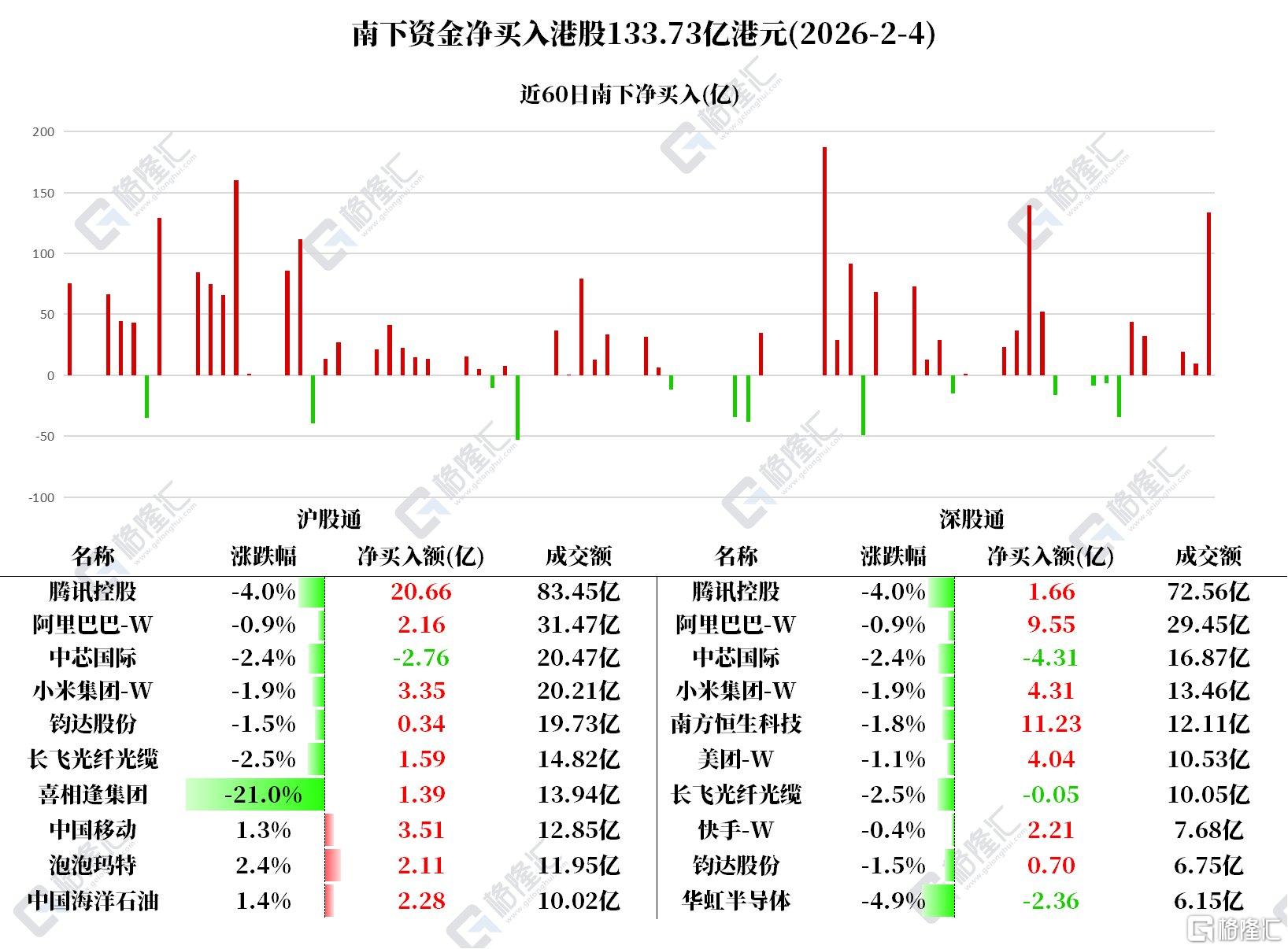
资金动向 | 北水爆买港股超133亿港元,加仓腾讯控股、阿里巴巴
Ge Long Hui A P P· 2026-02-04 11:18
Group 1: Investment Trends - Net purchases included Tencent Holdings at 2.231 billion, Alibaba-W at 1.171 billion, and Xiaomi Group-W at 0.765 billion [1] - Southbound funds have continuously net bought Xiaomi for 5 days, totaling 2.92981 billion HKD, and Tencent for 3 days, totaling 5.49 billion HKD [4] - Net sales included SMIC at 0.706 billion and Hua Hong Semiconductor at 0.235 billion [1] Group 2: Company Developments - Tencent Holdings announced the optimization of its red envelope sharing mechanism, now referred to as "password red envelope" [5] - Alibaba has open-sourced a new efficient hybrid expert model, Qwen3-Coder-Next, with a total of 80 billion parameters [5] - China Mobile expects net profit to be under pressure due to an increase in value-added tax rates, focusing on operational efficiency and transitioning to AI and cloud services [5] Group 3: Corporate Expansion - Pop Mart announced London as its European headquarters and plans to open 7 new stores in the UK, creating over 150 jobs [6] - Junda Co. has initiated a placement to fund research and production of space photovoltaic battery products and investments in commercial aerospace [6]


这个板块彻底火了!下一只有望大涨的公司浮现
Xin Lang Cai Jing· 2026-02-04 10:29
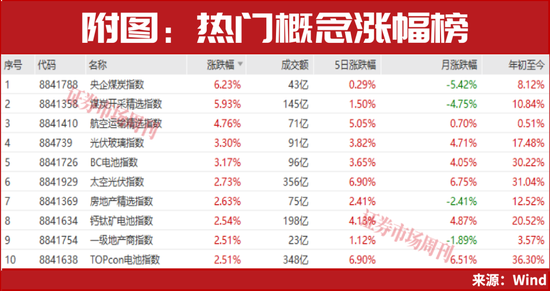
Core Viewpoint - The A-share market is experiencing fluctuations, with coal and space photovoltaic concepts showing significant activity. However, the rebound in coal stocks is primarily a result of overselling, while the space photovoltaic sector may have more sustainable growth due to ongoing positive developments and performance reversals [1][2][10]. Group 1: Coal Sector Analysis - The coal sector saw a notable increase, with indices such as the central enterprise coal index rising by 6.23% and the coal mining selection index by 5.93% [3][11]. - Despite the surge, 19 out of 27 companies in the coal industry have projected a decline in performance for 2025, indicating a lack of fundamental support for the rebound [2][11]. - The operational strategy for coal stocks should be closely monitored, particularly in relation to the performance forecasts for the first quarter of 2026 [2][11]. Group 2: Space Photovoltaic Sector Analysis - The space photovoltaic sector is showing stronger fundamentals, with nearly 50% of companies in the photovoltaic equipment industry expected to achieve performance growth by 2025, a significant increase compared to previous years [2][12]. - Notable stocks in the space photovoltaic sector include Zhonglai Co. and Zerun New Energy, which have reached "20CM" and "10CM" daily limits, respectively, indicating strong market interest [2][12]. - The space photovoltaic index has also shown a year-to-date increase of 31.04%, reflecting robust investor sentiment [3][12]. Group 3: Technological Developments in Space Photovoltaics - Space photovoltaic cells are categorized into three main types: gallium arsenide, crystalline silicon, and perovskite cells, each with distinct advantages and challenges [5][15]. - The efficiency of gallium arsenide cells is high but comes with a high cost, while perovskite cells offer flexibility and low theoretical costs but face stability issues [5][15]. - Crystalline silicon cells, although less efficient, are currently the most cost-effective option and are gradually replacing gallium arsenide in low-cost satellite applications [5][15]. Group 4: Company Developments and Performance Forecasts - Companies like Canadian Solar (阿特斯) are actively developing technologies related to space photovoltaics, including HJT technology and perovskite/HJT tandem cells, achieving significant advancements in efficiency [16][17]. - The company has reported a research and development efficiency exceeding 27.6% and a mass production efficiency of over 27.30%, positioning it at the forefront of the industry [16][17]. - Five companies are projected to see their performance double by 2025, with the fastest growth expected from Dingjide (鼎际得), forecasting a net profit increase of 171.15% to 206.73% [8][20].
超4800股飘红 A股四大指数涨逾1%
Shang Hai Zheng Quan Bao· 2026-02-03 18:19
Market Performance - The A-share market experienced a rebound on February 3, with the Shanghai Composite Index closing at 4067.74 points, up 1.29%, and the Shenzhen Component Index at 14127.11 points, up 2.19% [2] - Over 4800 stocks rose, with more than a hundred stocks hitting the daily limit or increasing by over 10% [2] - The total trading volume in the Shanghai and Shenzhen markets reached 25,656 billion yuan [2] Space Photovoltaics Sector - The photovoltaic industry chain saw a collective surge, particularly in the space photovoltaic sector, with stocks like Aotwei and Dike Co. hitting the daily limit at a 20% increase [3] - SpaceX announced the acquisition of xAI, which is expected to enhance its capabilities in the space photovoltaic domain [3] - Junda Co. announced a share placement to fund research and production of space photovoltaic batteries and plans to invest 30 million yuan for a 16.67% stake in Shanghai Xingyi Xinneng [3] Chemical Sector Activity - The chemical sector also showed strong performance, with companies like Wanfeng Co. achieving a four-day consecutive limit increase [4] - Wanfeng Co.'s stock price has risen nearly 75% this year, driven by rising prices of disperse dye intermediates [4] - Analysts suggest that the chemical industry is shifting towards profitability-focused strategies, with opportunities arising from high-end export replacements due to declines in Europe and Japan [4] Market Outlook - Short-term market fluctuations are expected due to rapid previous gains and the upcoming Spring Festival, but medium-term support factors remain unchanged, indicating potential for a slow upward trend [5] - Analysts predict that February may see a rotation of funds towards technology and cyclical sectors, with a focus on previously underperforming stocks [5] - The market is anticipated to face adjustments in February, particularly in high-performing sectors like non-ferrous metals, while technology and cyclical sectors may present significant investment opportunities [5]

交银国际:太空光伏远期空间巨大 太空数据中心有望推动需求
Zhi Tong Cai Jing· 2026-02-03 06:21
Group 1 - The global commercial space industry is experiencing rapid growth, driven by policy incentives and the increasing demand for AI computing power, which is expected to boost the demand for space photovoltaic solutions [1][3] - Space photovoltaic systems are identified as the most cost-effective power solution for space activities, with significant advantages over terrestrial solar power, including enhanced sunlight exposure and higher energy stability [1][3] - The annual energy output of a solar cell in a morning and evening orbit is 5-12 times greater than that of ground-based systems, and it does not require expensive energy storage systems [1] Group 2 - Low Earth Orbit (LEO) satellites are currently favored for short-term applications, with HJT crystalline silicon batteries being the preferred choice, while perovskite batteries are expected to be the future option [2] - Space photovoltaic batteries are categorized into three types: gallium arsenide, crystalline silicon, and perovskite, with crystalline silicon currently being the most cost-effective despite its lower performance [2] Group 3 - The market potential for space crystalline silicon and perovskite photovoltaic batteries is estimated to be around 3 billion RMB annually from 2026 to 2030, but this is limited in the short term [3] - If launch costs significantly decrease, the annual launch capacity could dramatically increase, potentially reaching 100 GW, leading to a market expansion to 500 billion RMB [3] Group 4 - Companies that may benefit from the growth of space photovoltaic technology include those involved in HJT and perovskite battery equipment, such as Maiwei Co., Ltd. (300751.SZ), Jiejia Weichuang (300724.SZ), and Jing Shan Light Machinery (000821.SZ) [4] - Other beneficiaries include GCL-Poly Energy Holdings Limited (03800) for perovskite batteries and Dongfang Risheng (300118.SZ) for ultra-thin HJT batteries [4]