HMS for Car

Search documents
广汽集团联手华为终端 全面深化鸿蒙生态与AI技术合作
Zheng Quan Shi Bao Wang· 2026-01-05 14:22
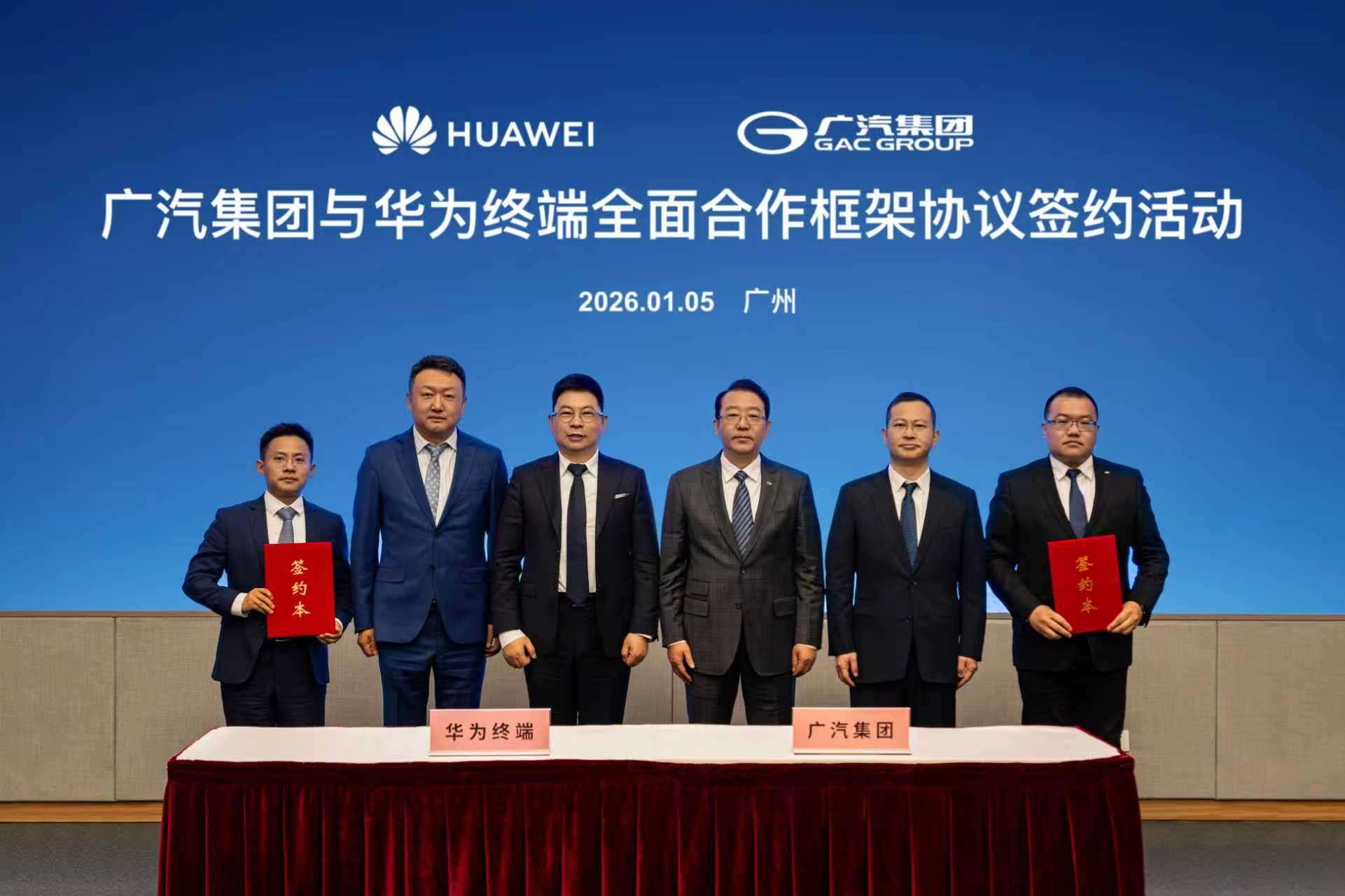
Core Viewpoint - Huawei and GAC Group have signed a comprehensive cooperation framework agreement to deepen collaboration in the HarmonyOS ecosystem, AI, and HMS for Car, aiming to enhance the smart and international development of the automotive industry [1][5]. Group 1: Cooperation Framework - The agreement focuses on joint innovation in cutting-edge technologies such as AI and the HarmonyOS ecosystem, leveraging both companies' strengths in electric vehicle manufacturing, operating systems, smart cockpits, and global services [3]. - GAC Group will work with Huawei to promote the deep integration of the HarmonyOS ecosystem in enterprise operations and user services, contributing to business growth and productivity enhancement [3][4]. Group 2: Technological Collaboration - GAC Group plans to expand its technical cooperation with Huawei, particularly in AI and existing collaborations like HMS for Car and Harmony cockpit, to enhance their technological boundaries [3][4]. - The partnership aims to develop unique applications and services tailored to GAC's vehicle brands and user needs, enriching the smart travel experience under the HarmonyOS ecosystem [4]. Group 3: Strategic Partnership Development - The renewed signing signifies a deeper and closer relationship between Huawei and GAC Group, with a focus on the global expansion of the HarmonyOS and smart automotive technologies [5]. - Since their first agreement in 2017, the strategic partnership has evolved to cover various areas, including hardware, software, product development, cloud services, and the creation of high-end smart electric vehicle brands, with a strong emphasis on smart technology collaboration [4].


广汽华为联手!
中国基金报· 2026-01-05 14:04
Core Viewpoint - GAC Group has signed a comprehensive cooperation framework agreement with Huawei Terminal to deepen collaboration in the HarmonyOS ecosystem and AI technology, marking a significant step in their ongoing partnership since 2017 [2][5]. Group 1: Cooperation Details - The cooperation will focus on co-building the HarmonyOS ecosystem, enhancing AI technology, and integrating Huawei's HMS for Car services, which include navigation, voice interaction, application ecology, and vehicle networking [8][9]. - GAC Group plans to develop specialized applications and services in collaboration with Huawei, tailored to the positioning of its various vehicle brands and user needs, thereby enriching the intelligent travel experience under the HarmonyOS ecosystem [9]. Group 2: Strategic Goals - The partnership aims to accelerate the smart and international development of China's automotive industry by leveraging both companies' strengths in electric vehicle manufacturing, operating systems, smart cockpits, and global services [11]. - GAC Group's overseas sales of its self-owned brands increased by 39% year-on-year in the first 11 months of 2025, highlighting its focus on internationalization [11]. - The "Smart Travel 2027" action plan aims to solidify GAC's AI model platform, electronic and electrical architecture, and big data platform over three years, enhancing user experience through optimized smart driving assistance and smart cockpit technologies [11].
广汽华为联手!
Zhong Guo Ji Jin Bao· 2026-01-05 13:27
Core Viewpoint - GAC Group has signed a comprehensive cooperation framework agreement with Huawei Terminal to deepen collaboration on the HarmonyOS ecosystem and AI technology, marking a significant step in their ongoing partnership since 2017 [2][4][7]. Group 1: Partnership Development - The partnership will focus on co-building the HarmonyOS ecosystem, enhancing AI technology, and integrating Huawei's HMS for Car services into GAC's offerings [7][8]. - GAC Group's recent initiatives include the launch of the high-end smart electric vehicle brand "Qijing" in collaboration with Huawei, showcasing their commitment to innovation in the automotive sector [2][4]. Group 2: Technological Integration - GAC Group plans to leverage its industry advantages and market demands to innovate and implement technology in collaboration with Huawei, particularly in AI and smart cockpit development [7][8]. - The integration of Huawei's intelligent driving and HarmonyOS smart cockpit technologies into GAC's models, such as the A800 and M8, highlights the focus on enhancing user experience and product differentiation [8]. Group 3: Strategic Goals - The collaboration aims to accelerate the smart and international development of China's automotive industry, with GAC Group's overseas sales of its self-owned brands increasing by 39% year-on-year in the first eleven months of 2025 [8]. - GAC Group's "Smart Travel 2027" action plan aims to solidify its AI model platform and enhance smart driving and cockpit technologies over the next three years [8].

余承东造访广汽集团,双方又有哪些大动作?
Nan Fang Du Shi Bao· 2026-01-05 13:15
Core Viewpoint - The collaboration between GAC Group and Huawei aims to enhance the competitiveness of smart mobility solutions globally, focusing on the integration of cutting-edge technologies like AI and the HarmonyOS ecosystem [1][3]. Group 1: Partnership Development - GAC Group signed a comprehensive cooperation framework agreement with Huawei on January 5, 2026, marking a significant step in their ongoing partnership [1]. - The partnership will leverage both companies' strengths in electric vehicle manufacturing, operating systems, smart cockpits, and global services to accelerate the smart and international development of China's automotive industry [1][3]. Group 2: Technological Collaboration - GAC Group will work with Huawei to deepen the implementation of the HarmonyOS ecosystem in enterprise operations and user services, aiming to boost business growth and productivity [3]. - The collaboration will expand the technical cooperation boundaries, particularly in AI and other advanced fields, enhancing product innovation and technology application [3][4]. Group 3: Historical Context - GAC Group has been a pioneer in collaborating with Huawei since signing a strategic cooperation agreement in June 2017, focusing on smart connected electric vehicles [4]. - Over the past year, GAC and Huawei have engaged in multiple significant collaborations, including the establishment of GH Project Company with a registered capital of 1.5 billion yuan to accelerate joint initiatives [5]. Group 4: Brand Development - The "Qijing" brand was officially announced in September 2025, representing a high-end smart electric vehicle brand co-created by GAC Group and Huawei, integrating advanced smart technologies [6]. - GAC Group and Huawei's collaboration has led to the rapid deployment of the GAC Huawei Cloud Car Machine technology, which was implemented in the Aion UT model within 20 days of its global debut [6].
华为HMS for Car智行论坛落幕,赋能车企智能化转型与出海新征程
Xin Lang Cai Jing· 2025-12-09 05:19
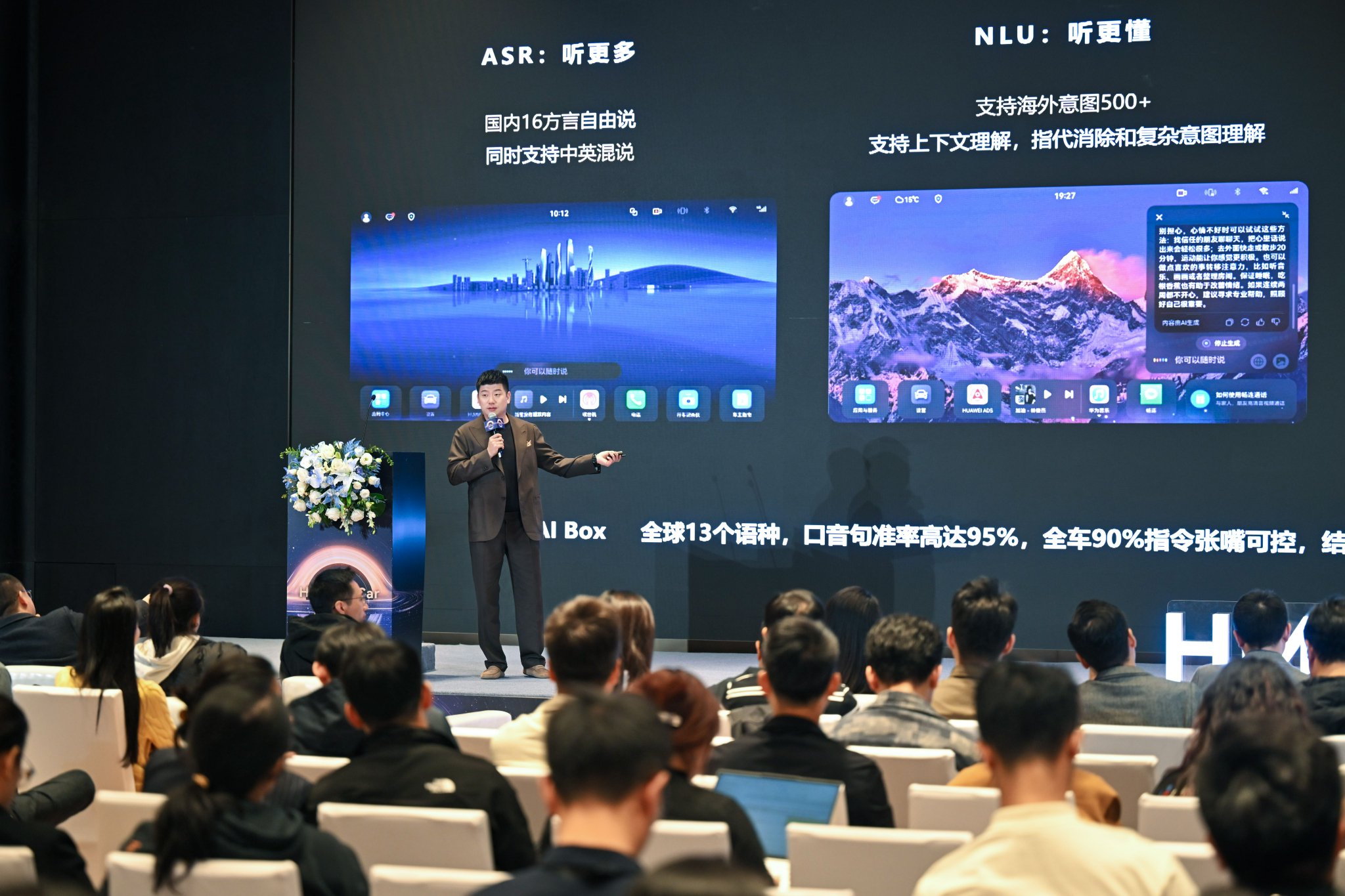
Core Insights - The automotive industry is rapidly transitioning towards digitalization, intelligence, connectivity, and electrification, with a focus on building a globally competitive smart in-car service system [1] - Huawei's HMS for Car aims to enhance the localized experience of smart cockpits to address the diverse user habits and ecosystem applications across different regional markets [2] Group 1: HMS for Car Overview - Huawei has developed the HMS for Car integrated smart in-car solution, which includes four core capabilities: maps, voice, ecosystem, and connectivity services, to help automotive companies establish a differentiated competitive advantage globally [2] - The focus has shifted from merely addressing the "existence" of services to integrating into local ecosystems and enhancing product localization [2][4] Group 2: Core Capabilities - The AI Box upgrade allows for proactive understanding and natural communication, achieving a 90% accuracy rate in recognizing local accents and supporting 16 Chinese dialects and 13 global languages [4] - The Service Box serves as a bridge for localizing in-car ecosystems, adapting top-tier applications based on user habits in different countries [4][5] - The Net Box enhances network stability by leveraging 11 years of technology accumulation and integrating resources from over 150 operators across 100+ countries [5] - The Map Box focuses on real-time updates and local map data accuracy, supported by research centers in Munich and the Netherlands, and integrates over 280 million POI data for precise navigation [5] Group 3: Integration and Collaboration - HMS for Car is evolving into a "personal travel assistant" by integrating multiple business functions and enabling seamless connections between navigation, vehicle control, and services [7] - The system provides compliance and security assurances, having supported over 70 vehicle models globally [8] Group 4: Industry Collaboration and Innovations - The collaboration with automaker Seres has led to the development of a smart automotive ecosystem, enhancing user experience through AI algorithms and multi-scenario intelligent functions [9] - Long-term cooperation with Great Wall Motors has resulted in significant improvements in navigation accuracy and stability, with new capabilities being introduced in upcoming products [11] - Partnerships with content providers like Tencent Music have enabled the creation of an AI music recommendation system that enhances the in-car entertainment experience [13] Group 5: Enhancing User Experience - The collaboration with Shenzhen Shunyi Technology has led to the development of convenient parking services, allowing users to reserve parking spots and pay fees through voice commands [15] - TomTom's integration of dynamic mapping capabilities supports real-time navigation and traffic updates, enhancing the overall driving experience [17] Group 6: Future Outlook - HMS for Car is set to continue its evolution from "going out" to "going in," focusing on systematic capability development and co-creating new smart travel experiences with partners [18]
华为HMSfor Car智行论坛落幕,赋能车企智能化转型与出海新征程
Xin Lang Cai Jing· 2025-12-08 12:25
Core Insights - The Huawei HMS for Car forum held on November 28 in Shenzhen focused on the automotive industry's transition towards digitalization, intelligence, connectivity, and electrification, emphasizing the need for a competitive global smart in-car service system [1][10] Group 1: HMS for Car Overview - Huawei's HMS for Car integrates four core capabilities: maps, voice, ecosystem, and connectivity, aiming to help automotive companies establish differentiated competitive advantages globally [2][11] - The platform has evolved from addressing basic needs to integrating into local ecosystems, enhancing product localization experiences for automotive companies [2][12] Group 2: Core Capabilities - In smart voice technology, the AIBox has been upgraded to understand context and engage in natural conversations, achieving a 90% accuracy rate in local accents and supporting 16 Chinese dialects and 13 global languages [3][12] - The ServiceBox acts as a bridge for localizing automotive ecosystems, adapting top-tier in-car applications to different countries and supporting various interaction methods [3][13] - The NetBox enhances network stability for in-car services, covering over 100 countries and integrating resources from 150 operators [3][13] - The MapBox focuses on providing accurate local map data and real-time updates, collaborating with overseas map providers to offer over 280 million points of interest [4][13] Group 3: Collaborative Practices - The partnership with automaker Seres emphasizes a new paradigm in smart mobility, integrating AI capabilities to create a comprehensive user experience across six key areas: smart travel, smart living, smart entertainment, safety, child companionship, and smart office [5][15] - Long-term collaboration with Great Wall Motors has led to significant advancements in navigation accuracy and stability, with new features set to debut in December [6][16] Group 4: Ecosystem Partnerships - Collaborations with content partners like Tencent Music aim to enhance in-car entertainment experiences through AI-driven music recommendations based on user context [7][18] - The integration of smart parking solutions simplifies the parking process, allowing users to reserve spaces and pay fees via voice commands [9][18] - TomTom's dynamic mapping capabilities support real-time navigation and traffic management, enhancing the overall driving experience [9][19] Group 5: Future Directions - The forum highlighted the evolution of HMS for Car from a basic service provider to a comprehensive travel assistant, with plans for continuous upgrades and deeper integration with partners to create innovative travel experiences [10][19]
华为HMS for Car智行论坛举办,携手全球伙伴探索生态共赢之路
Xin Lang Cai Jing· 2025-12-05 15:14
Core Insights - The automotive industry is rapidly transitioning towards digitalization, intelligence, connectivity, and electrification, with a focus on building a globally competitive intelligent in-car service system [1] - Huawei's HMS for Car aims to enhance the localization experience of smart cockpits to meet diverse regional market needs, moving from merely supporting car companies to integrating into local ecosystems [2] Group 1: HMS for Car Capabilities - HMS for Car integrates four core capabilities: maps, voice, ecosystem, and connectivity services, providing a comprehensive intelligent in-car solution that has already supported multiple car manufacturers [1] - The AI Box upgrade allows for proactive understanding and natural communication, achieving a 90% accuracy rate in recognizing local accents and supporting 16 Chinese dialects and 13 global languages [4] - Service Box acts as a bridge for local ecosystem adaptation, enhancing user familiarity with local applications and supporting diverse interaction methods [4] - Net Box enhances network stability for in-car services, covering over 100 countries and integrating resources from 150 operators [4] Group 2: Navigation and Mapping Enhancements - Map Box focuses on creating a differentiated product experience with real-time updates, supported by local research institutes in Munich and the Netherlands [5] - The collaboration with overseas map providers has resulted in over 280 million Points of Interest (POI) data, improving navigation accuracy and efficiency [5] Group 3: Integration and User Experience - HMS for Car is evolving into a "personal travel assistant," integrating various services such as navigation, vehicle control, and entertainment into a seamless user experience [7] - The system can understand the entire travel cycle, automatically planning routes and recommending services along the way [7] - Over 70 vehicle models globally have successfully integrated HMS for Car solutions [7] Group 4: Collaborative Innovations - The partnership with automaker Seres has led to the development of a smart automotive ecosystem, enhancing user experience through AI algorithms and multi-scenario intelligent functions [8] - Long-term collaboration with Great Wall Motors has resulted in significant improvements in navigation precision and stability, with new capabilities set to debut in December [10] - Collaborations with content partners like Tencent Music have led to the creation of an AI music recommendation system tailored to user travel scenarios [13] Group 5: Parking and Navigation Solutions - The partnership with Shenzhen Shunyi Tong has resulted in a convenient parking experience through features like space reservation and voice-activated payment [15] - TomTom's integration of radar perception and data fusion has enhanced the accuracy and reliability of global map data for the "live map" capabilities [17] Group 6: Future Outlook - The forum highlighted the evolution of HMS for Car from "going out" to "going in," emphasizing ongoing upgrades and partnerships to create new intelligent travel experiences [19]
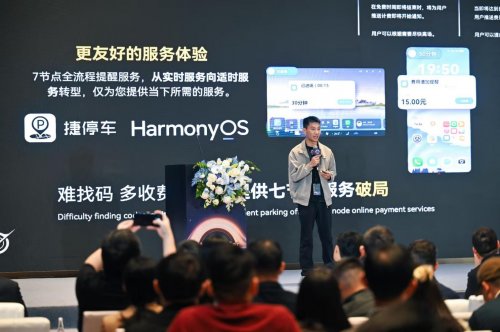
「服务找人」新范式,捷停车×鸿蒙重塑出行价值链
Cai Fu Zai Xian· 2025-12-04 08:33
Core Insights - The article discusses the latest innovations and practical applications of Huawei's HMS for Car, particularly in the context of smart parking services, highlighting the collaboration with Jie Parking to transition from "people finding services" to "services finding people" in the parking industry [1][9] Group 1: Current Challenges in Parking Services - Traditional parking services face numerous pain points, including information mismatches, resource rigidity, and fragmented user experiences, leading to prolonged payment processes due to issues like finding payment codes and predicting parking space availability [3] - Jie Parking aims to transform parking from a constant service in the user status bar to a "node service" in the travel chain, proactively providing necessary services at the right time [3] Group 2: Data-Driven Innovations - Jie Parking utilizes data from 60,000 smart parking lots and 140 million vehicle and scenario data points to predict parking space availability for the next 12 hours and offers over 6,000 parking lots with "space selection" time-based package services [4] - The collaboration with HarmonyOS enables a "service finding people" engine, allowing users to search for parking spaces, predict future availability, and make reservations directly from their vehicle [4] Group 3: Payment and User Experience Enhancements - Jie Parking has integrated deeply with Huawei Pay to upgrade to a seamless payment service, aiming to reduce the payment process from at least 7 seconds to 1 second, allowing users to complete payments with a voice command [6] - The company has introduced a "zero disturbance" payment interface, removing ads and unnecessary steps, and implemented a three-tier privacy protection mechanism to enhance user security and privacy [6] Group 4: Future Directions - Jie Parking's partnership with Huawei began four years ago, focusing on integrating traditional parking into the smart travel ecosystem, with plans to extend services to wearable devices like smartwatches and AR glasses [8] - The parking industry is evolving from a single payment service to an "intelligent travel node," with Jie Parking and Huawei HMS for Car driving the industry towards a more efficient, intelligent, and user-friendly future [9]