HarmonyOS(鸿蒙系统)

Search documents
鸿蒙实战开发系列课程
Sou Hu Cai Jing· 2026-01-03 11:37
Core Insights - HarmonyOS, developed by Huawei, represents a significant shift in operating systems, emphasizing a distributed architecture that enables seamless interaction across devices [2][3] - The "Harmony Practical Development Series Courses" aim to provide developers with a systematic understanding of future interaction models and the skills necessary for creating innovative applications [2][8] Group 1: Understanding HarmonyOS - The first step in HarmonyOS development is a paradigm shift from single-device optimization to a "super terminal" mindset, focusing on distributed soft bus and atomic services [3] - Developers must grasp the philosophy behind "one-time development, multi-end deployment" to fully leverage the capabilities of HarmonyOS [3] Group 2: Foundational Skills - ArkTS, the primary programming language for HarmonyOS, is based on TypeScript and incorporates ArkUI's declarative UI paradigm, forming the foundation for application development [4] - Mastery of ArkTS language features, such as static typing and asynchronous concurrency, is crucial for building robust and maintainable applications [6] Group 3: Core Competencies - Practical exercises in the courses focus on distributed capabilities and hardware collaboration, allowing developers to experience the unique features of HarmonyOS [5][6] - Understanding atomic services enables developers to create lightweight, independent service units that enhance user experience through high-density information and convenient interactions [6] Group 4: Advanced Optimization - After establishing basic functionalities, developers are encouraged to focus on performance, user experience, and ecosystem integration [7] Group 5: Future Outlook - The Harmony ecosystem is rapidly evolving, and the courses aim to equip developers with the ability to adapt to new capabilities and hardware forms [8] - Developers will transition from being platform-specific to becoming experience designers and architects, capable of creating exceptional digital services that connect users and devices [8][9] Group 6: Cross-Device Collaboration - Developers will learn to manage distributed tasks and ensure seamless transitions between devices, enhancing user experience in tasks like video playback and document editing [10] - Understanding how to leverage hardware capabilities across devices will enable the creation of complex functionalities that a single device cannot achieve [10] Group 7: User Experience Design - Mastery of universal card development will enhance user engagement by providing rich information and quick actions at the application entry points [10] - Developers must also focus on performance optimization in distributed environments to ensure smooth collaborative experiences and device longevity [10]


人生第一堂HarmonyOS公开课开讲,十大鸿蒙生态伙伴体验区惊喜连连
Sou Hu Cai Jing· 2025-08-17 18:39
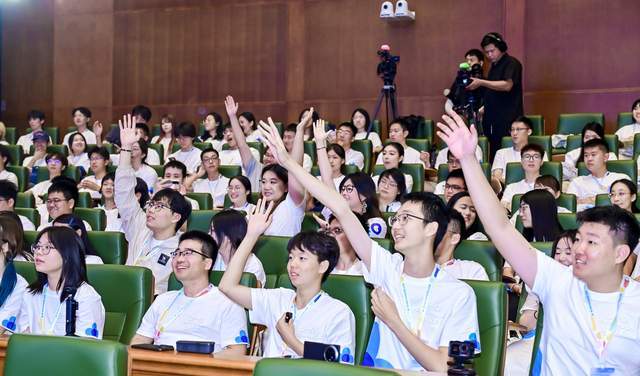
Core Insights - The event showcased Huawei's HarmonyOS ecosystem, emphasizing its innovative features and user-friendly interactions for young students [1][3][9] Group 1: Event Overview - 200 students participated in an immersive experience at Huawei's research base, exploring the HarmonyOS ecosystem [1] - The event included interactive exhibits from ten ecosystem partners, enhancing the overall experience with unique functionalities [3] Group 2: Innovative Features - Students engaged with features like "tap to share" and seamless content transfer across devices, highlighting the convenience and intelligence of the HarmonyOS [3] - The Bilibili HarmonyOS version demonstrated innovative split-screen design, allowing users to watch videos while controlling playback simultaneously [3] Group 3: Practical Applications - The Didi HarmonyOS version featured real-time vehicle information on the lock screen and simplified trip sharing [5] - The Qunar travel app showcased voice command capabilities for booking train tickets, streamlining the user experience [5] Group 4: Educational Aspects - The event included talks from industry leaders and Huawei experts, providing valuable insights into technology development and career paths [7] - Over 400 universities are involved in HarmonyOS talent cultivation, with more than 6,100 companies participating in innovation training camps [7] Group 5: Support Initiatives - Huawei launched the "Star Plan," investing 100 million yuan to support campus developers, offering incentives for application development [8] - The plan provides financial rewards for successful app submissions, encouraging student participation in the HarmonyOS ecosystem [8] Group 6: Youth Engagement - The enthusiasm of the younger generation for the HarmonyOS ecosystem is translating into active participation in both usage and development [8] - The event served as a practical classroom for showcasing China's technological self-innovation, fostering a connection between youth and technology [9]

当Z世代遇见鸿蒙,人生第一堂HarmonyOS公开课现场直击
Sou Hu Cai Jing· 2025-08-17 10:42
Core Insights - The event "Walk into Huawei: The First HarmonyOS Public Class" gathered 200 young students eager to explore technology at Huawei's research base, showcasing the company's commitment to fostering innovation among youth [1][3]. Group 1: Event Overview - The event featured a unique transportation experience within the Huawei campus, enhancing the students' excitement and engagement with the innovative environment [3]. - Students experienced the HarmonyOS ecosystem firsthand, interacting with various Huawei products and applications, which highlighted the advanced technology and user-friendly features of HarmonyOS 5 [6][8]. Group 2: Ecosystem Engagement - The HarmonyOS exhibition area was particularly popular, allowing students to engage with innovative applications and features such as "Touch and Share" for photo transfer and multi-device streaming [6][8]. - Various ecosystem partners, including major brands like Air China and Bilibili, provided interactive experiences that captivated the students, demonstrating the collaborative nature of the HarmonyOS ecosystem [8]. Group 3: Future Aspirations - The event inspired students to consider participating in the HarmonyOS Innovation Competition, reflecting the positive impact of the experience on their aspirations in technology and development [8]. - The interaction with the HarmonyOS ecosystem instilled a sense of potential in the students, suggesting that they may become future developers and contributors to the ecosystem [8].
QQ音乐鸿蒙2.0版本发布,首创移动端实时声伴分离技术
Cai Fu Zai Xian· 2025-06-23 09:28
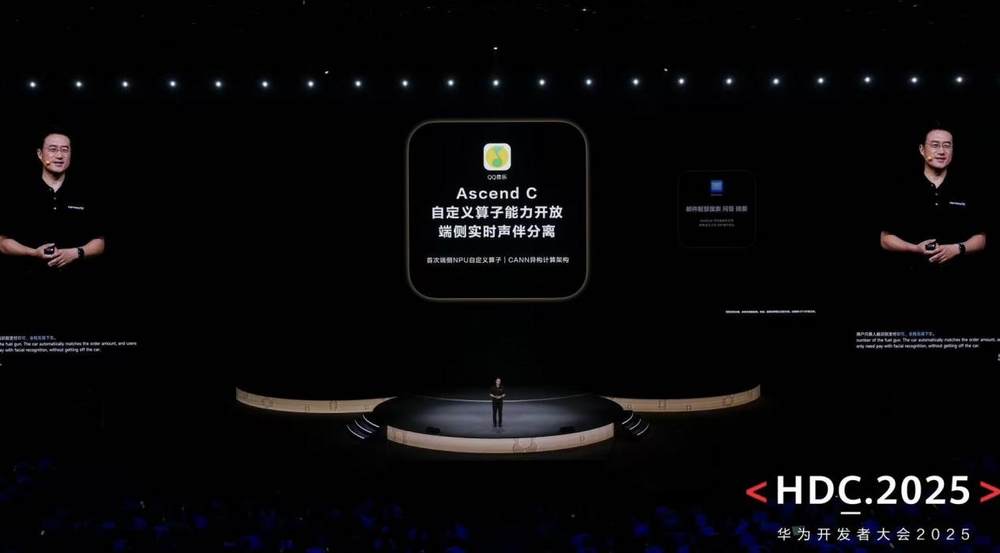
Core Insights - The 2025 Huawei Developer Conference (HDC) aims to accelerate digital transformation and intelligent upgrades across various industries, with QQ Music showcasing its collaboration with the HarmonyOS ecosystem [1] Group 1: Technological Innovations - QQ Music introduced real-time vocal separation technology on mobile devices, allowing users to separate vocals from songs in its extensive library with a simple button press [3][5] - The new HarmonyOS 2.0 version of QQ Music includes features like immersive listening experiences, personalized music profiles, and customizable ringtones, addressing user pain points [7][10] Group 2: User Experience Enhancements - QQ Music optimized its app for HarmonyOS and foldable devices, enabling seamless operation between external and internal screens, enhancing user interaction [5][10] - The integration of the voice assistant "Xiao Yi" allows users to control music playback hands-free, improving the overall user experience [7][10] Group 3: Strategic Collaboration - The partnership between QQ Music and HarmonyOS represents a significant technological leap, focusing on the deep integration of operating system capabilities with music services [10] - QQ Music aims to enhance user satisfaction and establish itself as a leading music application within the HarmonyOS ecosystem through continuous innovation and collaboration [10]
华为开发者大会HDC 2025正式开幕:鸿蒙生态驶入快车道
Sou Hu Cai Jing· 2025-06-20 13:46
Core Insights - Huawei Developer Conference (HDC 2025) has commenced, focusing on "Harmony Ecosystem and AI Technology," marking a new phase of large-scale development for the Harmony ecosystem [1] Group 1: Harmony Ecosystem Growth - The Harmony ecosystem has achieved "exponential growth," with over 40 Huawei terminal products running HarmonyOS 5 and more than 30,000 Harmony applications and services in active development [5] - Over 9,000 applications are involved in more than 70 system-level innovation experiences, and over 100 general office platforms have been adapted for Harmony, covering more than 38 million enterprises [5] - The developer community has expanded to 8 million developers, with 6.14 million learning sessions in the ecosystem academy and over 1 million tool downloads [5] Group 2: Multi-Device Connectivity and AI Innovations - The multi-device connectivity capabilities include a "tap to share" feature supporting over 50 applications and a new "one send, multiple receive" function for high-definition file transfers [7] - Over 100 apps support seamless content switching across devices, enhancing user experience [7] - Huawei introduced the Harmony Intelligent Agent Framework (HMAF) to facilitate efficient development of Harmony intelligent agents, with over 50 pioneering agents in development by companies like Shenzhen Airlines and Weibo [9] Group 3: Privacy, Security, and Performance Enhancements - The Harmony system's innovative security access mechanism has intercepted unreasonable permission requests 8.6 billion times, and the message privacy protection feature automatically hides sensitive content [11] - Performance improvements include a 126-minute increase in video playback duration and a 500-minute increase in audio playback endurance due to the integration of the Ark Engine [11] - Collaborative innovations with over 30 partners have led to the development of more than 50 projects, enhancing performance and reducing memory usage significantly [11] Group 4: Future Directions - Huawei aims to continue collaborating with developers and partners to promote the prosperity of the Harmony ecosystem, providing users with a more intelligent and convenient all-scenario experience [13]

华为鸿蒙系统本不叫“鸿蒙”,鸿蒙原名竟另有隐情,华为董事长揭秘
Sou Hu Cai Jing· 2025-06-09 01:02
Group 1 - The core viewpoint is that Huawei's HarmonyOS has emerged as a significant third option in the global operating system market, breaking the previous duopoly of Android and iOS, and providing a domestic alternative that is no longer reliant on foreign systems [1][5] - HarmonyOS has achieved substantial growth, with projections indicating that by 2025, devices running HarmonyOS will exceed 700 million, covering 18 major industry categories, and native applications will account for over 60% [5][7] - The open-source model of HarmonyOS has fostered industry collaboration, with companies like Zhongke Chuangda and Runhe Software developing industry solutions based on OpenHarmony, and chip manufacturers like SMIC and Yangtze Memory Technologies deeply adapting to HarmonyOS [7] Group 2 - The name "Harmony" was not originally intended for the operating system; it was initially the name of an internal kernel, and the media's misinterpretation led to its widespread adoption as the system's name [3][5] - The transition from a reliance on Android compatibility to a fully native HarmonyOS has been marked by significant achievements, dispelling earlier doubts about its capabilities [5][6] - Huawei's chairman emphasized that HarmonyOS is not just a Huawei product but a foundational infrastructure for the era of interconnected devices [7]