IntelliJ IDEA

Search documents
高负载不卡顿:i7处理器编程体验大升级
Xin Lang Cai Jing· 2026-01-07 01:45
Core Insights - The article highlights three different Intel Core i7 processors that cater to various needs of developers, emphasizing their performance and suitability for high-load tasks in both mobile and desktop environments [1][4]. Group 1: Product Recommendations - The first recommended product is the Intel Core i7-9750H, a mobile flagship processor with 6 cores and 12 threads, featuring a base frequency of 2.6GHz and a maximum turbo frequency of 4.5GHz, priced at 0.0 yuan [5][6]. - The second recommendation is the Intel Core i7-12700F, a desktop processor with a hybrid design of 12 cores and 20 threads, a maximum turbo frequency of 4.90GHz, and a price of 2280.0 yuan [3][6]. - The third product is the Intel Core i7-9700, which has 8 cores and 8 threads, a maximum turbo frequency of 4.90GHz, and is priced at 2599.0 yuan, offering strong performance in single-threaded applications [3][6][7]. Group 2: Performance and Features - The i7-9750H is particularly suitable for developers who travel frequently, as it can handle heavy development environments and lightweight AI training tasks, supported by an RTX 2070 Max-Q GPU and 16GB DDR4 RAM [5][6]. - The i7-12700F supports DDR5 4800 MT/s memory and PCIe 5.0, making it ideal for future upgrades and capable of handling large-scale data processing and algorithm simulations with a TDP of only 65W [3][6]. - The i7-9700 remains competitive in Java backend and web full-stack development, offering strong compatibility and stability for users with budget constraints [3][6][7]. Group 3: Target Audience - The i7-9750H is aimed at mobile developers who require portability and performance [4][7]. - The i7-12700F targets high-performance desktop users looking for advanced multi-threading capabilities [4][7]. - The i7-9700 is designed for practical developers who prioritize stability and compatibility in their systems [4][7].

懵了!JetBrains 刚停掉 Fleet IDE,又推新工具 Air。网友:把开发者当小白鼠?
程序员的那些事· 2025-12-15 02:06
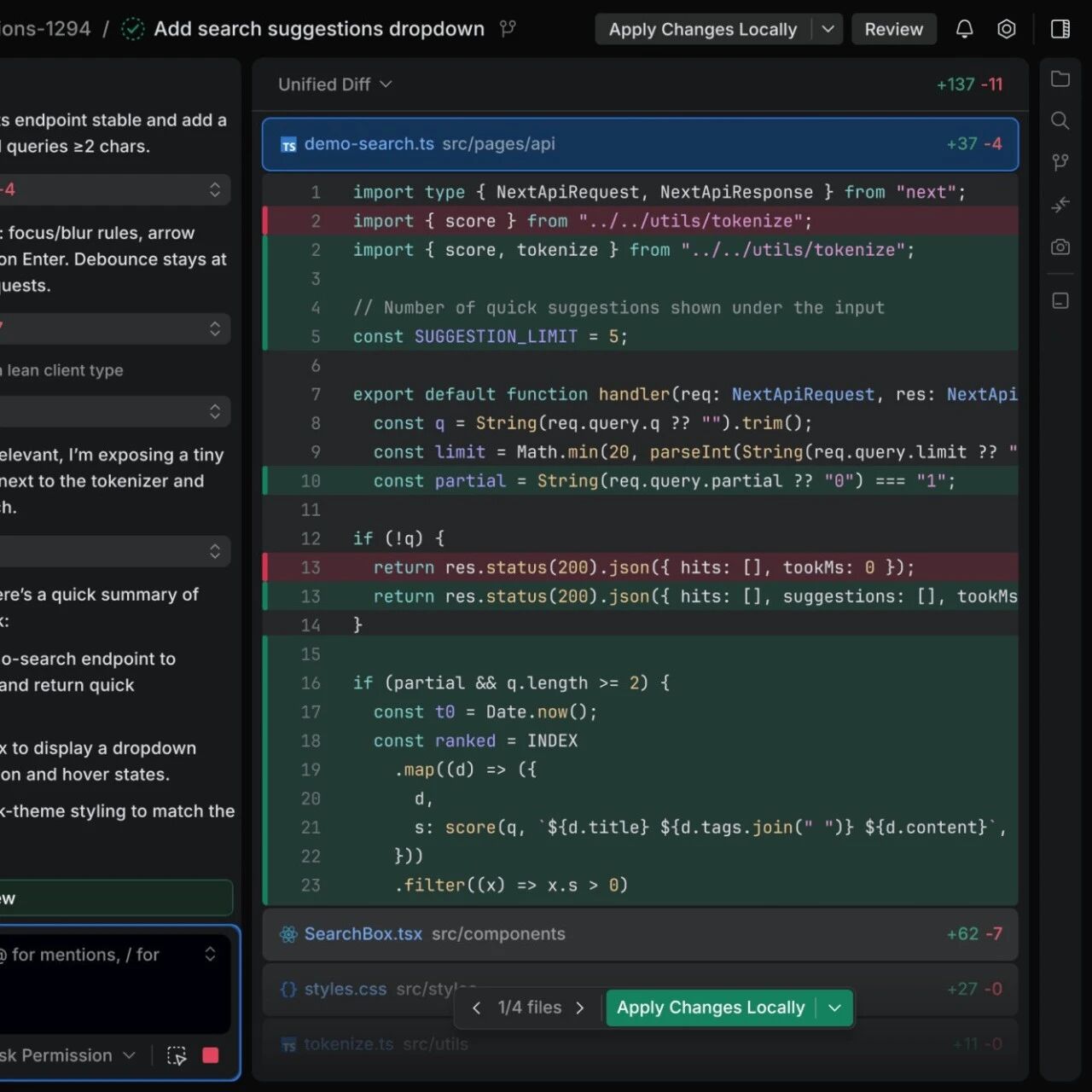
Core Viewpoint - JetBrains has decided to discontinue its Fleet IDE, which has been in public preview since its launch in 2021, and will focus on a new intelligent development environment called Air, indicating a shift in strategy to adapt to market trends and developer needs [3][4][8]. Group 1: Fleet IDE Discontinuation - Fleet IDE was intended to be a lightweight, collaborative tool that could adapt to remote projects, developed in response to the competitive pressure from Microsoft’s Visual Studio Code [3]. - Despite some initial interest, the majority of developers preferred the established IntelliJ tools due to its robust plugin ecosystem and the uncertainty surrounding Fleet's prolonged preview status [4]. - JetBrains announced that Fleet will no longer be available for download after December 22, 2025, citing confusion among users and a diversion of company resources as reasons for this decision [4][5]. Group 2: Transition to Air - The new tool, Air, is built on the Fleet platform and aims to introduce a novel workflow where developers guide an intelligent assistant to generate code, which they then review [5][8]. - Air is currently in public preview and requires a subscription to Anthropic services for access, with plans to support additional operating systems and features in the future [7]. - The decision to pivot to Air reflects JetBrains' ongoing strategy to keep pace with the evolving landscape of AI development tools, similar to offerings from AWS, Google, and Microsoft [8]. Group 3: Developer Reactions - Some developers expressed disappointment over the discontinuation of Fleet, feeling that it had the potential to compete effectively with VS Code [8]. - There are concerns among developers that instead of creating new tools, JetBrains should integrate intelligent features into its existing, mature IDEs, which are already well-regarded [9].

JetBrains放弃Fleet:急刹变道打造全新Agentic IDE,与VS Code、Cursor争夺下一代AI编程王座
AI前线· 2025-12-14 05:32
Core Viewpoint - JetBrains has decided to discontinue the development of its IDE Fleet, which has been in public preview since its launch in 2021, and will focus on a new development environment called Air aimed at agentic development [2][6]. Group 1: JetBrains and Fleet - JetBrains has a comprehensive suite of IDE products primarily based on the IntelliJ core platform, which has been in use since 2001 [4]. - Fleet was intended to be a lightweight, collaborative IDE to compete with Microsoft's Visual Studio Code (VS Code), which has gained popularity for its features [4][5]. - Despite some initial interest, most developers remained loyal to the IntelliJ series due to its robust plugin ecosystem and Fleet's prolonged public testing status [5]. Group 2: Discontinuation of Fleet - JetBrains announced that Fleet will no longer be available for download starting December 22, 2025, as maintaining two IDE product lines was causing user confusion and internal resource dilution [6]. - The company acknowledged that it failed to replace IntelliJ IDEA with Fleet or narrow its focus to a clear, differentiated niche [6]. - Although Fleet is being discontinued, its components will be integrated into other JetBrains IDEs, and the new product Air is an evolution of the Fleet platform [6]. Group 3: Introduction of Air - Air is designed to focus on a new workflow that leverages AI capabilities, allowing developers to delegate significant tasks to agents, which contrasts with traditional IDE workflows [7][8]. - The agentic workflow involves structured task definitions and asynchronous execution, which necessitates a different tool experience than traditional IDEs [8]. - Air is currently in public testing and will support multiple operating systems and cloud execution, enhancing its functionality beyond what Fleet offered [8]. Group 4: Developer Reactions and Market Position - Some developers expressed disappointment over the discontinuation of Fleet, believing it had the potential to compete effectively with VS Code and other emerging tools [10]. - The shift from Fleet to Air reflects a recurring pattern in JetBrains' strategy to adapt to evolving software development paradigms, particularly in the AI programming tool space [11]. - There are concerns about the necessity of creating a new tool rather than enhancing existing IDEs with AI features, raising questions about developer migration to Air [11].

马斯克新公司叫 “巨硬”,“微软”看了都得吐血
3 6 Ke· 2025-08-08 11:26
Core Viewpoint - The article discusses Elon Musk's new company named "MacroHard," which is a direct challenge to Microsoft, highlighting the rivalry between Musk and Bill Gates in the tech industry [1][4][5]. Company Overview - "MacroHard" has officially applied for a trademark on August 1, with an application fee of $2,300, indicating serious intentions behind the name [4]. - The company aims to focus on developing AI agents for programming and image/video generation, potentially revolutionizing these sectors [13][14]. Business Strategy - In programming, "MacroHard" plans to create a new ecosystem where AI agents can generate high-quality code based on user requirements, significantly improving efficiency and reducing costs [13]. - For image and video generation, the company intends to develop AI agents capable of creating realistic and high-quality content, which could transform industries like film and advertising by shortening production times and lowering costs [14]. Competitive Landscape - "MacroHard" will face competition not only from Microsoft but also from established players like JetBrains in programming tools and Adobe in image/video processing [15]. - The potential capabilities of "MacroHard" could disrupt the current market dynamics, prompting competitors to enhance their offerings [15]. Future Outlook - The establishment of "MacroHard" injects excitement into the tech industry, with expectations for innovative developments that could reshape the landscape [16]. - The ongoing rivalry between Musk and Gates is anticipated to intensify, with both figures representing different approaches to technology and business [18].



我去,IDEA 竟然免费了?!
菜鸟教程· 2025-07-25 02:12
Core Viewpoint - JetBrains has announced a unified distribution for IntelliJ IDEA, allowing users to access more features in the free version while maintaining a subscription model for advanced functionalities [1][3]. Group 1 - The new setup will replace the separate Community and Ultimate versions with a single installation program, where Ultimate features still require a subscription to unlock [1][3]. - Starting from version 2025.3, free users will gain access to many features previously exclusive to the Ultimate version, such as code highlighting for popular frameworks like Spring and Quarkus, and project creation wizards [3][4]. - The free version will now allow users to view database designs directly within IDEA, although data access and SQL execution will not be available [4]. Group 2 - Previously, if a subscription expired, users could not open projects in the Ultimate version, but now they will automatically revert to the free version, allowing project access and editing [4]. - JetBrains' strategy appears to balance the needs of free users while ensuring the sustainability of its business model, potentially attracting more developers to its ecosystem and converting them into paying customers [4][5]. - JetBrains has shown commitment to providing free versions of its products, including WebStorm, while also maintaining open-source versions [5].

IDEA 发布中文文档,再也不用右键翻译了~
菜鸟教程· 2025-06-02 12:40
Core Viewpoint - The release of Chinese documentation for IntelliJ IDEA marks a significant step towards enhancing user experience and localization services for Chinese developers [2][6]. Group 1: Documentation Release - IntelliJ IDEA has launched Chinese documentation, which is a positive response to the needs of Chinese developers and signifies a trend towards improved user experience [2]. - The Chinese documentation is primarily machine-translated, which, while helpful, still contains some English screenshots that may cause confusion [3][6]. Group 2: User Experience Improvement - The availability of Chinese documentation significantly reduces the time developers spend on translation, making it easier for those with limited English proficiency to access the information [6]. - Despite some translation issues, the overall readability of the documentation has improved, allowing most users to understand the content [7]. Group 3: Competitive Landscape of IDEs - The IDE market is highly competitive, especially with the integration of AI capabilities that enhance functionality [7]. - Several AI-driven IDEs are emerging, such as: 1. Cursor: Optimized for VS Code with strong AI code understanding and project-level analysis [7]. 2. Windsurf: Features long-term memory to understand project context, mimicking human thought processes [8]. 3. Trae: ByteDance's AI IDE with intelligent Q&A and code auto-completion [9]. 4. Lingma IDE: Integrates Alibaba Cloud services for end-to-end task completion [10]. 5. VS Code + Copilot: Richest plugin ecosystem enhanced by AI [11].