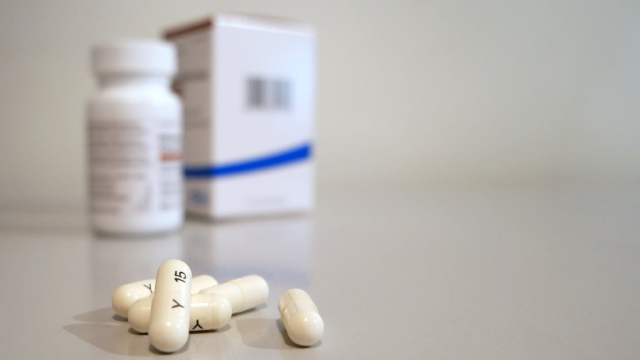
Jaypirca

Search documents
Lilly Stock Down 5% in a Month: Should You Buy Now or Steer Clear?
ZACKS· 2026-03-05 14:16
Core Insights - Eli Lilly and Company (LLY) shares have decreased by 5.2% in the past month despite strong Q4 2025 results, primarily due to industry pricing concerns and increased competition in the diabetes and obesity markets [1][10]. Group 1: Financial Performance - In 2025, Mounjaro and Zepbound generated combined sales of $36.5 billion, accounting for approximately 56% of Lilly's total revenues [6][10]. - Lilly's revenues surged by 45% in 2025, with earnings per share (EPS) growing by 86% [32]. - The company projects revenues of $80-$83 billion and EPS of $33.50-$35.00 for 2026, indicating continued growth expectations [32]. Group 2: Product Portfolio and Market Position - Lilly's cardiometabolic division is its strongest segment, driven by the success of Mounjaro and Zepbound, which have rapidly become key revenue drivers [4][5]. - Mounjaro leads the market in new prescriptions for type II diabetes, while Zepbound holds nearly 70% market share in the branded obesity market [5]. - Lilly has secured approvals for several new therapies, including Omvoh, Jaypirca, Ebglyss, and Kisunla, contributing to revenue growth [7][8]. Group 3: Competitive Landscape - Novo Nordisk's recent price cuts for its semaglutide medicines have raised concerns that Lilly may need to follow suit, impacting its pricing strategy for GLP-1 therapies [2][10]. - The global obesity market may not reach the previously expected $150 billion due to competitive pressures and pricing concerns [2]. - Competition in the obesity market is intensifying, with Novo Nordisk launching an oral version of Wegovy, potentially affecting Lilly's market share [19][22]. Group 4: Future Growth Opportunities - Lilly is advancing an oral obesity pill, orforglipron, expected to launch in the U.S. in Q2 2026, which could broaden patient adoption and drive significant sales [11][12]. - The company is also evaluating retatrutide, a triple-acting incretin, for multiple indications, with expected data readouts in 2026 [15][16]. - Lilly's diversification efforts include acquisitions in cardiovascular, oncology, and neuroscience areas, enhancing its growth potential beyond obesity and diabetes [17][18].


Eli Lilly Just Delivered Great News for Investors -- and It Goes Beyond Weight-Loss Drugs
Yahoo Finance· 2026-02-15 15:05
Core Viewpoint - Eli Lilly's strong performance is largely attributed to its successful clinical and commercial progress with tirzepatide, a drug approved for diabetes and weight loss, which is driving rapid sales growth and excellent financial results [1] Group 1: Clinical and Commercial Progress - Eli Lilly's weight loss portfolio, particularly tirzepatide, is expected to remain the biggest growth driver in the foreseeable future [1] - The company has achieved positive outcomes for nearly all R&D key events in 2025, a rare achievement in the pharmaceutical industry [3] - Eli Lilly's retatrutide and orforglipron have shown promising results in phase 3 studies, contributing to the company's success in weight management and diabetes [3] Group 2: Broader Therapeutic Advances - Eli Lilly has made significant clinical progress in other therapeutic areas, including cancer and Alzheimer's disease, with Jaypirca excelling in a phase 3 study and Kisunla showing promise in slowing cognitive decline [4] - The company's innovative approach in R&D is performing better than many peers in the industry, highlighting its competitive edge [4] Group 3: Investment in Technology - Eli Lilly is investing in artificial intelligence (AI) to enhance its clinical trial success rate and accelerate drug development, including plans to build the industry's largest AI supercomputer [5] - The U.S. Food and Drug Administration's recognition of AI's value in drug discovery supports Eli Lilly's strategic direction in leveraging technology for future advancements [5]
Eli Lilly and Company Q4 Earnings Call Highlights
Yahoo Finance· 2026-02-05 08:26
Core Insights - Eli Lilly reported strong financial performance for 2025, with full-year revenue of $65.2 billion, a 45% increase compared to 2024, and earnings per share (EPS) of $24.21, up 86% year-over-year [3][6] - The company anticipates continued revenue growth in 2026, projecting revenue between $80 billion and $83 billion, reflecting approximately 25% growth at the midpoint despite expected pricing pressures [4][9] Financial Performance - In Q4 2025, Lilly achieved a revenue growth of 43% compared to Q4 2024, with a gross margin of 83.2% [2] - The non-GAAP performance margin was reported at 47.2%, an increase of 4.2 percentage points year-over-year [1] - R&D expenses rose by 26%, while marketing, selling, and administrative expenses increased by 29%, driven by investments in the pipeline and promotional support [2] Product Performance - The incretin portfolio was a significant growth driver, generating over $13 billion in Q4, a 91% increase year-over-year [6] - Key products like Zepbound and Mounjaro saw substantial market growth, with Zepbound revenue more than doubling year-over-year and holding nearly 70% share of new prescriptions in the branded obesity market [8] Pipeline and Clinical Updates - Lilly's late-stage pipeline includes Orforglipron, which is expected to receive FDA approval in Q2 2026, and retatrutide, which showed promising results in weight loss trials [13][14] - The company is also advancing combination studies in immunology and oncology, with positive results reported for ixekizumab and pirtobrutinib [15][16] Access Initiatives and Market Strategy - Lilly has established a U.S. access agreement for obesity medicines, capping patient out-of-pocket costs at $50 per month, with Medicare access expected by July 1, 2026 [5][17] - The company is expanding direct channels, with LillyDirect engaging over 1 million patients, to offset pricing pressures through increased volume [19] Capital Allocation - In 2025, Lilly returned $1.3 billion to shareholders through dividends and $1.5 billion in share repurchases, while committing over $55 billion to manufacturing expansion since 2020 [20]
Lilly Stock Jumps After Q4 Earnings Beat and Strong 2026 Guidance
ZACKS· 2026-02-04 16:25
Core Insights - Eli Lilly and Company (LLY) reported strong fourth-quarter 2025 results, with adjusted earnings per share (EPS) of $7.54, exceeding the Zacks Consensus Estimate of $6.99, and a year-over-year earnings increase of 42% [1] - Revenues reached $19.3 billion, a 43% increase year over year, driven by the success of GLP-1 drugs Mounjaro and Zepbound, surpassing the Zacks Consensus Estimate of $17.87 billion [1] Revenue Drivers - Mounjaro generated sales of $7.41 billion, up 110% year over year, exceeding the Zacks Consensus Estimate of $6.65 billion [2] - Zepbound recorded sales of $4.26 billion, a 123% increase year over year, also beating the Zacks Consensus Estimate of $3.87 billion [3] Competitive Landscape - Mounjaro and Zepbound face competition from Novo Nordisk's semaglutide products, with Novo Nordisk reporting a decline in its Diabetes and Obesity Care segment sales due to competitive pressure from Lilly's offerings [4] - Despite competitive dynamics, Mounjaro and Zepbound are expected to maintain strong demand in 2026 [13] Other Drug Performance - Trulicity generated $1.04 billion in revenue, down 17% year over year, but still beating the Zacks Consensus Estimate of $1.0 billion [5] - Jardiance sales fell 36% to $768 million, missing the Zacks Consensus Estimate of $776 million [5] - Taltz brought in $1.05 billion, up 10% year over year, exceeding the Zacks Consensus Estimate of $955 million [6] - Verzenio generated $1.60 billion, up 3% year over year, but missed the Zacks Consensus Estimate of $1.62 billion [6] Full-Year Performance - For the full year 2025, Eli Lilly's sales rose 45% to $65.2 billion, significantly beating the Zacks Consensus Estimate of $63.54 billion [10] - Adjusted earnings for 2025 were $24.21 per share, an 86% increase year over year, surpassing the Zacks Consensus Estimate of $23.74 [10] 2026 Outlook - Eli Lilly expects 2026 revenues in the range of $80 billion to $83 billion, higher than the Zacks Consensus Estimate of $77.5 billion [11] - EPS for 2026 is projected to be between $33.50 and $35.00, exceeding the Zacks Consensus Estimate of $33.24 [11] Market Reaction - Following the positive quarterly earnings and optimistic 2026 outlook, Lilly's shares rose approximately 9% in pre-market trading [14] - Over the past year, Lilly's stock has increased by 19.2%, outperforming the industry average of 17.1% [14] Strategic Initiatives - Lilly is investing in obesity treatments and has several new molecules in clinical development, including orforglipron, an oral GLP-1 small molecule [16][17] - The company is diversifying its portfolio beyond GLP-1 drugs into cardiovascular, oncology, and neuroscience areas, including recent acquisitions to enhance its capabilities in oral small-molecule therapies [19]

Lilly(LLY) - 2025 Q4 - Earnings Call Transcript
2026-02-04 16:02
Financial Data and Key Metrics Changes - In 2025, full-year revenue grew by 45% to $65.2 billion compared to 2024, with earnings per share increasing by 86% to $24.21 [6][10] - Q4 revenue increased by 43% compared to Q4 2024, with gross margin at 83.2%, consistent with Q4 2024 [10][11] - Non-GAAP performance margin was 47.2%, an increase of 4.2 percentage points compared to Q4 2024 [10] Business Line Data and Key Metrics Changes - Key products contributed over $13 billion to revenue in Q4, growing by 91% compared to Q4 2024 [12] - Kisunla became the U.S. market leader in amyloid-targeting therapy with over 50% share of total prescriptions, generating $109 million in revenue [12] - Zepbound revenue more than doubled compared to Q4 2024, maintaining nearly 70% share of new prescriptions in the branded obesity market [14] Market Data and Key Metrics Changes - U.S. revenue increased by 43% in Q4, driven by volume growth of Mounjaro and Zepbound, partially offset by a 7% decline in price [11] - International revenue growth was strong, with double-digit volume growth in Europe, Japan, and China, and volume doubling in the rest of the world due to Mounjaro's launch [11] Company Strategy and Development Direction - The company executed 39 business development transactions and is investing in artificial intelligence for drug discovery [7] - Plans to build multiple new manufacturing sites in the U.S. and Europe to expand manufacturing capacity [7] - The company anticipates launching Orforglipron for chronic weight management in the U.S. in Q2 2026, with a focus on expanding the addressable market [16] Management's Comments on Operating Environment and Future Outlook - Management expressed confidence in the growth trajectory of the incretin analog market and expects continued robust growth in 2026 [16] - The company is preparing for potential challenges in Medicaid access but anticipates new states will add coverage in 2027 [17] - Management highlighted the importance of patient satisfaction and real-world efficacy for new product launches [42] Other Important Information - The company distributed $1.3 billion in dividends and $1.5 billion in share repurchases in 2025 [8] - The company has one of the largest clinical stage pipelines in its history, with 36 active phase III programs [18] Q&A Session Summary Question: Metrics for Orforglipron launch - Management indicated they will track market expansion and patient satisfaction as key success factors for Orforglipron [41][43] Question: Accelerated pathways for international approvals - Management expects most international launches for Orforglipron to occur in late 2026 to 2027, with some exceptions [47] Question: International Mounjaro growth - Management noted Q4 as a strong base for 2026 growth, with a focus on market expansion and reimbursement strategies [53][54] Question: Investment in immunology - Management is reinvesting proceeds from obesity opportunities to accelerate growth in immunology and other areas [60] Question: Medicare volume ramp and employer opt-ins - Management expects Medicare access to be granted by July 1, 2026, and anticipates a bolus of patients moving into the Medicare space [65][66] Question: Combo therapies with Zepbound - Management sees significant opportunities in combination therapies for immune diseases and is pursuing various studies [75]
Lilly(LLY) - 2025 Q4 - Earnings Call Presentation
2026-02-04 15:00
Not for promotional use Q4 2025 EARNINGS CALL ELI LILLY AND COMPANY Agenda Introduction and Key Events Dave Ricks, Chair and Chief Executive Officer Q4 2025 Financial Results & 2026 Financial Guidance Lucas Montarce, Chief Financial Officer R&D Update Dan Skovronsky, M.D., Ph.D., Chief Scientific and Product Officer Question & Answer Session 3 2025 Q4 EARNINGS Safe Harbor Provision and Other Information This presentation contains forward-looking statements that are based on management's current expectations ...
How Will Mounjaro and Zepbound Sales Aid LLY's Upcoming Q4 Results?
ZACKS· 2026-01-15 16:21
Core Insights - Eli Lilly (LLY) has established a strong position in the cardiometabolic market, primarily due to the success of its GLP-1 therapies, Mounjaro and Zepbound, which generated $24.8 billion in sales, representing 54% of total revenues in the first nine months of 2025 [1][10] Group 1: Product Performance - Mounjaro and Zepbound's sales growth is attributed to improved domestic supply and expansion into new international markets, prompting Eli Lilly to raise its sales and earnings guidance twice in 2025 [2] - Sales estimates for Mounjaro and Zepbound for the upcoming quarter are projected at $6.55 billion and $3.62 billion, respectively, driven by stronger market penetration in the U.S. and international adoption [3] Group 2: Broader Portfolio Growth - Eli Lilly's portfolio, including oncology drug Verzenio and immunology drug Taltz, continues to show steady growth, with new launches like Omvoh, Ebglyss, Jaypirca, and Kisunla contributing to overall revenue [4] Group 3: Competitive Landscape - Eli Lilly and Novo Nordisk (NVO) are the leading players in the obesity market, with Mounjaro and Zepbound competing against NVO's semaglutide products, Ozempic and Wegovy [5] - Novo Nordisk received FDA approval for its oral Wegovy pill, enhancing its competitive edge, while Eli Lilly is seeking FDA approval for its own oral GLP-1 pill, orforglipron [6] Group 4: Market Dynamics - The obesity market is gaining attention due to its significant growth potential, with smaller biotech firms like Viking Therapeutics and Structure Therapeutics developing competing GLP-1 therapies [7][8] Group 5: Stock Performance and Valuation - Eli Lilly's stock has increased by 35.9% over the past six months, outperforming the industry average of 20.9% [11] - The stock is currently trading at a price/earnings ratio of 31.58, which is higher than the industry average of 17.86, but below its five-year mean of 34.56 [14] - Earnings estimates for 2025 have improved from $23.69 to $23.85 per share, and for 2026 from $32.06 to $33.25 [18]
The Zacks Analyst Blog Eli Lilly, Medtronic, Intuitive Surgical, Regeneron Pharmaceuticals and Johnson & Johnson
ZACKS· 2026-01-06 10:41
Core Insights - The medical sector is increasingly adopting artificial intelligence (AI), enhancing drug synthesis, device creation, and diagnostic accuracy [2][3] Group 1: Eli Lilly and Co. (LLY) - Eli Lilly focuses on cardiometabolic health, neuroscience, oncology, and immunology, which are high-growth areas with significant commercial potential [5] - Demand for LLY's GLP-1 drugs, Mounjaro and Zepbound, remains strong, contributing to robust sales in 2025 [6] - LLY is advancing its pipeline with an oral GLP-1 obesity pill, orforglipron, expected to launch next year [7] - Eli Lilly is collaborating with OpenAI for novel medicine discovery and invested $409 million in Genetic Leap for AI-driven drug discovery [7] - The company is building a supercomputer with NVIDIA to enhance its AI capabilities, with expected revenue and earnings growth rates of 22.3% and 41.3% respectively for the current year [8] - LLY has a return on equity (ROE) of 109.5%, significantly higher than the industry average of 37% [9] Group 2: Medtronic plc (MDT) - Medtronic is integrating AI into its solutions to improve patient care and operational efficiency, including an AI-powered surgical video management platform [10] - The GI Genius project enhances colorectal cancer detection, increasing survival rates by identifying polyps that may be missed [11] - Medtronic's partnerships leverage AI to optimize cardiac procedures and improve diagnostic precision, driving growth in the medtech sector [12] - The company has an expected revenue and earnings growth rate of 7.5% and 2.7% respectively for the current year [14] - MDT has a ROE of 14.9%, outperforming the industry average of -2.5% [14] Group 3: Intuitive Surgical Inc. (ISRG) - Intuitive Surgical is embedding AI into its robotic systems, providing objective performance indicators for surgeons [15] - The company is piloting telecollaboration for remote surgical support, enhancing training and decision-making [16] - ISRG's revenue and earnings growth rates are expected to be 14.3% and 11.1% respectively for the current year [19] - ISRG has a ROE of 15.1%, compared to the industry's ROE of -18.7% [19] Group 4: Regeneron Pharmaceuticals Inc. (REGN) - Regeneron utilizes AI and machine learning for drug target identification, clinical trial optimization, and precision medicine [20] - The company has seen revenue growth driven by strong performance from Dupixent and Libtayo, despite declining sales of Eylea [21] - REGN's expected revenue and earnings growth rates are 4.9% and -0.4% respectively for the current year [23] - REGN has a ROE of 13.8%, significantly higher than the industry's ROE of -65.41% [23] Group 5: Johnson & Johnson (JNJ) - Johnson & Johnson's MedTech division is focused on AI technologies for surgical robotics and digital surgery analytics [24] - The company has developed the Ottava robotic surgery platform and the Caresurgical/VELYS digital surgery systems, enhancing procedure planning [25] - JNJ has an expected revenue and earnings growth rate of 5% and 5.7% respectively for the current year [26] - JNJ has a ROE of 32.7%, compared to the industry's ROE of 37% [26]


Watch 5 AI-Powered Medical Stocks for a Strong Portfolio in 2026
ZACKS· 2026-01-05 13:45
Core Insights - The medical sector is rapidly adopting artificial intelligence (AI), significantly transforming diagnostics, treatment, and operational efficiency in 2024 [1] - AI-powered diagnostics have become central to enhancing accuracy and speed in medical practices [1] Group 1: AI Adoption in Healthcare - The healthcare sector is typically defensive, characterized by low-beta and dividend-paying stocks, but AI has turned several stocks into potential high-growth providers [2] - Key stocks benefiting from AI integration include Eli Lilly and Co. (LLY), Medtronic plc (MDT), Intuitive Surgical Inc. (ISRG), Regeneron Pharmaceuticals Inc. (REGN), and Johnson & Johnson (JNJ) [2] Group 2: Eli Lilly and Co. (LLY) - Eli Lilly focuses on cardiometabolic health, neuroscience, oncology, and immunology, which are high-growth areas with significant commercial potential [5] - Strong demand for LLY's GLP-1 drugs, Mounjaro and Zepbound, is driving top-line growth, supported by international market launches and increased production [6] - LLY is advancing its pipeline in obesity and diabetes, with an oral GLP-1 obesity pill expected to launch next year [7] - The company is collaborating with OpenAI and investing in AI-driven biotech initiatives, including a $409 million investment in Genetic Leap [9] - LLY has an expected revenue growth rate of 22.3% and earnings growth rate of 41.3% for the current year, with a beta of 0.35 and a dividend yield of 0.6% [9][10] Group 3: Medtronic plc (MDT) - Medtronic is integrating AI into its surgical systems and endoscopy to enhance patient care and operational efficiency [11] - The GI Genius project uses AI algorithms to detect colorectal polyps during colonoscopies, improving cancer survival rates [12] - MDT's partnerships leverage AI to optimize cardiac procedures and improve diagnostic precision, positioning the company for growth in medtech innovation [13] - Medtronic has an expected revenue growth rate of 7.5% and earnings growth rate of 2.7% for the current year, with a beta of 0.71 and a dividend yield of 3% [15] Group 4: Intuitive Surgical Inc. (ISRG) - Intuitive Surgical is embedding AI and digital tools into its robotic ecosystem, enhancing surgical performance metrics [16] - The company is piloting telecollaboration through Intuitive Telepresence, allowing remote surgical support [17] - ISRG has an expected revenue growth rate of 14.3% and earnings growth rate of 11.1% for the current year, with a beta of 0.39 and an ROE of 15.1% [20] Group 5: Regeneron Pharmaceuticals Inc. (REGN) - Regeneron utilizes AI and machine learning for drug target identification, clinical trial optimization, and precision medicine [21] - The company has seen revenue growth driven by strong performance from drugs like Eylea HD and Dupixent, despite declining sales of its lead drug [22] - REGN has an expected revenue growth rate of 4.9% and earnings growth rate of -0.4% for the current year, with a beta of 0.39 and a dividend yield of 0.5% [24] Group 6: Johnson & Johnson (JNJ) - Johnson & Johnson's MedTech division applies AI technologies for surgical robotics and digital surgery analytics [25] - The company has developed the Ottava robotic surgery platform and the Caresurgical/VELYS digital surgery systems, enhancing procedure planning and real-time data sharing [26] - JNJ has an expected revenue growth rate of 5% and earnings growth rate of 5.7% for the current year, with a beta of 0.34 and a dividend yield of 2.5% [27]



My Top 3 Healthcare Stocks to Buy in 2026
The Motley Fool· 2025-12-13 19:37
Core Viewpoint - The healthcare sector is anticipated to potentially rebound in 2026, with several attractive stocks identified for investment, including AbbVie, Eli Lilly, and Intuitive Surgical. AbbVie - AbbVie is recognized as a reliable dividend payer, boasting 54 consecutive payout increases, qualifying it as a Dividend King [3] - The company reported third-quarter revenue of $15.8 billion, reflecting a 9% increase year-over-year [4] - AbbVie's product portfolio includes key drugs such as Vraylar, Botox Therapeutics, Qulipta, Skyrizi, and Rinvoq, which are expected to drive future growth [6][8] - Skyrizi is projected to become the second best-selling drug globally by 2030, with estimated sales of $26.6 billion [7] Eli Lilly - Eli Lilly's third-quarter revenue reached $17.6 billion, marking a significant 54% year-over-year growth [9] - The company is leveraging tirzepatide, marketed as Zepbound and Mounjaro, to sustain its growth trajectory, alongside promising pipeline candidates like orforglipron [10] - Eli Lilly is diversifying its portfolio, with recent launches in oncology, including Jaypirca for mantle cell lymphoma and Inluriyo for breast cancer [13] - The company's strategic investments in artificial intelligence and other therapeutic areas position it favorably for future growth [14] Intuitive Surgical - Intuitive Surgical faces challenges from tariffs and increased competition, particularly from Medtronic's Hugo system [15] - Despite these challenges, the company maintains a strong economic moat with 10,763 da Vinci systems installed, which creates high switching costs for customers [16] - The da Vinci system has over two decades of clinical evidence supporting its effectiveness, allowing Intuitive Surgical to command significant pricing power [18] - The company is expected to benefit from label expansions and increased procedure volumes, which will enhance revenue and margins over time [19]