
Lazcluze

Search documents
Cancer Stocks to Buy as Innovation Reshapes Global Oncology Market
ZACKS· 2026-03-26 14:22
Industry Overview - The global oncology market is experiencing rapid evolution due to rising cancer incidence, aging populations, and scientific breakthroughs, with the U.S. projected to have approximately 2.1 million new cancer cases and over 626,000 deaths in 2026 [2] - Lifestyle-related risk factors and demographic shifts are driving higher cancer prevalence, leading to long-term growth in oncology-related healthcare spending [2] Treatment Innovations - Innovations in immunotherapy, targeted therapies, and personalized cancer vaccines are expanding treatment options beyond conventional methods [3] - Emerging technologies like genomic sequencing, AI, and machine learning are enhancing biomarker discovery and enabling earlier, more accurate diagnoses [4] Pharmaceutical Industry Response - Major pharmaceutical companies such as Novartis, AstraZeneca, J&J, Pfizer, AbbVie, Merck, Bristol Myers Squibb, and Eli Lilly are investing in oncology pipelines with advanced modalities like antibody-drug conjugates and next-generation immuno-oncology therapies [5] - Smaller biotech firms are crucial in driving innovation, often leading to partnerships and M&A activity [5] Market Resilience - Oncology is considered one of the most resilient and attractive segments of the global healthcare sector for long-term investors, supported by ongoing innovation and favorable reimbursement trends [6] Company Highlights: Johnson & Johnson (J&J) - J&J's oncology segment accounts for approximately 27% of total revenues, with oncology sales rising 20.9% in 2025, driven by strong market growth and key products like Darzalex and Erleada [9] - J&J's new cancer drugs, including Carvykti, Tecvayli, and Talvey, generated $3.0 billion in sales in 2025 and are expected to contribute to a target of $50 billion in oncology sales by 2030 [10][11] - The company is expanding its oncology pipeline through M&A, including the acquisition of Halda Therapeutics [12] Company Highlights: Verastem Oncology - Verastem Oncology focuses on targeting key signaling pathways and received FDA approval for its combination regimen for treating KRAS mutant recurrent low-grade serous ovarian cancer, generating $30.9 million in sales in 2025 [14][15] - The company is also evaluating its therapies in other cancer types and developing new candidates for KRAS G12D mutant solid tumors [16] Company Highlights: Xilio Therapeutics - Xilio Therapeutics has an exclusive license agreement with Gilead for its investigational tumor-activated IL-12 inhibitor and plans to submit an IND application for its bispecific PD-1 / masked IL-2 candidate [17][18] - The company is advancing preclinical T-cell engagers targeting various tumor antigens, with plans for clinical development by 2027 [19]



PFE's Atirmociclib 2L Breast Cancer Study Hits Goal, Aid Pipeline Push
ZACKS· 2026-03-18 16:27
Core Insights - Pfizer is a leading oncology drugmaker with a strong portfolio and pipeline across various cancer types, including breast, genitourinary, thoracic, gastrointestinal, and blood cancers [1] - The company's oncology revenues grew by 8% year over year in 2025, accounting for approximately 27% of total revenues [2] Oncology Pipeline and Development - Key candidates in late-stage development include atirmociclib for metastatic breast cancer and sigvotatug vedotin for metastatic non-small cell lung cancer [3] - A regulatory application for vepdegestrant for ER+/HER2- metastatic breast cancer is under review in the U.S., and sasanlimab for high-risk non-muscle invasive bladder cancer is under review in the EU [3] Clinical Study Results - The FOURLIGHT-1 study showed that atirmociclib combined with fulvestrant met its primary endpoint, demonstrating a statistically significant improvement in progression-free survival [4][5] - Atirmociclib treatment resulted in a 40% reduction in the risk of disease progression or death [5] - The treatment was well tolerated and had a manageable safety profile, particularly in a hard-to-treat patient population [6] Competitive Landscape - Pfizer competes with major players like AstraZeneca, Merck, Johnson & Johnson, and Bristol-Myers in the oncology space [9] - AstraZeneca's oncology sales rose 14% in 2025, while Merck's Keytruda generated $31.7 billion in sales, up 7% year over year [11][12] - Johnson & Johnson's oncology sales increased by 20.9% to $25.4 billion, and Bristol-Myers' Opdivo sales rose 8% to $10 billion [13][14] Financial Performance and Valuation - Pfizer's shares have increased by 10.2% year to date, contrasting with a 0.1% decline in the industry [17] - The company is trading at a price/earnings ratio of 9.33, below the industry average of 17.65 and its five-year mean of 10.15 [18] - The Zacks Consensus Estimate for 2026 earnings has slightly declined from $2.99 to $2.97 per share [19]


Can Pfizer Reignite Growth Amid COVID Declines and Patent Expirations?
ZACKS· 2026-03-05 14:46
Core Insights - Pfizer (PFE) is facing significant near-term challenges, including declining COVID-19 product sales, the impending loss of exclusivity (LOE) for several key drugs, and headwinds from U.S. Medicare Part D, which could negatively impact sales and profits starting in 2026 [2][12]. Revenue Impact - The LOE cliff is projected to result in a revenue decline of approximately $1.5 billion in 2026 as key products like Eliquis, Vyndaqel, Ibrance, Xeljanz, and Xtandi approach patent expirations [3][12]. - The redesign of Medicare Part D under the Inflation Reduction Act (IRA) is expected to adversely affect Pfizer's revenues in 2025 and continue into 2026, particularly impacting higher-priced drugs [4][12]. - COVID-19 product sales, specifically Comirnaty and Paxlovid, have sharply declined from their 2022 peak, with projected COVID revenues around $5 billion in 2026, down from approximately $6.7 billion in 2025 [5][4]. Strategic Initiatives - To address these challenges, Pfizer is focusing on rebuilding its pipeline in oncology and obesity, aiming for growth in 2028 and beyond. The company is actively acquiring assets to offset lost COVID revenues and has initiated a multi-year cost realignment program to enhance margins [6][12]. - Despite the introduction of new and acquired products, they have not yet compensated for the revenue losses from legacy products and the decline in COVID-related sales [7]. Competitive Landscape - Pfizer is a major player in the oncology market, competing with other large pharmaceutical companies such as AstraZeneca, Merck, Johnson & Johnson, and Bristol-Myers [8]. - AstraZeneca's oncology sales accounted for about 44% of its total revenues, with a 14% increase in 2025 driven by key products [9]. - Merck's Keytruda, a leading oncology drug, generated $31.7 billion in sales in 2025, marking a 7% year-over-year increase [10]. - Johnson & Johnson's oncology sales rose 20.9% in 2025, contributing significantly to its overall revenue growth [11]. - Bristol-Myers' Opdivo, a key cancer drug, accounted for around 21% of its total revenues, with sales increasing by 8% to $10 billion in 2025 [13]. Financial Performance - Pfizer's stock has increased by 1.4% over the past year, compared to an 8.6% rise in the industry [14]. - The company's valuation appears attractive, trading at a price/earnings ratio of 9.04, significantly lower than the industry average of 18.22 and its five-year mean of 10.20 [16]. - The Zacks Consensus Estimate for 2026 earnings has slightly decreased from $2.99 to $2.97 per share, while the estimate for 2027 remains stable at $2.83 [18].

FDA Grants Breakthrough Status To Johnson & Johnson's Cancer Drug For Advanced Head and Neck Cancer
Yahoo Finance· 2026-02-21 16:31
FDA Designation - The FDA granted Breakthrough Therapy Designation for subcutaneous Rybrevant Faspro as a monotherapy for adults with advanced head and neck squamous cell carcinoma [1] - The designation is for patients with recurrent or metastatic cancer that is HPV-unrelated after progression on platinum-based chemotherapy and a PD-1 or PD-L1 inhibitor [2] - Rybrevant Faspro is also approved for multiple settings in locally advanced or metastatic non-small cell lung cancer and is being evaluated in additional solid tumors, including colorectal cancer [2] Clinical Studies - The Breakthrough Therapy Designation is supported by data from the open-label Phase 1b/2 OrigAMI-4 study, which showed promising clinical activity with rapid and durable responses in a heavily pretreated patient population [3] - Subcutaneous amivantamab is being further evaluated in the ongoing Phase 3 OrigAMI-5 study, assessing its combination with Merck's Keytruda and carboplatin versus 5-fluorouracil plus pembrolizumab and platinum-based chemotherapy for HPV-unrelated recurrent or metastatic head and neck squamous cell carcinoma [4] New Dosing Schedule - The FDA approved a new, simplified monthly dosing schedule for Rybrevant Faspro in combination with oral Lazcluze for the first-line treatment of EGFR-mutated advanced non-small cell lung cancer [5] Contract Extension - Trellus Health plc extended its contract with Johnson & Johnson's Health Care Systems unit for six months to continue providing Trellus Elevate for patients with moderate to severely active inflammatory bowel disease [6] - The extension was influenced by the achievement of engagement and satisfaction metrics during the initial pilot phase [6]
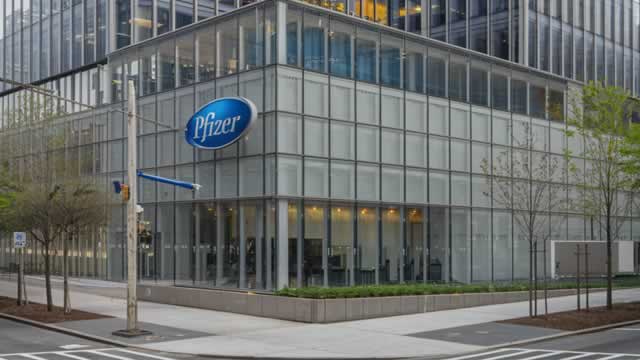
Can Pfizer's New & Acquired Drugs Offset Its Looming Patent Cliff?
ZACKS· 2026-02-11 14:11
Core Insights - Pfizer's COVID product sales have significantly declined from their peak, with projections of around $11 billion in 2024 and $6.7 billion in 2025, down from $56.7 billion in 2022. The company also faces challenges from U.S. Medicare Part D and upcoming patent expirations for key products between 2026 and 2030 [1][12] Non-COVID Revenue Growth - Non-COVID revenues for Pfizer are improving, driven by key products like Vyndaqel, Padcev, and Eliquis, as well as new launches and acquisitions. In 2023, Pfizer achieved a record number of FDA approvals, with nine new medicines and vaccines contributing to revenue growth [2][3] - Revenues from non-COVID products rose 6% operationally in 2025, with recently launched and acquired products generating $10.2 billion, reflecting a 14% operational growth year over year. Continued double-digit growth is expected for these products in 2026 [3] Strategic Acquisitions and Pipeline Development - Pfizer is focusing on rebuilding its pipeline through strategic acquisitions, investing approximately $9 billion in M&A deals in 2025, including the acquisition of Metsera and a licensing deal with 3SBio. The company plans to initiate 20 pivotal studies in 2026, targeting obesity and oncology [4][5] Competitive Landscape in Oncology - Pfizer is a major player in the oncology market, competing with companies like AstraZeneca, Merck, Johnson & Johnson, and Bristol-Myers. Each of these companies has seen significant growth in their oncology segments, with AstraZeneca's oncology sales rising 14% in 2025, Merck's Keytruda generating $31.7 billion in sales, and J&J's oncology sales increasing by 20.9% [6][8][9][10] Financial Performance and Valuation - Pfizer's stock has increased by 8.4% over the past year, compared to a 17.3% increase in the industry. The company's shares are trading at a forward price/earnings ratio of 9.33, which is lower than the industry average of 18.65 and its own 5-year mean of 10.23 [13][15] - The Zacks Consensus Estimate for Pfizer's 2026 earnings has slightly decreased from $2.99 to $2.98 per share, while the estimate for 2027 remains stable at $2.83 per share [17]
J&J Posts Innovative Medicine Growth in 2025 Amid Stelara Patent Loss
ZACKS· 2026-02-09 15:25
Core Insights - Johnson & Johnson (JNJ) has a diverse revenue stream in its Innovative Medicine division, with sales reaching $60.4 billion in 2025, reflecting a 5.3% operational growth and a 4.1% organic growth despite the loss of exclusivity for Stelara [1][10] Group 1: Sales Performance - The Innovative Medicine segment achieved over $15 billion in sales for three consecutive quarters in 2025, marking the first time it surpassed $60 billion in full-year sales [2] - Key products such as Darzalex, Tremfya, and Erleada contributed significantly to growth, with Darzalex sales increasing by 23.0% to $14.35 billion, Erleada by 19.2% to $3.57 billion, and Tremfya by 40.5% to $5.2 billion [6][9] - The decline in Stelara sales by 41.3% to $6.08 billion in 2025 due to its loss of exclusivity negatively impacted the segment's growth by 1110 basis points [4][5] Group 2: Future Outlook - J&J anticipates accelerated growth in the Innovative Medicine segment in 2026, driven by key products and new launches, with expected growth of 5% to 7% from 2025 to 2030 [7][9] - The company expects a more pronounced impact from new products in 2026, including Rybrevant and Caplyta, following approvals in 2025 [7] - However, the impact of generic competition is expected to intensify in 2026, particularly for Stelara, Simponi, and Opsumit as they lose patent protection [8] Group 3: Competitive Landscape - J&J operates in key areas of immunology and oncology, facing competition from major drugmakers such as Novartis, AstraZeneca, AbbVie, and Amgen [10][11] Group 4: Stock Performance and Valuation - J&J's stock has outperformed the industry, rising 55.6% over the past year compared to an 18.0% increase in the industry [12] - The company's shares are currently trading at a price/earnings ratio of 20.63, higher than the industry average of 18.76 and above its five-year mean of 15.65 [14] - The Zacks Consensus Estimate for 2026 earnings has increased from $11.48 to $11.54, indicating positive sentiment [16]

J&J Targets $100B+ Sales in 2026 as Growth Accelerates in Both Units
ZACKS· 2026-01-27 16:55
Core Insights - Johnson & Johnson (J&J) announced a financial outlook for 2026, projecting sales between $100.0 billion and $101.0 billion, surpassing the Zacks Consensus Estimate of $98.5 billion, with adjusted earnings per share expected to be in the range of $11.43 to $11.63 [1][9] Group 1: Innovative Medicine Segment - J&J anticipates accelerated growth in the Innovative Medicine segment in 2026, despite the loss of exclusivity (LOE) for the blockbuster drug Stelara, which negatively impacted growth by 1040 basis points in 2025 [2][3] - Key products such as Darzalex, Tremfya, Spravato, Carvykti, and Erleada, along with new launches like Rybrevant and Caplyta, are expected to drive growth in 2026 [4][5] - The impact of generic competition is expected to increase in 2026 with the introduction of biosimilars for Stelara and generics for Simponi and Opsumit [3][4] Group 2: MedTech Segment - J&J's MedTech business showed improvement with sales rising 4.3% to $33.8 billion in 2025, and stronger growth is expected in 2026 due to increased adoption of new products across various portfolios [6][7] - The company anticipates some challenges from China's volume-based procurement (VBP) program, which is a government-driven cost containment effort [6][7] Group 3: Stock Performance and Valuation - J&J's stock has outperformed the industry, rising 47.3% over the past year compared to a 19.3% increase in the industry [8] - The company's shares are currently trading at a price/earnings ratio of 19.11, higher than the industry average of 18.33 and above its five-year mean of 15.65 [11] - The Zacks Consensus Estimate for 2026 earnings has increased from $11.46 to $11.53, reflecting a positive outlook following J&J's financial projections [13]

Johnson & Johnson reports 9.1% increase in sales for Q4 2025
Yahoo Finance· 2026-01-22 11:03
Financial Performance - Johnson & Johnson (J&J) reported a 9.1% increase in Q4 2025 sales, reaching $24.56 billion, with net earnings rising by 49.1% to $5.11 billion [1] - For the entire year, sales grew by 6% to $94.2 billion, and full-year earnings per share (EPS) registered at $11.03 [1] - Adjusted net earnings for Q4 2025 were reported at $6.1 billion, up by 21.5% from $4.94 billion in the same period of the prior year [2] - Adjusted diluted EPS increased to $2.46 from the previous year's $2.04, translating to a 20.6% growth [2] - The diluted EPS for Q4 2025 stood at $2.10, up from $1.41 in Q4 2024, reflecting a 48.9% growth [1] Product Innovations and Sector Performance - Significant innovations included approvals for Caplyta in treating major depressive disorder and Rybrevant Faspro plus Lazcluze for non-small cell lung cancer [2] - Operational sales of the global innovative medicine sector increased by 5.3%, driven by products such as Erleada, Darzalex, Carvykti in oncology, and Tremfya in immunology [3] - Medtech saw a worldwide operational sales increase of 5.4%, primarily driven by electrophysiology products and Abiomed in cardiovascular and wound closure products in general surgery [3] Future Outlook - J&J announced guidance for 2026, forecasting estimated reported sales of $100.5 billion and an adjusted EPS of $11.53 at the midpoint [3] - The company emphasized that 2025 was a catapult year, fueled by a strong portfolio and pipeline, marking the beginning of a new era of accelerated growth [4] - The acquisition of Halda Therapeutics for $3.05 billion in cash was completed in December 2025, enhancing J&J's capabilities in biotechnology [4]
Johnson & Johnson Q4 Earnings Call Highlights
Yahoo Finance· 2026-01-21 17:14
Core Insights - Johnson & Johnson reported a strong operational sales growth of 5.3% for full-year 2025, reaching $94.2 billion, with U.S. growth at 6.9% and international growth at 3.4% despite challenges from Stelara [1] - The company emphasized a strategic pivot towards higher-growth markets, including plans to separate its Orthopaedics business by mid-2027, and highlighted significant investments in R&D and M&A totaling over $32 billion in 2025 [4] - CEO Joaquin Duato described 2025 as a "catapult year" for accelerated growth, supported by a robust portfolio and pipeline, with expectations for continued growth and improving margins in 2026 [5] Financial Performance - For Q4 2025, net earnings were $5.1 billion, with diluted EPS of $2.10, up from $1.41 a year earlier; adjusted net earnings were $6.0 billion, with adjusted diluted EPS of $2.46, reflecting increases of 21.5% and 20.6% respectively compared to Q4 2024 [2] - Full-year net earnings reached $26.8 billion, with diluted EPS at $11.03, including a $7 billion talc reserve reversal; adjusted net earnings were $26.2 billion, with adjusted diluted EPS of $10.79, both up 8.1% from 2024 [6] Business Segments - In Innovative Medicine, Q4 worldwide sales were $15.8 billion, up 7.9% operationally, with both U.S. and international growth at 7.9%; acquisitions contributed 170 basis points, primarily from Intra-Cellular [7] - Oncology products showed strong performance, with Darzalex sales growing 24.1% in Q4 and over $14 billion in full-year sales; Carvykti generated $555 million in Q4 sales, up 63.2% [7] - MedTech sales in Q4 were $8.8 billion, up 5.8% operationally, driven by cardiovascular growth, including Abiomed and Shockwave [8] Margins and Guidance - Adjusted income before tax as a percentage of sales rose to 28.7% in Q4 from 24.1% a year earlier, with Innovative Medicine margin improving to 36.3% and MedTech margin to 17.4% [10] - For 2026, the company expects operational sales growth of 5.7% to 6.7%, with a midpoint of $100 billion; adjusted EPS guidance is set at $11.28 to $11.48, implying 5.5% growth at the midpoint [13][14] Pipeline and Future Outlook - Management highlighted anticipated regulatory events for 2026, including expected approvals for Icotide in psoriasis and Tecvayli in multiple myeloma [15] - The company is also focusing on its multiple myeloma portfolio, with positive early feedback on Inlexo for bladder cancer and plans for a permanent J-code [16]
J&J(JNJ) - 2025 Q4 - Earnings Call Transcript
2026-01-21 14:30
Financial Data and Key Metrics Changes - In Q4 2025, worldwide sales reached $24.6 billion, a 7.1% increase despite a 650 basis point headwind from Stelara [17] - For the full year 2025, worldwide sales were $94.2 billion, reflecting a 5.3% increase, with U.S. growth at 6.9% and international growth at 3.4% [18] - Net earnings for Q4 were $5.1 billion, with diluted earnings per share at $2.10, compared to $1.41 a year ago [18] - Full year 2025 net earnings were $26.8 billion, with diluted earnings per share at $11.03, significantly up from $5.79 the previous year [19] Business Line Data and Key Metrics Changes - Innovative Medicine reported Q4 sales of $15.8 billion, a 7.9% increase, with notable growth in oncology and immunology [20] - In oncology, Darzalex grew 24.1%, while Carvykti achieved sales of $555 million with a growth of 63.2% [20] - Immunology saw Tremfya grow 65.4%, while Stelara declined 48.6% due to biosimilar competition [21] - MedTech sales for the year were $34 billion, with operational growth of 5.4%, driven by cardiovascular and surgical segments [13] Market Data and Key Metrics Changes - U.S. sales growth was 7.5% in Q4, while international sales grew by 6.6% [17] - The cardiovascular segment delivered 15% operational sales growth, with Abiomed and Shockwave showing strong performance [13] - Surgical vision grew 10.8%, driven by new product innovations and demand for premium intraocular lenses [24] Company Strategy and Development Direction - The company plans to separate its orthopedics business by mid-2027, focusing on high-growth areas [30] - Investments of over $32 billion in R&D and M&A were made in 2025, including acquisitions of Intra-Cellular Therapies and HALDA Therapeutics [6] - The company aims for double-digit growth by the end of the decade, supported by a strong portfolio and pipeline [5] Management's Comments on Operating Environment and Future Outlook - Management expressed confidence in achieving faster growth in 2026 compared to 2025, with a line of sight to double-digit growth [6] - The company anticipates operational sales growth in 2026 to be between 5.7% and 6.7%, with a midpoint of $100 billion [31] - Management highlighted the strength of their portfolio and pipeline as key drivers for future growth [41] Other Important Information - The company ended 2025 with approximately $20 billion in cash and marketable securities, and $48 billion in debt [30] - A net interest expense of $300 million to $400 million is expected for 2026 [33] - The effective tax rate is projected to be between 17.5% and 18.5% for 2026 [34] Q&A Session Summary Question: Overview of growth prospects and key levers for double-digit growth - Management highlighted the strength of the portfolio and pipeline, focusing on oncology, immunology, and MedTech as key growth areas [40][41] Question: MedTech market dynamics and growth expectations - Management does not expect the loss of ACA subsidies to materially impact MedTech performance, with a focus on clinical capacity driving growth [48] Question: Margin progression and relationship to top-line growth - Management indicated that margin improvements will align with sales growth, with expectations for at least 50 basis points of improvement in 2026 [55] Question: Vision care market health and performance - Management noted strong underlying demand in the contact lens category, with robust growth driven by new product launches [58][59]