Letsvan奇梦岛

Search documents
潮玩品牌Letsvan奇梦岛亮相服贸会
Bei Jing Shang Bao· 2025-09-12 03:48
Core Insights - Letsvan's brand, 奇梦岛, showcased its original IPs such as WAKUKU and SIINONO at the 2025 China International Service Trade Fair, emphasizing cultural and technological integration [1][3] - The brand's innovative approach includes a focus on global expansion through localized operations and collaborations with various sectors [3][4] Group 1: Brand and Product Highlights - 奇梦岛 created an immersive experience area themed around "奇梦岛," featuring core IPs and their integration with culture, sports, tourism, and technology [3] - The WAKUKU brand collaborated with the China Open Tennis Tournament, generating significant interest among attendees [3] - The "又梨" series was selected for the "Beijing Gifts" recommendation list due to its blend of traditional aesthetics and modern trends [3] Group 2: Global Expansion Strategies - The company employs four strategies for globalizing its潮玩 IP: entering overseas markets with IP products and pop-up events, leveraging data for user demand capture, minimizing trial and error costs through small-scale testing, and innovating the "潮玩+" model through cross-industry collaborations [3] - The new IP "SIINONO" achieved remarkable sales, with over 1.5 million yuan in revenue within three days and over 10,000 units sold in the first 10 minutes [4] - Letsvan has expanded into Southeast Asia and North America, with its first overseas pop-up event held in Bangkok, Thailand [4]


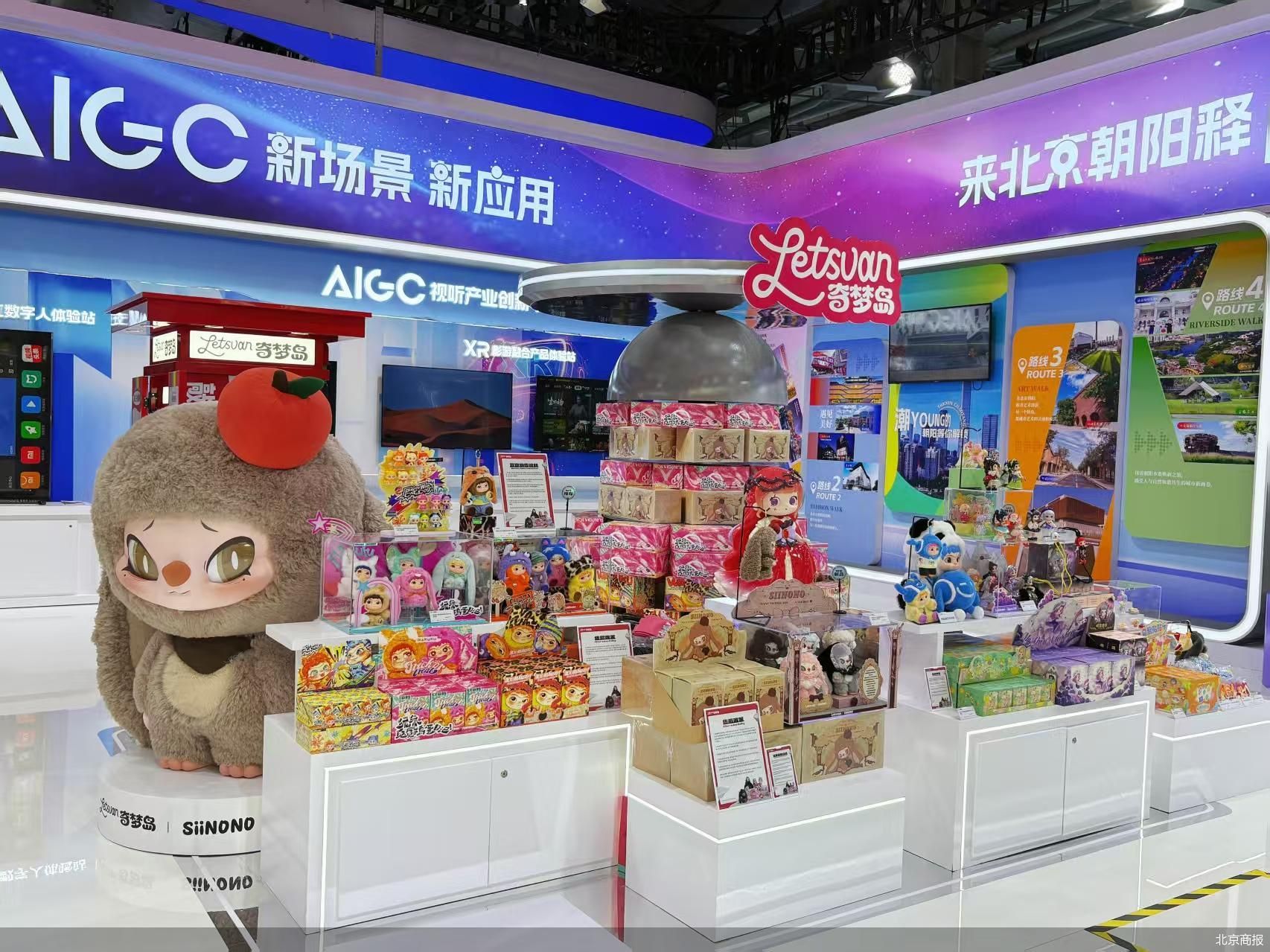
量子之歌旗下潮玩品牌Letsvan奇梦岛亮相服贸会
Zheng Quan Ri Bao· 2025-09-10 13:13
Group 1 - The core viewpoint of the article emphasizes that潮玩 (trendy toys) serve not only as collectibles but also as carriers of emotional value and cultural innovation, with Letsvan奇梦岛 aiming to create impactful experiences and showcase Chinese cultural creativity to a broader audience through the China International Fair for Trade in Services (CIFTIS) [1][2][4] - Letsvan奇梦岛 has successfully launched several phenomenon-level IPs this year, including "又梨," "WAKUKU," and "SIINONO," demonstrating strong capabilities in IP incubation and commercialization [1][2] - The "SIINONO" product achieved sales of 1.5 million yuan within three days of its launch, with over 10,000 boxes sold in the first 10 minutes, setting a new sales record for trendy toy categories [2] Group 2 - Letsvan奇梦岛 has entered Southeast Asia and North America markets, conducting localized operations and successfully holding its first overseas pop-up event in Bangkok, Thailand, in June, marking a significant step in its global strategy [2] - The participation in CIFTIS allowed Letsvan奇梦岛 to showcase its innovative achievements in original trendy toys and reflect the vibrant development of China's cultural and creative industry, providing new opportunities for the trendy toy sector to enhance cultural confidence and expand into global markets [2][4]
吴声2025年度演讲:场景革命十年,哲学生活方式到来
36氪· 2025-08-04 11:04
Core Viewpoint - The article emphasizes the concept of "meaning reconstruction" in the context of the AI scene revolution, highlighting the importance of specific scenarios in shaping business and consumer experiences [3][18]. Group 1: Scene Creation and Evolution - The past decade has been marked by "scene creation," where well-designed scenarios drive the evolution of new business entities, as seen in collaborations with companies like Luckin Coffee and Tencent [10][13]. - The evolution of brands like Sanwing Bird illustrates the shift from product-centric to solution-oriented approaches, focusing on personalized home scene customization [13][17]. - Red Star Macalline's transformation into an "AI home life destination" showcases the integration of home appliances, furniture, and decoration into a cohesive shopping experience [15][17]. Group 2: Instant Emergence and Meaning Reconstruction - The concept of "instant emergence" suggests that technological advancements must be carefully designed within specific scenarios to avoid losing sight of their significance [19][21]. - The article discusses the potential of AI to transition from "intelligence" to "super intelligence," with implications for economic growth and the redefinition of resources [23][25]. - The need for a philosophical lifestyle cycle is highlighted, where the reconstruction of meaning is essential in navigating the complexities of the AI era [25][28]. Group 3: NOW - Connection in the Present - The "NOW" concept emphasizes the importance of real-time connections facilitated by AI, transforming how individuals interact with information and each other [29][30]. - Platforms like Xiaohongshu exemplify the redefinition of connection through user-generated content, creating a space for real-time engagement and shared experiences [33][35]. - The article notes that the ultimate goal of business is to turn individual problems into collective solutions, as demonstrated by Xiaohongshu's focus on immediate user needs [35][36]. Group 4: FLOW - Smooth Human-Machine Interaction - The "FLOW" concept refers to the evolution of human-machine interaction, where AI becomes a seamless part of daily life, enhancing user experiences [51][52]. - The emergence of "intelligent agents" signifies a shift in how technology interacts with users, moving from mere tools to integral parts of personal and professional environments [54][56]. - Companies like Lenovo are leading the way in creating cohesive ecosystems of AI devices that enhance user interaction and experience [56][58]. Group 5: HERE - Narrative Beyond the Scene - The "HERE" concept emphasizes the importance of local narratives and experiences in creating meaningful connections between brands and consumers [79][80]. - Brands like Anta are innovating their retail spaces to become community hubs, blending art and local culture to enhance customer engagement [83][84]. - The article highlights the need for physical spaces to evolve alongside digital experiences, ensuring that they remain relevant and engaging for consumers [87][88].