MOS管

Search documents
功率半导体市场跟踪-频传涨价背后的逻辑探讨及行情展望
2026-01-26 15:54
Summary of Key Points from Conference Call Industry Overview - The conference call focuses on the power semiconductor market, particularly the dynamics of pricing and demand in relation to various applications, including AI servers, automotive, and consumer electronics [1][3][4]. Core Insights and Arguments - **Cost Increases**: Packaging costs for power devices have risen significantly, driven by the increase in metal material prices, which account for over 50% of the total device cost. Metal materials alone represent 60%-70% of packaging costs, leading to an overall cost increase of 20%-30% [1][6]. - **AI Server Demand**: There is a surge in demand for MOSFETs driven by the AI server market, with major suppliers facing capacity constraints and extended lead times, which further drives up prices. However, demand in industrial control, automotive, and home appliance sectors remains stable, insufficient to support widespread price increases [1][3][4]. - **Market Dynamics**: The power device price increase is currently in a testing phase, with actual price hikes expected to take effect in Q1 2026. High-end products and alternative products to traditional brands show greater potential for price increases [1][10][11]. - **Inventory Levels**: Global power device manufacturers have largely cleared their inventories, maintaining low levels, but capacity still exceeds demand. Thus, inventory clearance alone is not enough to drive price increases; cost pressures are the primary driver [1][17][20]. - **Specific Market Growth**: The AI server power market is projected to reach $1.5 billion to $2 billion in 2026 and may grow to $3.5 billion in 2027, primarily benefiting high-voltage MOSFETs and silicon carbide (SiC) MOSFETs [21][22]. Additional Important Insights - **Material Cost Breakdown**: Metal materials constitute approximately 30%-40% of the total cost of power devices, with significant implications for pricing strategies [5][12]. - **Impact of IGBT**: IGBTs are less affected by cost increases due to their larger wafer size, while smaller power components like diodes and low-power MOSFETs are more sensitive to material price fluctuations [7][12]. - **Market Competition**: Domestic manufacturers face intense competition, particularly in the mid-to-low power segment, where they have a higher localization rate and less foreign competition [12][36]. - **Future Trends**: The penetration of SiC in electric vehicles and energy storage is expected to rise, despite ongoing cost pressures. The technology is seen as a future trend due to its performance advantages [2][32][40]. - **Consumer Electronics Outlook**: The consumer electronics sector is unlikely to see significant recovery in 2026, primarily due to rising memory prices affecting overall production and sales [39]. Conclusion - The power semiconductor market is experiencing significant changes driven by cost pressures, demand from AI applications, and competitive dynamics. While there are opportunities for growth, particularly in high-performance segments, challenges remain in terms of pricing strategies and market competition.
又菜又爱玩的荷兰人,在安世半导体上翻车了。。。
芯世相· 2025-10-24 10:33
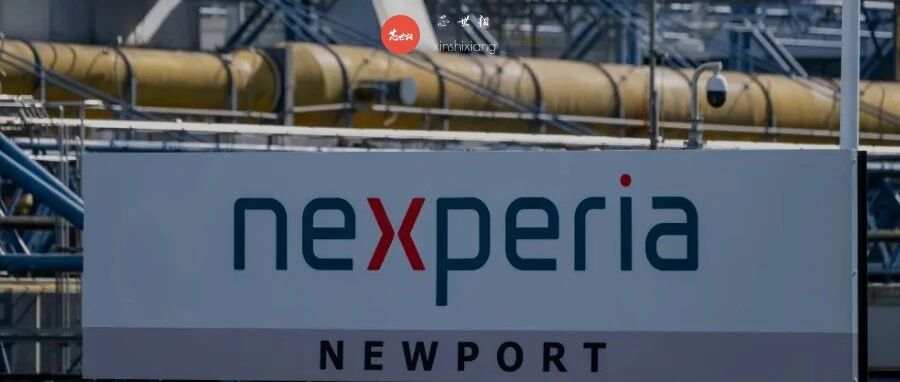
Core Viewpoint - The article discusses the geopolitical tensions surrounding the semiconductor industry, particularly focusing on the conflict involving Dutch company Nexperia (formerly part of Philips and NXP) and its Chinese parent company, Wingtech Technology, amid U.S. export controls and Dutch government intervention [5][28][36]. Group 1: Background of Nexperia - Nexperia originated as a core semiconductor division of Philips and later became a part of NXP, which has shifted its focus to high-profit sectors like IoT and automotive chips, leading to Nexperia being spun off due to its lower profit margins in power semiconductors [15][16]. - Nexperia specializes in power semiconductors, which include diodes and transistors, and has established itself as a leader in automotive-grade chips, holding significant market shares in various segments, including 40% of the global inverter chip market for electric vehicles [18][20][25]. Group 2: Acquisition and Growth - In 2019, Wingtech Technology acquired Nexperia for over 34 billion yuan, transforming it into a Chinese subsidiary, which subsequently experienced significant growth, with revenue increasing by 60% and net profits multiplying since the acquisition [23][25]. - Nexperia's success has been bolstered by the rise of China's new energy vehicle market, with 40% of its shipments directed to Chinese automakers, contributing to substantial tax revenues and job creation in Europe [25]. Group 3: Geopolitical Tensions - In December 2022, Wingtech was placed on the U.S. export control entity list, which was later expanded to include Nexperia, prompting the Dutch government to intervene and take control of the company, citing national security concerns [28][31]. - The Dutch government's actions included freezing Wingtech's global subsidiaries and replacing its management, which has been criticized as a capitulation to U.S. pressure and a move to seize valuable assets [31][34]. Group 4: Impact on the Semiconductor Supply Chain - Following the Dutch government's intervention, China responded with export controls on Nexperia's products, halting shipments from its critical manufacturing facilities in Dongguan and Huizhou, which are essential for the global supply chain [36][37]. - The European automotive industry expressed alarm over potential chip shortages, with major manufacturers warning that their production lines could face immediate disruptions due to the lack of semiconductor supplies [41][42]. Group 5: Future Implications - The situation highlights the fragility of global supply chains in the semiconductor industry, where geopolitical tensions can rapidly escalate into significant operational challenges for companies [46]. - The article suggests that the era of easily seizing foreign assets through legal means is over, emphasizing the need for careful consideration before leveraging such strategies in a globalized economy [47][48].